Double Sided Sales Slip Customer Copy

A couple of kids protesting in a church on the other side of the planet taught me that if you want to play with fire, be prepared for the consequences.

A musician who’s part of a corporatised musical group playing officially-sanctioned anti-corporate lyrics taught me that hypocrisy knows no cultural bounds.

You see, I’m all about the power of the people.

But keep in mind that my goal is to move the wealth of many thousands of millionaires and billionaires out of reach of the people.

The “people,” of course, is a meaningless term that can be used positively or derogatorily: “We the people…” or “you people,” and its many forms used to provoke crowds in time for [re]election.

The people get used a lot, don’t they/we?

Keep people distracted while we prepare…

Well, I’m not supposed to tell you what’s being prepared, am I, if I am to maintain this storyline?

Let’s imagine a few possible futures:

  1. It’s clear that changing the habits of billions of people to save themselves from themselves is not going to happen when so much profit is at stake, including just good enough profit to feed the mouths of billions of people.  If you had the opportunity, would you set up a location for your friends and family that is safe from invasion by non-heavily armed people and sufficient to provide you a livable subculture/ecosystem while the rest of the world was experiencing major/negative climate change?
  2. You have great wealth at your disposal and you believe that the global economy is your friend so you spend your billions of dollars trying to improve local economies which, in turn, improve the global economy, increasing not only your chance for survival but the whole world’s, too.
  3. You and your friends in private and public businesses have been testing the theory that living off-world is a sure way to hedge your bets about Earth’s climate change and any detrimental effects it may have on your way of life.  You encourage the use of public funds to affirm your theory while you amass the resources you need to build off-world colonies.
  4. Your family has lived in relative poverty for generations.  You have competed against your peers and created a small empire — it’s time to enjoy the fruits of your labour, cost no object in pursuing a life of luxury.
  5. Your family has lived in the peace and comfort of middle-class living for generations — no reason for you to change the course of history.
  6. Poverty means nothing in your subsistence lifestyle.  Words like “blog” and “computer” do not exist in your language full of nature-based terminology.

All of us are familiar with these scenarios, through personal experience, from someone we know or by popular culture references.

In telling the story of our species in relation to the humongous universe in which we barely understand we live, tying these subplots together is interesting some days and boring on other days.

However, it’s all I have to work with here.

Like going from static cartoon strips to creating animated daily cartoons in writing, if not drawing.

Protestors with machetes will most often lose to security guards with guns, who will always, always, always claim self-defense after discharging their weapons and killing protestors.

My question is this: if the commander in-chief claims credit for killing a notorious villain, does he also take credit for the most number of military suicides of any commander in-chief during his time in office?  If your military has some of the lowest morale on record, then I, in honouring my father’s legacy, have to ask myself why anyone with a military background would vote for you?  Following that train of thought, how many of us benefit from one of the largest peacetime (sorry, I mean “war on terror”) military deployments in history — should we also question re-electing the commander in-chief?  In this case, the Law of Unintended Consequences meets the Law of Diminishing Returns.  What am I missing here?  What am I not telling the reader?  I am not my father so why is there not a viable third candidate for me to elect?

Ahh…the balance of power.  ‘Tis a game that entertains, n’est pas?  Sarkozy and Berlusconi quickly become footnotes in history.  Merkel, like Kohl, is not far behind.  Anyone remember Mikhail Gorbachev or Deng Xiaoping?  Did Greece used to be a country?

It will be no different on the Moon or Mars.  More pioneers, more forgotten history as we scramble to feed, clothe and shelter ourselves from the elements while armchair bystanders question our motives and protest our version of progress that clashes with theirs.

Remember the Golden Rule: S/he with the most power protecting a stash of gold makes the rules.

If you’re happy and you know it, clap your hands…

If you are a salmon swimming upstream, a grizzly bear tries to take a bite out of you, you slip out of its mouth and die before spawning, would you think your life had any meaning as your body parts decompose and feed multiple non-bear lifecycles?

What about the soldier who committed suicide before reproducing himself?

Or the young girl ridiculed at school who steps in front of a subway train?

Or the farmer who died of a heart attack in the field with ten children to feed?

What about a planet full of fossils but no living beings at this time?

In other words, do we have to give meaning to or put everything in context with our current civilisation?

I have added seven more books to my collection, books which belonged to my father and my great-uncle:

  • The Armored Forces of the United States Army, (c) MCMXLIII by Rand McNally, foreword by Brigadier General David G. Barr, General Staff Corps
  • The Coast Artillery Corps of the United States Army, (c) MCMXLIII by Rand McNally, foreword by Major General J. A. Green, President, U.S. Coast Artillery Association
  • Recruit Handbook, published and distributed for recruits at the Naval Training Center, San Diego, California, 1941 (?), owned by G.T. Green 567-70-46, a word of welcome by R. S. Haggart, Commodore, U.S. Navy Center Commander
  • Mathematics, Volume 1, Basic Navy Training Courses, NAVPERS 10069-A, published by United States Government Printing Office: 1951, owned by Porter (rank unknown)
  • Watch Officer’s Guide, by Captain Russell Willson, United States Navy, published by United States Naval Institute, Annapolis, Maryland, 1941
  • Same as above, formerly owned by Ensign Paul F. Glynn, given to my father
  • The Bluejackets’ Manual, United States Navy, 1940, Tenth Edition, published by United States Naval Institute, Annapolis, Maryland, 1940

Everywhere I turn in research of my father’s material, I find war memorabilia.

My father never let WWII out of his thoughts.  Further, his Army service during the Cold War gave him fluency in the German language as well as a group of lifelong friends.

My father read spy novels and enjoyed watching John Wayne movies, which reminded him of his youth, going to the theatre on Saturday to watch serialised cowboy movies.

Soon, I will run out of Dad’s material to rummage through.

Then, I will have my mother to spend more time with.

I will not worry about dangling modifiers or prepositional phrases that my father, a professor of 20+ years, taught me to pay attention to.

Days spent with my father are as gone as living beings that became fossils on another planet, with no one to tell their tale.

I only have this moment to call my own.

My nieces and nephews will have a few memories of their uncle that became part of their narratives they pass on now and in the future.

Every day, I gain a bit of wisdom, creating an insight from my observations.

What have I gained from today?

My grandfather and his brother in-law (my great-uncle) both served in the U.S. Navy during WWII — the former remaining a career sailor, the latter returning to civilian life as a U.S. Postal Inspector.

My father, a youth at that time, had plenty of heroes to call his own — war heroes, film heroes — because he was, in part, making up for the lack of his biological father.

In my youth, who were my heroes?  Richard Nixon and his staff, my father, my Scout leaders, some of my teachers, actors who played James Bond, Euell Gibbons, Alfred Hitchcock, Robert Rodale, Red Skelton, and others.

I didn’t have any war heroes.  The Vietnam War was not the type of engagement that the mass media used to create heroes for kids.  We learned about heroes of other wars like George Washington, Sergeant York and General Patton.  We watched protest marches and heard about European terrorist groups like the Red Brigade and American criminals like the Symbionese Liberation Army.

The battle for my set of thoughts was fought not in terms of Axis vs. Allies but cocaine-filled discotheques fueled by bands like the Bee Gees and Donna Summer vs. Boy Scout campfire songs and summer church camp singalongs.

The clash of subcultures continues unabated.

In 1,000 years, the fossilised remains of today’s subcultures will be studied for the minute traces of continuity between one time period and another.  Genealogical institutes will try to connect heroes of the past to common people wanting a feeling of blood-related significance.

The cycles go on and on.

What kinds of songs are we teaching our children?  Singalong songs that were the pop culture tunes of their day or modern songs that reflect the tastes of today?

More importantly, are we creating heroes that our children will continue to admire in their senior years, long after we’re gone?

Do we have to have heroes to give meaning to our lives?

Do we have to have children to leave a legacy and/or do we have to leave a legacy at all, knowing we’re always part of the multiple lifecycles of the universe?

Are we alone?

Talking with a friend in south Florida about some of her clients, one of whom she nicknamed “Sybil,” and, for the protection of many I won’t detail here (but suffice it to hear that multiple personality disorder may be more myth than fact, except in rare cases like this one), I wonder what to do next.

My grandparents built a house in North Port, Florida, in 1964.

So did my next-door neighbours (built a house in Big Cove, Alabama, in 1964, that is).

My grandparents and my father are dead.

So, too, one of my next-door neighbours.

My mother considers selling the house in Florida.

The surviving next-door neighbour was convinced by his real estate agent to sell his song for a dance, or less, and he did.

From the death of his spouse to the sale of his house in less than a month.

Makes me question the integrity of the real estate agent (the agency is Keller Williams — more on that later) and/or the sanity of my neighbour.

My mother has been advised not to make major life decisions until six months after her husband is dead.

Someone didn’t tell my neighbour the same thing.

Sure, he wants to be closer to his children and grandchildren.

I know he’ll be lonely without his dear wife.

My wife and I will miss seeing her in her yard, dressed in long-sleeved shirt and long pants during the heat of summer, a beekeeper’s headgear protecting her from sun and insects.

I am winding down from a once-in-a-decade holiday trip with my wife a few months after my father died, after which I spent a week with my mother and sister going through the house in Florida where my grandparents savoured their retirement years year-round and my parents enjoyed their retirement years as snowbirds.

Meanwhile, people have killed each other by the hundreds, if not thousands, thousands of babies have been born, businesses opened/closed and other aspects of our planet’s lifecycle — killing and eating each other to survive — moving along as it always has and always will.

In the meantime (why don’t I say “in the happytime,” instead?), I examine historical documents to prepare myself for a future filled with humour, satire, comedy, tragedy and words.

Last night, I had a dream.

My mother, sister and I sat down at a large table.  Two or three other large tables were spread around the restaurant where people were sitting down in order to get a good view of Dad opening his birthday presents.  Several people walked up and described the special, unique gift they had brought/made and hidden in a back room so my father wouldn’t see when he walked in for the surprise birthday party.

I looked through the gifts, marveling at the personal touches so many people had put into their gifts, feeling a sense of anticipation rise in me at seeing Dad come back and open so he would know how special he was to so many in his life.

Then, the realization of reality crept into my dream world and I woke up shaking, my neck and back muscles tense, my face twitching.

Dang it, I miss Dad!

My subculture wants me to believe Dad is out there somewhere watching over me (i.e., heaven) but I don’t care about some imaginary space that defies gravity.

I want to share time and space here with my father now, talk about the U.S. Navy material I found in his father’s (my grandfather’s) sea chest, ask him what he remembers about growing up during WWII, go fishing one more time, hit golf balls into the park and retrieve them, look at new sports cars and wonder how people can afford them.

But life doesn’t work that way.

We are born, maybe get married, maybe have children, and then we die.

I have lived into that part of the lifecycle that I never wanted to face again after my best friend/girlfriend died when we were 10 years old.

Forty years later, I’m facing the same emotions I couldn’t handle as a preteen, when I dove into my Boy Scout training, schoolwork and marching/concert/jazz band practice to hide the mess of thoughts inside me.

Where do I hide now?

Am I alone as I feel?

Do I even exist?

Does any of this matter?

Today is an imaginary time period created to account for the rotation of Earth on its axis while tilted.

Tomorrow is another such imaginary time period.

I shall let my imagination take me into a world of stories where writers pluck plots and characters, harvesting them at just the right time to entertain themselves (and, perhaps, others later).

Storytelling is my comfort food, a habit I turned to when I was 10 and didn’t have anyone to share the pain of losing my girlfriend with, how I compensated for the fact that the universe is neutral to my existence as a temporary conflux of states of energy.

In the near-term (both time and space), we appear to exist through experimentation from birth that shows an environment of similar groups of states of energy responding to us.

From a great distance, we do not exist — we do not move this planet through our individual actions, although collectively we influence the condition of the planetary environment around us.

Most of us only care about our local conditions, our circle of influence.

But if I don’t care, if I see conditions — past, present and future — that are, practically, independent of the existence of me, what then?

The story continues, with or without me…

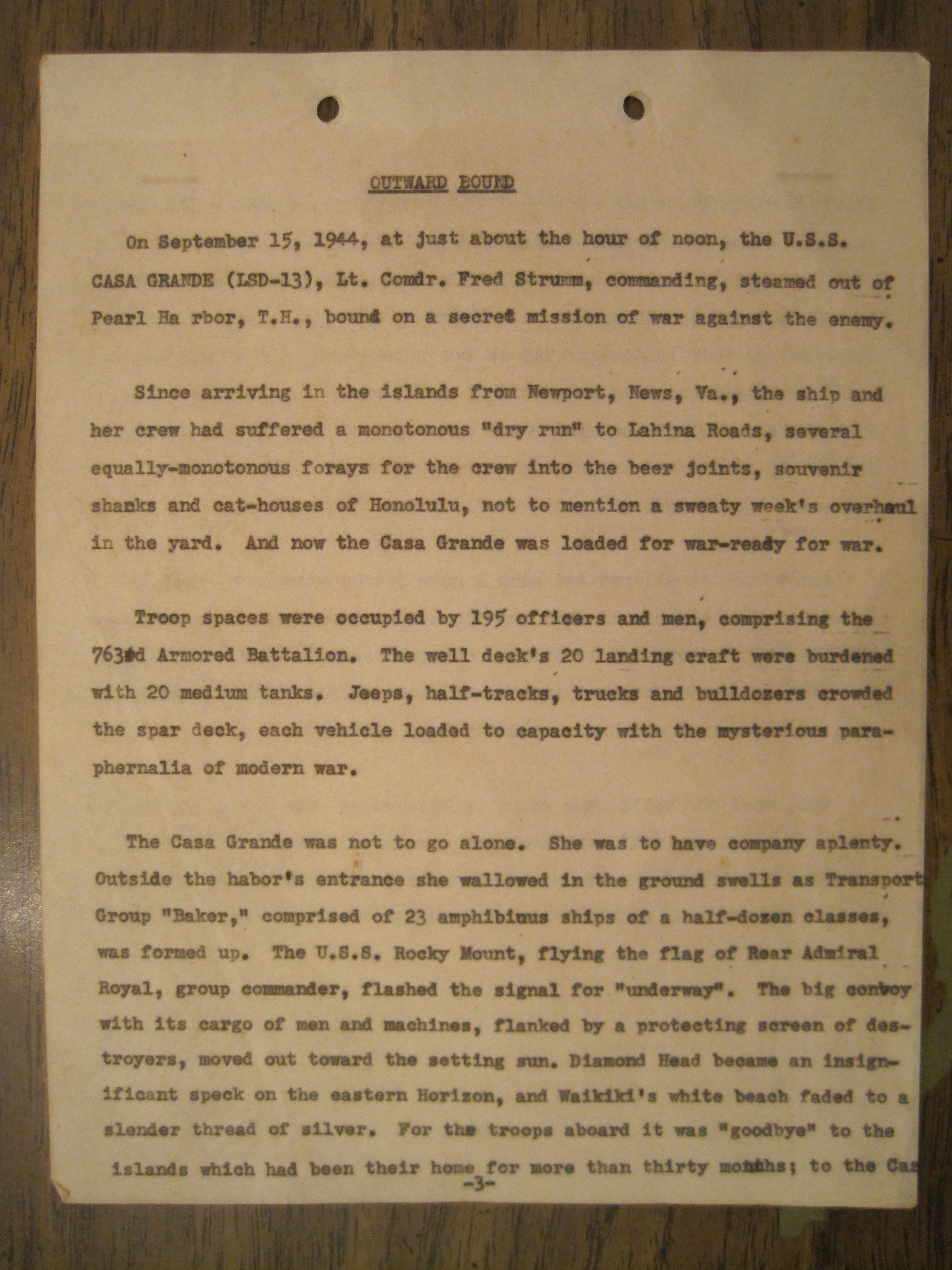
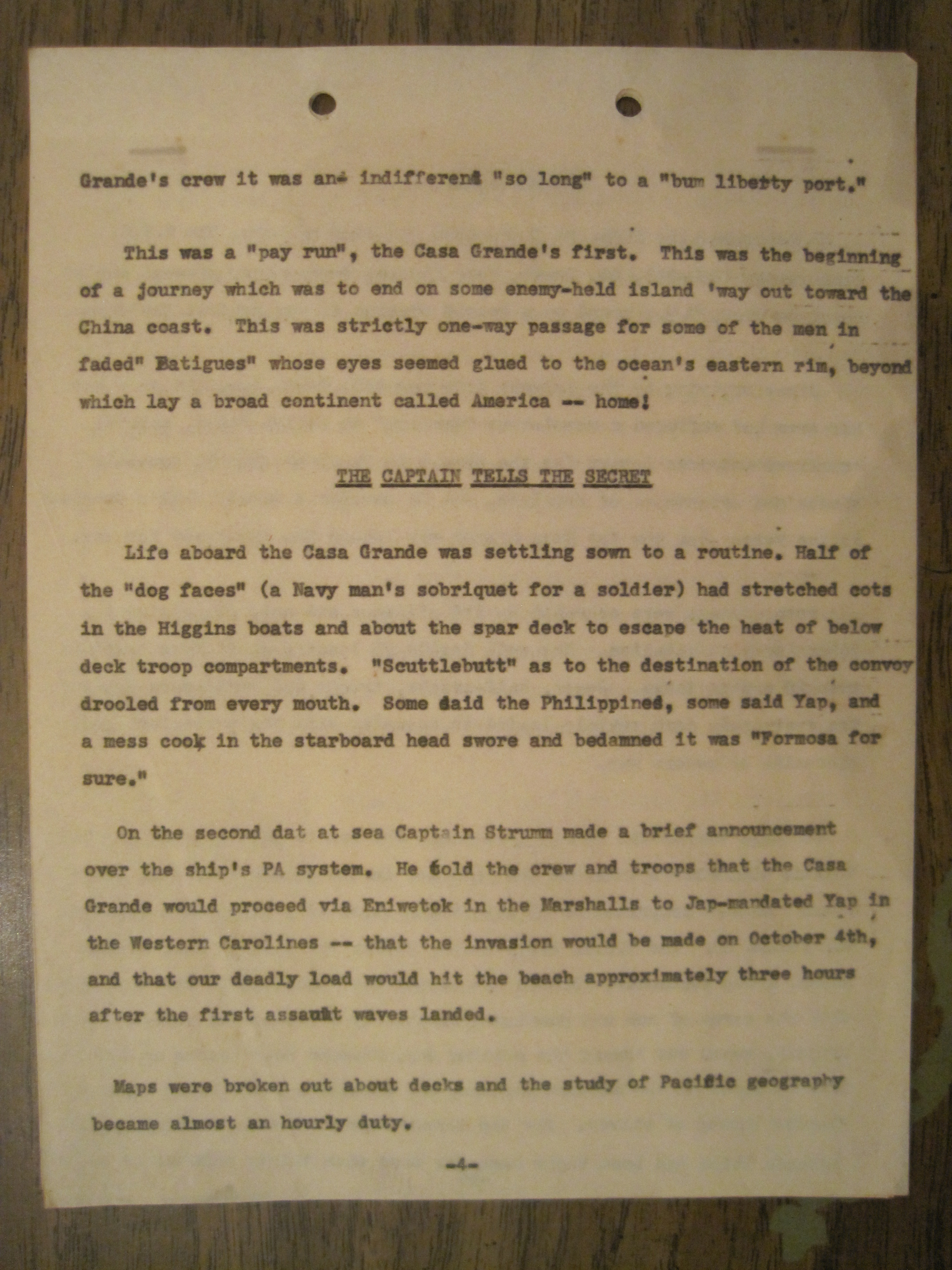
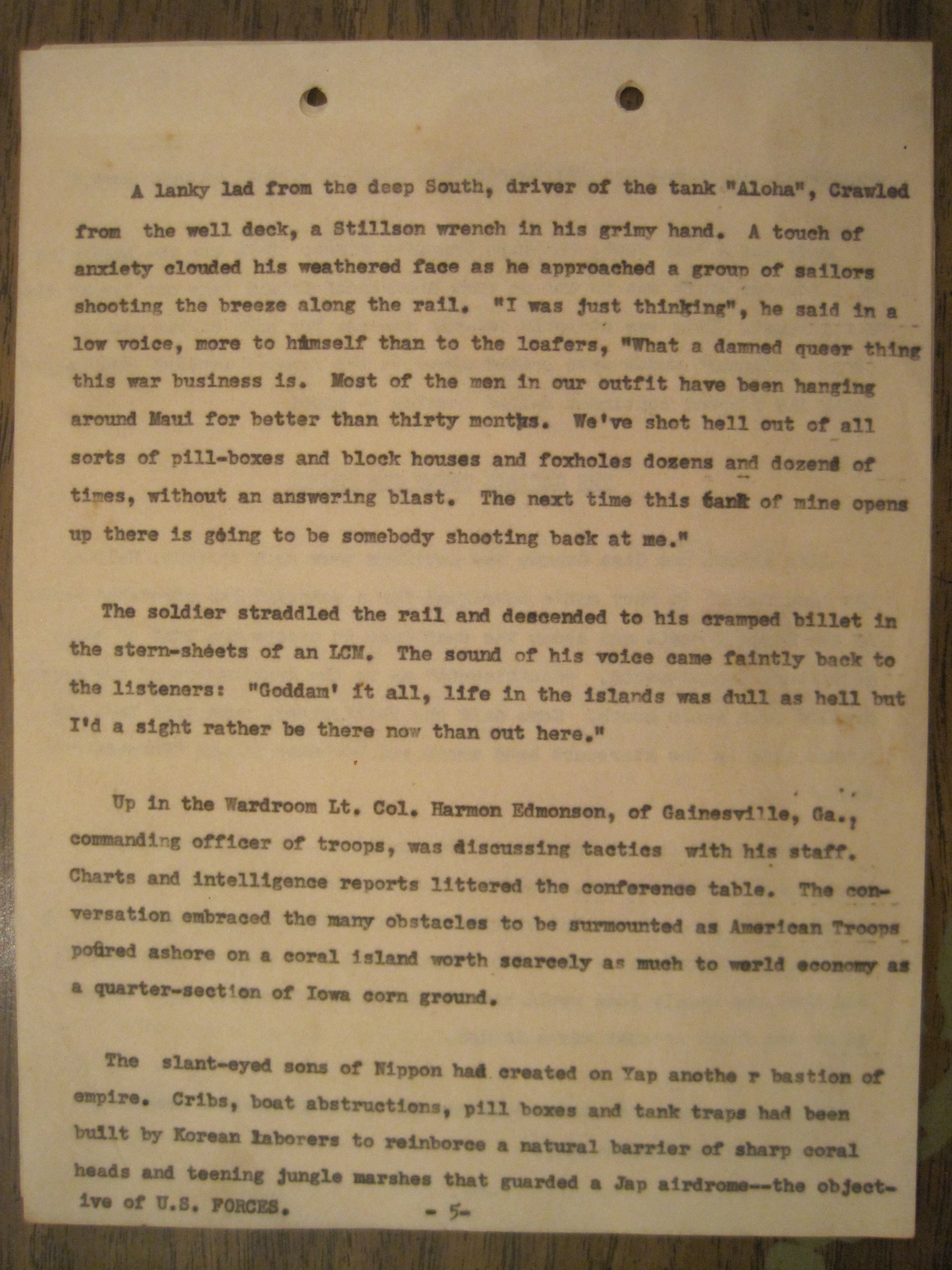
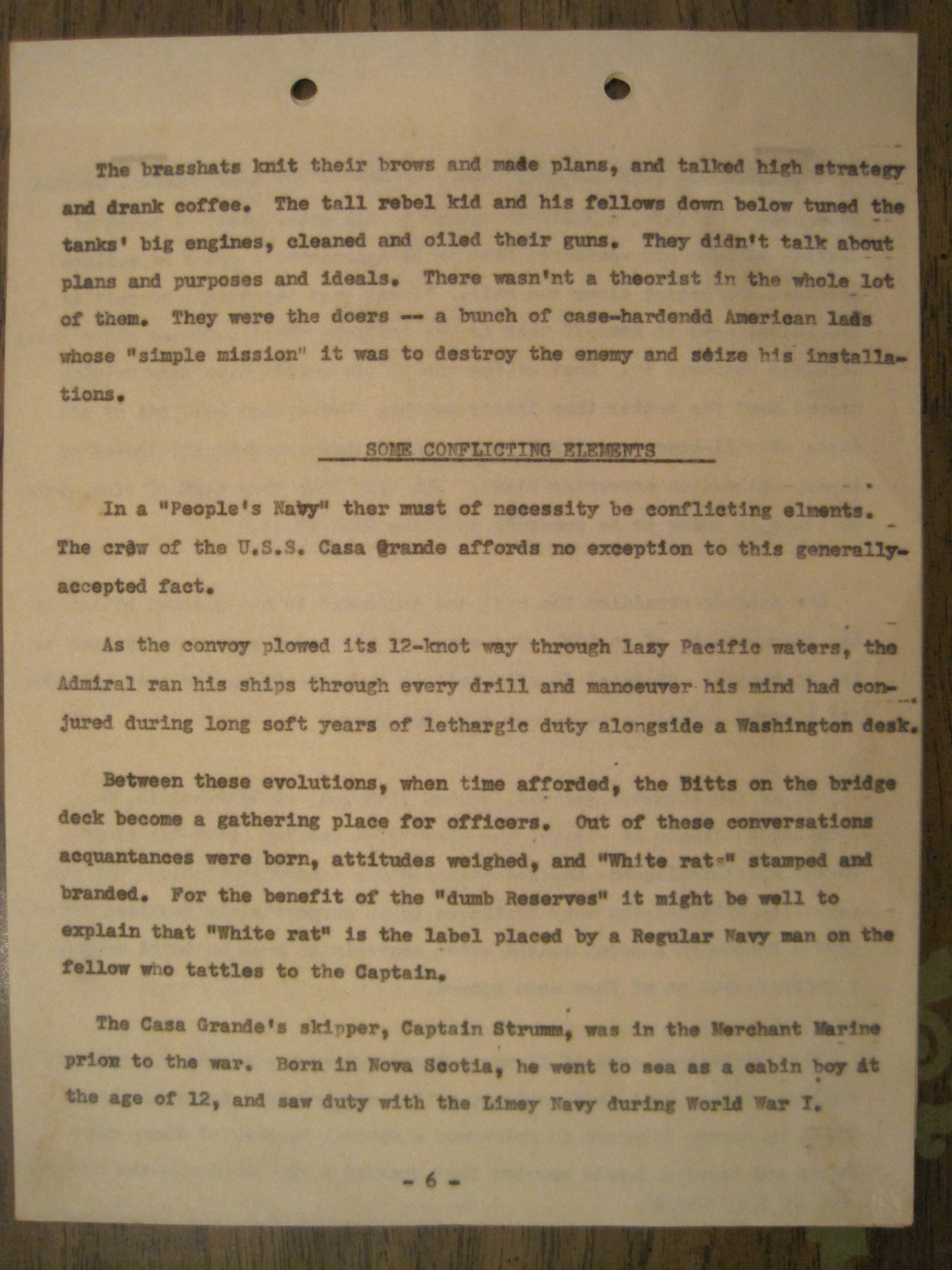
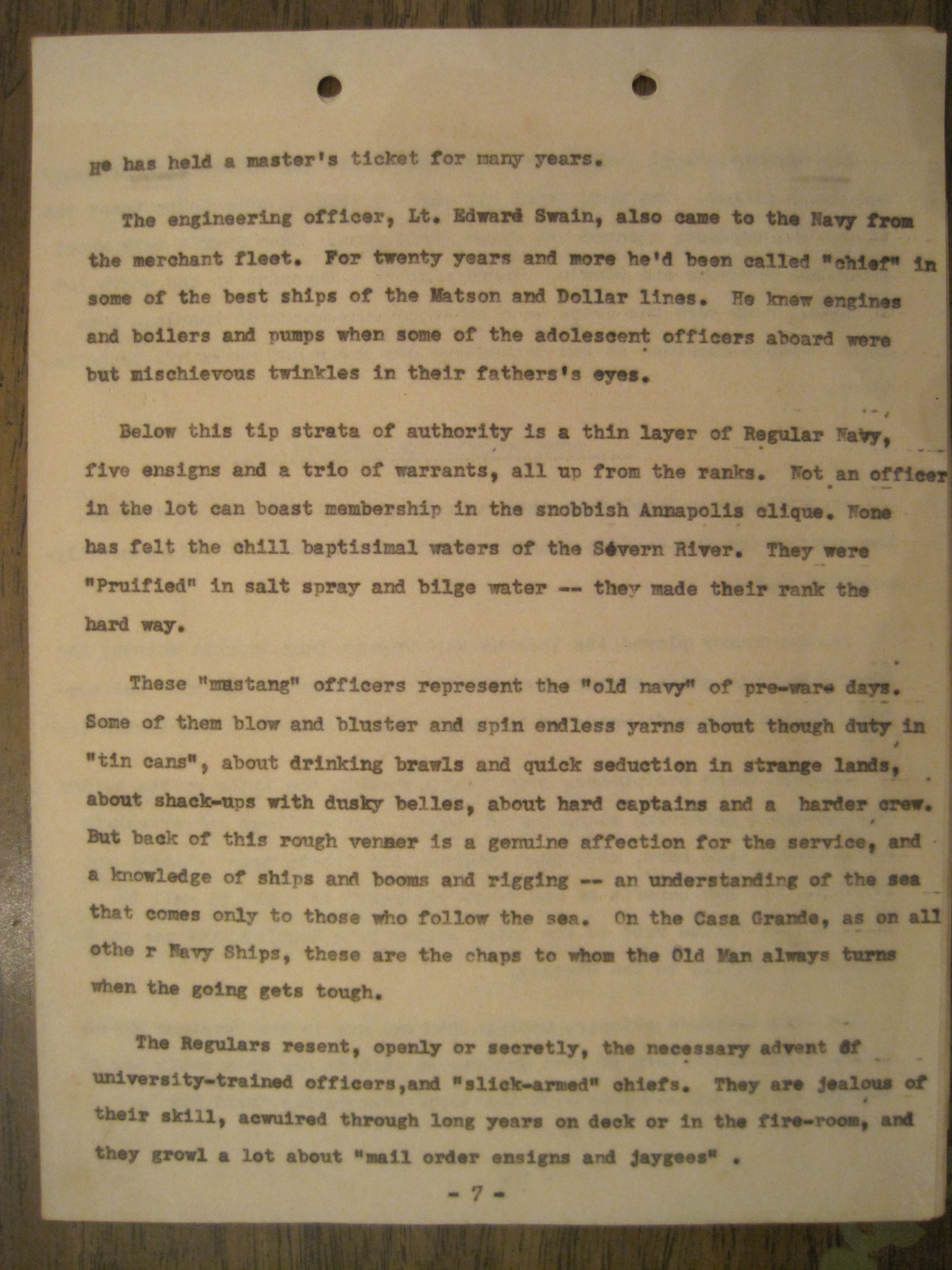
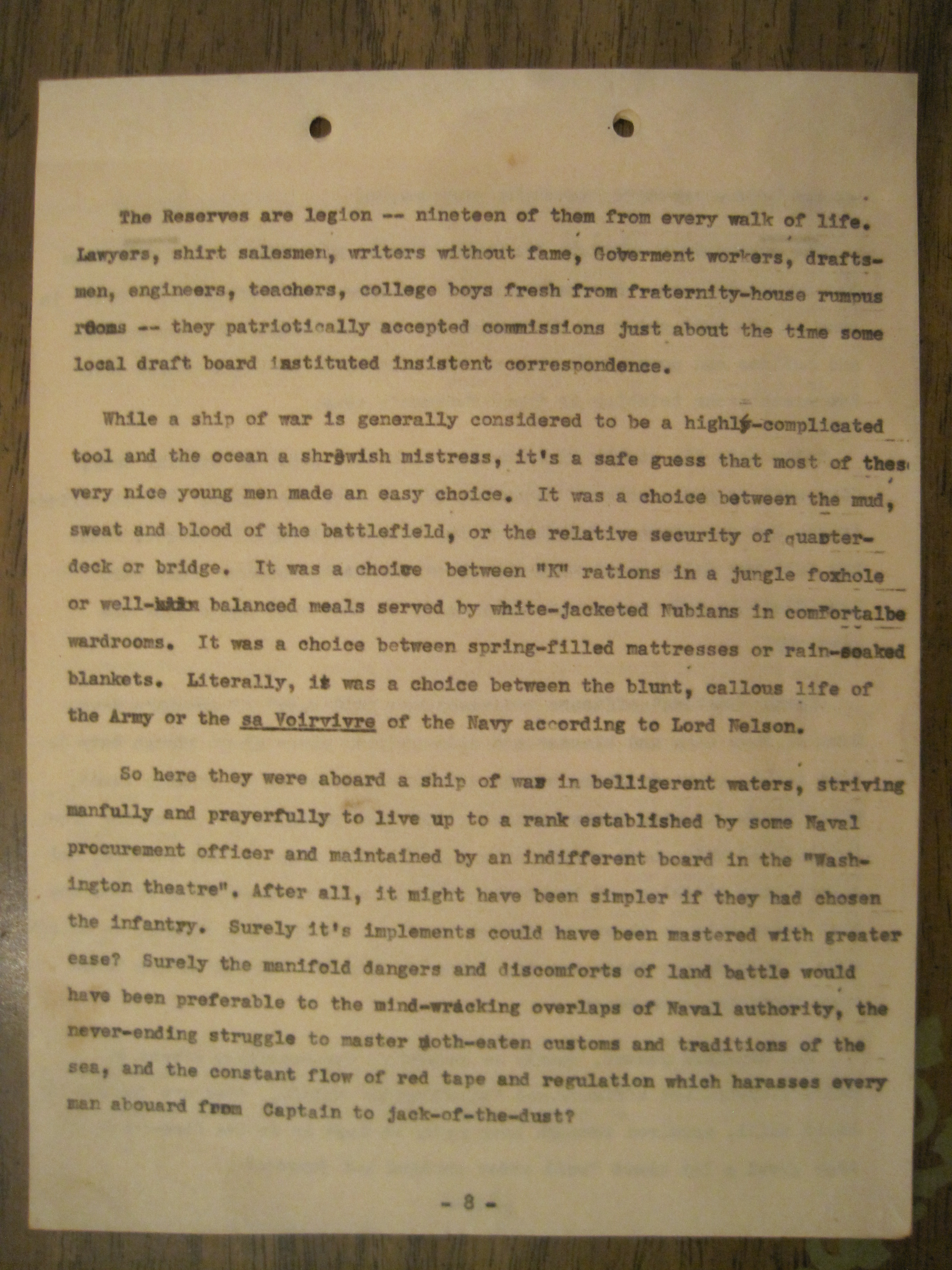
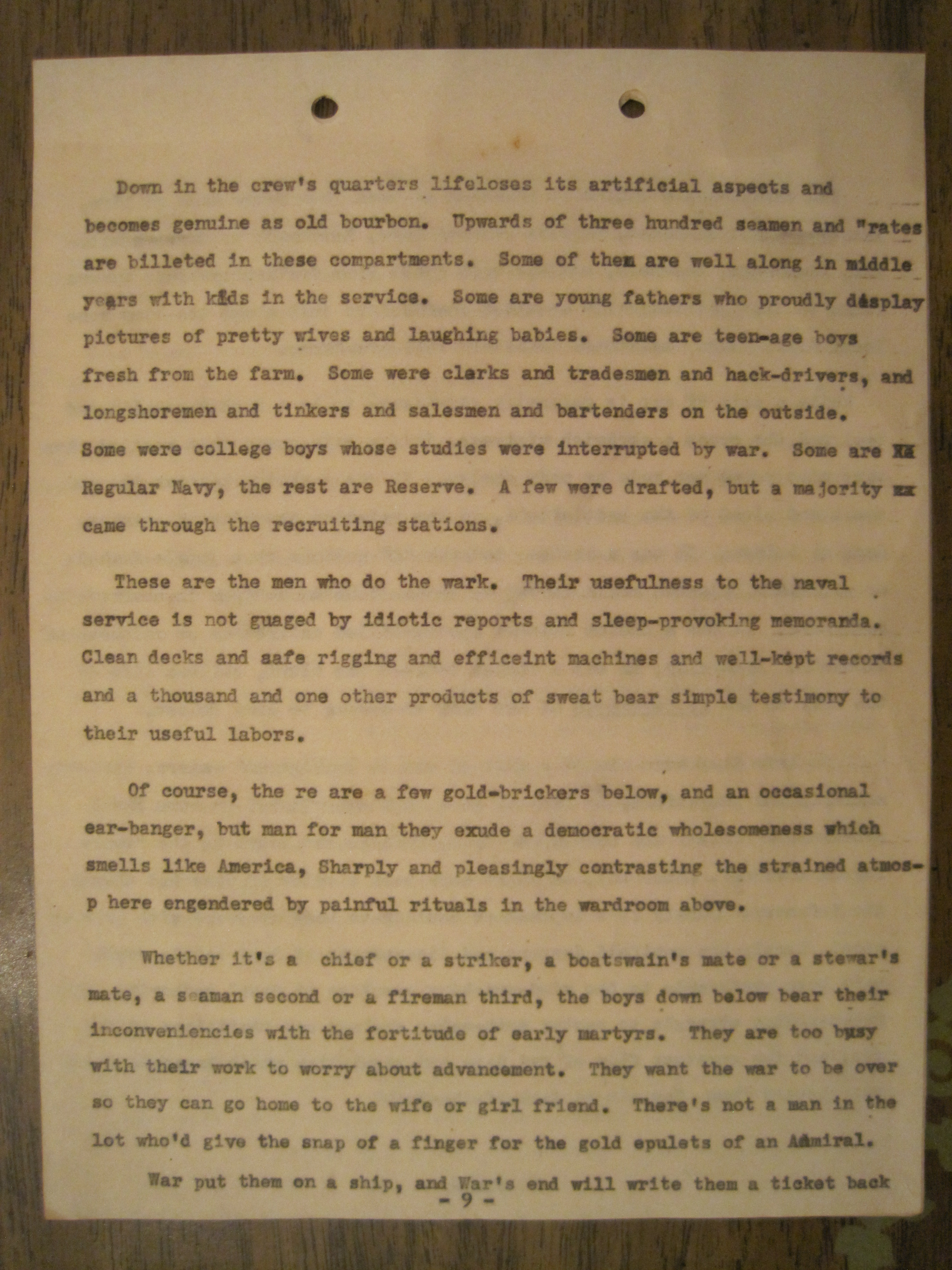
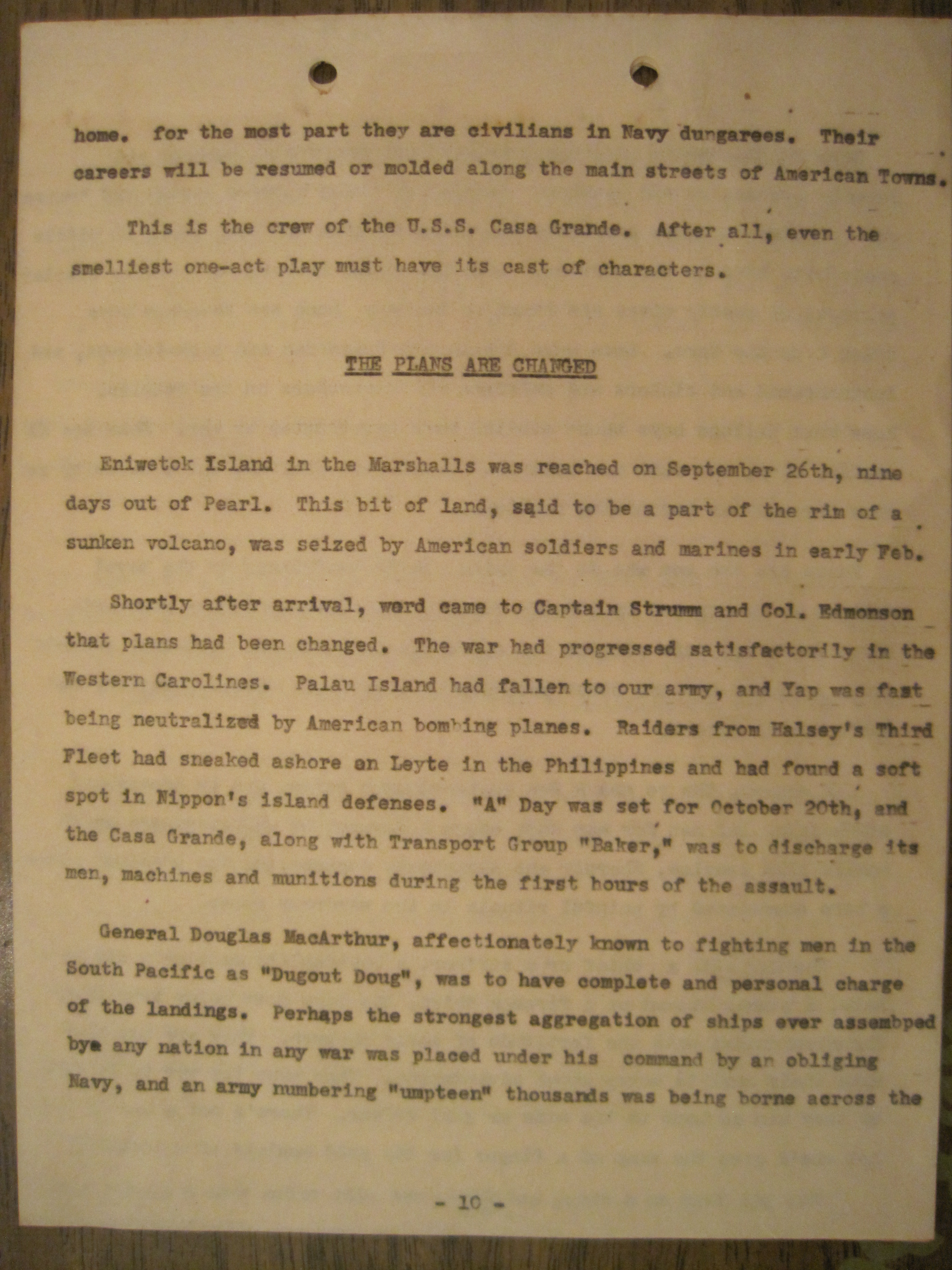
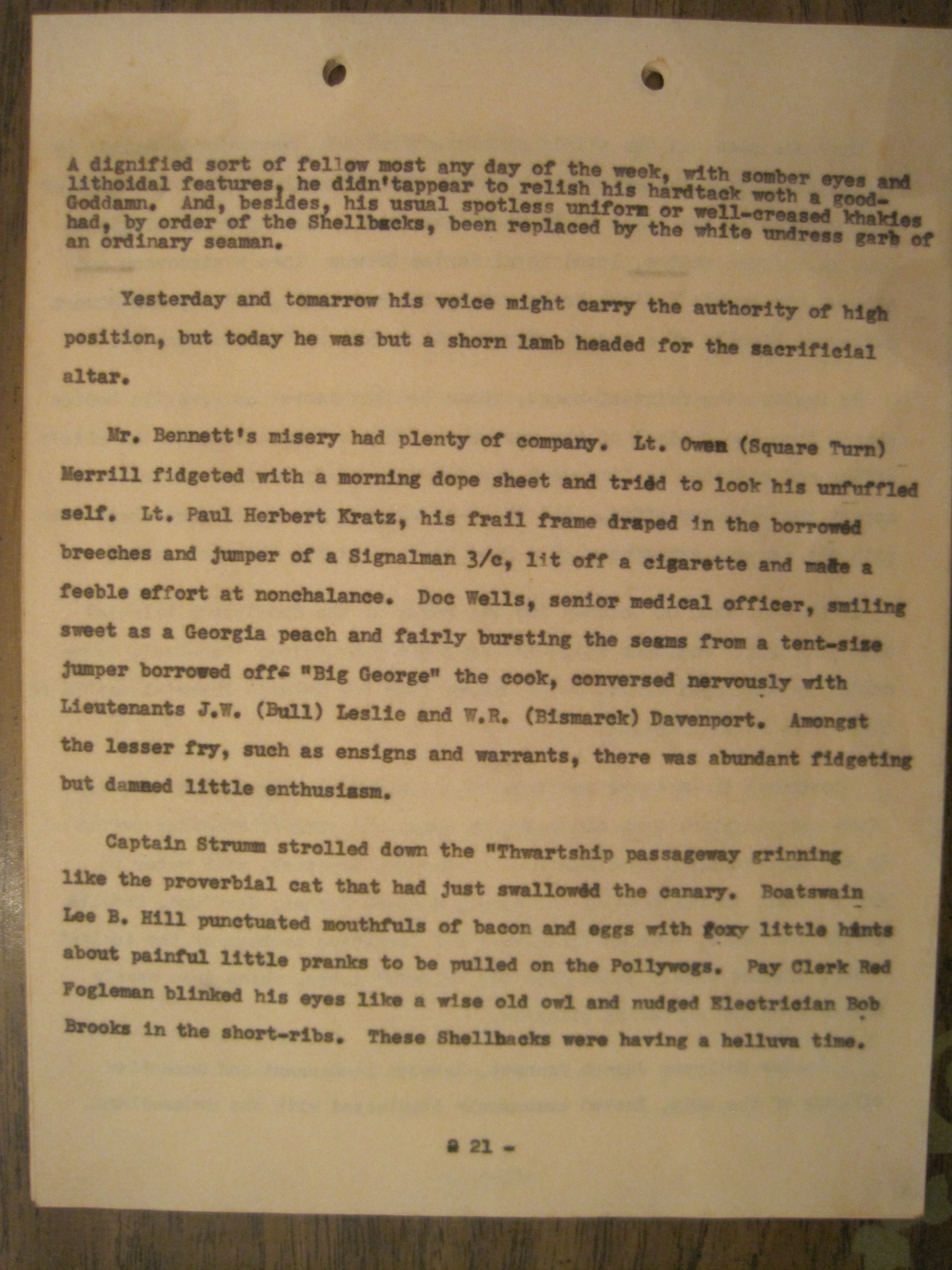
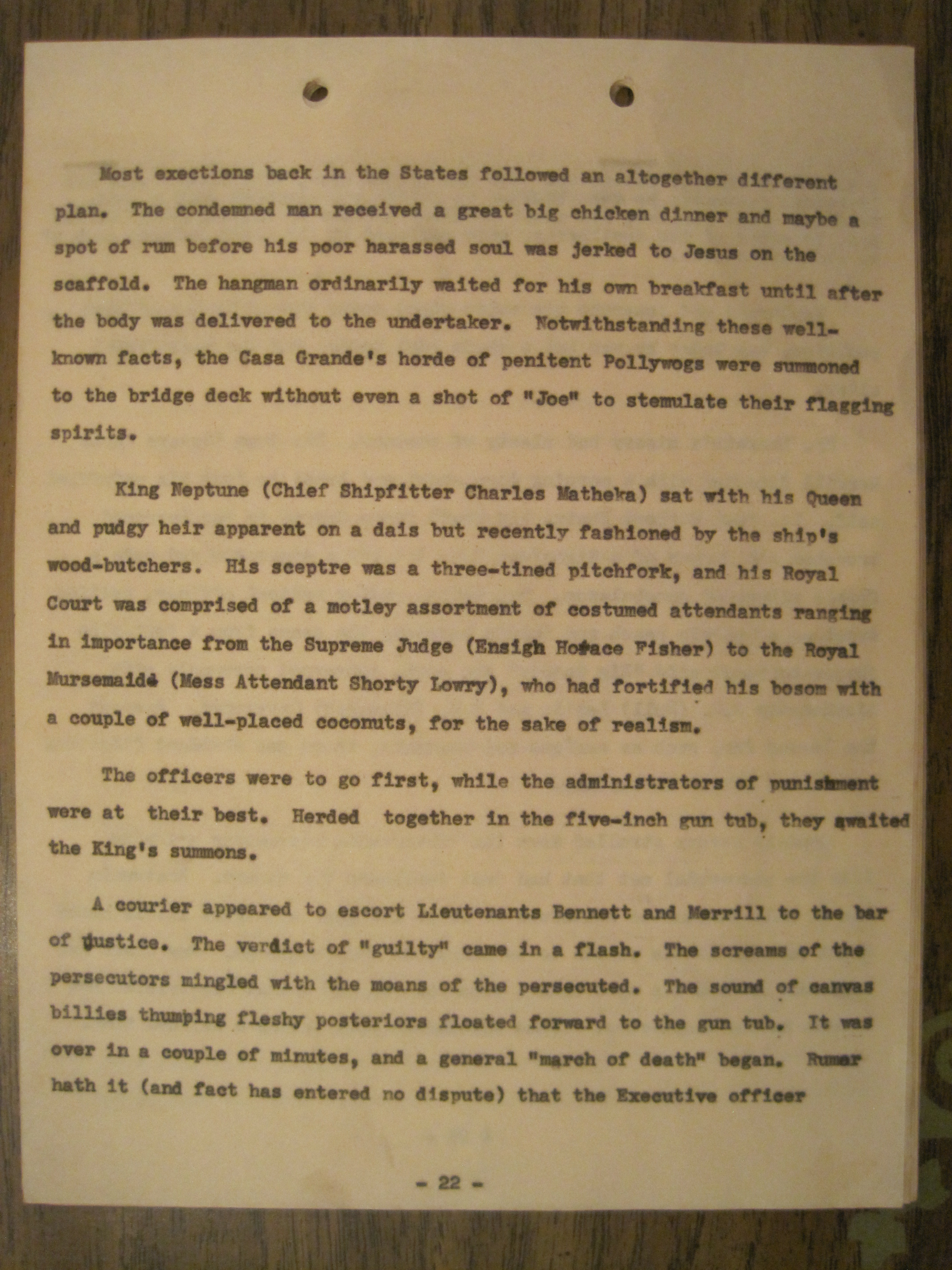
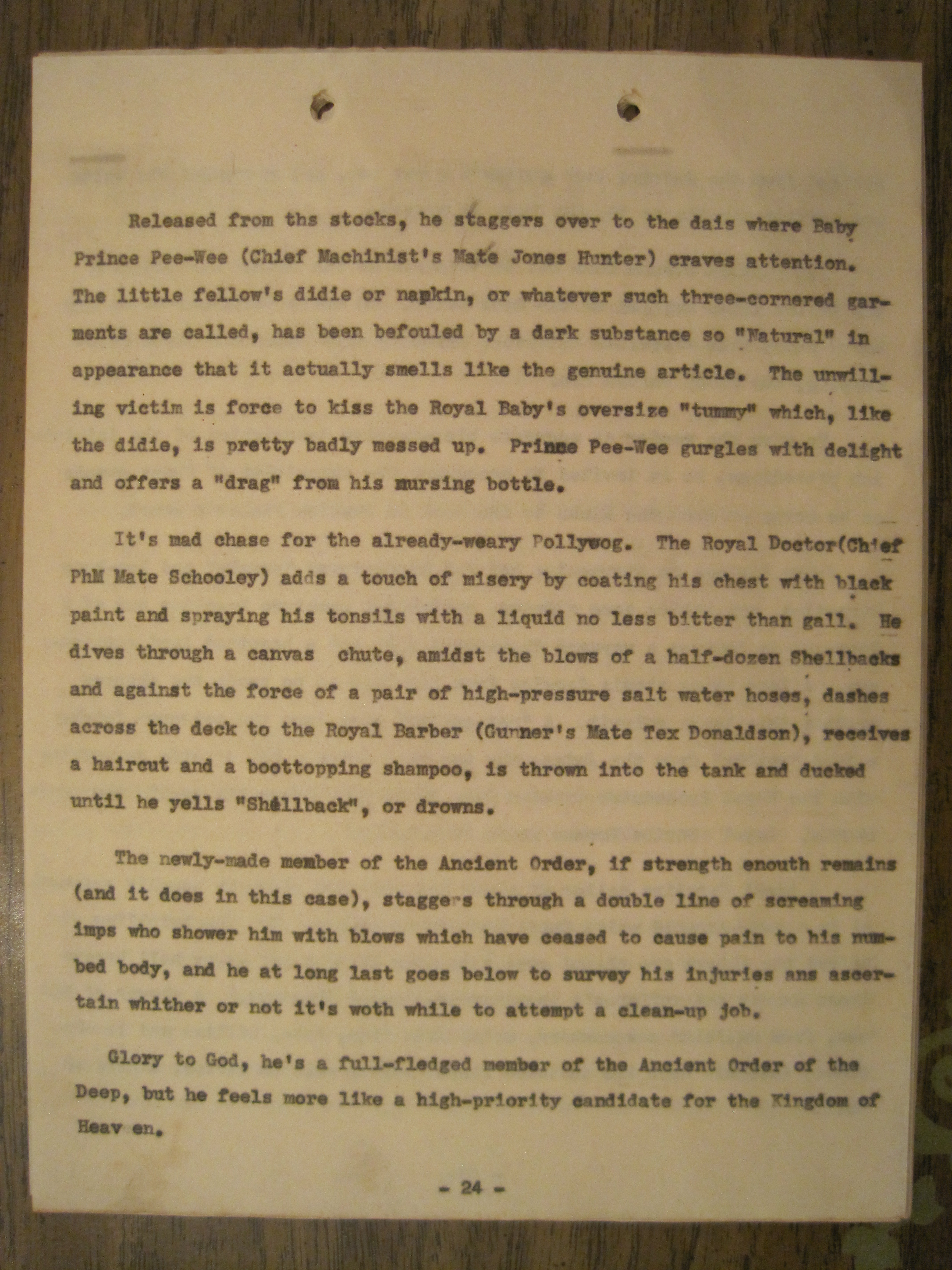
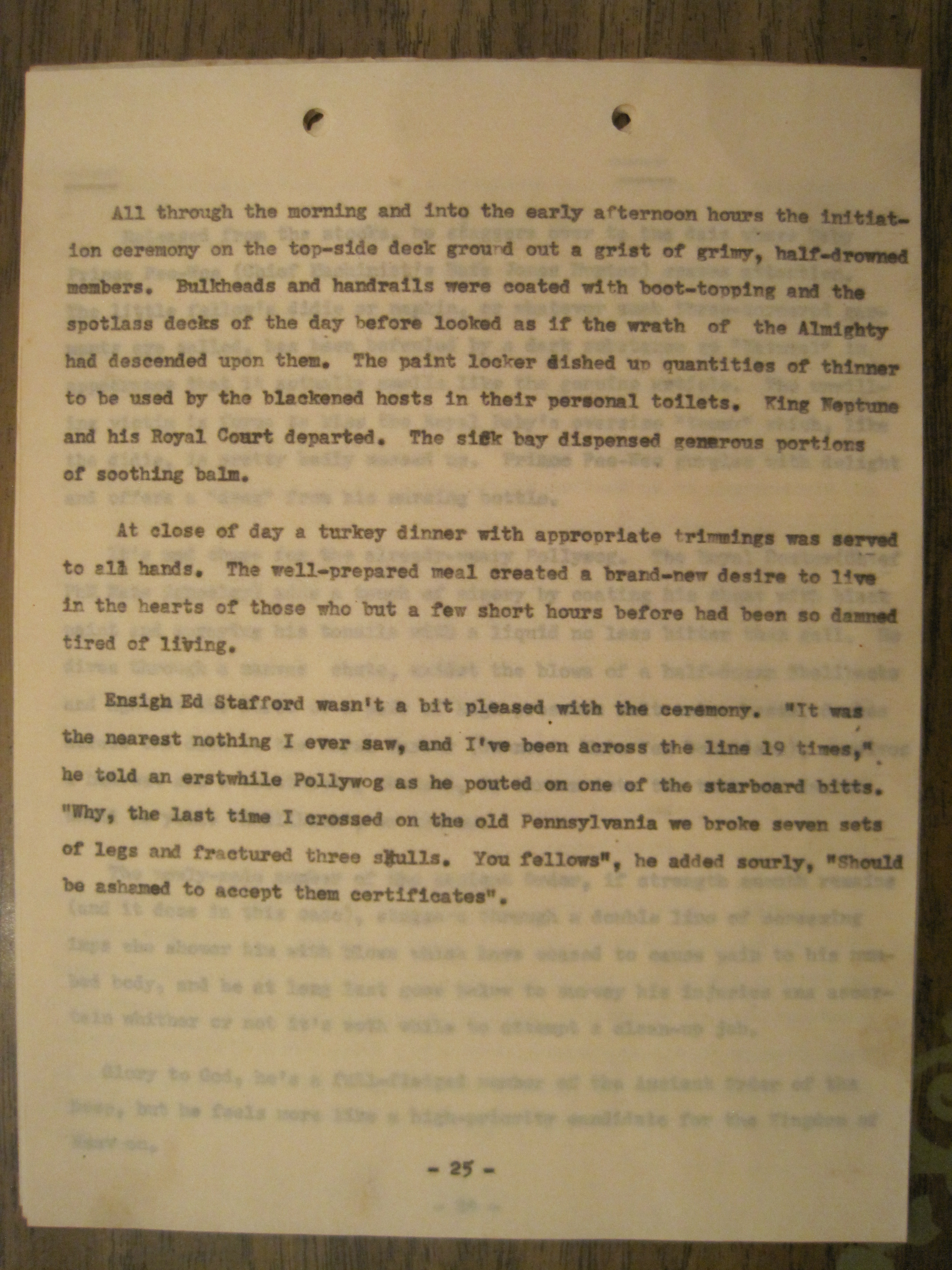
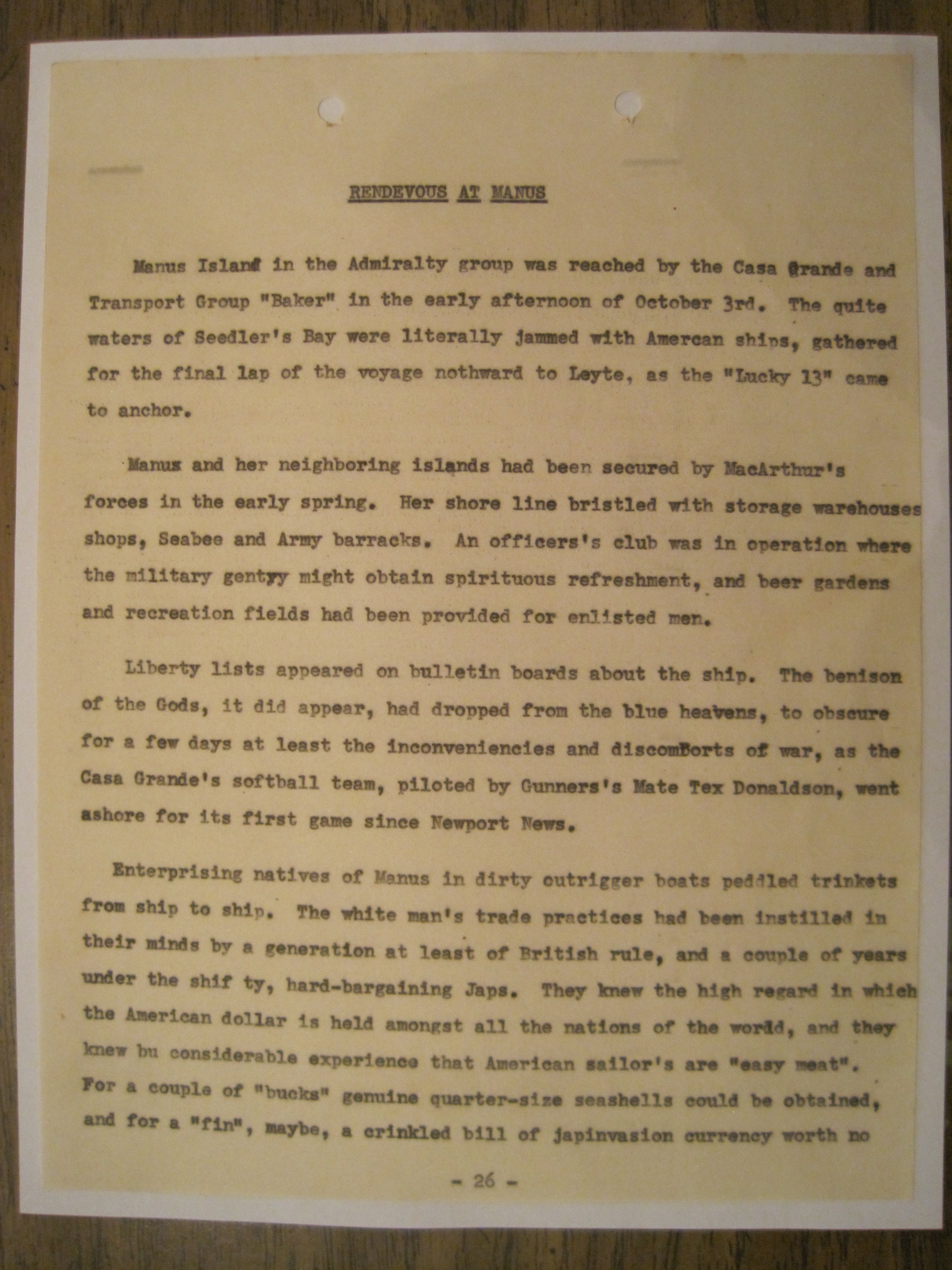
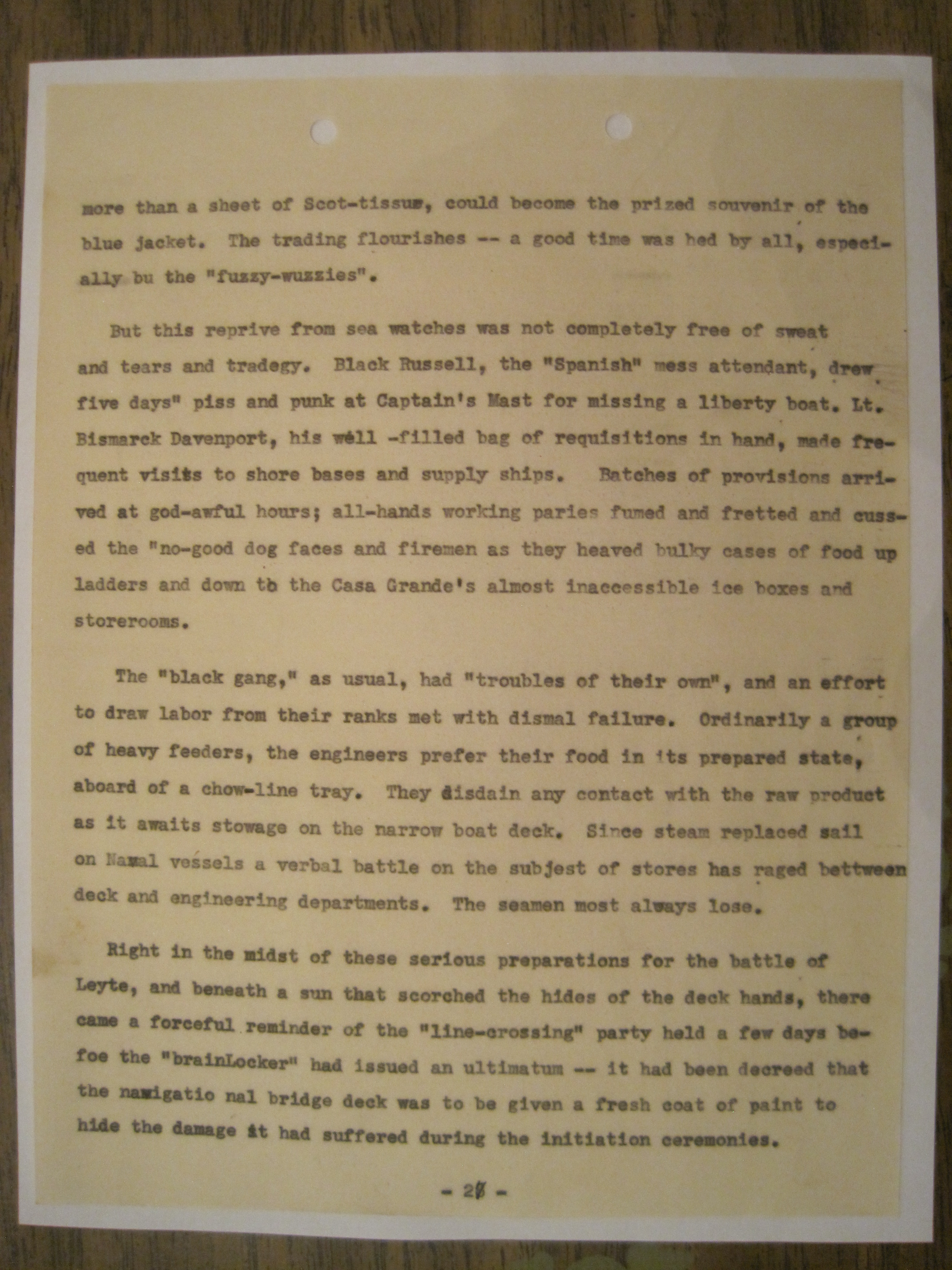
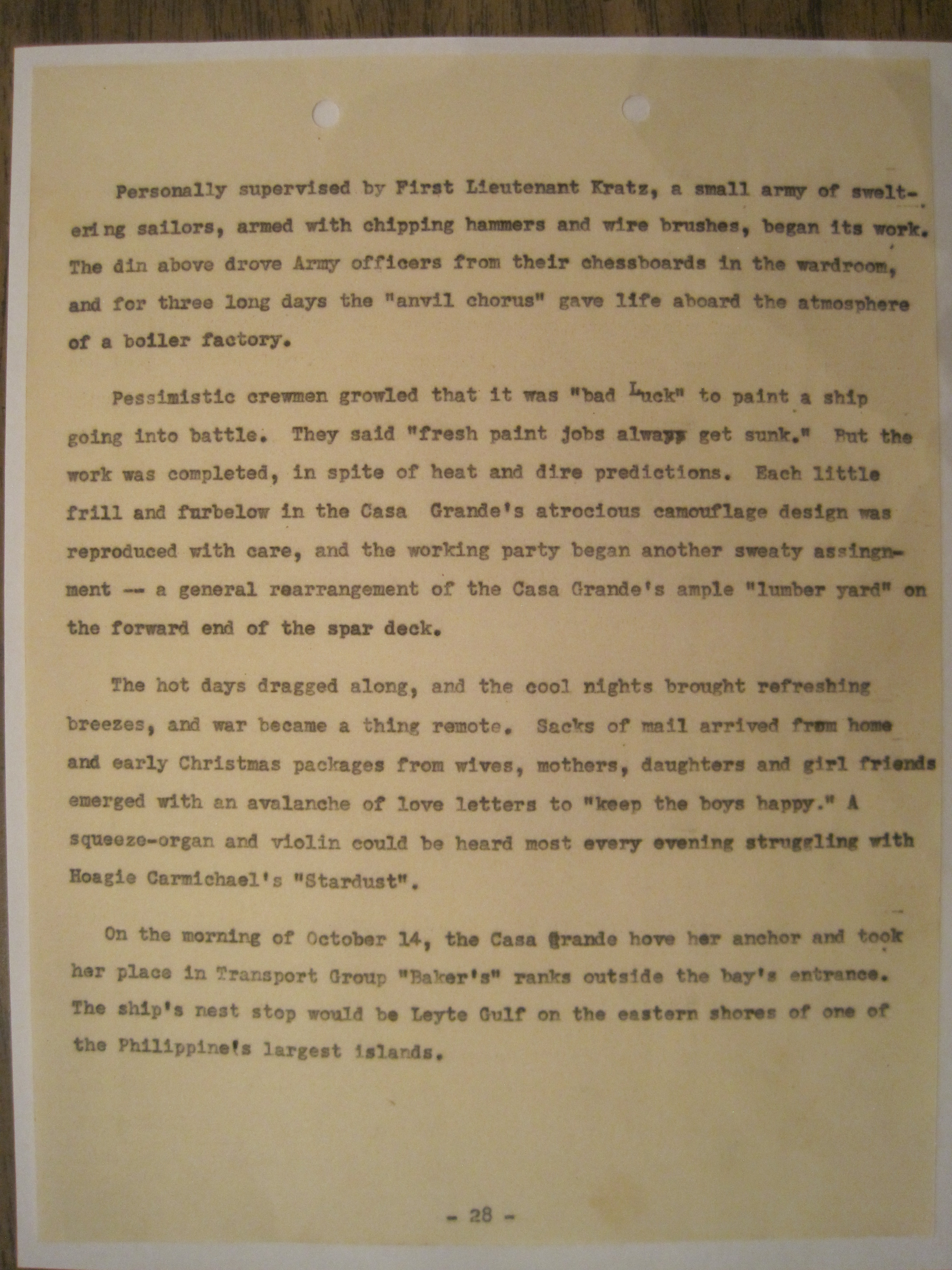
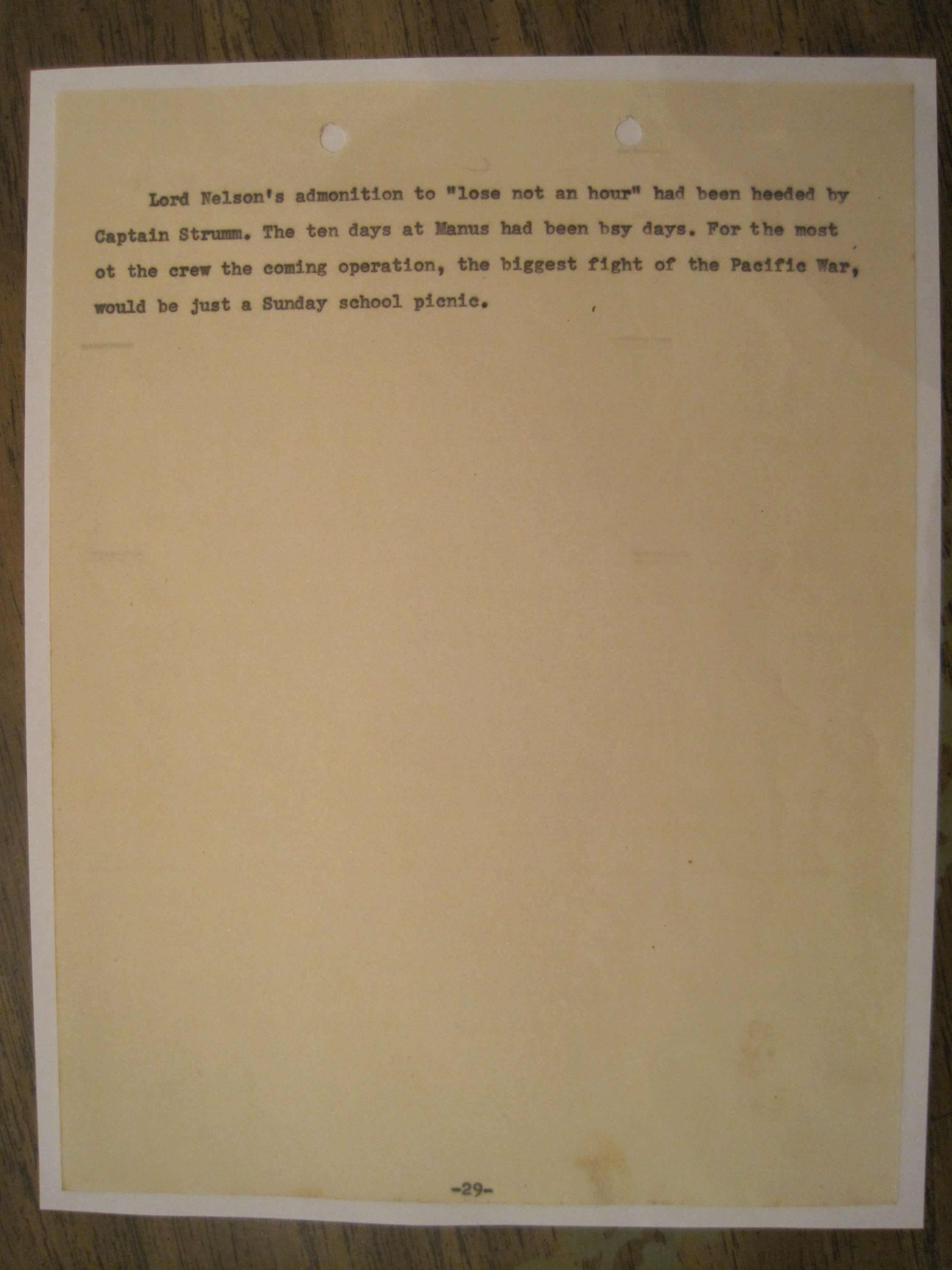
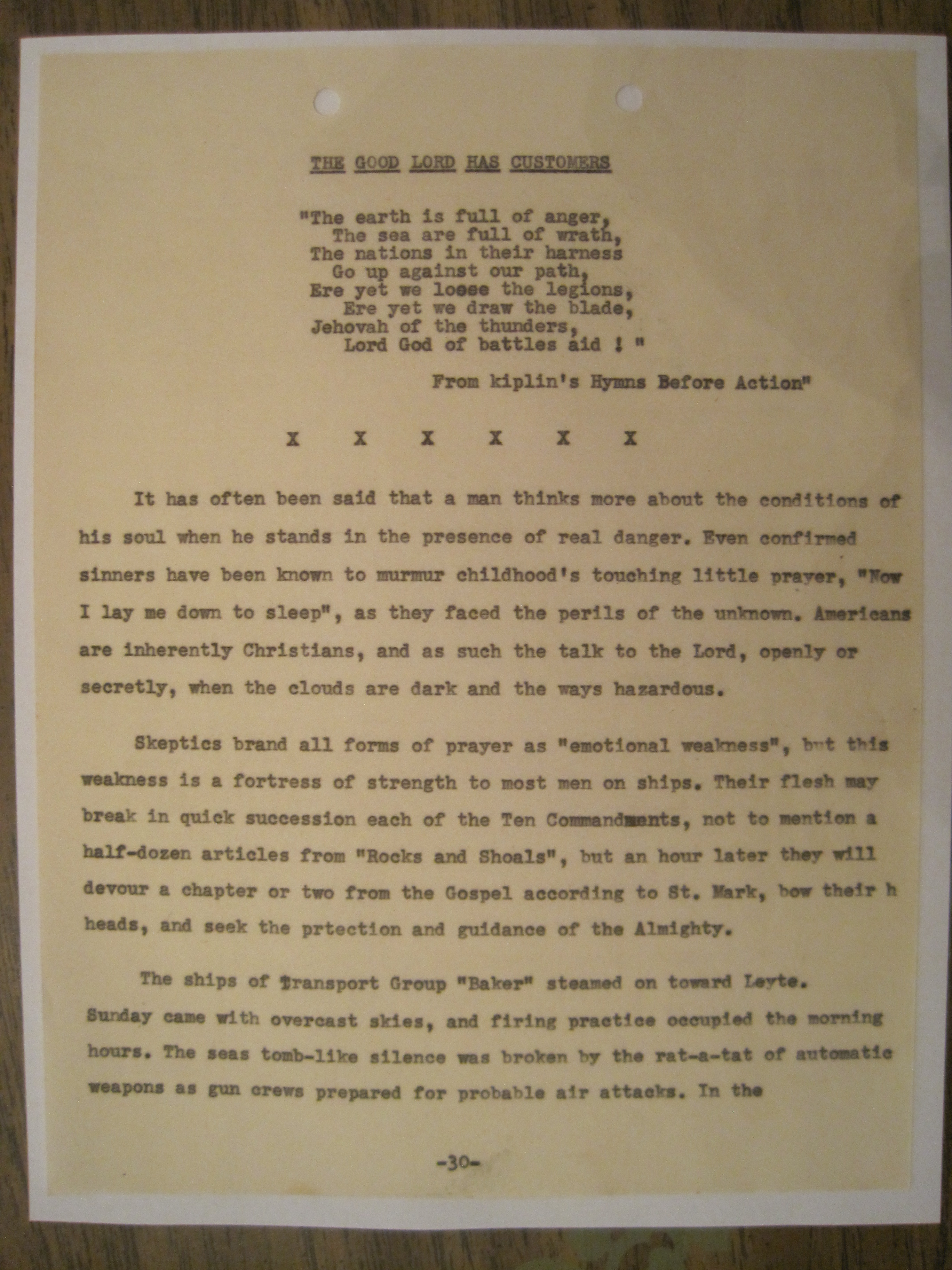
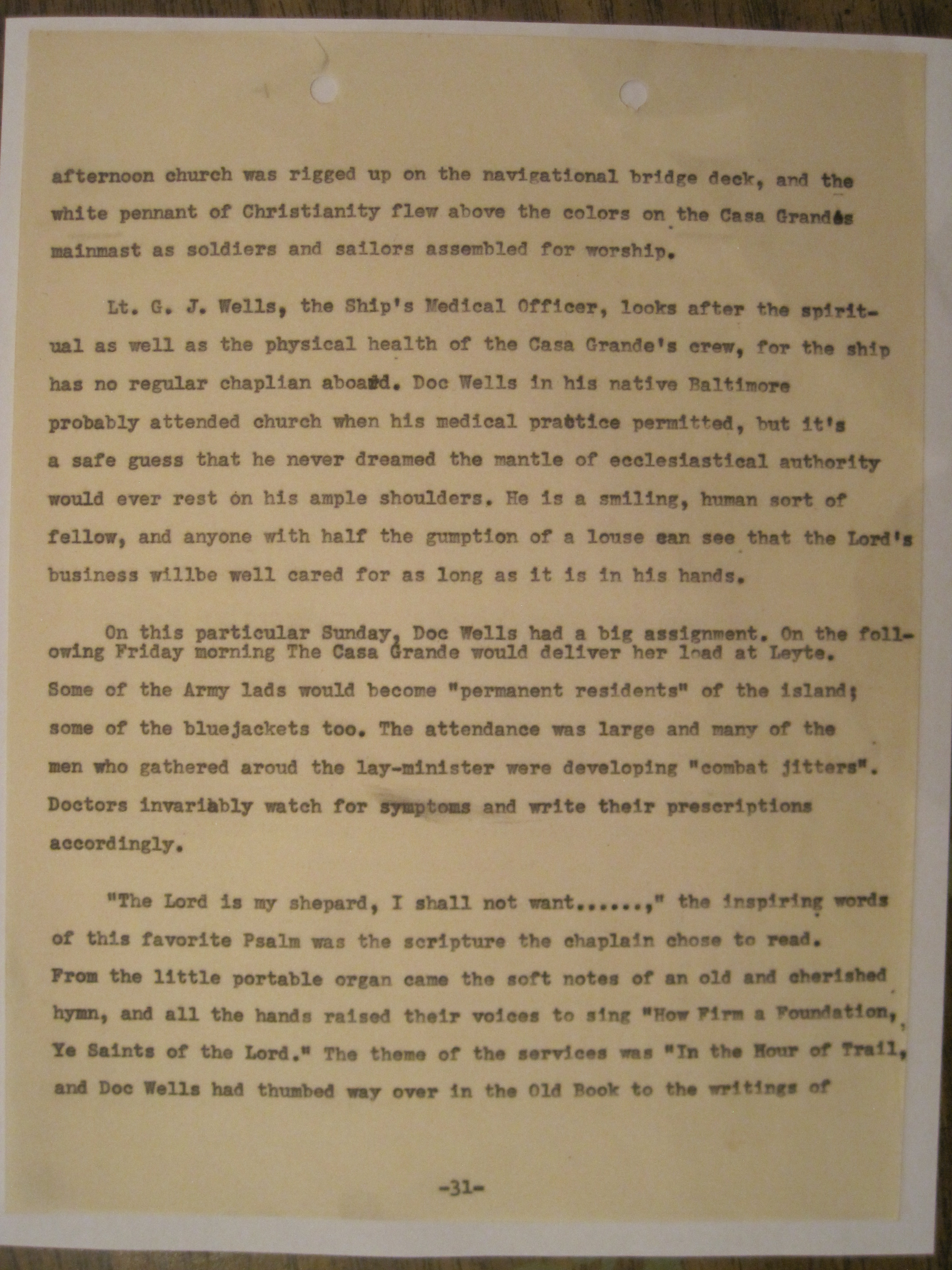
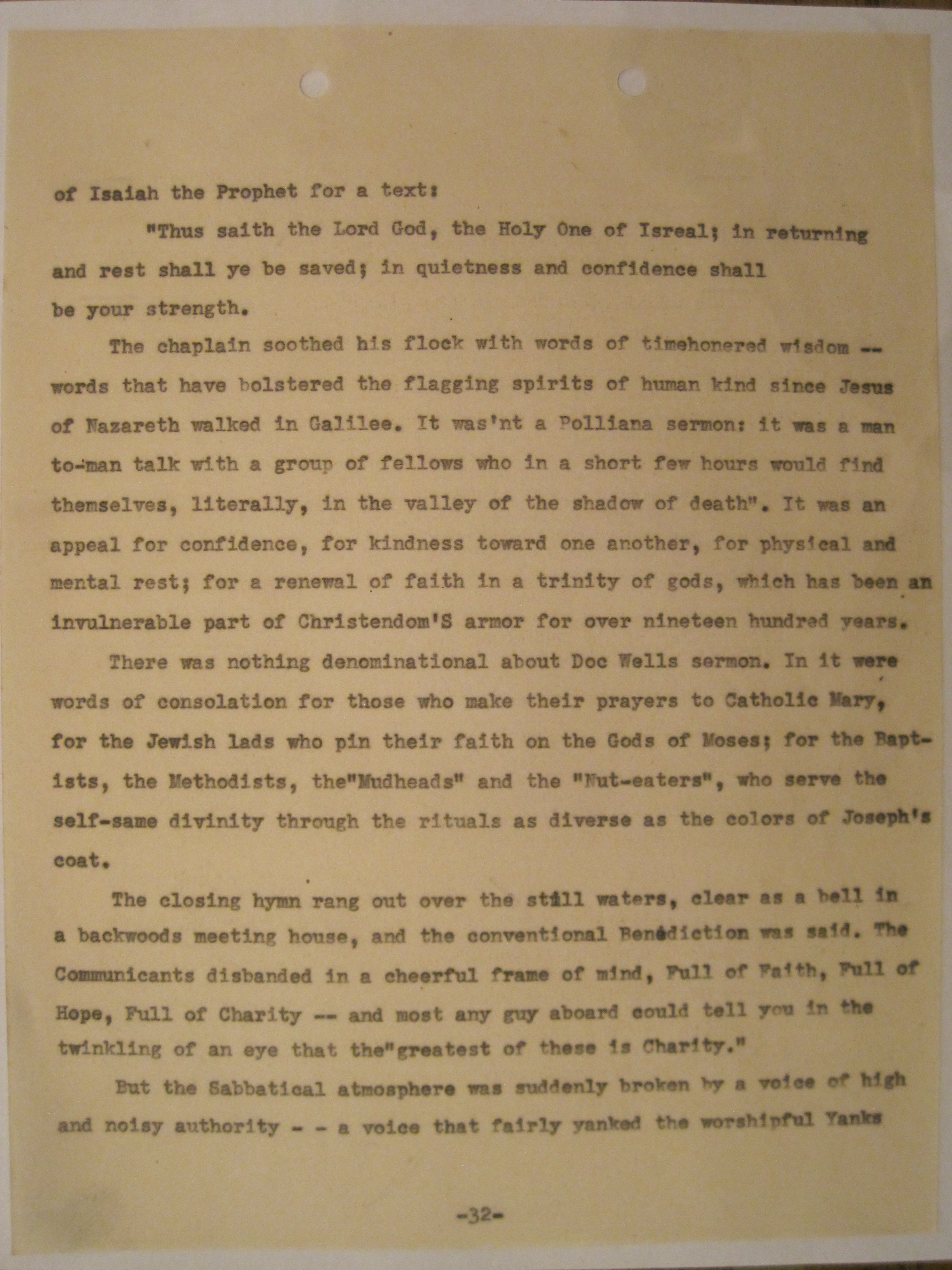
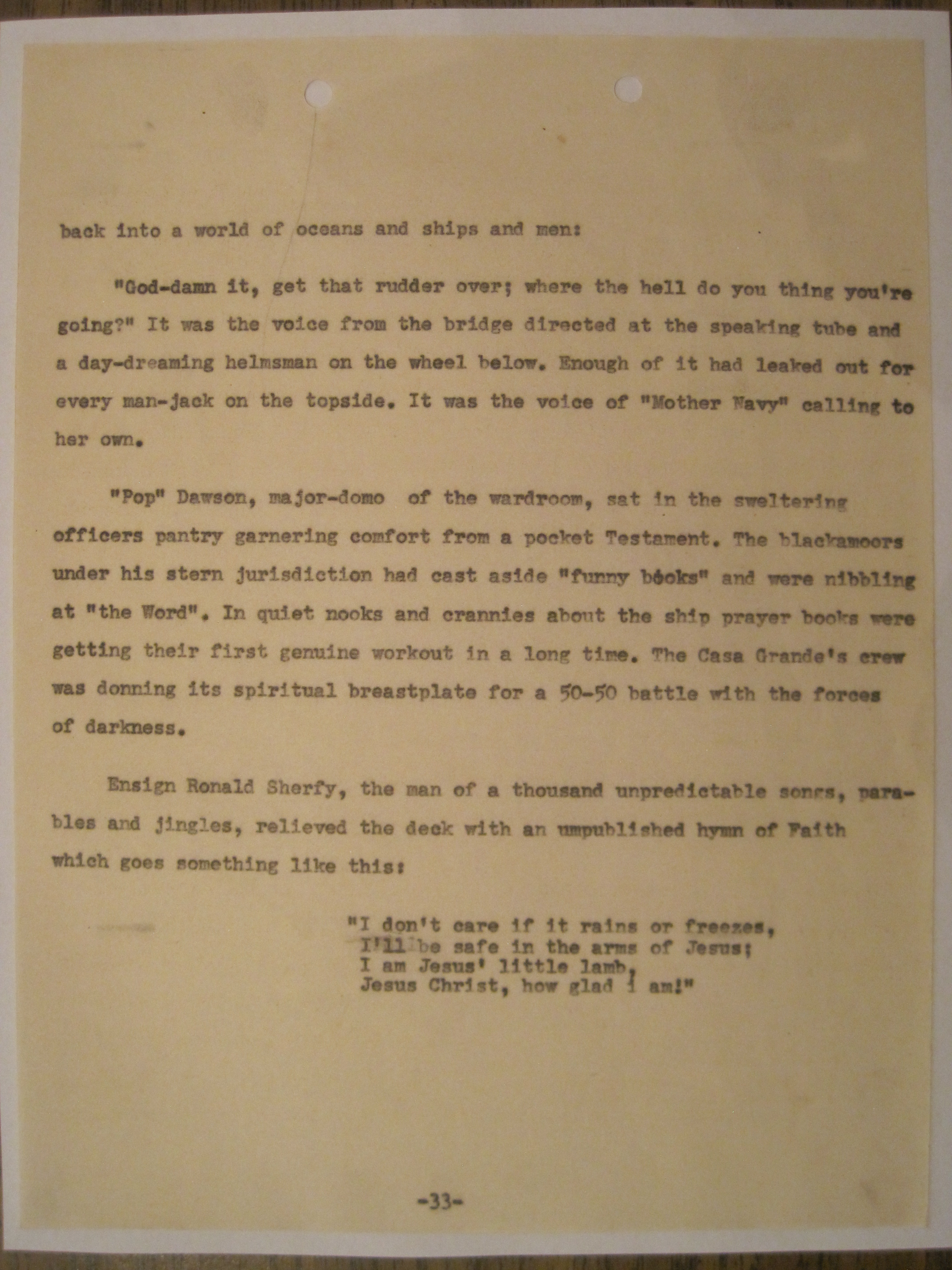
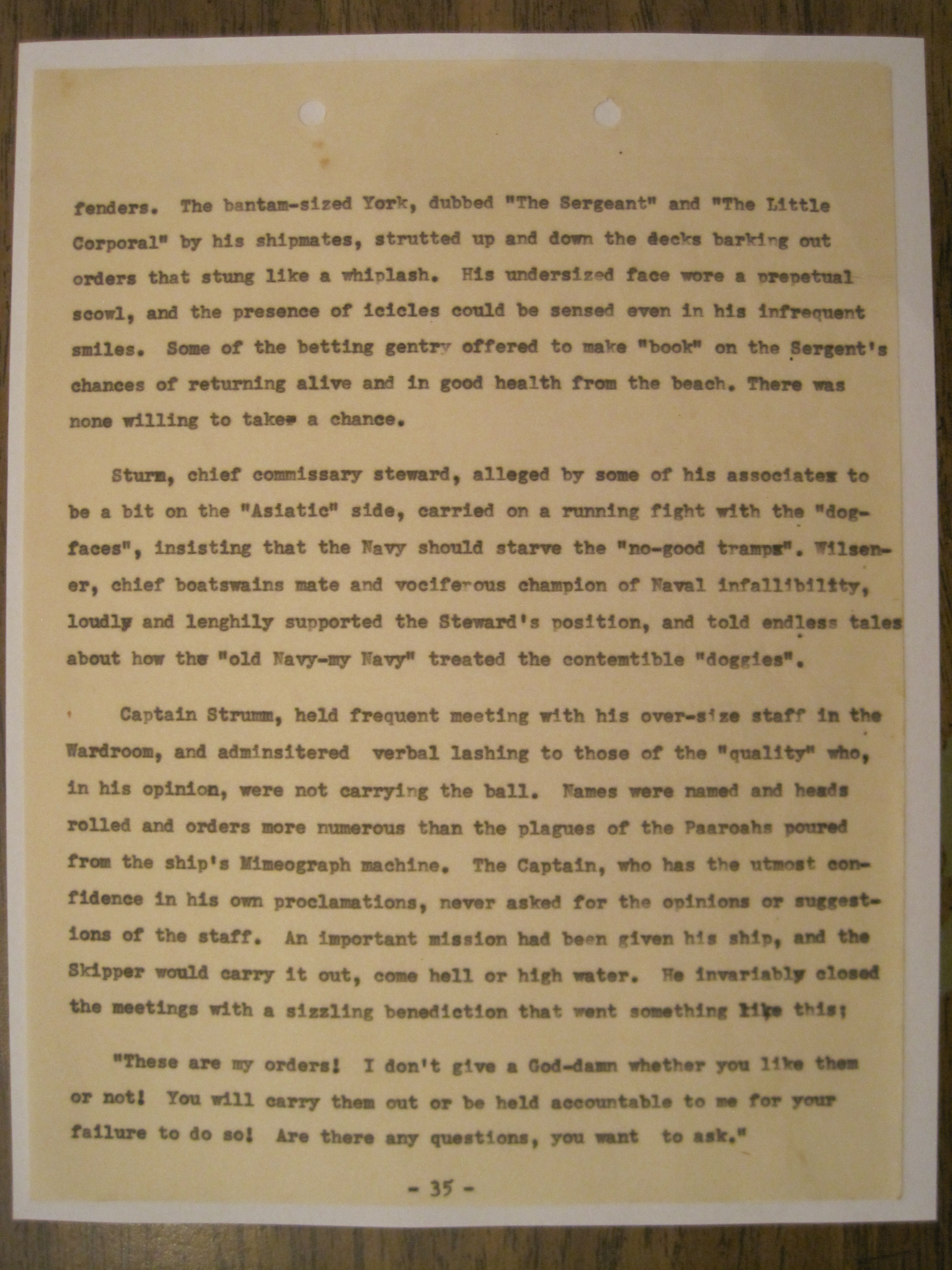
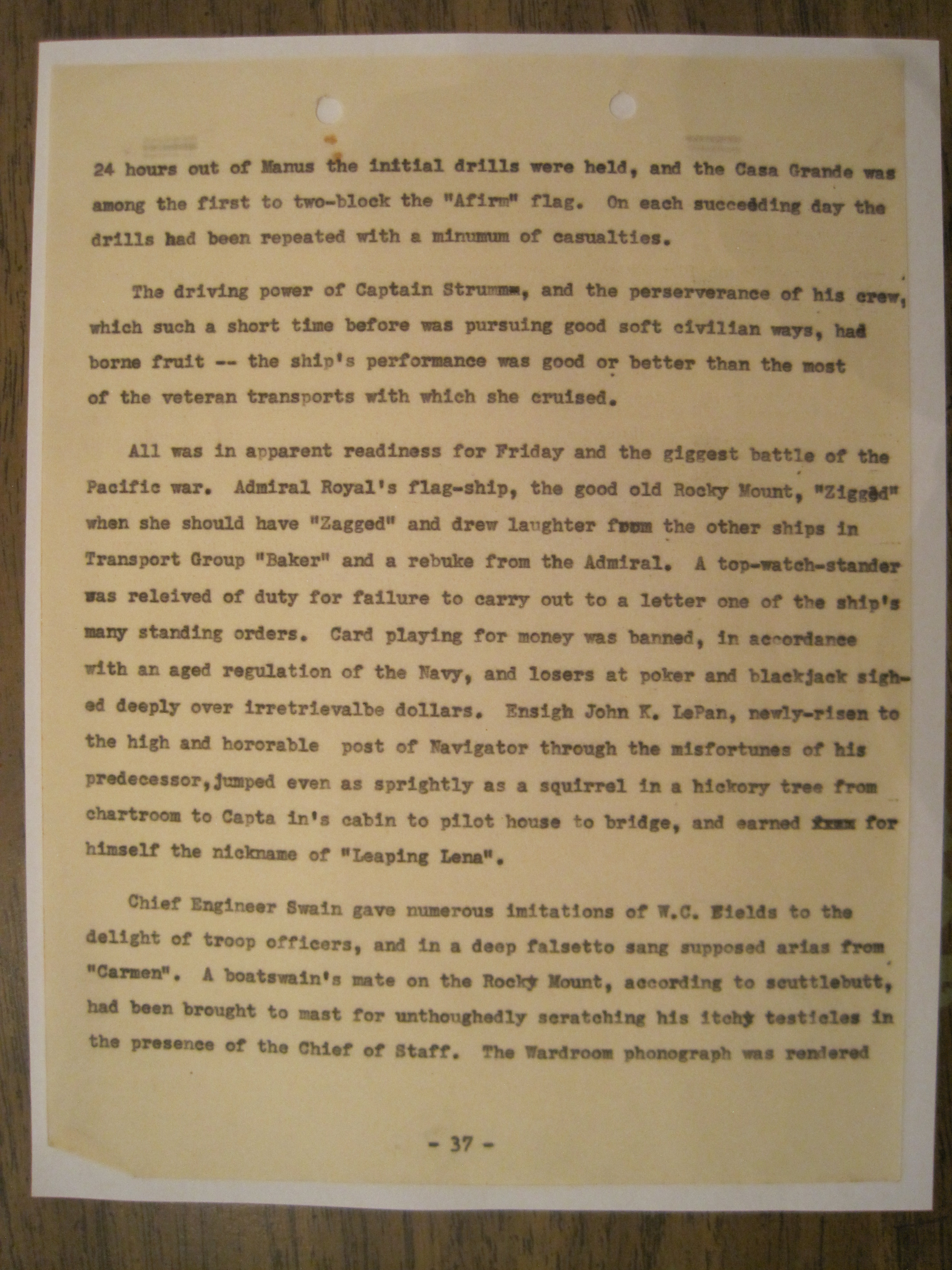
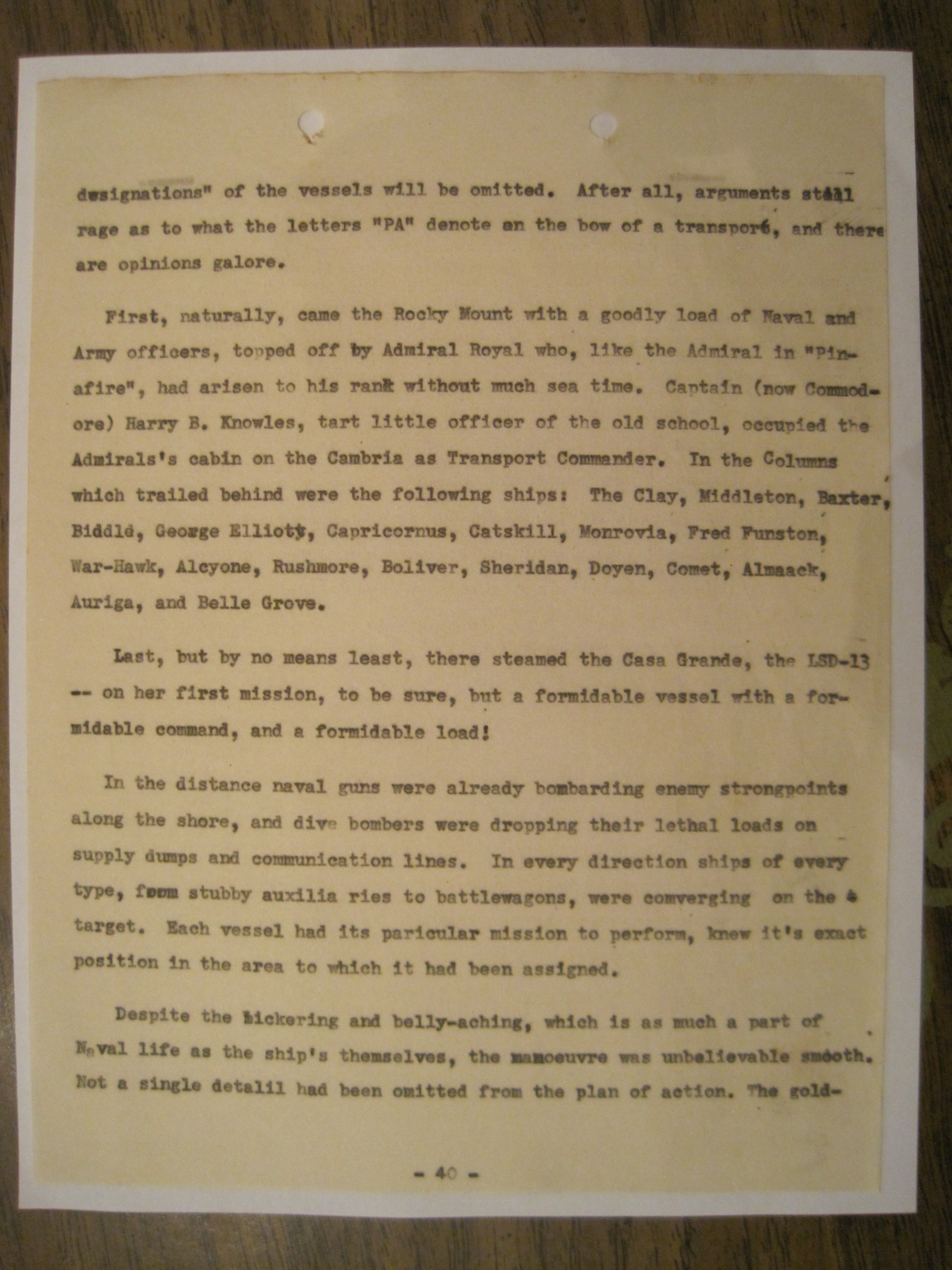
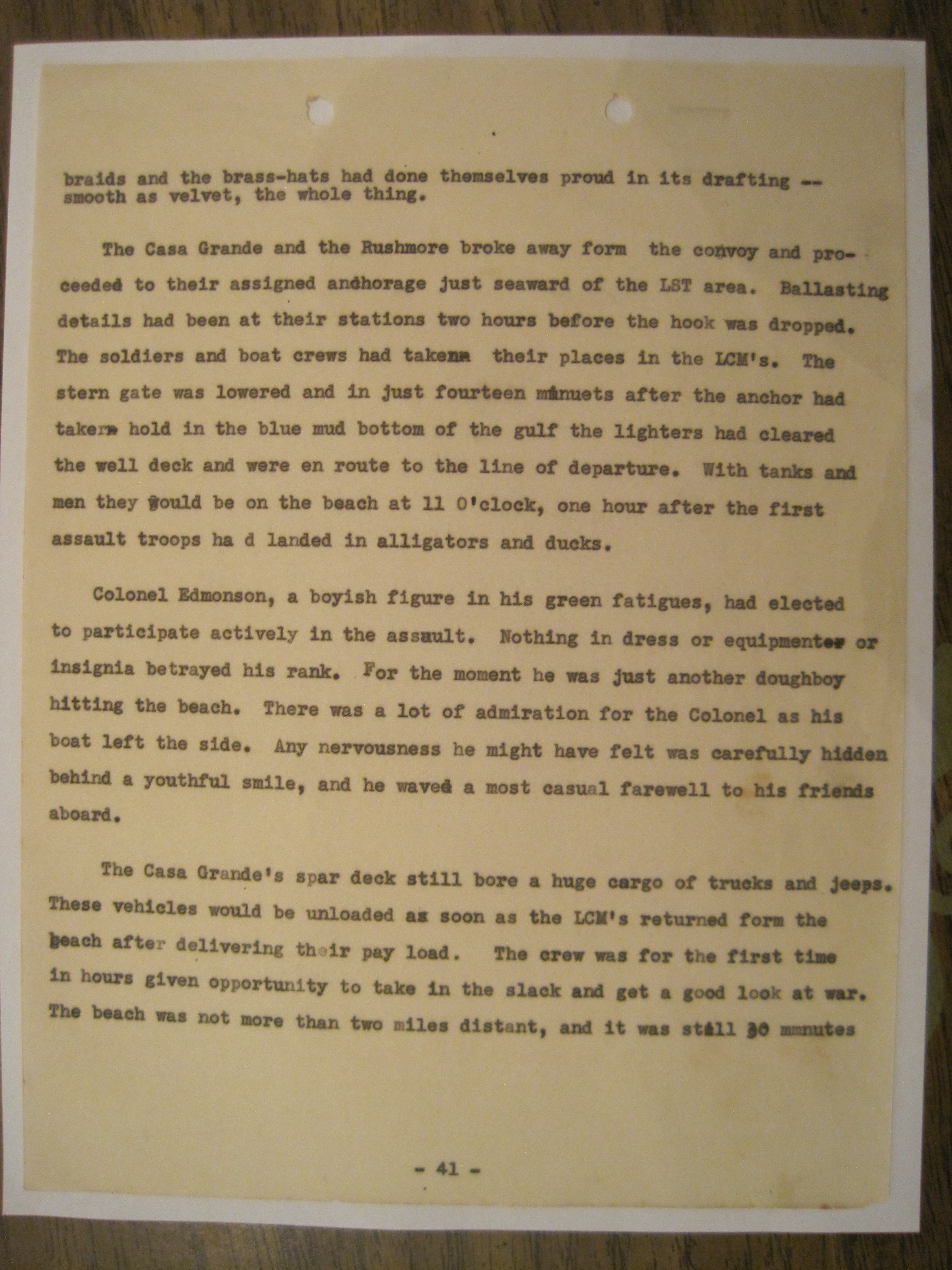
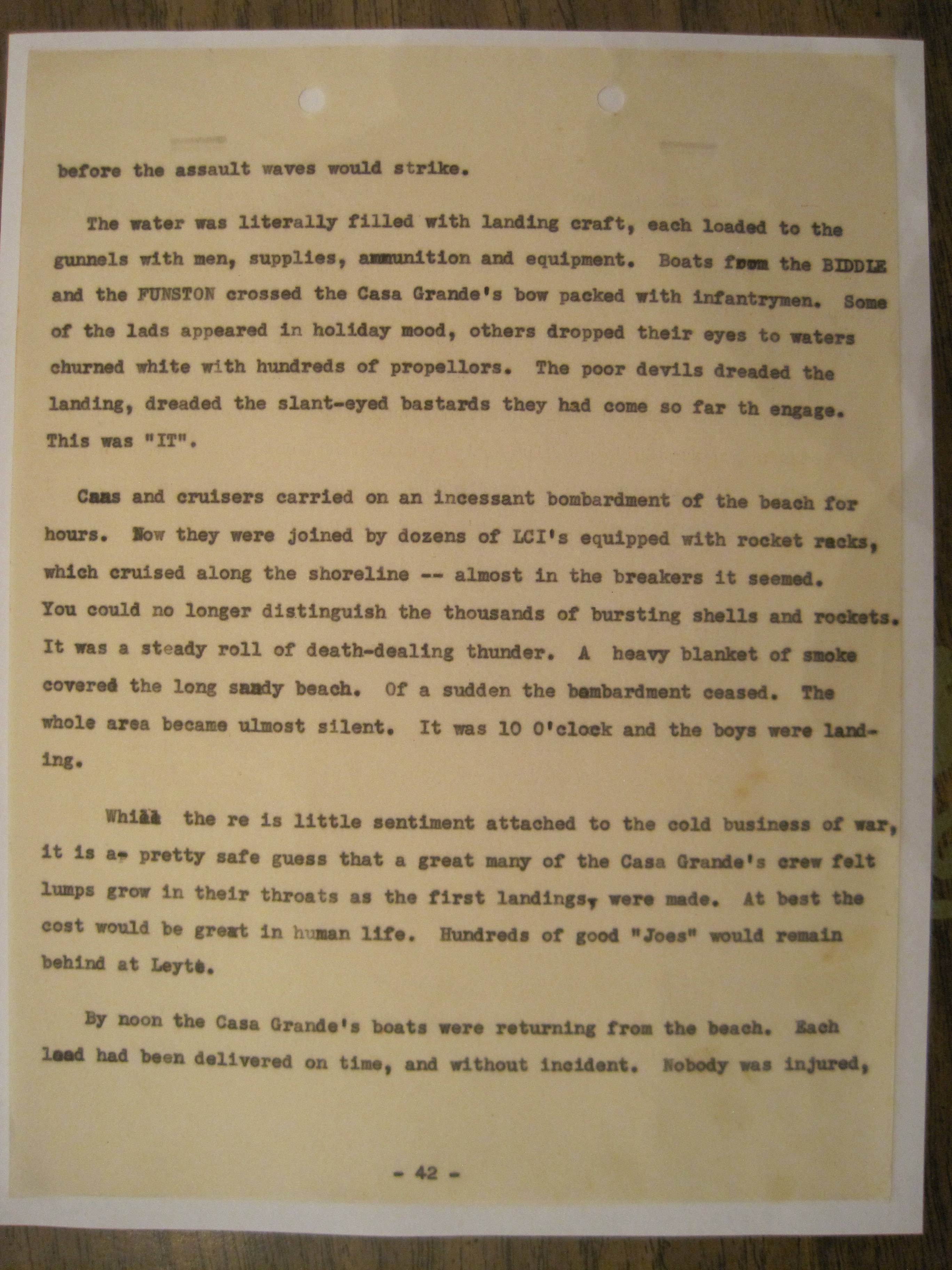
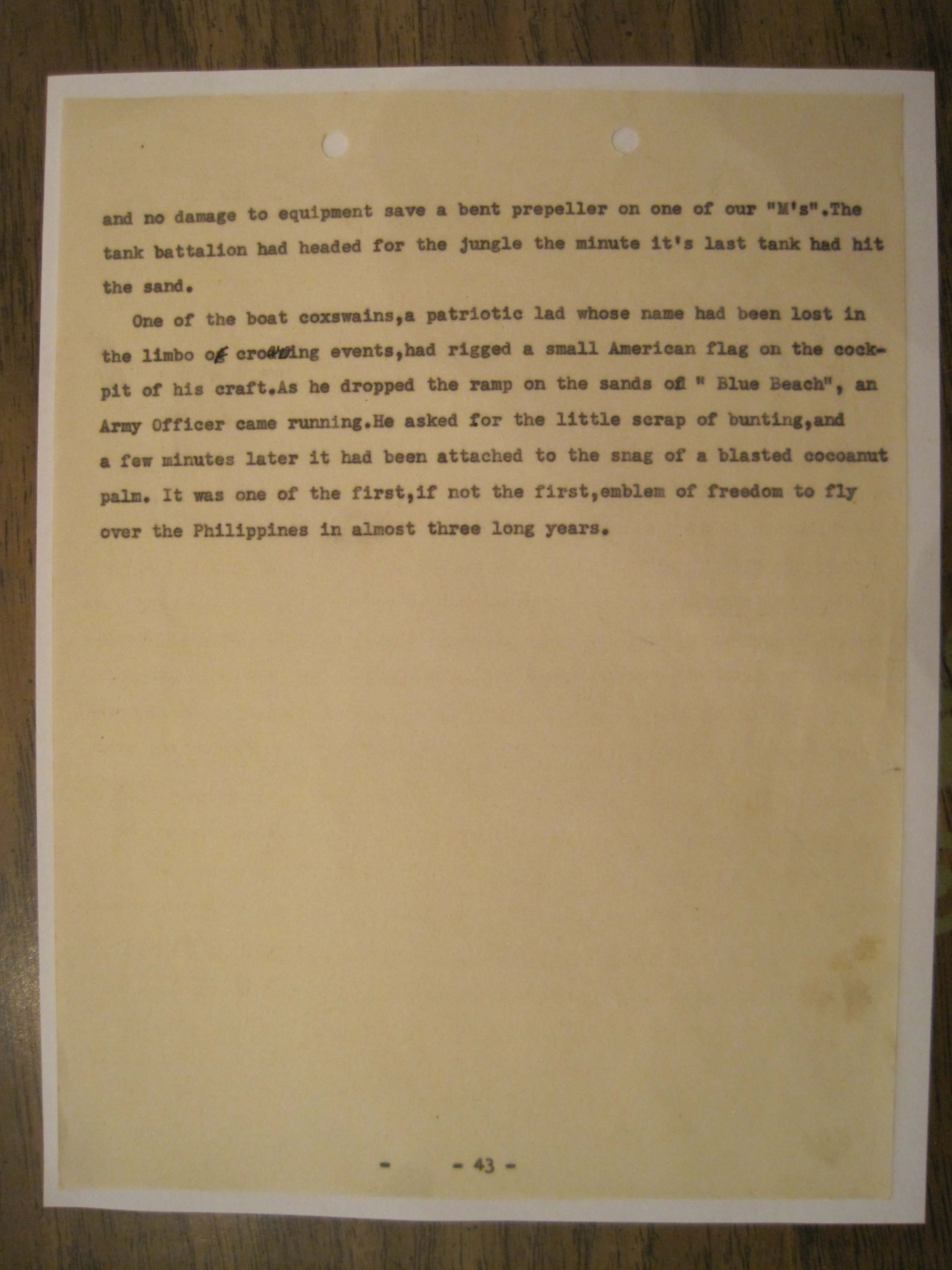
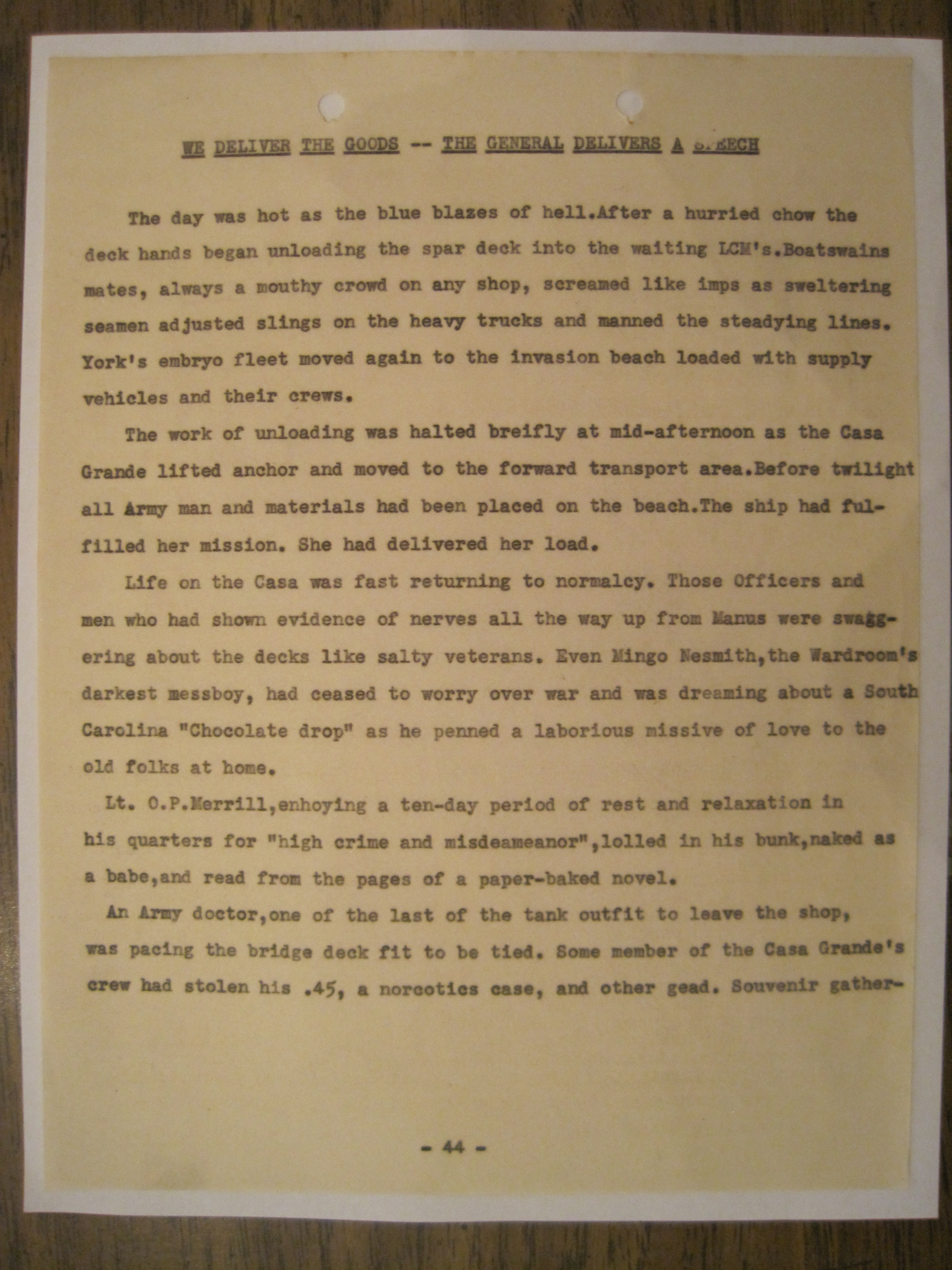
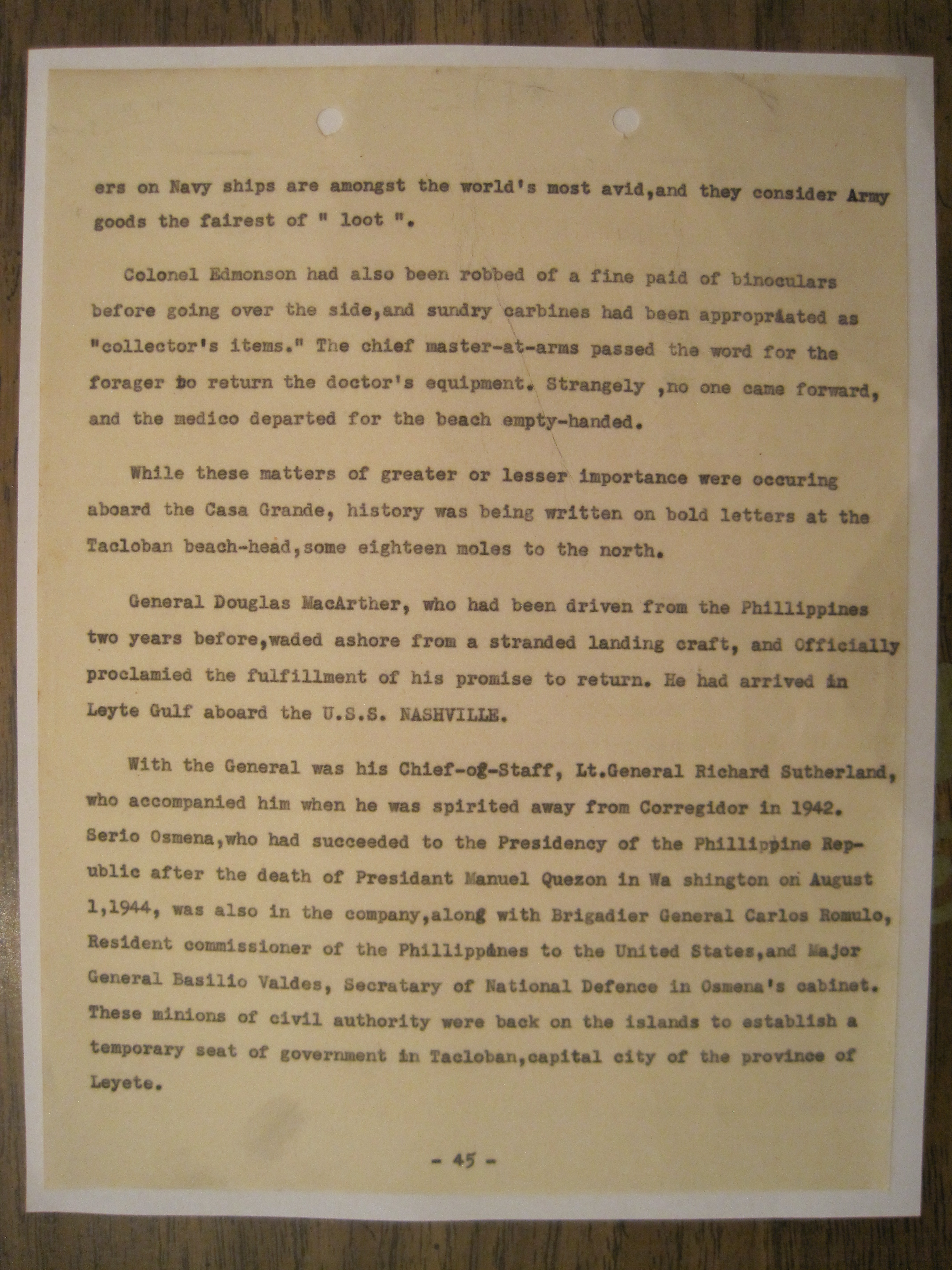
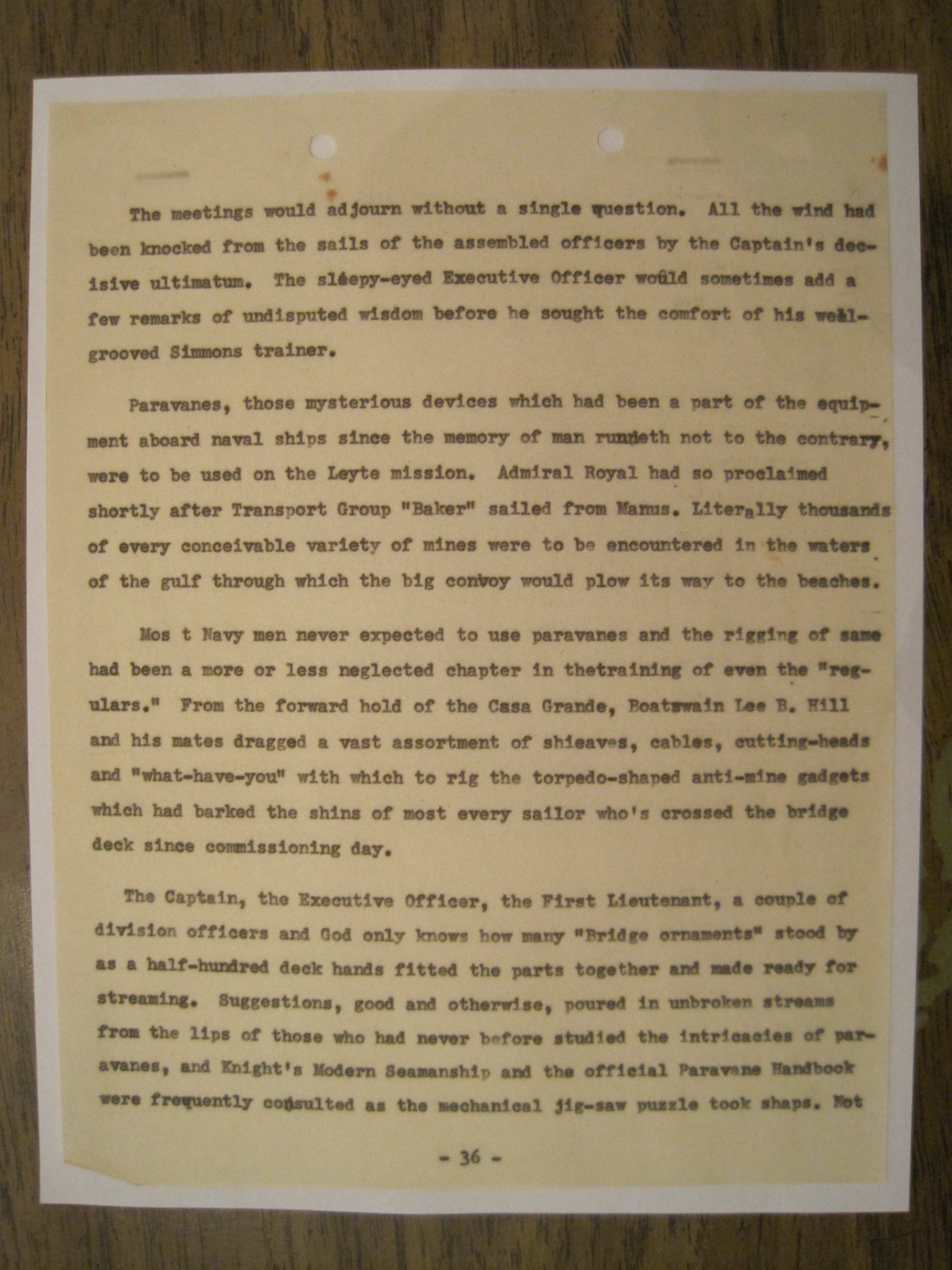
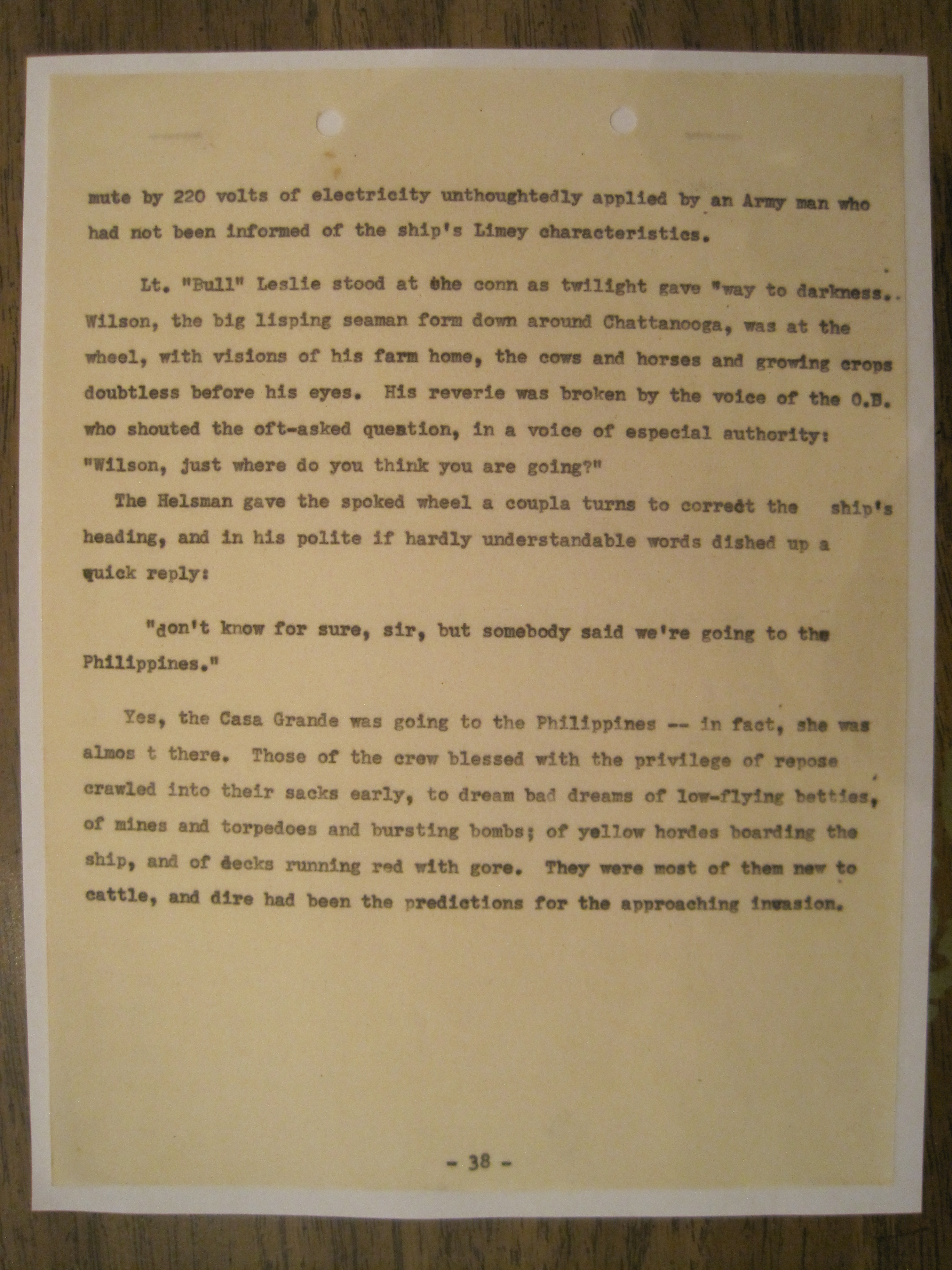
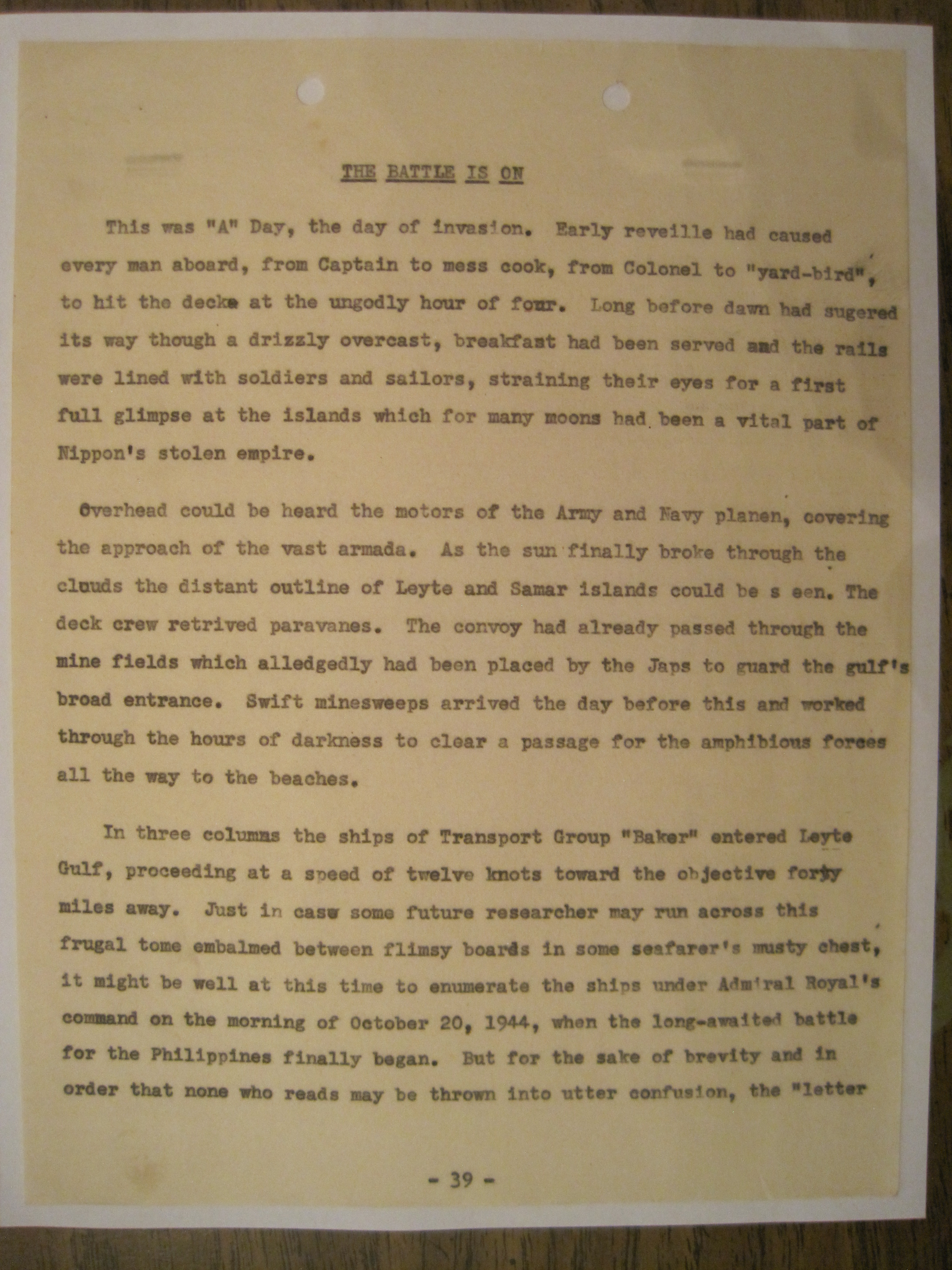
Life on the USS Casa Grande, continued

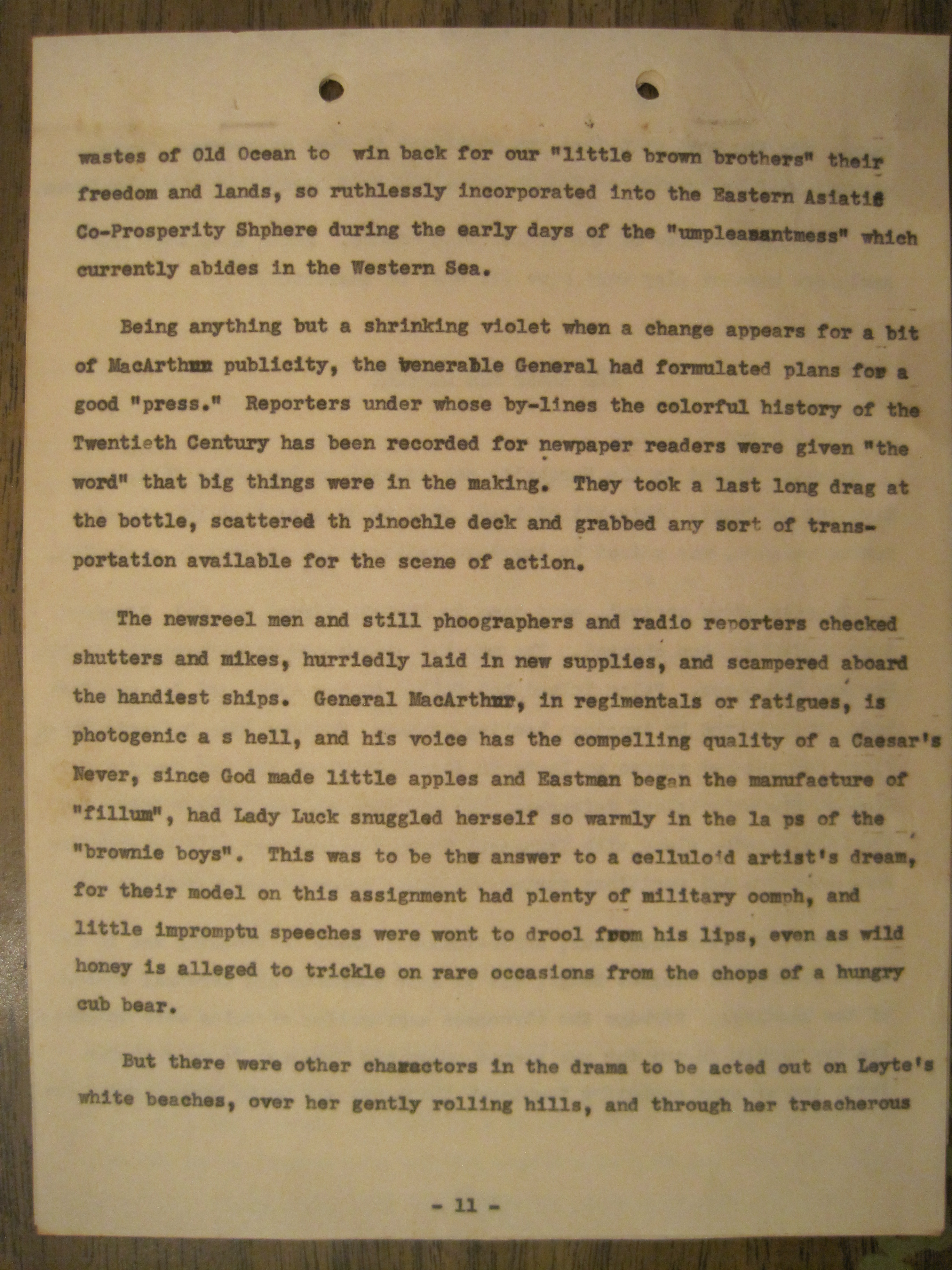
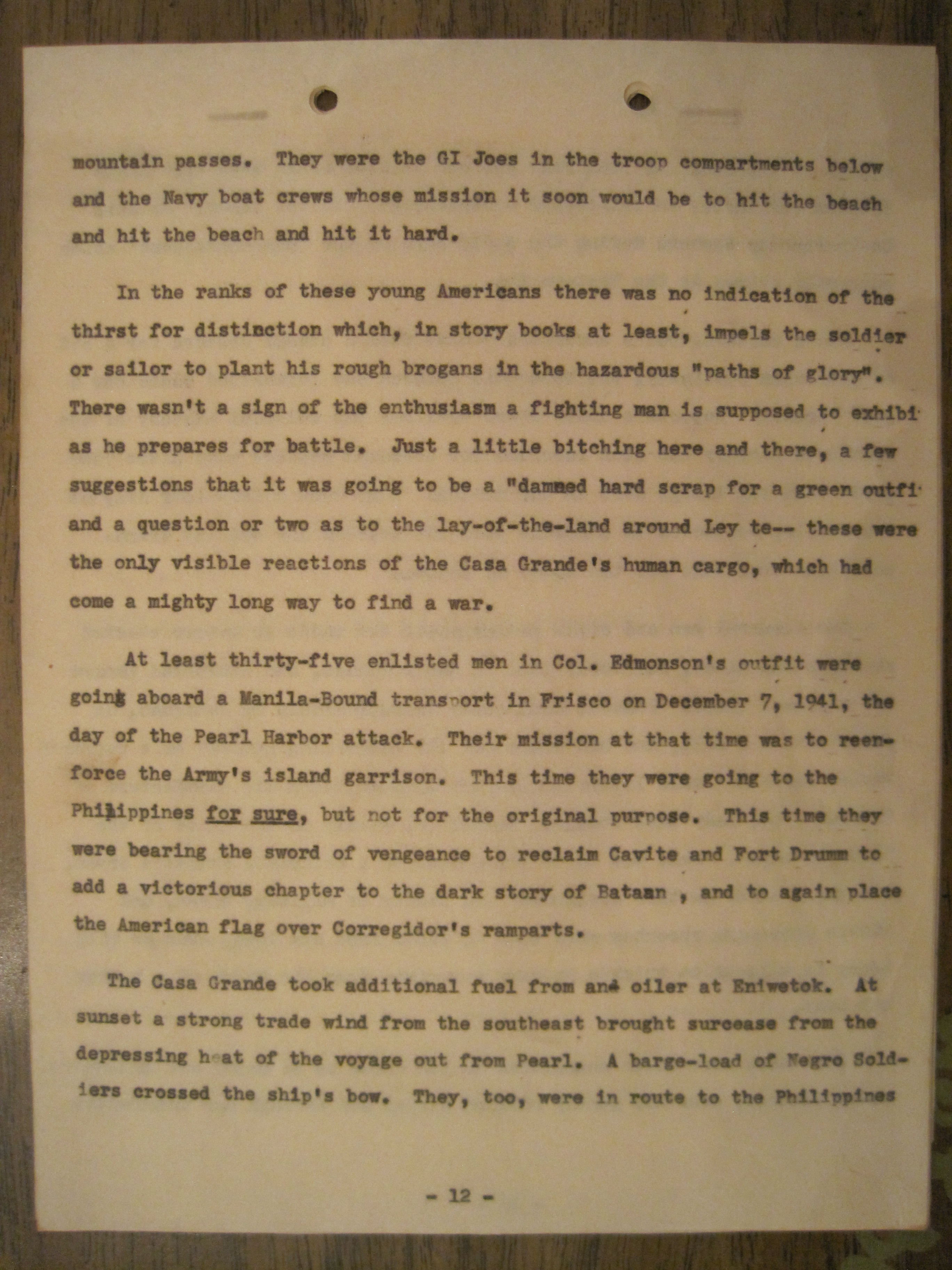
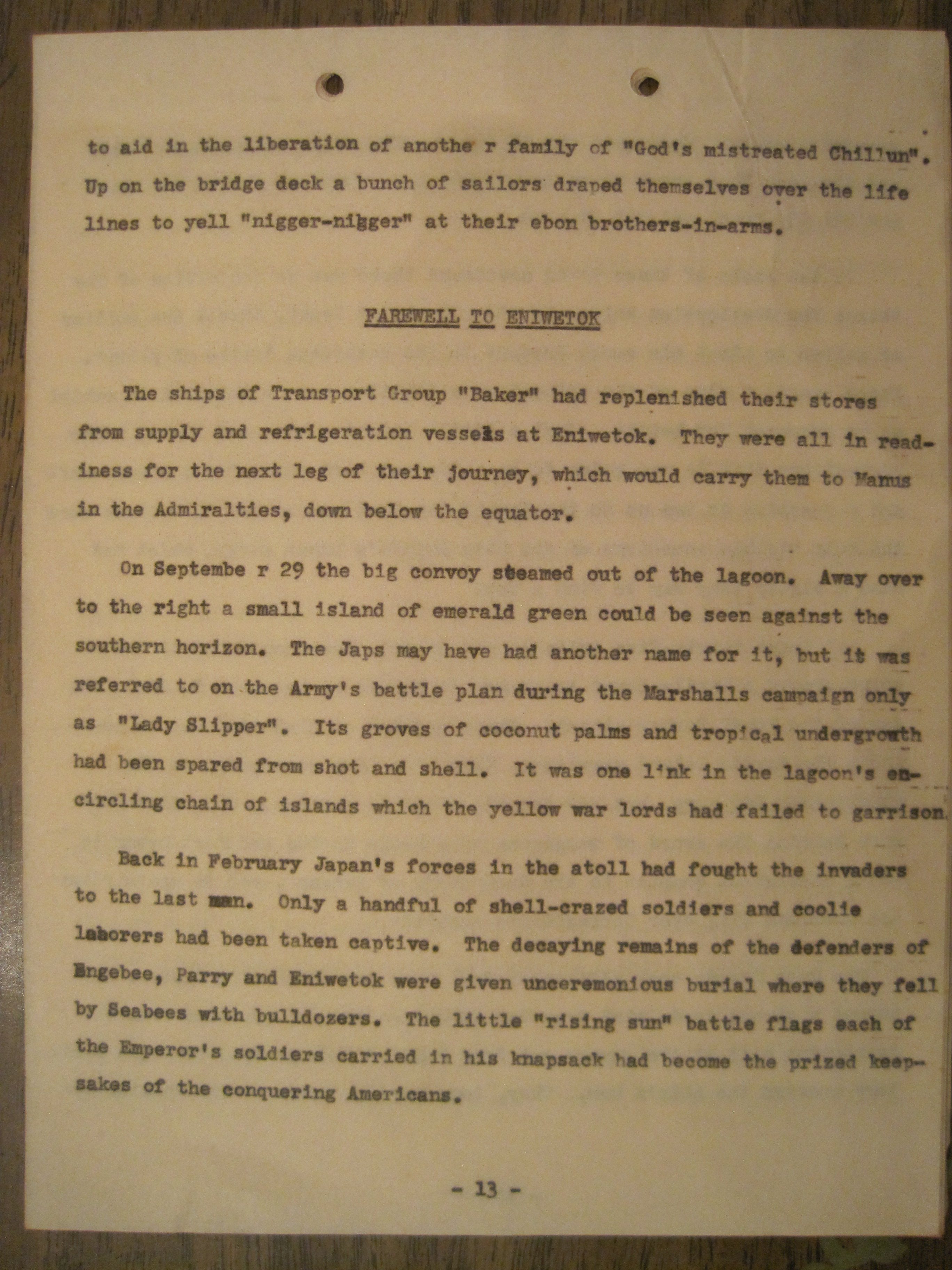
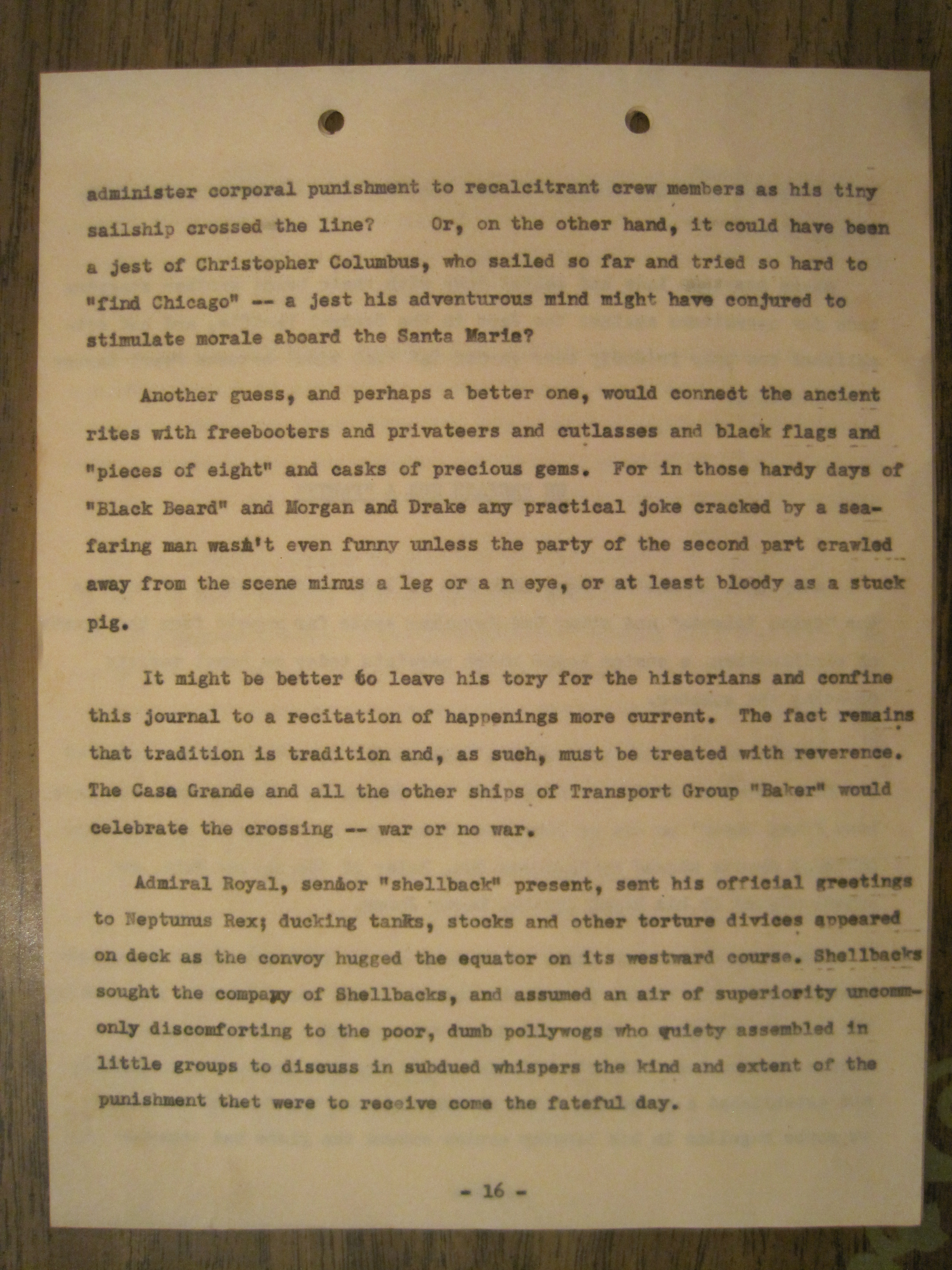
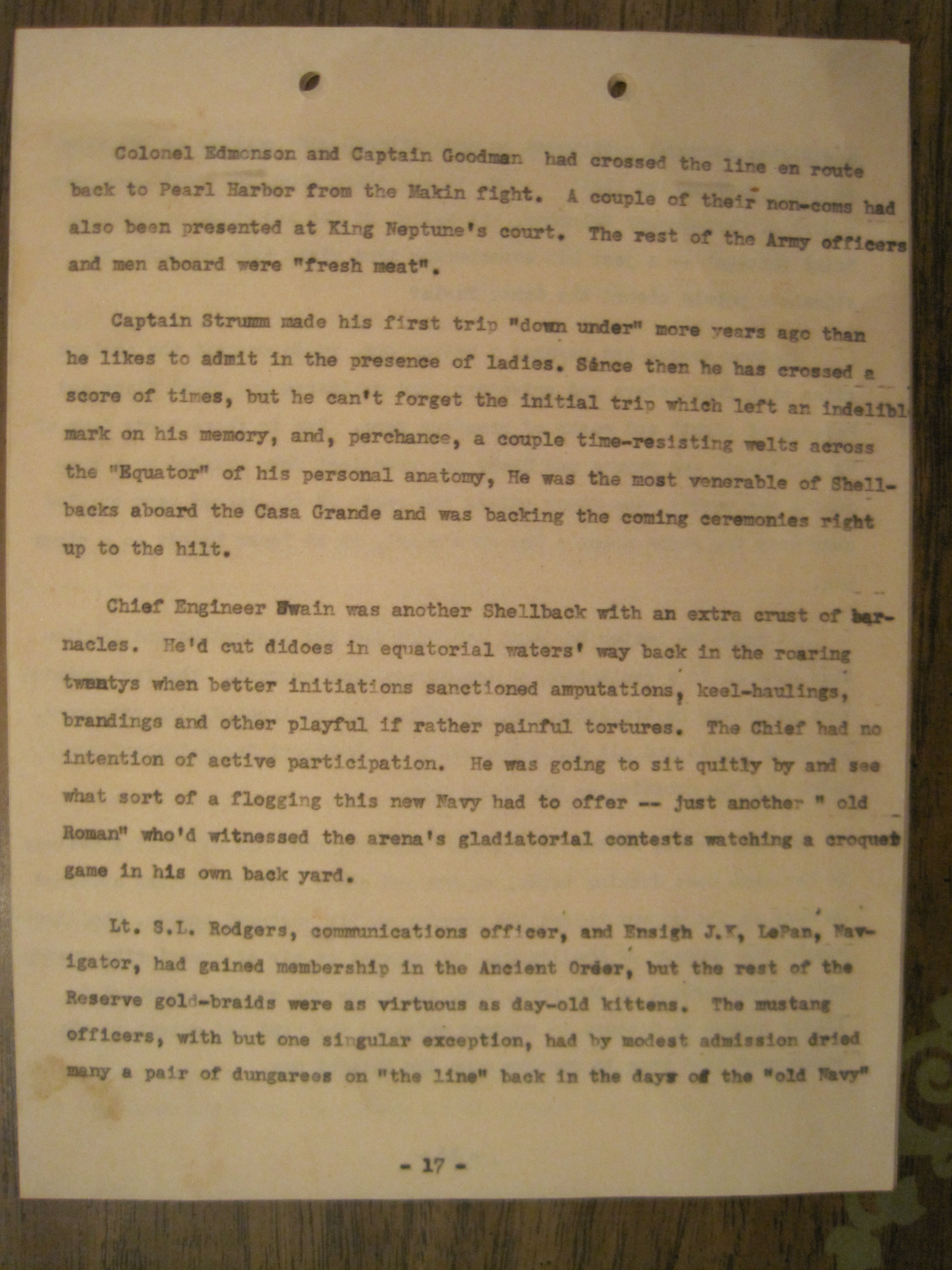
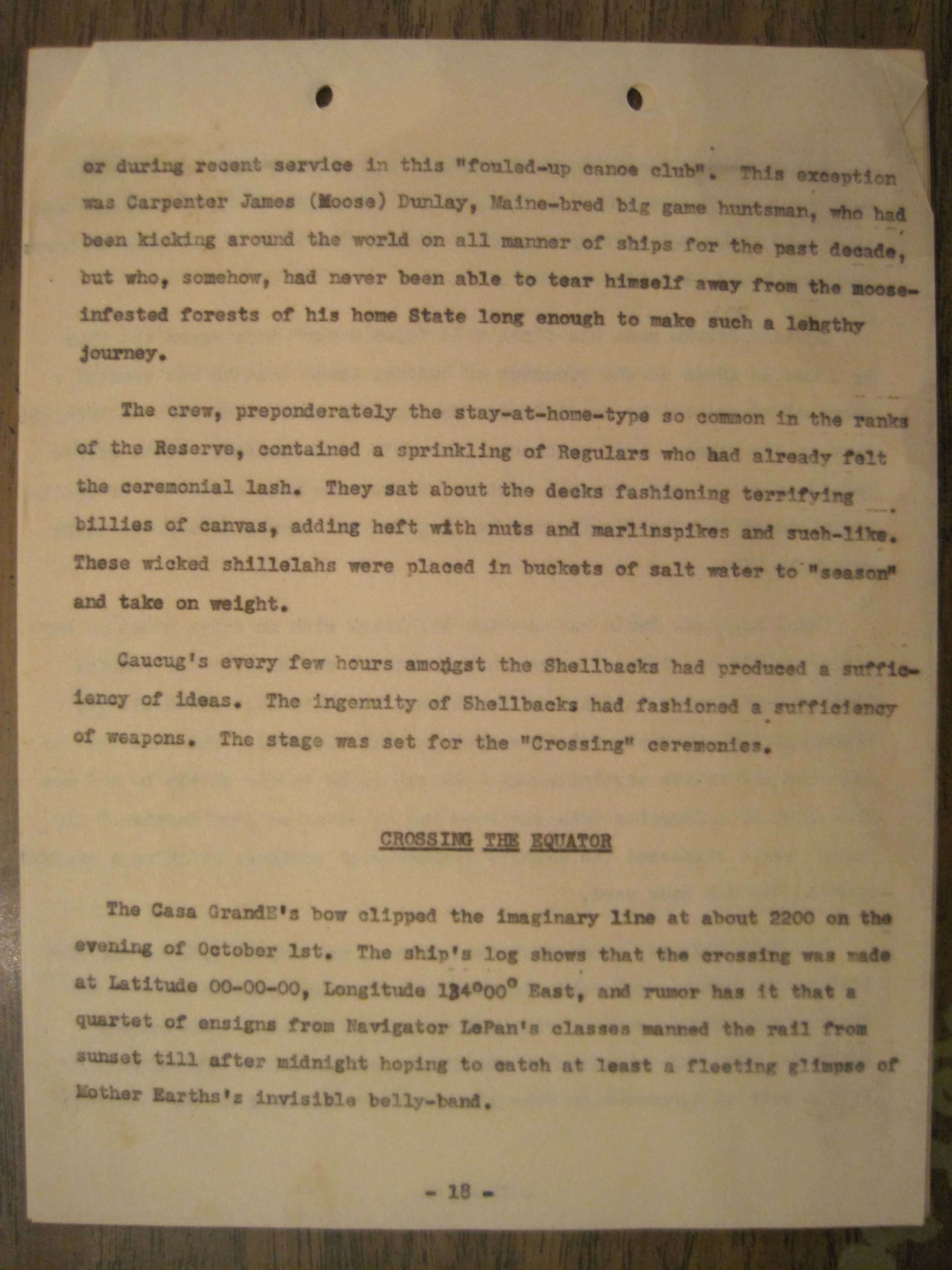
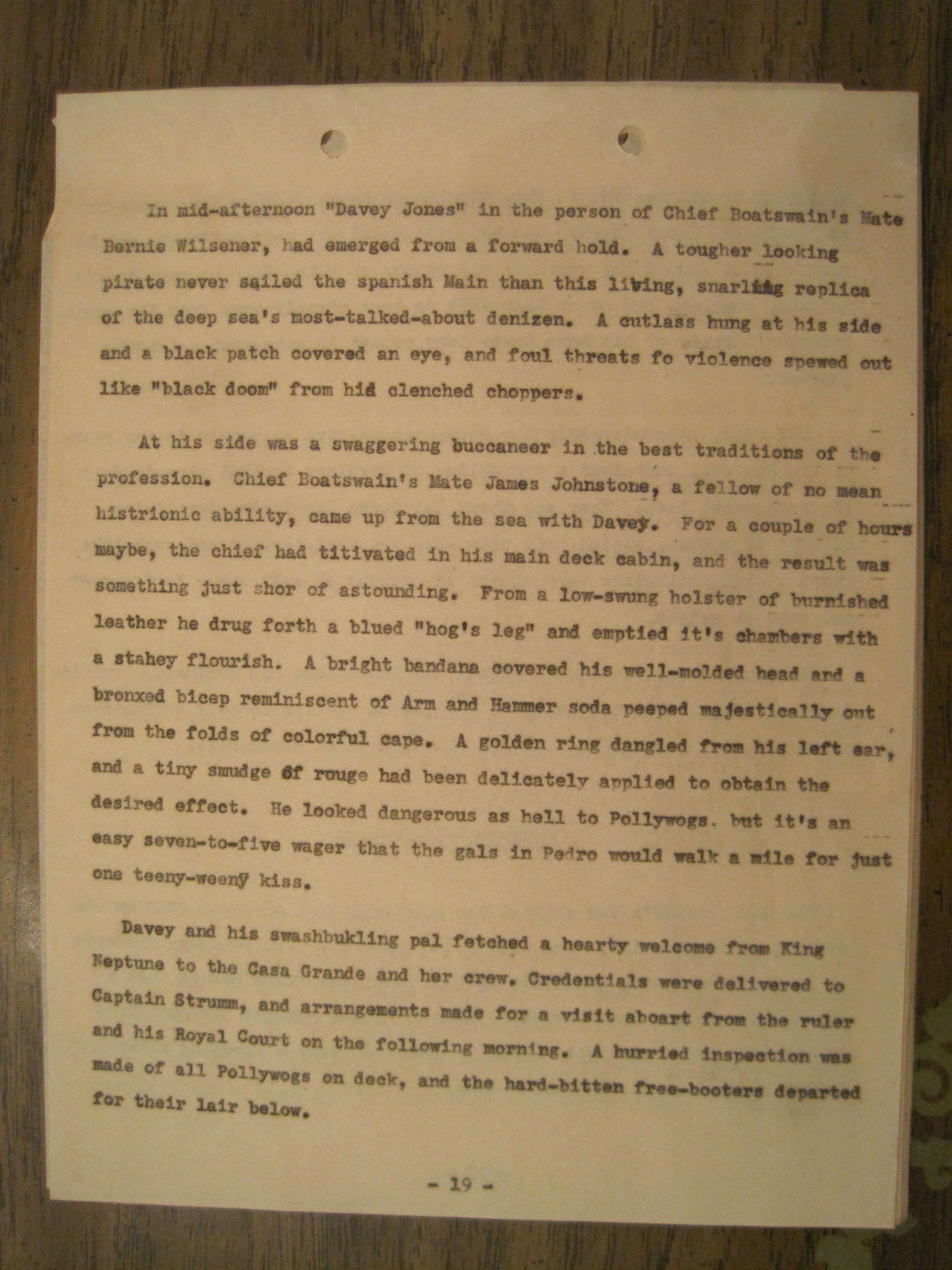
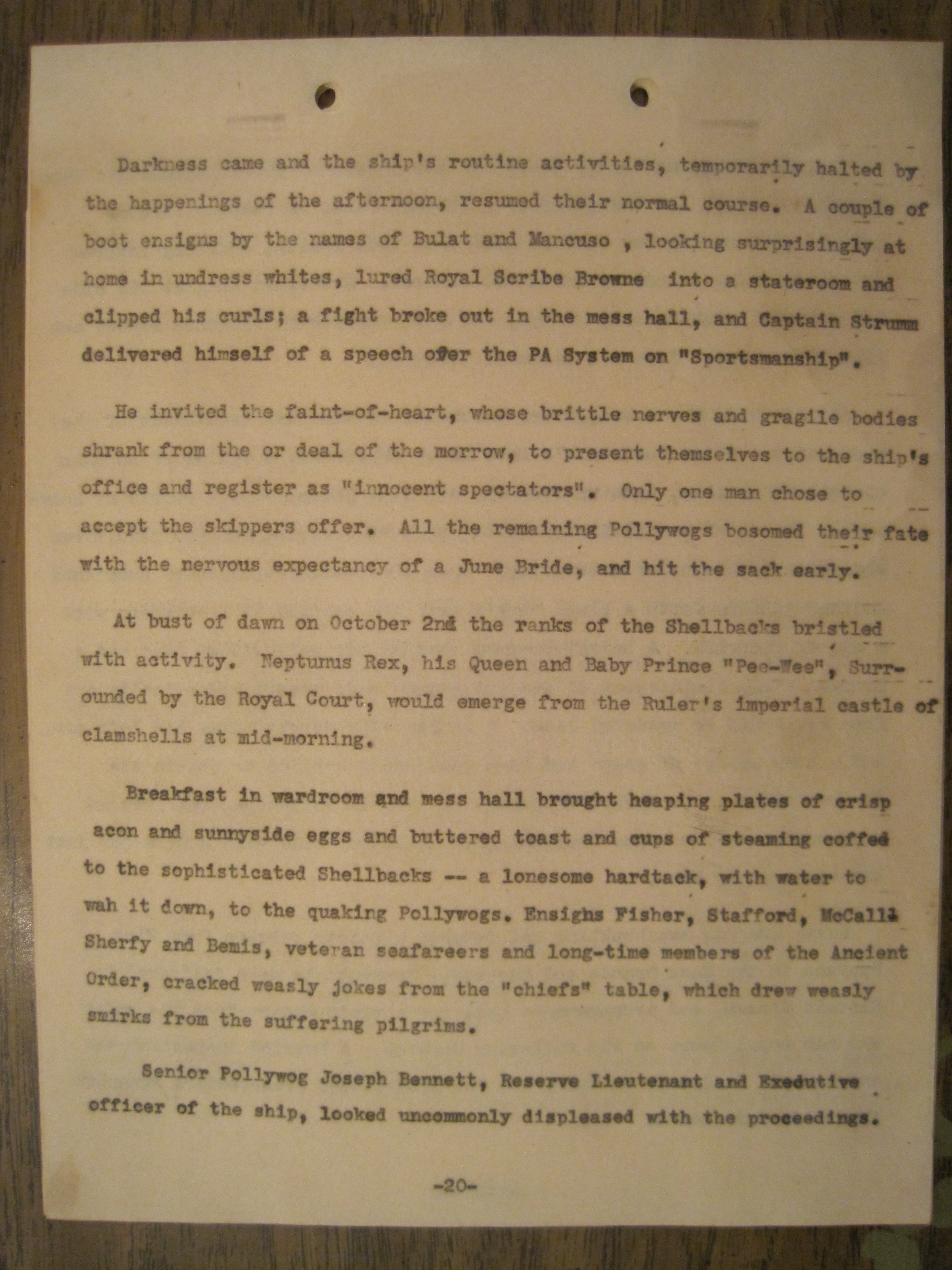
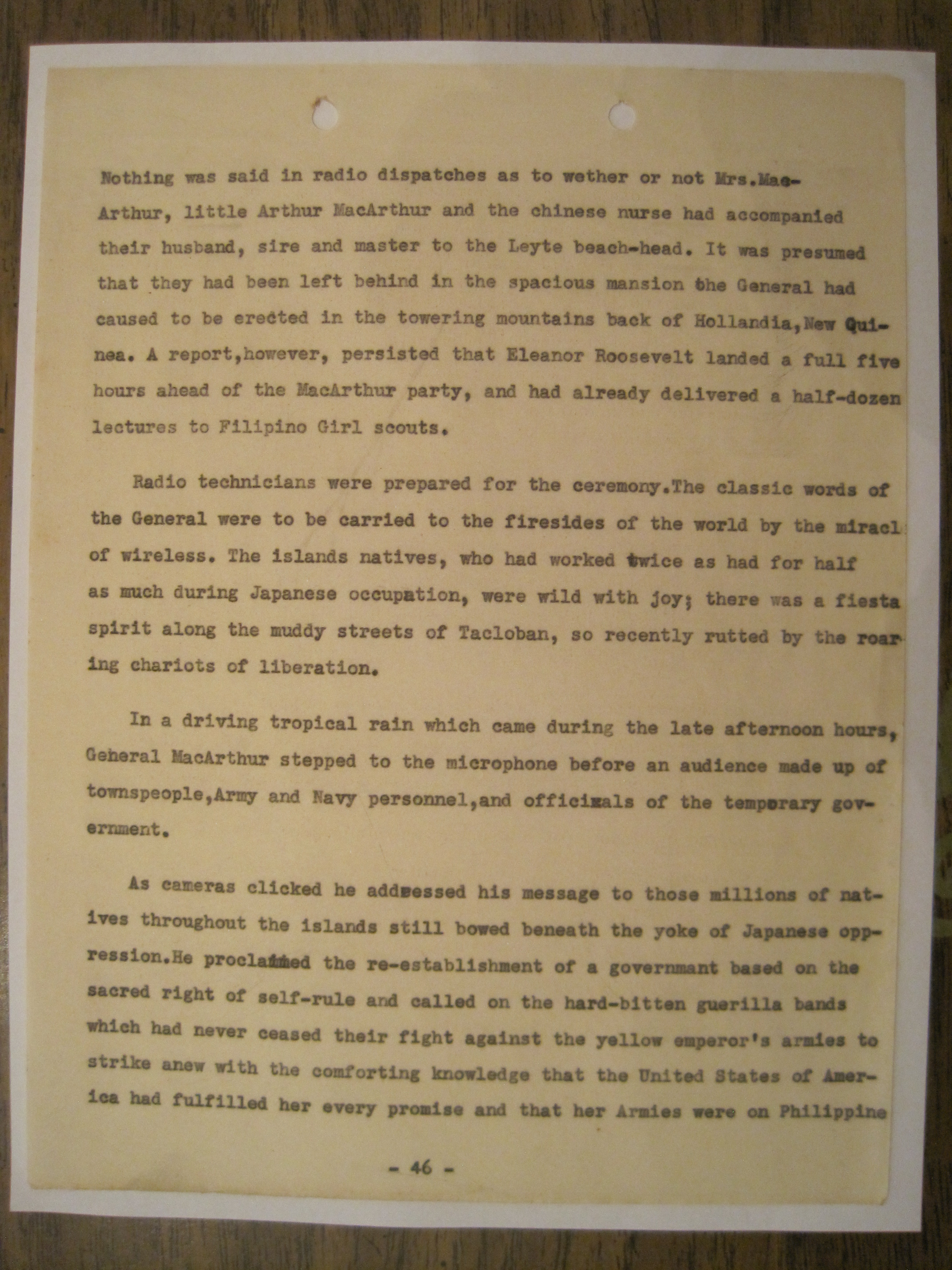
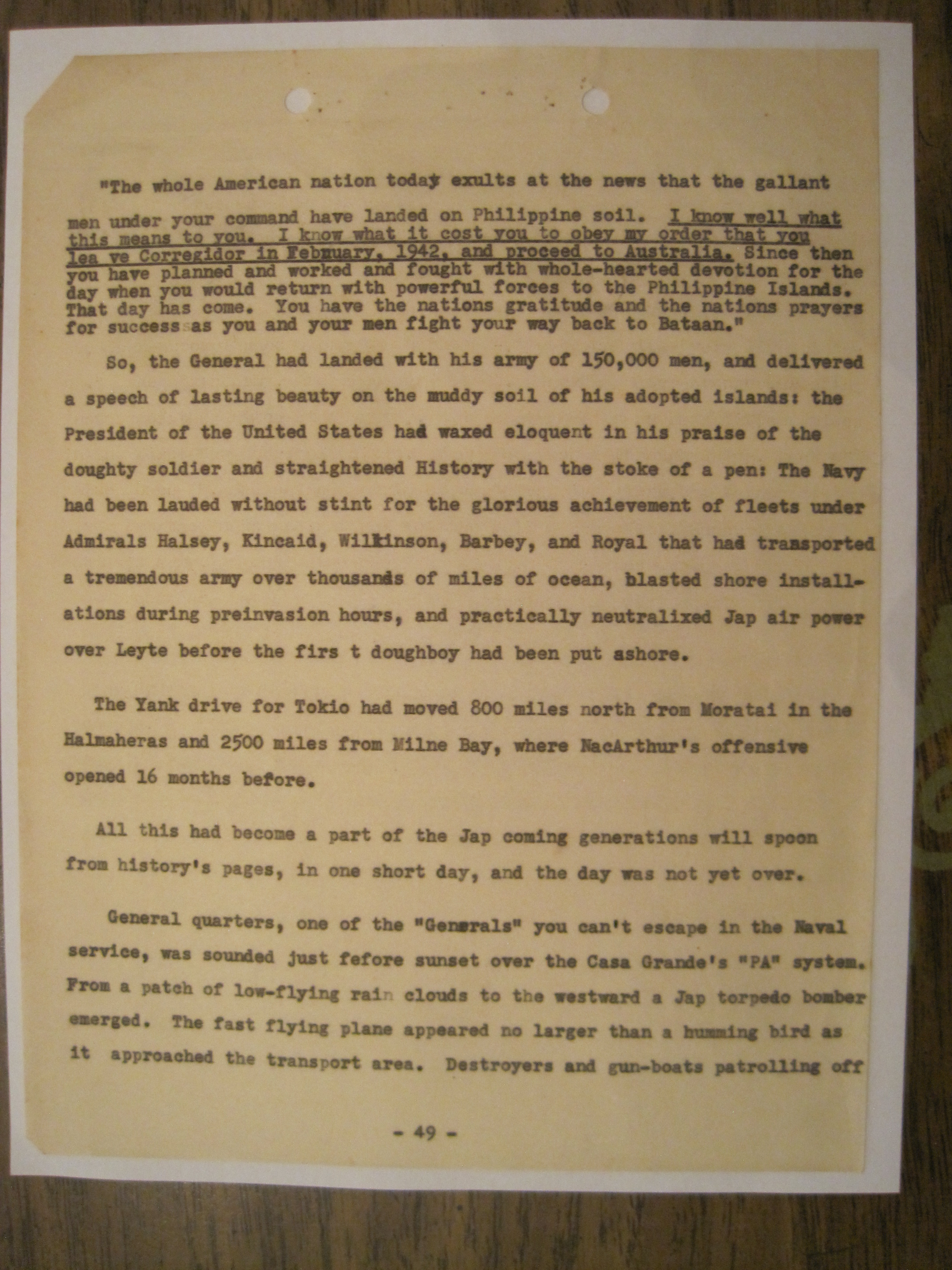
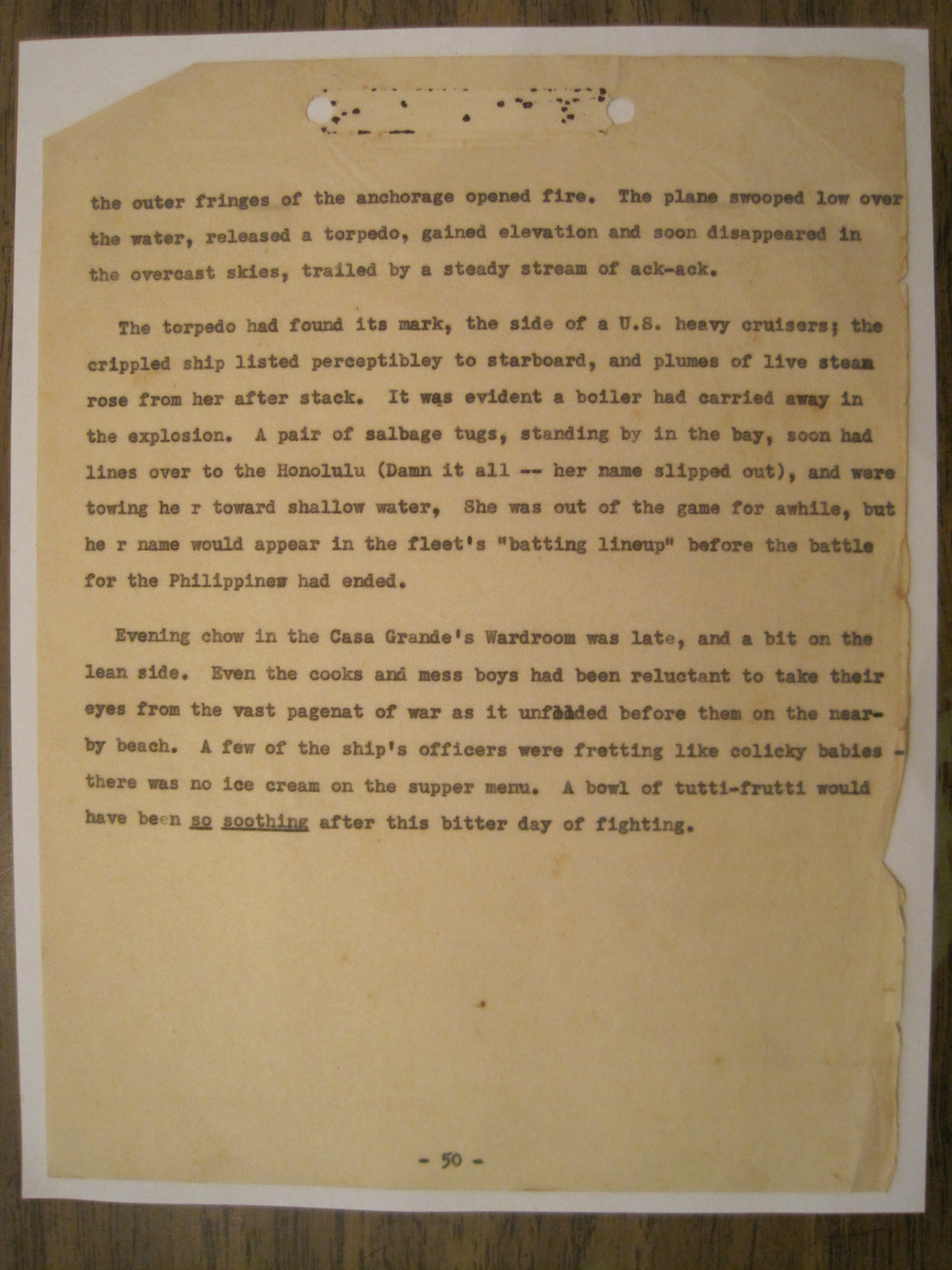
The following pages were clipped together in a file folder alongside other wartime material inside my grandfather’s sea chest/foot locker.

NOTE: The cultural references and social mores of the time (1944) are not politically correct today.

Last link loaded too long, didn’t it?

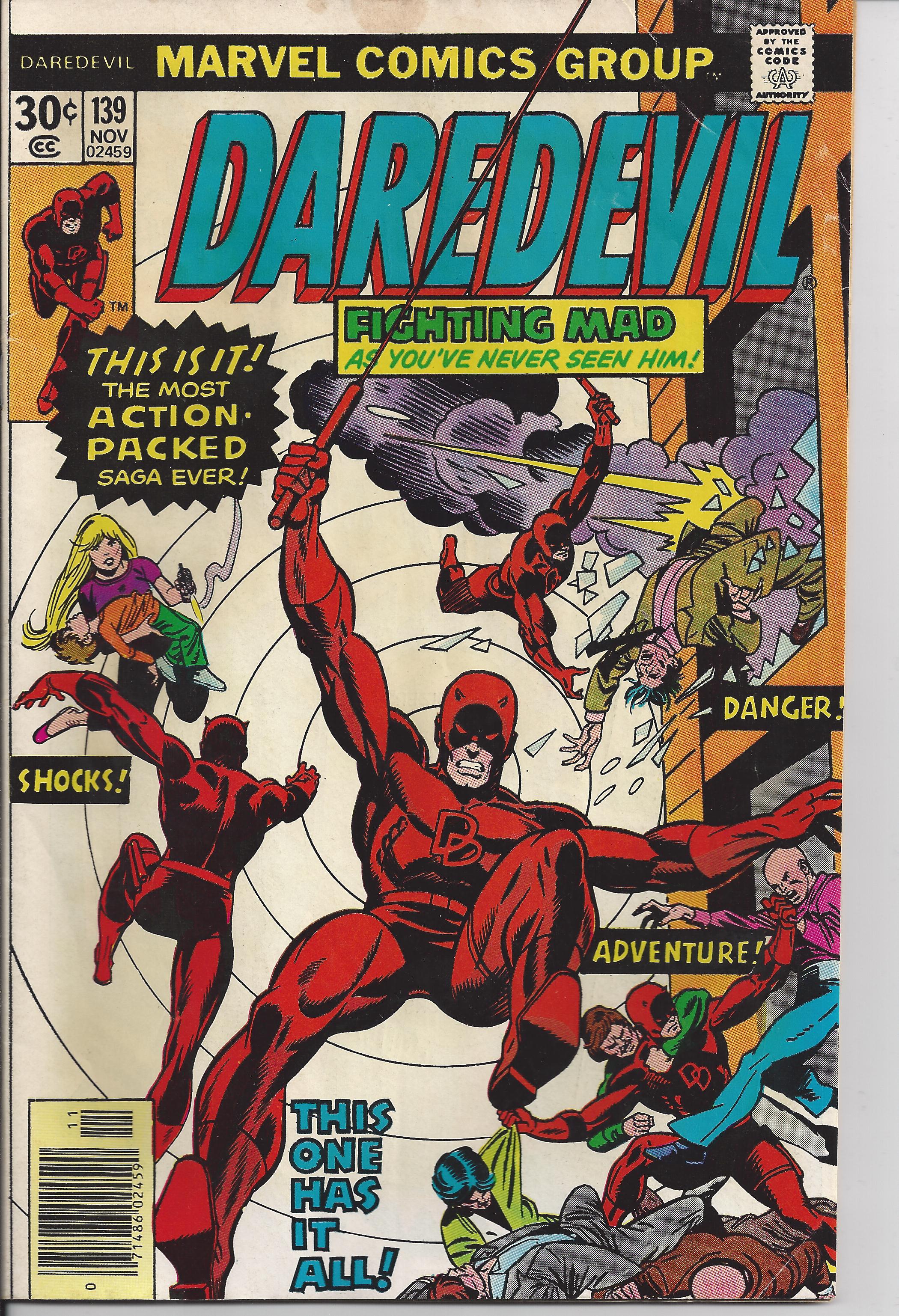
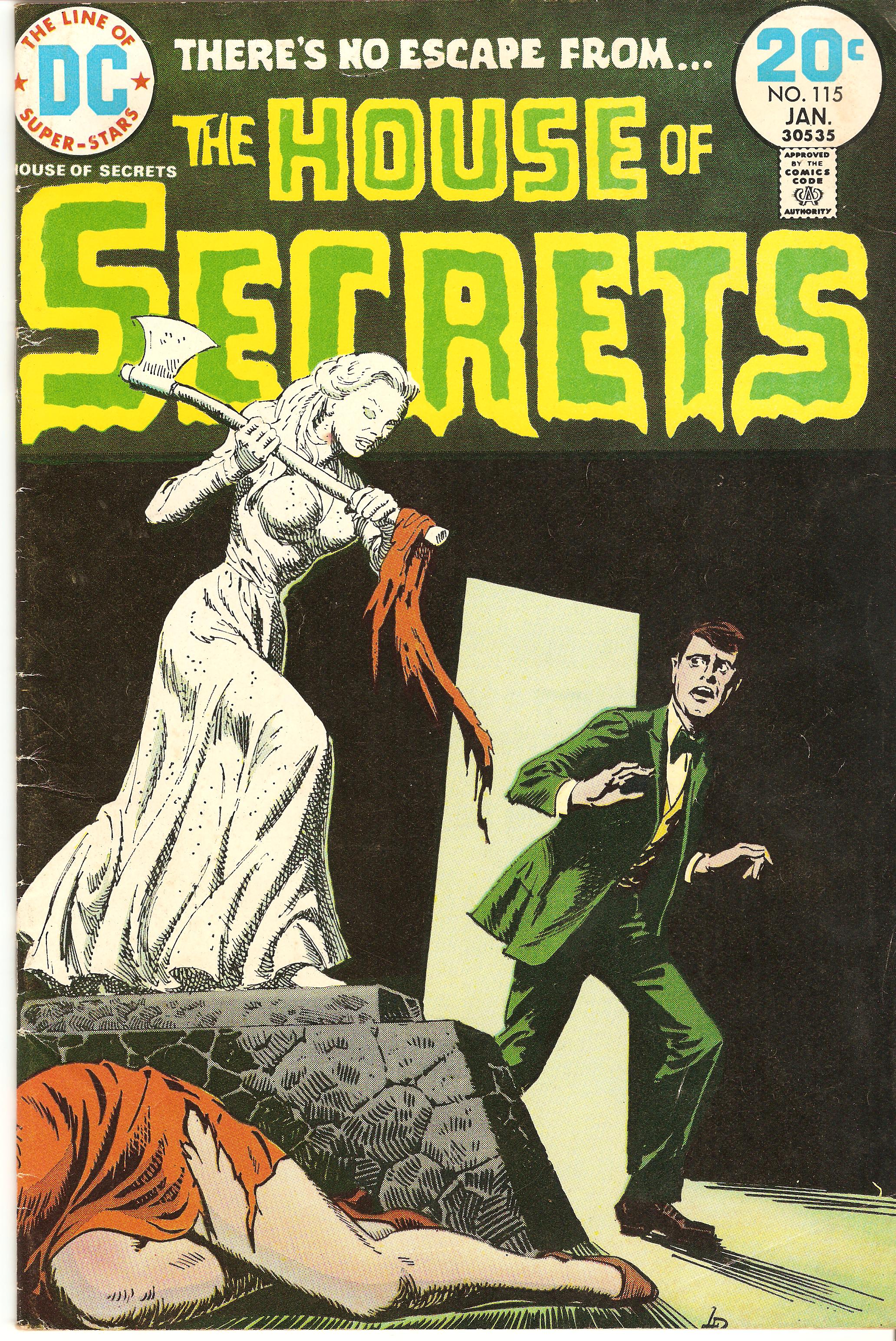
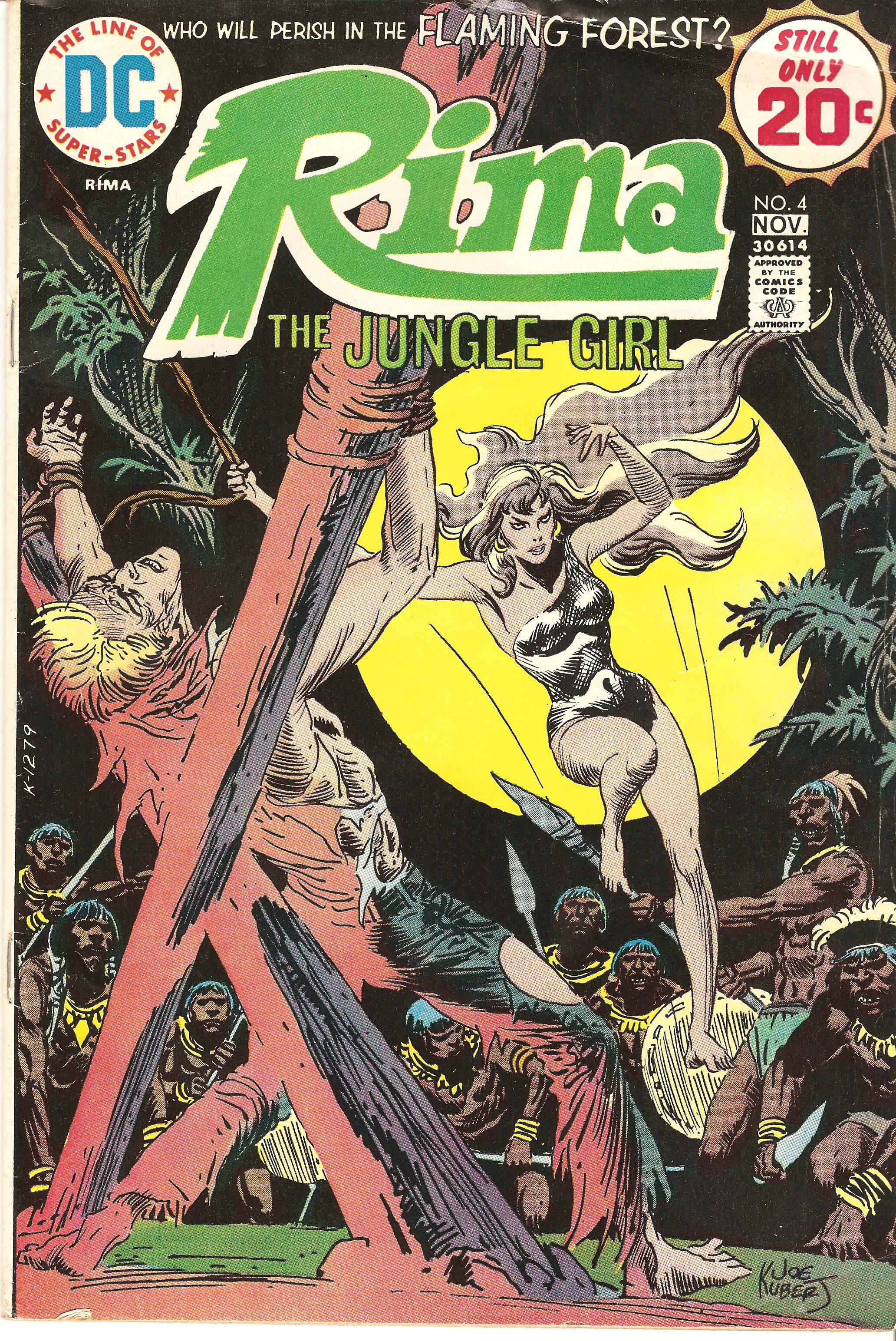
Here are some comic/horror book covers that don’t take long to load:


And one more PDF biggie that does take a long time to load:

Comic-horror-book-covers


Mayberry RFD, the next generation

So, word on the street in Hollywood is a remake of the Andy Griffith Show, with Opie returning to his hometown, OR…

A live version of the Archie comic series, because…

we’ve already re/made these:

So many more to read at my leisure before digging gold in Canada.

Did somebody mention the Gold Diggers?

Deep Secrets of the Subterranean Basement

In my parents’ house is a partially-completed basement, one section meant to be a couple of bedrooms turned into a big storage area many moons ago.

This morning, my mother calmly asked me to look at the heat pump system air filters to see if they needed changing.  The one in the upstairs area was caked with dust, not changed in months.

A quick trip to Walmart later, I changed the upstairs filter. Lo and behold! we have cool air circulating throughout the upper floor of the house.

Meanwhile, in the darkest reaches of the basement is an air intake vent hidden behind piles of stuff from my old bedroom, long since converted into Dad’s office upstairs.

Mom pointed into the middle of the spider webs and said, “Son, can you reach in there and see if the air filter needs to be changed?”

My life for a clean air filter?  Mom, is that all I’m worth to you?!

As I bargained with the hungry arachnids for a few seconds to disturb their threadbare threads, I nearly stepped on a box covered with contact paper from the mid 1970s.

Could it be the lost artifacts, the treasure of my forgotten youth?

THE BOX OF COMIC BOOKS I THOUGHT MY PARENTS HAD TOSSED OR MARKED DOWN IN A GARAGE SALE?????

Yes!!!!

Ahh…I myself had bought this box of illustrated tales, both comical and horrible, at a garage sale for the terribly high price of $2 or $3 decades ago.

My parents scoffed at paying such a fortune for mere paper covered with colourful drawings and stories of questionable morals.

Yet, I persisted and they caved in.

Here, for your viewing pleasure, is the second cover of one of the many dozens, including Beetle Bailey:

Meanwhile, a spider bite is itching…what evil lurks in the damaged hearts of regenerating men!

A Second Look at Female Suicide

Is it true more American military kill themselves than die in battle or perish in motorbike wrecks?  If so, what is the ratio of military men to women self-sacrificers?

Compared to the civilian population and, more specifically, civilian job categories, how much higher or lower are male military or female military likely to kill themselves than, say, dentists or cops?

Finally, is it because we’ve infested the military population with the same microorganisms that push cat owners into ending their ninth try at a nice life?

Could we look back at those of the female persuasion who left written records and killed themselves, analysing their literary output for clues as to the true cause of their desire for demise?

For instance, take this poem of Sylvia Plath.  Is it just me or is she perhaps using her poetic licence to drive home a point that it was secretly a creature of the feline persuasion that persuaded her to say goodbye to life, to children, to husband, to career?:

The Companionable Ills

by Sylvia Plath

The nose-end that twitches, the old imperfections—
Tolerable now as moles on the face
Put up with until chagrin gives place
To a wry complaisance—

Dug in first as God’s spurs
To start the spirit out of the mud
It stabled in; long-used, became well-loved
Bedfellows of the spirit’s debauch, fond masters.

Looking Back

A reposted blog entry referencing Andy Griffith (from here):

02 February 2009

What’s a groundhog got to do with it?

2 February 2009, 11:32 a.m. – Two nights in a row with no sleep…am I supposed to see my shadow today? At my age, I know my moods, my body ailments, and my set of reactions to the familiar world around me. Once, I would attack the world like Don Quixote, jousting at monsters with relish, exhilarated in the extreme during the thrust and plunged into depression when the dragons of the world defeated me with laughter. The highs and lows have mellowed somewhat with age. I, I, I…it’s not all about me. I have to keep telling myself that, reminding and repeating myself often, because as a selfish person I tend not to care about others. I just said this to myself and heard echoes in my thoughts of repeating even these set of words. The next thing I know I’ll say is, “Yet, because I was raised to worry about what the neighbors think, a selfish person like me still doesn’t exceed a limit of social decency that I wish did not exist.”

I look at the words, phrases, and sentences I’ve written and exasperate myself with my attitude of “good enough” (as in “good enough for government work”), not taking the time to perfect my use of the rules and suggestions of the English language. Thus, I’ll use too many commas or place a word with a similar but not quite precise meaning (e.g., “I see” versus “I comprehend”).

I write for an unknown reader. Well, I write for myself first but myself as a person with a group of colleagues (including some imagined ones, such as other writers who had brains superior in calculation capability than mine but whose inspiration gives me hope for the value of my work), well-read colleagues who may not exist except in my imagination. Colleagues who enjoy reading dictionaries, plant identification books, philosophy, cartoons, economic analysis reports, sports headlines, milk cartons, random blogs, user manuals, billboards, handwritten letters from friends, LP liner notes, fortune cookie slips and literary fiction.

On a flight from one forgotten destination to another a few years ago, I read a book highly recommended to me titled, “Eats, Shoots & Leaves.” The friend who suggested the book to me majored in English in college and had more than a passing interest in the correct use of punctuation, even though her career had moved into computer equipment sales. I suppose our lives crossed paths for a reason (a reason, mind you, not a purpose). I reason that I wanted to major in language studies or literature but my upbringing pointed in the direction of the hard sciences such as chemistry, engineering or computer software design, thus my vocation would always clash with my avocation of reading and writing literature (literature in the form of poetry, short stories, novellas, skits, plays and novels; I hesitate adding the word “essays” to the list because the blogging world has taken over the world of the formal essay, where even a haiku becomes both blog and essay; I might add “graphic novel” one day should my artwork interest hold my attention for longer than a day of drawing). So literature becomes a joke about a panda that serves as a book title which mixes my life and my friend’s life well.
You know the joke, don’t you? A panda walks into a bar, sits on a stool, munches on some peanuts, kills the person sitting next to him with a gun and then calmly walks out of the bar. A patron turns to the bartender and asks, “What was that all about?” The bartender responds, “Don’t you know that’s a panda?” The bartender hands a poorly written children’s alphabet animal book to the patron, who turns to the letter P and reads the definition of panda: “an animal, native to China, that eats, shoots, and leaves.”

Today, literature as solely a written art form almost has no meaning. The Internet has invaded our thoughts and actions so pervasively and persuasively that we’ve become both creator and audience at once. The visual arts, including rap and hip-hop songs, take literature from the static written page into the three-dimensional realm from whence it originated. Our storytelling ancestors sitting in caves would understand us and our need to carry around Internet devices in the form of cell phones and other UMPCs.
Yesterday afternoon, my wife and I watched the movie, “Inkheart,” at a local theater. If you haven’t seen the movie and plan to, then you should stop reading here because I’ll soon discuss spoilers. As in right now. LOL Toward the end of the movie, the character played by Jim Broadbent (one of my favorite actors, by the way), the writer of “Inkheart,” expressed his wish to move out of the regular, lonely world of writing and into the exciting world he created with his writing. I don’t know how the third act of the movie jibed with the “Inkheart” book series on which the movie’s based, but I was happy to see the writer character get his wish granted.
The night before, I slept in a fit of delirium. I tossed and turned, fighting the enemy who has stalked my dreams and wishes like the shadow from “Inkheart.” I suppose all of us have seen such an enemy as mine, who works night and day to drain me of my true desire, waiting for the moment to suck the life blood out of me and turn me into a zombie, with which the shadow can play like pieces on a chess board or marionettes on a puppet stage, reducing me to the role of an automaton working in an office full of fellow robots. In the dreamlike state, I defeated the enemy because I surrounded myself with the love and support of those who believe with me that my creative talent is worth calling myself a writer. Or more than that, really…I’ll take a deep breath here, look around me to make sure no one is looking, feel my heart beat in my throat before I speak and finally say, “I am an author.”

After watching the movie, my wife and I returned home to watch the spectacle known as the Super Bowl. With a superlative like “super,” we can automatically assume the bowl is anything but. However, I have accepted the conditioning of my society to cheer for or against the participants of the main event, grown men running around chasing an inflated bag of sewn pigskin (and if you ever want a humorous view of football, listen to Andy Griffith‘s comedy sketch “What It Was, Was Football,” – even if you’re not a fan of “The Andy Griffith Show,” the skit is funny), whilst with bated breath we gaze at the screen for gleeful exposure to commercial advertising.

As the NFL game progressed, I glanced at the clock, mentally counting down the hours until the countdown ended for the opening of submission of works of fiction for the 2009 Amazon Breakthrough Novel Award at www.createspace.com/abna. When the game ended after 9 p.m. Central, I grabbed another bottle of Yuengling Black & Tan and headed to my study, where I could sit and listen to jazz on old vinyl LP albums and watch the countdown clock on a webpage. Tick. Tock. Or so my brain thought because the silent digital display simply showed the word, “Tonight,” underneath was which a counter of hours, minutes and seconds. My blood pressure leapt when the numbers dropped from 01:00:00 to 00:59:59. Had I made any glaring mistakes in the work of fiction itself, much less the other text I had to submit for the contest, including an excerpt of less than 5,000 words, a pitch statement of less than 300 words, an anecdote, a biography and a description to be used for the novel should the contest judges deem my novel worthy of posting on amazon.com as a semifinalist in March?

Finally, as the hour shrank to ten minutes, I resigned myself to the fact that no matter how well my novel succeeded in capturing the attention of the editor(s) who reviewed first the pitch statement (to reduce the 10,000 entries down to 2,000) to create a reasonable set of good entries and then read my novel excerpt (to drop the entries down to 500, I believe), I had written an opus, though not perfect, which represented me, complete with poor punctuation – with ill-advised comma placement, or omission – and lack of precise word usage.

A groundhog does not determine the next six weeks of weather any more than a randomly selected judge determines the worth of my writing. At 23:11 (11:11 p.m. Central, or 12:11 Eastern time on 2nd February 2009), I clicked the Submit button and received confirmation that my novel submission was completed and accepted for the 2009 ABNA contest.

HAPPY GROUNDHOG’S DAY, EVERYONE!

Posted by TreeTrunkRick at 1:12 PM

= = = = = = = = = =

HAPPY FOURTH OF JULY!!!  Thanks to Megan, Pat, Gail, Derek, Andrew, Heather, Roy, Cassandra, Shirley, Stephanie (a/k/a Athens pie)