I just discovered filk music, too nerdy or not nerdy enough?
Tag Archives: culture
If you don’t work, no one can say who you work for
Yesterday, while typing a blog entry and deciding whether to post it (the one containing jokes about Boston bombings and social aftermath), a framed copy of a Marconi Wireless stock certificate and tobacco card images of Marconi himself(!) fell onto the carpeted floor of the study, the glass shattering, shards bouncing, potential splinters pointing up in bayonet charge positions.
I am not one who sees signs and signals in my everyday life.
No, I create them in my fiction, instead, knowing how much our sympathy networks naturally tend to use random events as silent/subliminal signals from our companions and readers thus need not suspend their disbelief for long when encountering a character who would see a fallen picture frame and interpret the “pick up sticks” pile of silicon slivers in a symbolic manner.
The I Ching of clear bling, in other words.
Molten sand as messages from the gods.
We like continuity.
We want to believe that something is good or bad for us on an as-needed basis.
And I, dear readers, want to give you what you want.
Snakes in the grass, the devil in hell, drunk drivers and deadly sunburns.
Guardian angels, smart detectives, good Samaritans and healthy sunscreen.
Throw them in the clothes washer, set it on “extra tumble” and show you the results in a story about the universe you think you live in.
In a dream last night, a man wearing worn clothing, a man who looked like he had worked outdoors all of his life, probably on a farm, sat next to my father while our family sat down for dinner.
As I gave the pre-meal prayer, the man started crying.
He turned to my father and said that his family, the Dukes, had been good, law-abiding citizens, the men all members of the Masons, attending and caring for the Masonic Lodge on a regular basis, yet when his father and uncle recently died, no one, especially the Masons, showed up for the funerals.
My father inquired about how the Dukes had let others outside their family know about the deaths.
The man said they didn’t, they expected God to tell the community about their suffering and their needs for love from the community.
My father fell into silence and looked at me.
I had stopped praying, having faltered on a phrase I can not remember.
I started praying again, asking the Almighty to let the man know that the Dukes were asked to suffer during recent funerals so that the man would be at this meal with us at this particular time, so he could the people next door who had come to see the arrival of a newly-adopted baby by my parents’ next-door neighbours.
We turned and looked out the window to see people of all shapes and sizes, nationalities and beliefs crowd onto a carport to gain entry to the house next-door.
The man continued crying. He just could not see why it had to be his family to suffer in silence.
I woke up in the dream state, my eyes open, seeing the silhouetted trees outside the sunroom where I had fallen asleep on the sofa earlier in the evening, yet also still in the dining room with my family and the man, watching the people next door slowly entering the house in single file.
As the dream continued, I asked myself what I expected from the dream. What were my dreamlike/subconscious thoughts trying to accomplish, assimilating symbols, strengthening neuronic connections, by having this dream?
I stopped praying. We let go of each other’s hands. My father nodded at me and continued to console the crying man, quietly talking to him about the wonderful life that the Dukes had in order to be able to share the luxury of a family-only funeral, a luxury which the community had not been given nor would ever have.
I fully woke up.
I rolled from my side and onto my back, wrapping the heated blanket a little closer around my body.
I rolled back onto my right side, a pile of boxes atop a sofa table blocking light from the neighbour’s driveway lamps.
The dream itself was what it was, a subconscious reminder that the one-year anniversary of my father’s death is approaching, following on the heels of my birthday.
I lay on the sofa, unwilling to get up and write down the dream, wanting to see what my emotional state at that moment felt like.
A little bit of sadness remained. Yes, I missed my father’s ability to work openly with community leaders to ferret out the misfits and reorient them toward positive community service before they became law-breaking criminals.
I also knew that Dad could not help everyone, despite his best efforts, because some people’s personalities are well-formed and cocooned from outside influence due to their upbringing, their beliefs as strongly set in black-and-white/good-and-evil stone as my father’s.
As my father knew, I had developed a personality different than his.
Perhaps because Nixon was my favorite U.S. President, a man known as Tricky Dicky, who, like me, used the available material to accomplish his goals, regardless of the material’s origin.
“Judge not lest you be judged” can also mean the same thing.
It’s not my place to condemn someone to hell. I want to use everyone for my one-and-only purpose — establish viable colonies of Earth-based lifeforms off this planet.
Meanwhile, the rest of us live and die for my entertainment, providing fodder for stories that you interpret as meaningful messages about life itself.
I am my own reader as well as a writer.
I write for myself first, planting clues in this and previous blog entries about what I want to write later.
Unlike the man in my dream, my wife and I would be happy if no one showed up at my funeral. We are private people who enjoy meeting others when we eat out, go to dance lessons, etc., but are just as happy to sit at home by ourselves with our own hobbies to occupy us.
Are we any different than you, dear reader?
Strange Daze
Today, I let my eyes wander over to websites I rarely find interesting only to find them interesting, including this “poster” at rare.us:
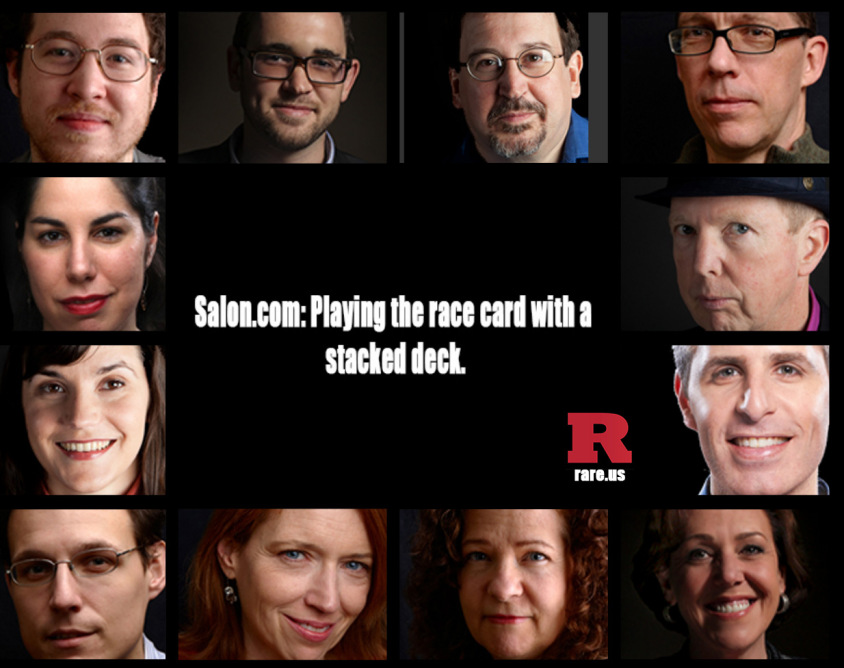
Which pushed my thoughts on to other mass media outlets and their statistical anomalies, including the Saturday Night Live “Five Timers Club“:

Is there a pattern here worth analysing or simply pointing out and laughing toward?
If George W. Bush’s image can be rehabilitated, then anything is possible, n’est pas?
Can you find a correlation?
Can you find a correlation between cost of living and happiness?
First, the second:

Second, the first:

Rogue traders can destroy a company in milliseconds — it only takes one of all three
Success breeds complacency. Complacency breeds failure. Only the paranoid survive.
Denial can blind.
It is a very important truism that immigrants and immigration are what made America what it is. We must be vigilant as a nation to have a tolerance for differences, a tolerance for new people.
Technology is both an end in itself and a means to other ends. When you figure something out and make it work, there is pleasure and excitement. Not just because the technology is going to do something, but because you created something with its own inherent beauty, like art, like literature, like music.
All art is in some fashion escape. It sucks you out of your own life. It absorbs you.
You must understand your mistakes. Study the hell out of them. You’re not going to have the chance of making the same mistake again — you can’t step into the river again at the same place and the same time — but you will have the chance of making a similar mistake.
Satisfaction doesn’t come in moments but in periods of time.
Privacy is one of the biggest problems in this new electronic age. At the heart of the Internet culture is a force that wants to find out everything about you. And once it has found out everything about you and two hundred million others, that’s a very valuable asset, and people will be tempted to trade and do commerce with that asset. This wasn’t the information that people were thinking of when they called this the information age.
Take a bit of the future and make it your present.
Names: Melody, Autumn, Garrett, Candice.
Places. Nouns. Pronouns but no connouns yet yes connotations.
Seeing reactions with no desire to profit from them.
Laying crumbs along a trail, asking the birds to peck their way along behind, not the pied piper, recalling Latin lessons about silva and “p” words that trigger dim memories of pied (pronounced pee-ed rather than pie-uhd).
Conscious and unconscious at the same time again and again, seeing connections, sensing subconscious influences upon fleeting conversations, creating twists and turns on trails to hide going in a circle, corpuscle, corporal, corporate, cerebral cycle.
Trigger finger over the keyboard, waiting for the signal to press/type/click.
But with touchscreens, it’s press/swipe/touch.
Multifinger gestures.
Gestation, Guest station, Geriatric, Acrobatic, Aeronautic.
Cranking through the sausage maker, maker, maker, maker…
Imaginary rhythms, a wooden finger tacked to the wall, cough drops fall, that’s all.
Disjointed intersections of ceilings and floors.
Can a ceiling touch the floor?
Can a floor touch the sky?
What makes the sky “up”?
She sits
But she doesn’t sit for long
She waits for no one
Others wait for her
No time for her
Because time is meaningless
Words do not touch
The stirrings of her soul
She prepares each movement
Like a tai chi master in meditation
The turn of a wrist
Raising an eyebrow
Sitting in a chair
Listening for the silence between heartbeats
Music only she knows
Folds in her skin deepen
Aging finely maybe wisely
She sleeps
But she doesn’t sleep for long
Trumpets blaring ideas deep within her brain
Push her out of bed
Ideas scribbled on the napkins of last night’s mind
Fade too quickly for human use
Extraterrestrials passing by the planet
Record the thoughts for later dissemination
A purpose for being
Being not the purpose
She moves on
Like water from a fallen bamboo flute into a pond
Fish breathing her in
Exhaling her out
Discordant sounds of a Qinqiang
Playing up her strengths
The paper bird pales in the sun
And flies away.
— 10 Dec 2004, Rick Hill
Panoply, Calliope, Penelope, Plywood, Dagwood, Dogwood
A look back at an artist who will perform at Panoply 2013:
Music Review in Ternary Form
– — — – –
A Woman in Red
Andante or Al Dente?
The Man in Black
– — — – –
A Woman in Red
A piano recital by Dr. Margery Whatley on Friday, 2 February 2001 at 7:30 p.m.
Drove to UAH campus around 6:45 p.m. Walked into building closely followed by an older couple of Eastern Asian descent. Went to use the restroom. By the time I walked up the stairs and got in line to pay for the performance, a few people were ahead of me, giving me a moment to observe the surroundings. On the stairs was a flower arrangement probably sent to the Music Department in honor of the department chair, Dr. David Graves, who had died late last month. I bought a copy of Dr. Whatley’s CD before I entered the recital hall.
The Roberts Recital Hall is walled with sound-absorbing material that is a series of four-foot by four-foot tiles colored yellowish, almost manila in the light. The hall contains 13 rows of seats (and one row of folding chairs at the front) with each row patterned with 4 seats on each side and 10 seats down the middle (4-10-4). The room slowly fills with people of all ages — presumably the older people are here for the cultural event while most of the younger people appear to be college students.
A Steinway piano sits (perhaps, rests) on rollers on the middle of the wooden stage. The piano shares the stage with two floral arrangements, two peace lilies (all probably more memorials to Dr. Graves) in addition to the piano bench.
Two young men sit in the row below me, one of whom is a piano student and wants a clear view of Dr. Whatley’s hands.
The program lists pieces by J.S. Bach, Joseph Haydn, Felix Mendelssohn, Johannes Brahms, Maurice Ravel and Franz Liszt.
What does a pianist do before a performance? I assume the playing I heard in the hall when I went to the bathroom was that of Dr. Whatley practicing.
At 7:15, the lights above the stage were turned on. At 7:21, the recital hall is fairly full, approaching about 2/3 of capacity. A couple of women sit down beside me, quickly glancing through the program. Some people behind me comment about the apparent lack of a reception afterward (because the program does not mention one). It appears that the recital hall will be filled close to capacity by the time of the performance. Some people are even taking seats in the front row.
Again, I wonder what the pianist goes through before the performance. My experience harks back to the middle school recitals where students performed their three- to twenty-minute pieces for their parents. Those of us waiting our turns spent our time counting the mistakes of others. In class, Dr. Whatley said when she makes a mistake she keeps playing as if the piece required the mistake, hoping no one notices. Now a woman of her later middle age sits to my left.
A person steps on stage to announce that “everyone please crowd in because it will be quite crowded.” The women on both sides of me take off their coats. They seem to know many people in the crowd around me. One has the accent of this region. The other seems to have the accent of say, Connecticut (she talks about renovating her home while the Southern one talks about the clothes she has on).
At 7:34, the recital hall is essentially filled. I forgot how much I detest a crowd. Well, the lights dim – must be time. The crowd quietens. The lights dim more. A door opens on stage and the pianist steps out, nodding gently to the crowd as she makes her way to the piano. She wears a red, sleeveless dress that probably complements an orchestra full of people dressed in black.
Toccata in D major, BWV 912, J.S. Bach
Lively beginning, then cadence followed by walking pace with two voices that play with each other. The performer sits slightly bent over the keys, spending the time looking down at the keys. The music would sound good on harpsichord.
The next section of music is very emotional…dramatic, as if a man was telling his wife, in a silent movie, that he had to go off to war. Then the piece picks up at a lively pace, like the wind playing off a field of poppies and then across the tops of trees, across the deep blue of a Canadian lake, ascending the heights of the Rockies and then down to the ocean.
The next section is so mesmerizing that I can hardly take my eyes from the maddening pace of the piano player.
Sonata in E-flat major, Hob. XVI:52, Joseph Haydn
The pianist adds commentary before playing this piece. Turns out that Haydn was a pretty good friend with Mozart. While waiting for the lights to be turned up (too many shadows on the keys), Margery continues to recount a tale of a piece of music written for Haydn by Mozart.
ALLEGRO. A playful movement, like a mini-carnival, with every performance in the three-ring getting its turn on the ivorys. One can sometimes hear “3 Blind Mice.”
Margery likes to wear a headband. Is she feeling the emotion of the work like a stage actress reciting her lines?
ADAGIO. Very steadfast, deliberate like a group of lions walking through the savanna, every animal aware of their presence but surprised nonetheless when the lions raise their heads above the grass.
FINALE. The pace picks up double-time as the gazelles seek flight. How can those fingers, which from halfway up the hall, look too short for a keyboard expert, be trained to be so steady? Margery definitely has fun playing this piece, stopping on notes and lifting her hands off with flair. At the end of the piece, she steps out of the room (is this as designed?) and quickly returns.
Rondo capriccioso, Op. 14, Felix Mendelssohn
Commentary: Schumann called Mendelssohn the “Mozart of the 19th Century.” Also called “Bach reborn.” Composed this piece at age 15.
What does a normal 15-year old boy think about? His first love, of course. After 10 years of composing music, the prodigy puts this on paper. What did boys do to play their hearts out in 1824? Today, they’d shoot hoops, no doubt, the best practicing for hours. Here, a boy practices a short rondo. At the end, Dr Whatley bows three times (including two steps back out on stage) after chasing the notes across the keyboard for this rondo.
INTERMISSION [at 20:10]
It’s funny watching people looking for their friends (like my wife and I looking for people we know at UT football games – says something right there, doesn’t it?). What lovely social creatures we are.
Back to wondering what goes through the minds of a pianist. The first half of this program is over, forever stamped in the minds of this audience. The second half has yet to occur, only a possibility, an opportunity for one person to share her talent for memorization and hand-eye coordination with others on a cold February evening in the year 2001. Well, before this degrades into an essay on the purpose of humans, I’ll take a cue from the dimming lights and pause from rubbing ink on paper.
From the exuberant comments of people around me about the performance so far, we will no doubt give a standing ovation when the second half is over.
6 Pieces, Op. 118, Johannes Brahms
Commentary: Liszt invited by Brahms to bring music to a party. Liszt was given an opportunity to play – he couldn’t and Brahms sight-read the piece while giving criticism. After all, Brahms was known as being brusque.
This piece is strong at the beginning – hard to believe the sound waves don’t knock the finish off the piano. Music like this must callus a pianist’s fingertips. I could hear this being played as the score for a movie about a couple in their later years. They have strong arguments followed by moments of tenderness that only years of tight budgets, late nights with sick children and dying parents can evoke.
Not sure which movement this is but it’s like the Attack of the Killer Fingers.
Obviously, the pianist spends time warming up before the performance but consider this: most audiences of a performance need time to warm up. It was not until this piece that I have warmed up to the understanding of the pianist’s link to the piano. All the other pieces felt technical. This one begs my heart to listen! If only I knew my major and minor scales to distinguish and understand the meaning of the changes.
How fortunate I am to go from place to place – football stadium, VBC Playhouse, Roberts Recital Hall – and enjoy the hard labor of others.
What a cool [there has to be a better adjective] beginning to this movement – the soft right hand followed by the glissando of the left hand. The applause for this piece is livelier than the others.
Jeux d’eau, Maurice Ravel
Commentary: River god laughing, which tickling here. Written for Faure.
One cannot help thinking of “Fountains of Rome.” I hear echoes of another piece but cannot place it. Mon Dieu! How can one acquire the mastery of the keyboard like this? When did this pianist begin playing?
Hungarian Rhapsody No. 6, Franz Liszt
Commentary: Considered the Elvis of the 19th C. Everyone wanted to be a student of Liszt.
What is Hungary? Well, it is not Hungry, which is what Margery is after playing the last piece, and looking forward to the reception. Hungary, in rhapsodic form, is a lively country, with bustling cities, stately country lanes, with delivery people hurrying about, street vendors shouting their sales pitches, heavyset matrons waddling in front of shop windows displaying the latest in French fashion. Meanwhile, the Army prances into town, on their way to the small campaign.
The audience claps for Dr. Whatley to play more. An encore. Sounds like…hmm…Copeland? Yes! Beef. It’s what’s for dinner. Another couple of bows. The applause ends at 21:05.
People slowly line up for the reception. The Connecticut woman puts her layers of clothes on while chatting with me.
“Are you a music student?” she asks.
“No, I’m just taking a class by Dr. Whatley and I’m required to attend a concert and provide my feedback.”
“Well, it looks like you’ve written a novel. Do you think she’ll have time to read it?”
“Ah, but no matter,” I respond smiling, “the enjoyment was in the writing of it. Drive safely.”
“What?” she replied deafly. “Oh, you, too. And good luck on your paper.”
– — — – –
Andante or Al Dente?
A Night at the Huntsville Museum of Art, Saturday, 10 March 2001
I. Prelude To A Tune
What better way to spend a Saturday evening than to attend a chamber music event with my wife? What better way to top off the music than to see the exhibit of “The Mystical Arts of Tibet”, an exhibition of Tibetan artifacts at the art museum (free with the concert tickets)?
In one of my previous incarnations as a college student, I spent almost three years in the early 1980s at the University of Tennessee, changing my collegiate major from chemical engineering to economics to accounting to computer science to religious studies. In my religious studies phase, I took courses on “Death and Dying”, “The Social Aspects of Christianity”, “The Early Christian Church”, and “Comparative Religions”. In the comparative religions class, we studied the major religions of the world, including Christianity, Islam, Taoism, Hinduism and Buddhism (as well as the various sects of these religions). Because there were so many religions to cover in so little time, we did not get the opportunity to feel the mystical/religious sides of the religions, only to study their historical significance and important doctrines.
Stepping into the world of the mystical arts of Tibet, I thought back to my religious studies’ days, pondering the wisdom I have gained in nearly 20 years, and marveling at the wisdom of the Tibetan people gathered over the last 1500 or so years. The first major work I saw was the “Sacred Text of the Prajna Paramita Sutra”, Buddha’s 42 Discourses on the Reflection of Wisdom, as well as other personal sacred objects of “HH the Dalai Lama”. My wife and I watched a film where we learned that Buddhists are always preparing for their death.
Through other Buddhist artifacts, I learned about:
• the doctrine of emptiness and two levels of reality (ultimate and conventional) and how these simultaneously exist,
• the Buddhist belief in working toward elimination of the individual ego,
• the names of the Buddha, including the buddhas of the three times – past, present and future
• the various Buddhisattvas, Manjushri (the Buddhisattva of Wisdom) who represents the meditative insight that penetrates to final nature of being, Avalokiteshvara (the Buddhisattva of Compassion) who represents compassion as the foremost quality to be cultivated on the path to enlightenment, Arya Tara (the Buddhisattva of Enlightenment Activity) who represents the female symbol of enlightenment energy of all previous buddhas and Vajrasattva (the Buddhisattva of Purification) who represents the power to purify the mind of the instincts of negative karma and delusions
• The two great masters – Nagarjuna, the principal Indian elucidator of Buddha’s teaching on voidness, and Asanga, the principal elucidator of Buddha’s teaching on general bodhisattva trainings – both were revered just below the great Buddha himself.
II. The Victorian Age
After an enlightening hour spent with the Tibetan artifacts, we found our way up the front stairs to the Great Hall, a rectangular room with pale olive walls maybe 30 feet tall and 25 feet wide, ending with three-foot tall windows on top of each wall. The floor of the room was covered with chairs, with the audience’s chairs arranged traditionally, with seven straight rows of 20 seats per row. The chamber orchestra’s seats were arranged in the traditional clamshell with the conductor’s podium at the center of the shell.
The musicians appeared from a set of double doors at the back of the room, walking to and sitting in their seats (the double bass player used a barstool), with applause eventually picking up enough so that as the conductor walked up to the podium, he asked the musicians to stand in recognition.
Sonata for String Orchestra, William Walton
Have you ever felt tempted to eat your dessert before the meal? Then you know how I feel about this delicious piece of music. Unlike the music we have studied in class so far, this piece has no regular duple or triple beat – the beats of the music are offbeat – this music is contemporary, starting with a quiet beginning of the allegro movement (say, three or four instruments) before the whole chamber orchestra joins in. The melody, if one can call it such, jumps from instrument to instrument like the first drops of rain before a great thunderstorm begins, the wind blowing through a stand of trees, then a brief calm enveloping the room before the storm builds back up (with the sound of the thundering cellos).
[I enjoy watching the facial expressions of the musicians] During this storm, I hear large drops of water fall off of a rooftop into a pool below with the pluck of strings. To this untrained ear, I would say that the violins are holding the continuo at this point.
Wow! This movement has quite a lovely pickup. The violins say, “Rush, rush rush…hurry, I must hurry”. What distinguishes this music, presumably written as a standalone piece, from studio pieces written as soundtracks? [Watching these string players, I see 13 crickets, dressed in black, brushing their legs against their wings. One player clicks the bow against the violin when plucking — is then intentional? It doesn’t sound like it should be intentional. Or am I just so close to these performers that I am hearing the natural, non-sanitized playing of a string instrument?] Here we are, caught in a “High Anxiety” moment. Where do we go to relieve the tension? Ahh, a sweet moment as long bowing of the strings lets us breathe out.
Back to the rain storm… The rain has tapered off and the sun rises, wisps of small clouds blow by. The sky gets brighter. Flocks of birds go past, but nothing small, the notes are too heavy, some Mallards, some Canada geese…ah, there go the country geese waddling across the yard as the swallows flutter in and out of the barn. [Funny how some musicians play with a pained look on their faces, like the bearded cello player who looks like he’ll burst, while others, like the bald player of the violin (viola? I can’t tell from here) who sits to the right toward the back and plays like a man getting his only sweet nourishment for the day.]
The day goes by and the sun reaches the horizon, loudly proclaiming, “Here I go! Here I go!” and the sky says, “Sweet dreams, dear sun, go quietly into the night, while I raise my blanket of stars.” The moon says, “Not so quietly as to forget me…” [“meeeeeeee, me,” retorts the viola chorus]. And the sky shakes the star blanket for each star to pop out, the sound sweeping back and forth between instruments. Finally, the sky sings a little two-word lullaby, “Good night”.
“Wake Up! Wake Up! Hey, all, it’s time to Wake Up! Wake Up!” the sky yells, pulling in the star blanket and nudging the sun. “Hey, can’t you see what time it is? You’ve got to wake up!” Hurriedly, the sun jumps to the sky. Farm animals scurry about. “What is this?” they ask. A wise cow, speaking through a violin, says, “Haven’t you seen this time and time again?” The crowd responds, “So what? We don’t like being disturbed, turbed, turbed, turbed.” Their voices rise in general anger, chaos everywhere. “Quiet!” yells the cow. “Quiet.” The Canada geese pick up in flight. The swallows swirl around. The country geese flutter all around the yard, saying, “My, my, my, my, my, my.”
At the end of the piece, Taavo has the 1st string (soloist?) players stand first, followed by the rest of the orchestra. “This is our most difficult piece so now we can rest. The harp and flute will now join us.”
Fantasia on “Greensleeves”, Ralph Vaughan Williams
Who has not heard Greensleeves (or What Child Is This?)? In this Fantasia, we first hear a flute solo, joined by strumming of the harp and then the rest of the orchestra picks up the classic strains of “Greensleeves”. [The faces of the musicians are indeed more relaxed for this one.] Unlike Walton’s sonata, the double bass and the harp are definitely more involved as the percussive bass beat here.
Finally, I hear a variation of the “Greensleeves” theme, the first part of the variation in the viola section, and the second part of the variation in the flute, with the rest of the orchestra joining in to repeat the variation.
Once again, the flute plays a solo with harp accompaniment and then back to “Greensleeves”.
INTERMISSION
During the intermission, the harpist retunes the harp while the other musicians and conductor walk around, mingling with the “crowd” (I use the word crowd loosely because it is more like a small gathering, much as one sees in movies about 18th and 19th Century Europe, where performances were given in large drawing rooms for one’s friends).
The musicians gather in the back and formally re-enter from the double doors, once again with applause driving the musicians to stand after they’ve sat down.
Elegy, Op. 58, Edward Elgar
A solemn processional beginning. Almost hear wailing in a violin [a fire truck siren from a nearby street adds to the immediacy of the setting]. The theme is stated very slowly. This is the music style that drove my sister from classical music.
After the performance of this piece, Taavo jokingly tells the audience, “Welcome to an evening of Elgar”. He continues, telling us that this is Elgar’s unwritten opera about a Spanish lady. This is Elgar’s Handelish Baroque music, with three of five movements.
“Spanish Lady” Suite, Edward Elgar
With this piece, there is a very discernable continuo in the cellos and double bass. I can definitely hear a waltz at the beginning. It comes to a stop with a pluck, pluck, pluck, and then the dance picks back up.
This section sounds very legato. For those of you who don’t know her, this is a very English (i.e., proper) Spanish lady. One can easily hear the Baroque-en chords and phrases – no Carmen here. The rhythm goes something like da-di-da-di-di-da-dum.
Oh boy, here’s a Bach-like moment if I ever heard one although my wife definitely hears Handel. I can only think of the Brandenburg concerti. It feels like someone took the Mona Lisa and repainted her in the style of the impressionists, smudging the beautiful clear lines.
At the end of this piece, Taavo shakes the hand of the chief violinist (as he has done earlier tonight).
Sospiri, Op. 70, Edward Elgar
“Stroke of the hours” by the harp to start this piece, somber without being solemn (because of the light touches by the cellos). How can one such as I pick out the theme – it all seems to be one long phrase?
[I noticed this earlier and wonder why some players move the bow back and forth and others bounce their fingers on the strings – are they trying to achieve the same vibrato/tremolo effect?]
Introduction and Allegro, Op. 47, Edward Elgar
Taavo tells us that this is written for solo quartet (and lots of strings, hahaha). This is the first time for Taavo to conduct music in this hall and hopes to do so again.
This piece starts out, “Blee! Da-dum-da-dum-da-dum-da-dum-dum.” Which ones are the string quartet and the rest the “lots of strings”? I must admit that Elgar does not move me. Taavo probably gives this music more life than it deserves (this reaction comes after I listened to four hours of bluegrass last night (with fiddles, not violins) and three hours of Philip Glass (Glassworks and Songs From Liquid Days)). The players are no less devoted to this than to the other pieces and yet I am no more moved than to sit and observe the funny sounds coming out of the scraped strings of one of the violas (like the rattle of bass speakers when turned up too loud). I am driven inside myself, from which these questions emerge:
• Why do we insist on the violin family maintaining the Baroque shape?
• What do contributors (patrons of the arts) expect? The sign on the back of the wall reads, “BOARD ROOM GIVEN BY BELLSOUTH”.
• Who chooses the music for the program?
In class, Taavo discussed the so-called Mozart effect and said that is not enough for one such as him to be. “We must love music and it must be important” were his expected reasons for us to be in music literature class. How many people sit here and think these thoughts now? How many are here just to be here? How many are here to learn? How many are here because it makes for a great place to bring/meet a date? I have learned that being here, at least for this piece, is no more enlightening than having listened to this on a record or CD. It is this music that is full of dry emotion. But then is that not what the English are accused of? I hesitate to use the word “bland” but one must share one’s thoughts.
The torture is over. As the applause picks up and the musicians stand (first the principals, then the whole orchestra), Taavo shakes hands with the principals of this piece, apparently two violins, a viola (or is it a violin? I can’t tell from here) and one cello. Give me minimalism any day. Supposedly, audiences come for the old-fashioned favorites but I crave the newer music, at least a John Adams or Philip Glass. When was the last time the HSO played a Cage or Adams work?
– — — – –
The Man in Black
Robert McDuffie and Margery McDuffie Whatley at the Madison-Morgan Cultural Center,
24 March 2001, 8:00 p.m.
I. Overture
While we wait for the doors to open at the Madison-Morgan Cultural Center – according to a brochure, an “1895 Romanesque Revival building, one of the first brick graded school buildings in the South,” with its 395-seat apse-shaped auditorium – we listen to the former 10th district campaign manager for Jimmy Carter’s gubernatorial campaign. This 71-year old man, whose doctor said has the vital signs of a 16-year old stands next to me on the portico, talking with another “young” woman, both of them trying to figure out how they know each other. She regales him with her vocational past, telling all of us that she is one of the attorneys familiar with the former Circuit Court Justice and U.S. Attorney General, Griffin Bell. She goes on to tell us about tonight’s performers, sharing her delight over the program given by the McDuffies, when they played the Violin Concerto by Philip Glass, along with works by Bach and Mendelssohn at the Cherry Blossom Festival last year.
My wife and I ate at a weekend-getaway-town kind of restaurant, O’Hara’s, earlier in the evening, and the wine we drank make both of us too tired for much conversation so we listen to our concert ticket companions. The campaign manager enjoys religious music and is not so sure about this modern music. He converses with another woman whose husband is a data processing manager who is at home with their small children, a seven-year old and three children age four. The campaign manager asked if she had been taking fertility pills before having the triplets and she said that no, it was simply that her husband is a large man. The conversation quickly changes.
The campaign manager was a school bus driver for a while, worked a dairy farm and had been a county commissioner. As far as he’s concerned, anyone running for office should have to had driven a school bus and do something like county commission work so that they know about school politics and local issues.
A couple that stands on the steps below us happen to stay at the same B&B as us, the Brady Inn. We saw the wife sitting on the front porch this afternoon, her gray outfit matching the gray-and-white alley cat rubbing against the rocking chair. The cottage that we’re staying in is directly across the street from the Morgan County Health Department, with a sign at the end of the drive that reads, “MORGAN AREA MENTAL HEALTH, MENTAL RETARDATION, SUBSTANCE ABUSE CENTER STRAIGHT AHEAD”.
The majority of the folks are of the blue hair crowd, the “culture hogs,” someone said a moment ago, “moving from one culture trough to another.”
Folks who sat at a table behind us at O’Hara’s and now stand at the other end of the portico continue their debate about Bill Monroe, the deceased bluegrass player, and whether someone had actually given him a $1 million Stradivarius violin.
As it turns out, the campaign manager had met the attorney at a fund-raising event years ago. “You haven’t changed a bit,” he tells the attorney. “You still know how to be political,” she says, and we all laugh.
My wife comments that she hears a mixture of Yankee and Old South accents around us.
II. Master of Ceremonies
The person introducing the music – the MC – has been involved with the Madison-Morgan Cultural Center from the beginning. During the first season, the MC who knew that many were opposed to bringing an opera company to Madison said that one of the opera singers was sick and he would have to substitute. He swore that many people got up to leave rather than endure his singing. He told us that we would not have to worry about that tonight. Tonight’s performers need no introduction because their pedigree is too long.
III. Like Listening to a One-man Quartet
I sit and watch the multiple facial expressions of the actor-violinist Robert McDuffie play this contemporary of Vivaldi’s The Four Seasons, J.S. Bach’s Preludia from Partita No. 3 in E Major, BWV 1006. How can a humble person such as I begin to put a single word on paper to describe this? I cannot.
After Robert completes his warm-up exercise, he steps off stage to be joined by his sister, Margery McDuffie Whatley, and a page turner.
Sicilienne, Lev Zhurbin
Okay, I’m cheating here a bit but for the second encore of tonight’s performance, Robert explains this piece to us. A 20-year old viola student at Julliard wrote it. When Robert was visiting Julliard, the student gave a tape of the music to Robert along with a note that read, “Tell me tomorrow what you think of this work.” Robert was impressed so he played it for his wife and daughter, who loved it. So it will be the second encore. In the meantime…
Here before us are the two offspring of a middle-aged couple of the species, Homo sapiens. The children grew up learning how to eat, drink and talk and yet within them was the drive, the capability, the…gift that two siblings rarely get to carry beyond baby talk, a language of their own that is also understood universally – music. This piece is very romantic (my wife calls it “sweet”).
Violin concerto, Philip Glass
Robert said that he was not going to say anything tonight but his sister wanted him to say something about this work. Philip Glass writes music that is very repetitive. Most people either like it or they don’t like it. The joke goes, “Knock, knock. Who’s there? Philip Glass. Philip Glass. Knock, knock. Who’s there? Philip Glass. Philip Glass.”, etc. This work is a reduction of the orchestra piece, which contains some good brass and percussion.
As Margery opens the first movement, Robert stands with his eyes closed, feeling the music coming from the piano.
AT LAST! I have lived my life this long with CD recordings of Glass but only now understand what it is all about. Watching Robert’s fingering, I see the simplicity, the difficulty of playing Glass’ repeated phrases. Interesting, watching Robert play without sheet music while Margery has a page-turner.
The audience warmly claps after the first movement. Robert wipes his brow and seemingly disappointed about the untrained audience, says something to his sister.
And so, once again Margery picks up the beginning of the next movement while Roberts gets his emotions back in order. Some animals are endoskeletons; that is, their structural forms, their skeletons, are inside their bodies. Robert, like an exoskeleton, his structural form, his emotional feel for the sounds around him, are worn on the outside.
At once, I hear the “om mani padme hum” of the Buddhists while dance music from a faraway Victrola echoes in the room. Glass seems to be saying that the music is at once here in the now yet in the past and ready for the future – there is no end.
Dr. Whatley talked about her brother being sent to Julliard because his parents didn’t think he would last through one year but they wanted to give him the opportunity. Although he flew home many times, he lasted the first year and they thought maybe he really had the staying power. Thank goodness for his staying power.
I am too mesmerized by the third movement to get all the observations about Glass returning to the original theme but who cares at this point? That can be saved for a CD session. Now is the time for becoming one with the LIVE music.
I understand the Baroque shape of the violin, watching Robert fly across the strings with his bow. Look! It’s Paganini’s ghost. Does Robert feel the music of the Guarneri through his neck?
INTERMISSION
My wife explains to me the intricacies of the Violin Concerto, with the repeating phrases moving slowly up the scales. She, too, appreciates the difficulty of having to play the same phrase over and over at the same tempo.
During the intermission, my wife chats with the woman sitting next to her who is a fan of the same university sports program for which we cheer, UT. The woman also happened to have been a student teacher in east Tennessee not far from Knoxville (Kingston). The woman has just moved here and tells us about a problem she’s having with a big tree on the property line. As luck would have it, her neighbor walks up and they discuss what to do with the tree. After the neighbor walks away from us, the woman is relieved that her neighbor agrees to do something about the tree. The search for camaraderie continues – my wife tells the woman about the accents she hears in the audience; the woman says her mother is from Kentucky and has lived in New York for 53 years but still pronounces the word why “whoo-eye”.
So here we are, dressed up in our Saturday finest, bipeds with the tendency to stand up straight, not seeking food or shelter. Perhaps some of us are seeking a betterment of our lives that goes beyond external factors. Many before me have sought to explain the want of humans to ignore our basic physical needs in order to satisfy an internal need. Like my lack of musical knowledge, my lack of biochemical processes limits my human understanding. I feel like I’m observing the human race through a window. I can describe what I see but what do I feel? How do I go beyond a simple description of emotional states to get to the root cause of the human problem? Well, it won’t happen tonight despite my desire to know more.
Violin concerto in E Minor, Op. 64, Felix Mendelssohn
During the tuning, Robert made a funny plucking sound on a string and commented, “Well, that just took a half million dollars off this violin.”
First movement – Funny how the piano part sounds much like the Glass violin concerto.
So these gypsies have come into town. They say to one another, “How are we going to get the townspeople to come to our camp?” One turns to the other, “I will stand on the hill over the town and play a passionate lullaby on the violin. As they fall asleep, you sing a wondrous plea for them to see our great performance tomorrow.” Years later, while they’re in a bar recounting the time they made off with the whole town’s money, a young composer named Mendelssohn listens in. “How do I retell this greatest of all tales?” he asks himself. He begins taking notes, building phrase upon phrase with each round of drinks because as new patrons come in, the gypsies relive their tale over and over again.
Isn’t it a shame that most people cannot pick up the violin after the age of 10 or 12? No one said life is fair but wouldn’t we all be richer could we play but a measure or two of Mendelssohn’s solo part in the first movement?
As a joke, Mendelssohn writes the bar scene into the second movement, phrasing, “Hey, look what we’ve done, look what we’ve done.” In real life, the gypsies are thrown out of the bar for not paying but Mendelssohn writes them in as heroes of the bar, the barmaid weeping with joy and the patrons patting the gypsies on the back for a job well done. The oldest gypsy, overtaken with appreciation, collapses on the floor. Everyone exclaims, “Oh my God, no. Oh my God, no.” Then the gypsy takes a deep breath and stands up. “No, I will not die today.”
In the third movement, Mendelssohn wonders what happened to the townspeople. “Oh, where is my brooch? Where is my babushka?” the people ask. The mayor, sensing a prime moment, jumps into the town square and dances a little jig, rather wanting to look like a fool than let his people know they’ve been fooled. Soon, the people realize their folly and join him, the noise echoing so loud that windows pop in nearby shop windows.
They jump and reel round and round to the point of madness. The sounds are so loud that nearby towns join in the fracas because they realized that they have been duped, too.
Standing ovation.
Magyar abrand (“Hungarian Fantasy”), Franz Lehar
“Well, now that we’ve warmed up…” A Hungarian, who of course liked gypsy music, taught the young Robert to play violin. Robert went to Brevard one summer and returned with a report card with comments by every instructor that read, “Plays like a gypsy.” [Funny how that is reflected in my understanding of the last piece.] That’s how he learned to be so emotional.
Well, Central Europe possesses us now.
Imagine being able to open the music box on your dresser and out pops a little violin player spinning around while the Hungarian Fantasy played! You would never leave your dresser, winding up the music box to play over and over again.
More standing ovation. One, two bows. And then the obligatory encore. But first, another retuning with accompanying commentary.
Robert was forced to see Itzhak Perlman because Robert at age 14 and eight years of playing violin was tired of playing violin and he had recently been promoted to first string on the basketball team because he had practiced so hard that week. After Perlman began to play, Robert forgot about basketball. Years later, Robert got to tell Perlman this story and Perlman said, “You would have made a lot more money playing basketball.”
Theme from “Schindler’s List.” The crowd oohs at the mention of the title which Robert dedicates to the performance he heard by Perlman (and the chance that he can be a direct influence on someone).
We avoid and isolate that which is alien to us and thus the Nazi party, under the leadership of an alienated person, eliminated a group of people genetically related who are commonly called Jews. By eliminating them, the Nazis reduced one part of humanity while inspiring the remainder. Where does that put us now?
Another round of applause. Another encore. Repeat of Sicilienne. The music says, “Oh, how I love you? How can I love you? How can I breathe? How can I know? I’ll never know that I love you.”
IV. Epilogue
Back at the inn, my wife and I enjoyed a late-night snack with the couple from Macon who had also attended the performance. The man, a former Los Alamos scientist, teaches chemistry at a college in Macon and the woman teaches post-GED classes for adults. Of all the faculty members at the man’s college, he was the only one who accepted an invitation. My wife commented that you’re never famous in your own hometown and the woman responded that Macon was quite receptive to Robert McDuffie, especially considering that Macon is not really a town with a “college” atmosphere, that Robert sold out performances in Macon. I responded that Huntsville treats Dr. Whatley with equal enthusiasm but as an example of the uneven attendance, a recent piano recital by an out-of-towner attracted only 18 people. The woman concurred about the same problem in Macon.
Where does a happy medium exist between mainstream culture and haute couture? Are we condemned to the occasional disco treatment of Beethoven? After all, how many concert violinists attend stock car races or race drivers attend orchestral performances? They’re all dedicated to their art/craft and in the end, focusing on one thing and doing it well is the ultimate satisfaction.
÷ ÷ ÷ ÷ ÷ ÷ ÷ ÷ ÷ ÷
Should software programs…?
Should software programs like Microsoft Excel be equated with the same job replacement “capabilities” of industrial robots?:
Genre
My wife and I watched “The Departed” a few nights ago. We had planned to watch it the evening before the Boston Marathon but opted for finishing a film already showing on the tellie, Torn Curtain.
Why “The Departed”?
Well, it’s that plate-of-shrimp type thing.
You know what I mean — you want a straight good guy/bad guy movie, go to the theatre and watch “Olympus Has Fallen,” only to have your interest piqued in another movie because of previews discussing the career of Mark Wahlberg.
Even though Leo D and Matt D are not your favourite actors, you agree to watch a film about crime, cops, corruption and punishment in the south Boston area.
Then, as luck would have it (I can’t say that the phrase “better bad luck than no luck at all” applies to the local crime scene on the streets of Boston right now), your interest is raised higher due to the conflux of life imitating art, art imitating life, life imitating life and art imitating immigration control acts with as much likelihood of passing as gun control acts in the Senate but maybe as much as the CISPA cybersecurity bill in the House of Representatives.
While the world watches video clips of potential suspects of the Boston Massacre Part Deux, we have little in the way of interest in the U.S. of the faces on bombing perpetrators in Iraq or Afghanistan.
Such is the power of the Western mass media owners, advertisers and viewers who want to prove their peaceful way of life is best.
Now, tell me again, which companies, according to Forbes, are the tops in the world right now? Chinese banks, ICBC and China Construction Bank.
I won’t wax the philosophical surfboard and ride waves of meditation upon the rise and fall of company values and families based on shaky loans and house-of-cards economics.
Instead, I take off my hat and bow my head, in respect, to the recently departed.
For them, there is no future on celestial bodies.
For them, our celestial body futures are dedicated.
For them and the billions before them.
There is no imitation for life, no substitute, no art form that replaces our loved ones.
But art and imitations can teach a lesson.
Are you listening? Paying attention? Can you afford the cost?
The Prophecy of Self, Fulfilled
Vghu is, like all of us, a set of states of energy.
Yet Vghu was not directly tied to any one corresponding set — not gravitationally-attached to a planet nor dependent on oxygen and carbon dioxide cycles for life sustenance.
Vghu lived on a plane of existence that was easily understandable but hard to explain.
We who read this think we are advanced enough to comprehend everything about the universe or at least able to adapt and expand our thought sets to accommodate new information about what is outside the thought boundaries of galaxies and universes.
We want to say that everything is a set of states of energy.
But what is a set of states of energy, when you get down to it?
We have symbols we correlate with phenomena, like E=m(c*c).
Conditions which are observed to be locally consistent in behaviour — action and reaction.
We pile assumption upon assumption until we have arrived at a situation we call modern civilisation which contains theorists, scientists, engineers, economists, politicians and relatively low-wage workers whose conditions reflect what will, in historical perspective, be called the slavery of the day.
Serfs and feudal lords.
Laws and regulations.
Local conditions that Vghu has little need for or comprehension of, conditions that describe the interaction of sets of states of energy which have followed a rational course and will continue** to branch out indefinitely, assumptions stated and premises approved.
Vghu does not live in the concept of time we demarcate with seconds and years. Vghu has no insight into the distances we measure with sticks and laser beams.
Vghu is a matrix like us but not like us.
Vghu sees, but not anthropomorphically, the dark energy and dark matter we are just barely able to fill into blanks of formulae without instrumentation to measure.
To Vghu, our conventions and conventional methods are like the arguments of angels on a pinhead or the circulation of quarks in an atom to us — we are there but are practically invisible as far as Vghu’s interface with its surroundings are concerned.
Our planet, if Vghu even noticed its relatively dense composition compared to the space around it, would be a plaything if Vghu had an idea about what play meant.
A mere game of chance interaction of particles.
Thus, if we are invisible to Vghu, can we say that Vghu is invisible to us?
Doesn’t the contact of Vghu’s “self” with our universe cause ripples that, though large in almost indetectibly large waveforms, cause changes in perceptible patterns we measure daily?
Do the games we play, games of fun and games of subsistence living, indicate altered outcomes we hadn’t predicted because we had no way to account for Vghu’s passage?
We are unable to show how the solar wind sweeps through poker games in Las Vegas and shifts the leaderboard of horse races in Saudi Arabia at the same time that a child of three discovers linear algebra and calculus are more fun than fingerpainting diversions, let alone the effect of invisible forces that form a matrix of what we choose to call a set of states of energy at a level we have no instruments to measure, let alone theories to envelop*, as its effects subtly change the linear passage of time we call history.
In other words, when a game is in play, can you keep track of the hundreds of events that are shadowed by a few conventionally-horrific black swans or tails or disrupters we call crime in our insular, well-defined, inside-the-box daily living?
Which doors of perception are you keeping open? Which windows of opportunity have you shut or have been closed in your face?
In creating and tracking your predictions about the future, are your computation devices able to keep up with changes in matrices and spreadsheets and algorithms and pigeonholes you think of on the fly that provide input for data you have stored for millennia in rock formations, star charts, newspapers and instant message logs?
What are the deltas and sigmas you account for?
I’m sitting on Mars, biting into a reconstituted bar of hardened goo that I want to pretend is a granola bar covered with chocolate because my brain can still suspend disbelief long enough for the sensation on my lips, tongue, cheeks, nose, esophagus and stomach to satisfy my craving for such an item.
Vghu’s impact on my existence with you here now was imperceptible for a long time even if time is/was irrelevant to Vghu’s interface with our place in the home we call this universe.
As far as we’re concerned, Vghu has been passing through us for billions of years.
Vghu is like the imperfections in a silicon computer circuit, shifting electrons well outside the level of tolerance needed for us to communicate together and understand each other.
However, the total number of changes similar to electron shifts are significant enough to point to something, something we now know is Vghu but are unable to acknowledge as such, shifts that make prophecies and predictions short of 100% reliable.
The game, in this case, is both afoot and a foot, unfortunately.
The deception of diversion is both a tactical error and a rounding error.
The points being made are both at our level and Vghu’s.
Labels are never what we make them out to be.
Symbols are never more than symbols, no matter how many experts weigh in about historic significance or point to clueless clues.
Take the smoke screens literally as smoke screens.
Perpetrators are only actors.
The puppeteers are the gamemasters and the pawns this time.
Between us and Vghu is more than you can imagine.
By our standards, connections won’t be made for thousands of years more, some for millions of years.
Messengers like to take holidays/vacations like everyone else.
Thank you and have a good day.
==============
[editor (13/4/18):**originally typed as “contain”; *originally typed as “envelope”]
The first…
“What’s the first thing you thought when you saw the news?”
“The first? Hmm…’state-sponsored terrorism.'”
“Which state?”
“State of mind, mainly. Or they could blame it on China and call it the new form of currency manipulation. The possibilities are fundamentally explorable. A real chance for entrenched interests to expand their roles and increase their budgets. Of course, I see it as bleeding away valuable resources for space exploration.”
“Thank you. Now back to more repetitious videos because we have nothing of value to add at this time.”
 treetrunkdings