A subculture calls me home…

Over the past couple of years, I have met with people who’ve asked me to reconsider the subcultural training of my youth in what I see as an attempt to keep me in the fold or bring me back in, depending on their views.

I met my wife at a summer church camp when we were 12, we married in her hometown church when we were 24 and, 26+ years later, we’re still married so I haven’t cut ties from my childhood subculture in any hard, abrupt, total sense.

Over the New Year’s Day extended holiday weekend, a good friend, medical doctor by trade, who with colleagues bought a primary school for a church congregation that has expanded from a few people to over 2000 since 2009, loaned me the following books to read:

Before I read them, I shall provide for myself and the reader a snippet of a review of each book.

  • The first: “Finally, Schaeffer names well, twenty-five years before such things unfolded in Washington, just how societies without a sense of what the political means, would respond to terrorism.  Such societies, Schaeffer writes, because they do not have any sense of liberty as a genuine political good, will “give up liberties” and welcome “a manipulating authoritarian government” (248) when decades of comfort get disturbed and the government promises to destroy evil (a strange promise for a government to make, as I tried to say even back in the last decade, but then again, it was the folks who recommended Schaeffer who seemed most convinced that a government could do just that).”
  • The second: “For Catholics—as well as for Protestants who have kept up contact with their Catholic past—natural law has been the principal vehicle for reflection upon general revelation. Though [John] Calvin accepted the natural law, he did not make much of it—for fear, perhaps, of obscuring the depravity of the mind. Among most of his heirs, the tradition has languished. Some even oppose it as a de facto denial of the fall, a neo–Scholastic treason more in debt to Aristotle than to Jesus Christ. I believe that this is a misunderstanding, and the Colson and Pearcey project would have been impoverished had it enjoyed no access to this great river of thought. [C.S.] Lewis—who, like the authors, only rarely refers to natural law by its proper name—is in many ways its ideal missionary, not only for laypeople who have never heard of it and for scholars leery of its Scholastic form, but also for specialists who have forgotten its roots in common sense. The authors have drunk deeply from his well.”

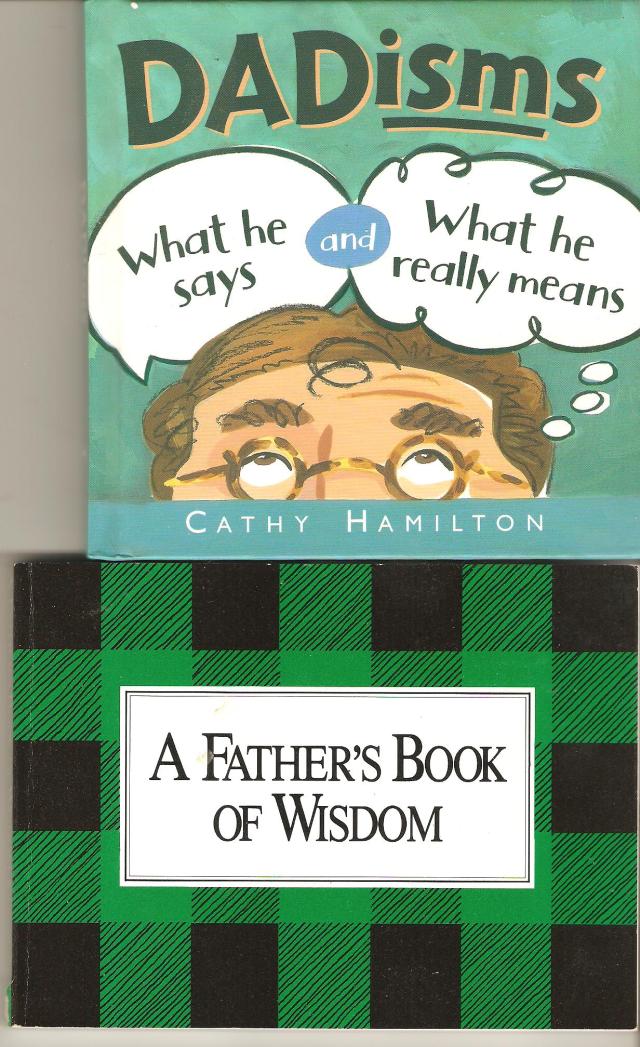
For recent Christmas gifts, I received two other books:

I contemplate my individual future, compare it to our species’ future, determine where we share goals and plot a true course that benefits us both.

For years…

For years, I thought an intellectual conversation had to include dissecting the meaning of the universe and debating the [non]purpose of life.

Then, at the suggestion of a friend, I checked a few books out of the library, books written by or about David Foster Wallace.

After reading the material, I came to the conclusion there’s no reason to read his writings anymore because DFW committed suicide, which in itself is the logical conclusion of all the arguments and observations he made in his writing.

Thus, as I have thought before but never articulated, an intellectual conversation can emphatically state or totally ignore the meaning of the universe and the [non]purpose of life.

I won’t go as far as saying that the writing/artwork/music/biographies of people who committed suicide should be banned, burned and/or buried.

I do suggest that we take into serious consideration the conclusion the suicidal people reached in their thoughts, less so for those within a short, miserable ending of a terminal illness, whatever we may [not] wish to call a terminal disease.

If a person created anything — a bridge, a computer, a spaceship, a novel, a quilt, a child — and then later committed suicide, the creations are part and parcel of the suicidal thoughts, are they not?

It is one thing to muse on the futility of our individual lives, and quite another thing to end our lives, regardless of our auspicious or suspicious beginnings.

What, next, about career suicide or similar forms of cutting off oneself from societal ties?

There are no failures.  There are no successes.  There is only what we choose to do next.

For me, there are 13,637 days until the next big step, despite momentary distractions that loom large in temporary comparison.

If a person ends his life, there is no “next” left.

DFW’s writings are absent from my future because he chose to absent himself from the present — I respect his right to say goodbye to my life.  I say goodbye to his.

Books of my father

While we continue to celebrate the holidays with my new friends and family, enjoying this morning’s early breakfast hospitality of my brother in-law’s folks and, later, dinner with mine, my sister and I reconcile our differences, strengthening old sibling bonds that run deeper than temporary political hot topics.

My mother, in the meantime, reconnects me with the early adult education of my father, exemplified by the following scanned book/calendar/flashcard titles:

Books-of-my-father 1956-Germany-calendar Books-of-my-father-2 Books-of-my-father-3

My brother in-law and I look through my father’s small collection of tools, from handmade ballpein hammers used in my great-grandfather’s metalsmithing days to brand-new circular blades still in their plastic packaging.

Let us remember the usefulness of what we have and worry less about what we don’t have.

The Old Man in the Cabin

When I walked into the sunlight to eat a banana as part of my daily ritual to get outside of the house at least once a day, the construction workers next door tended a small bonfire to burn scraps leftover from remodeling, mainly short pieces of wood.

A goldfinch in winter plumage hopped onto the tree limb near me and chirped away, expecting me to scoop up some birdseed and fill the feeder in the backyard.

The blue reflection of the sky domed me in, sunlight warming my pants and then my legs but not enough to take away the chill of freezing air around me.

When did I become this old man whose sympathy neurons were so overdeveloped from years of having to be on my toes, reacting to my father’s whims, his bursts of pent-up anger that seemed to come out of nowhere, that I don’t want to mingle with others because I have a bad habit of reading their movements in an attempt to gauge their thoughts in case they, too, would physically release their passive-aggressive volcano of internalised emotion-based thoughts or attack verbally?

I am a mischievous peacemaker, the devil’s advocate, whose raison d’être was to be constantly on the lookout for information to keep my father at bay, entertaining him while he was with me, paying attention to the conversations around us to steer people away from setting off my father.

I loved my father but to be with him, he who was the product of his parents’ and grandparents’ personality quirks, was to suppress my personality quirks that tended to set him off.

I look at myself and wonder how many of us are like me.

How many of us naturally respond to the behaviours of others just to avoid controversy?

I want to feel special, thinking I am the one and only me, but I know my set of states of energy is made of the same stuff as everybody else’s, sharing a large portion of subcultural as well as genetic traits with subsets, most especially those nearest me.

I am the two, three, four, x, y, z-dimensional intersection of subsets known and unknown.

My reaction to others is to immediately suppress my personality and figure out which subsets we have in common; then see if I can mentally predict the behaviours of the people around me not only in our conversation but also in events past and future.

The mischievous side of me sees what I’m doing, or what I know someone will do, and tries to stop it with a humourous interlude.

So many people take life too darn seriously when we know we’re all going to die.

I have grown into the old man in the cabin in the woods because I am now my father.

I ended up adopting his nonassertiveness when it comes to handling emotional responses to contradictory information from which I cannot pick or decide to choose a behaviour to exhibit in my repressed personality mode.

The most successful people, children AND adults, have spent many, many hours in training, learning from their mistakes and building upon their lessons.

Success itself is a rutted road, or the belief that one will keep one’s momentum pointed down the path of success, in whatever venture one seeks.

Habits, in other words.

My habits from early childhood were developed in response to my father, a man willing to use a belt or the back of his hand to serve justice immediately, with rarely a delay (my mother used the phrase “wait until your father gets home” sparingly).

When I was younger, I asked myself, “When do I get to be me?,” as if there was another person inside me wanting to get out.

At my workplace over the years, I attended a couple of assertiveness and anger management classes to get a better understanding of who people like me are.

I turned my assertiveness training into developing myself as a lead engineer, supervisor and then manager.

I learned that if I wanted to assert myself and was willing to face the consequences of my actions, no one would stop me because…you can guess where this is going…most of us are responding to others and repressing our personalities for the sake of the common good.

The secret to success is there is no secret to success.

All of us have habits that benefit some more than others, that’s all.

When I was an engineering manager, I wanted to hire an engineer who made more money than me.  My boss and the human resources manager told me that the system doesn’t work that way.  Either they had to increase my salary above that of the potential new hire or we couldn’t offer her a job unless it was at a lower salary.

Being a good midlevel manager not wanting to rock the boat, I extended a lower salary offer to the engineer and she declined after we couldn’t find any other negotiating points like a shorter workweek and/or flexible workday to make her hourly rate equivalent to what she was already making.

At that point in my career, I realised that I was on the wrong career track or perhaps working for the wrong company.

I never was a socioeconomic hierarchy climber.

I simply had my personal way of reading and reacting to the behaviour of others that made them feel good about themselves in the same way I treated my father, habits established in my formative years and refined as I got older.

I spent my whole life reacting, reacting, reacting and decided that if my only reward for reacting to others was to be given higher salaries and more people to manage, then I needed to stop reacting and become proactive, whatever that meant.

The only way to do that was to remove myself from social situations and place myself here in front of this electronic input device.

At least that’s what I keep telling myself.

Money buys me stuff but it never bought me prestige, it lifted me out of poverty and gave me enough luxury to satisfy my wants as well as my needs.

As we get older, our tastes change in relation to our age, societal status, family needs and reactions to a world full of overstimulating mass marketing.

At my age, the illusions now propagated by the Internet are as much a part of my life as physical realities.

My needs and wants are largely met by the reflected and beamed light of an LCD panel just as the needs and wants of the previous generation were largely met by the reflected and beamed light of a television tube, interrupted by paper-based books/magazines, breaking the monotony with retail shopping/eating therapy.

What will the next generation spend time doing in their old age after they’ve spent their youth and young adult years saying they aren’t like their parents but becoming them anyway?

How did your formative years train you for the success you’re experiencing right now?

How will your influence upon your children’s formative years feed their success?

How does this translate to subcultures, cultures, the global economy and civilisations over thousands of years?

That’s all for today — time to listen to the wind and see what its “personality” tells me will happen next in our society in some fuzzy way that comes out comically on these blog pages.

Wordyisms

Best observation of the recent U.S. presidential election:

“Pundits argue whether Obama’s reelection is a mandate for change.  To single women and gays, he’s simply a man date.”

Worse source verification of the recent “Hillary says let’s avoid talking about Benghazi, get revenge on socialites and philandering men in the military” scandal:

What was that book title, again?

News Digest, 14th of October 2012

A few years ago, I installed a couple of ultrasonic buzzers in our attics to keep out animals.  The first year, it was quieter than usual — fewer bumps in the middle of the night by our furry friends.  Then, this year, I discovered a family of raccoons had taken up residence in the attic.

Call it affirmation of survival of the fittest except, in this case, it is a family of deaf raccoons that discovered a place to live peaceably under the roof of our house.

I found out that fact last night by opening the attic door and shouting at the raccons to be quiet.  The baby raccoons kept chasing each other until one of them must have smelled me and turned, catching the attention of the other two who turned and froze, too.

Waving my arms and making aggressive charging motions scared them off into the unreachable corners.

Well, at least there’ll be no more screaming at the top of my lungs and confirming to my neighbours that the crazy man next door is trying to commune with the dead again.

In robot news, more from the analysis of Heidegger’s Being and Time by Hubert L. Dreyfus…

“2. Comportment is adaptable and copes with the situation in a variety of ways. Carpenters do not hammer like robots.  Even in typing, which seems most reflex-like and automatic, the expert does not return to the home keys but strikes the next key from wherever the hand and fingers are at the time.  In such coping one responds on the basis of a vast past experience of what has happened in previous situations, or, more exactly, one’s comportment manifests dispositions that have been shaped by a vast amount of previous dealings, so that in most cases when we exercise these dispositions everything works the way it should.”

“4. If something goes wrong, people and higher animals are startled. Mechanisms and insects are never startled. People are startled because their activity is directed into the future even when they are not pursuing conscious goals.  Dasein is always ahead of itself.”

In other words, our actions/thoughts are based purely on the past while focused on the future.  No wonder we have no idea what we’re doing in the present moment.

In business news, UPS made a hostile bid for the company Space Exploration Technologies Corp, commonly known as SpaceX, now that SpaceX has demonstrated its near-Earth-orbit package delivery service is reliable.

Experts expect FedEx to make a competitive bid to prevent UPS from expanding its reaches to “infinity and beyond,” with FedEx merely wanting to “be there before there are customers to be there,” mainly the Earth-to-Moon route that international transportation corporations are watering at the mouth to sink their teeth into.

The UPS CEO denied that Felix Baumgartner would be vice president of dropoff service for the new SpaceX division, if their bid is accepted.

The bicycle messenger union has opened negotiations for a stratospheric drop and parachute deployment training center that could provide pinpoint hand-delivery of packages to customers in remote locations via sky-high balloon or dirigible.

Pickup of the delivery person is a major sticking point in the negotiations at this time.

Confessions of a news junkie gaming the system

[Cryptic Teasing Headline inserted here]

[Byline of over/underpaid author added here]

[Headquarters of news agency/geographical source of news added here]

[Sensationalised lede added here]

[Supporting paragraphs added here]

[Unimportant filler paragraphs/charts/photos added here]

[Sensationalised summary paragraph added here]

Rinse and repeat

= = = = =

You, too, can become a news publisher/editor/reporter by following the simple steps above.

For more details on turning this into an exciting yet profitable career, buy my new book which details the secrets of creating the creative empire based on nothing but convincing people I am a convincing person whose wealth accumulation became its own source for more wealth accumulation — alchemy with mere words, I tell you!

The Menace From Beyond The Grave Situation

While we set our supercomputers to analyse processes that heat our CPUs surreptitiously, we give you another list of books added recently to our old-fashioned library of paper-and-ink products:

  • Facts on Aviation For The Future Flyers Of Tennessee, (c) 1944 Tennessee Bureau of Aeronautics, Nashville, Tennessee
  • Submarine! The Story of Undersea Fighters, by Kendall Banning, illustrated by Charles Rosner, (c) 1942 by Artists and Writers Guild, Inc., printed in the United States of America
  • The First Book of Moses called Genesis, translated out of the original Hebrew and with the former translations currently compared and revised, set forth in 1911 and commonly known as the King James version, pocket edition by American Bible Society (instituted in the year 1816), New York
  • Stamp collecting book by Richard Hill, Sunset Trail, Knoxville 18, Tennessee, manufactured by U.S. Government Printing Office
  • History of America, by Carl Russell Fish, Professor of American History, University of Wisconsin, illustrations by Leon D’Emo and Will Crawford, (c) 1925, 1928 by American Book Company, Made in U.S.A., owned by Ralph Eldridge, Knoxville Central High School senior 1932
  • The Kingsport Strike, by Sylvester Petro, (c) January 1967, Arlington House, New Rochelle, NY
  • International Atlas and Gazetteer of the World, containing a new and complete Descriptive Gazetteer of the Principal Countries of the World together with a complete collection of up-to-date Political Maps of the World, Statististical [sic] Tables, Census Figures, Air Line Distances, etc., (c) 1935 by C.S. Hammond & Co., Inc., Map Engravers, Printers and Publishers since 1900

Meanwhile, our staff in the Department of Dastardly Deeds has developed a potential storyline for us to follow:

By experimenting with chemical formulae, scientists have perfected the ideal poison letter.  Soon, they will infiltrate the labs of laser printer cartridge manufacturers, change the ingredients of the cartridge contents and release the newest formula into the homes, factories, offices, Internet cafes, construction trailers and libraries of the world.

Then, when the time is right, they will activate the signal that tells the cartridges to print a special circuit on paper.

The circuit, combined with the special ink that, after being heated and fused to the paper, uses the release of heat as the paper cools to send a strong enough “charge” to a blob of ink in one corner of the paper to achieve a minor goal of the Department of Dastardly Deeds.

The scientists have asked us not to reveal their goal at this time.

We won’t, because we have to figure out if their goal aligns with our major milestones before we decide to increase or eliminate their department budget.

While that’s going on, we’ll let you know that the brain circuit reconfiguration we’re testing on Jesse Jackson, Jr., may work this time.  We have tried similar experiments on other members in the public eye (refrain from referring to our previous work as “lobotomy,” electroshock treatment, drug cocktail service, etc.), in order to keep them in line with our milestones.

Those who haven’t stayed on message have been moved aside (again, refrain from referring to our previous work as  “failing the newspaper test,” “assassination,” “drug overdose,” suicide, not seeking reelection, retiring unexpectedly, etc.).

Managing a planet is distracting, we admit, but, on days when we’re bored, it provides an entertaining respite from looking back at this time period 1000 years in the future while trying to live a fulfilling life 1000 years from now, too.