On what you focus is who you are:
Tag Archives: literature
Next up…
A subculture calls me home…
Over the past couple of years, I have met with people who’ve asked me to reconsider the subcultural training of my youth in what I see as an attempt to keep me in the fold or bring me back in, depending on their views.
I met my wife at a summer church camp when we were 12, we married in her hometown church when we were 24 and, 26+ years later, we’re still married so I haven’t cut ties from my childhood subculture in any hard, abrupt, total sense.
Over the New Year’s Day extended holiday weekend, a good friend, medical doctor by trade, who with colleagues bought a primary school for a church congregation that has expanded from a few people to over 2000 since 2009, loaned me the following books to read:
- How Should We Then Live? (L’Abri 50th Anniversary Edition): The Rise and Decline of Western Thought and Culture, by Francis A. Schaeffer (Author), Lane T. Dennis (Foreword)
- How Now Shall We Live?, by Charles Colson (Author), Nancy Pearcey (Author), Harold Fickett (Collaborator)
Before I read them, I shall provide for myself and the reader a snippet of a review of each book.
- The first: “Finally, Schaeffer names well, twenty-five years before such things unfolded in Washington, just how societies without a sense of what the political means, would respond to terrorism. Such societies, Schaeffer writes, because they do not have any sense of liberty as a genuine political good, will “give up liberties” and welcome “a manipulating authoritarian government” (248) when decades of comfort get disturbed and the government promises to destroy evil (a strange promise for a government to make, as I tried to say even back in the last decade, but then again, it was the folks who recommended Schaeffer who seemed most convinced that a government could do just that).”
- The second: “For Catholics—as well as for Protestants who have kept up contact with their Catholic past—natural law has been the principal vehicle for reflection upon general revelation. Though [John] Calvin accepted the natural law, he did not make much of it—for fear, perhaps, of obscuring the depravity of the mind. Among most of his heirs, the tradition has languished. Some even oppose it as a de facto denial of the fall, a neo–Scholastic treason more in debt to Aristotle than to Jesus Christ. I believe that this is a misunderstanding, and the Colson and Pearcey project would have been impoverished had it enjoyed no access to this great river of thought. [C.S.] Lewis—who, like the authors, only rarely refers to natural law by its proper name—is in many ways its ideal missionary, not only for laypeople who have never heard of it and for scholars leery of its Scholastic form, but also for specialists who have forgotten its roots in common sense. The authors have drunk deeply from his well.”
For recent Christmas gifts, I received two other books:
- How the Irish Saved Civilization, by Thomas Cahill
- How the Scots Invented the Modern World: The True Story of How Western Europe’s Poorest Nation Created Our World & Everything in It, by Arthur Herman
I contemplate my individual future, compare it to our species’ future, determine where we share goals and plot a true course that benefits us both.
For years…
For years, I thought an intellectual conversation had to include dissecting the meaning of the universe and debating the [non]purpose of life.
Then, at the suggestion of a friend, I checked a few books out of the library, books written by or about David Foster Wallace.
After reading the material, I came to the conclusion there’s no reason to read his writings anymore because DFW committed suicide, which in itself is the logical conclusion of all the arguments and observations he made in his writing.
Thus, as I have thought before but never articulated, an intellectual conversation can emphatically state or totally ignore the meaning of the universe and the [non]purpose of life.
I won’t go as far as saying that the writing/artwork/music/biographies of people who committed suicide should be banned, burned and/or buried.
I do suggest that we take into serious consideration the conclusion the suicidal people reached in their thoughts, less so for those within a short, miserable ending of a terminal illness, whatever we may [not] wish to call a terminal disease.
If a person created anything — a bridge, a computer, a spaceship, a novel, a quilt, a child — and then later committed suicide, the creations are part and parcel of the suicidal thoughts, are they not?
It is one thing to muse on the futility of our individual lives, and quite another thing to end our lives, regardless of our auspicious or suspicious beginnings.
What, next, about career suicide or similar forms of cutting off oneself from societal ties?
There are no failures. There are no successes. There is only what we choose to do next.
For me, there are 13,637 days until the next big step, despite momentary distractions that loom large in temporary comparison.
If a person ends his life, there is no “next” left.
DFW’s writings are absent from my future because he chose to absent himself from the present — I respect his right to say goodbye to my life. I say goodbye to his.
Weitere Bücher, die mein Vater gehörte
Going through the small library of my father reminds me he was not always rough and gruff but had a sense of humour and a soft side that he shared with friends and family:

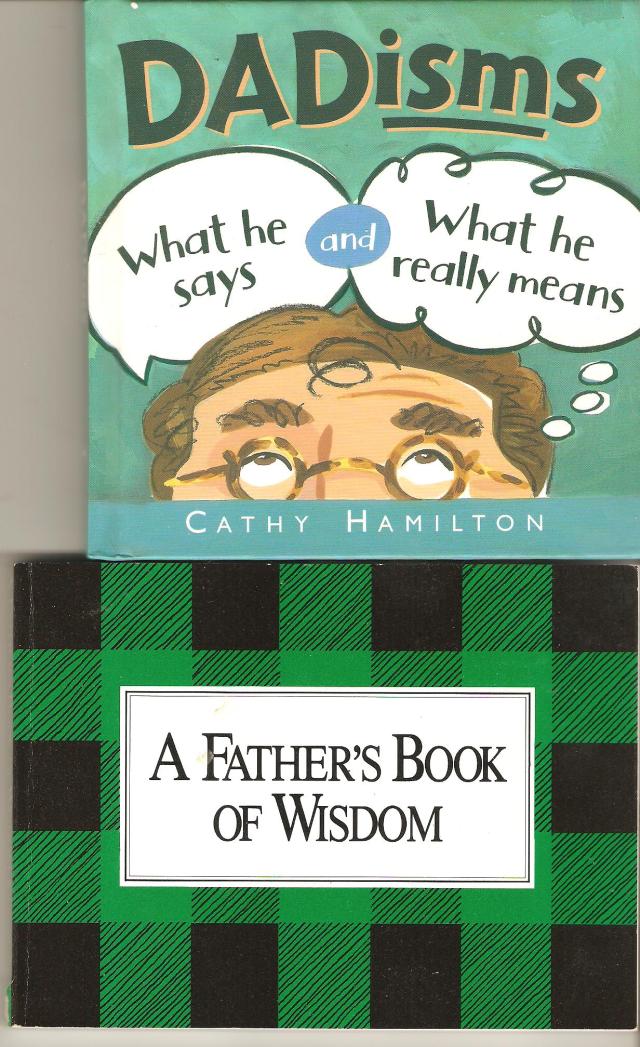
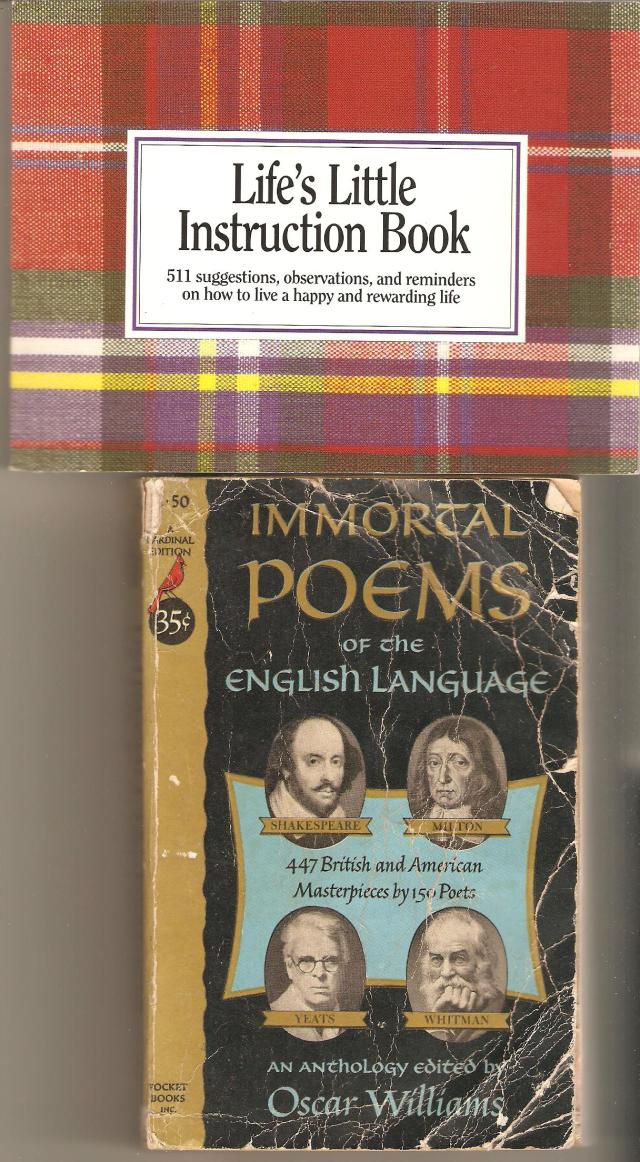
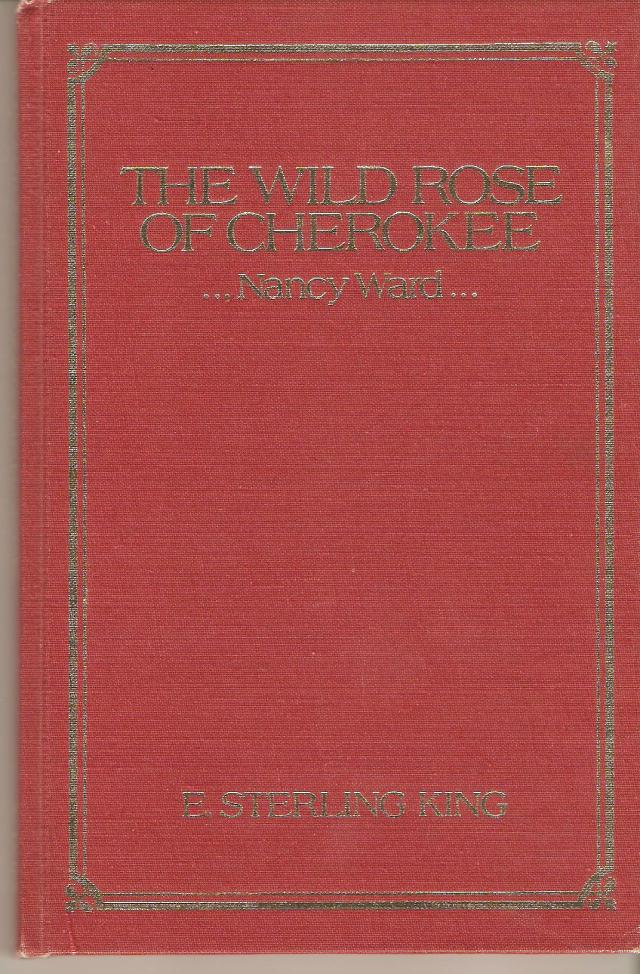


The Old Man in the Cabin
When I walked into the sunlight to eat a banana as part of my daily ritual to get outside of the house at least once a day, the construction workers next door tended a small bonfire to burn scraps leftover from remodeling, mainly short pieces of wood.
A goldfinch in winter plumage hopped onto the tree limb near me and chirped away, expecting me to scoop up some birdseed and fill the feeder in the backyard.
The blue reflection of the sky domed me in, sunlight warming my pants and then my legs but not enough to take away the chill of freezing air around me.
When did I become this old man whose sympathy neurons were so overdeveloped from years of having to be on my toes, reacting to my father’s whims, his bursts of pent-up anger that seemed to come out of nowhere, that I don’t want to mingle with others because I have a bad habit of reading their movements in an attempt to gauge their thoughts in case they, too, would physically release their passive-aggressive volcano of internalised emotion-based thoughts or attack verbally?
I am a mischievous peacemaker, the devil’s advocate, whose raison d’être was to be constantly on the lookout for information to keep my father at bay, entertaining him while he was with me, paying attention to the conversations around us to steer people away from setting off my father.
I loved my father but to be with him, he who was the product of his parents’ and grandparents’ personality quirks, was to suppress my personality quirks that tended to set him off.
I look at myself and wonder how many of us are like me.
How many of us naturally respond to the behaviours of others just to avoid controversy?
I want to feel special, thinking I am the one and only me, but I know my set of states of energy is made of the same stuff as everybody else’s, sharing a large portion of subcultural as well as genetic traits with subsets, most especially those nearest me.
I am the two, three, four, x, y, z-dimensional intersection of subsets known and unknown.
My reaction to others is to immediately suppress my personality and figure out which subsets we have in common; then see if I can mentally predict the behaviours of the people around me not only in our conversation but also in events past and future.
The mischievous side of me sees what I’m doing, or what I know someone will do, and tries to stop it with a humourous interlude.
So many people take life too darn seriously when we know we’re all going to die.
I have grown into the old man in the cabin in the woods because I am now my father.
I ended up adopting his nonassertiveness when it comes to handling emotional responses to contradictory information from which I cannot pick or decide to choose a behaviour to exhibit in my repressed personality mode.
The most successful people, children AND adults, have spent many, many hours in training, learning from their mistakes and building upon their lessons.
Success itself is a rutted road, or the belief that one will keep one’s momentum pointed down the path of success, in whatever venture one seeks.
Habits, in other words.
My habits from early childhood were developed in response to my father, a man willing to use a belt or the back of his hand to serve justice immediately, with rarely a delay (my mother used the phrase “wait until your father gets home” sparingly).
When I was younger, I asked myself, “When do I get to be me?,” as if there was another person inside me wanting to get out.
At my workplace over the years, I attended a couple of assertiveness and anger management classes to get a better understanding of who people like me are.
I turned my assertiveness training into developing myself as a lead engineer, supervisor and then manager.
I learned that if I wanted to assert myself and was willing to face the consequences of my actions, no one would stop me because…you can guess where this is going…most of us are responding to others and repressing our personalities for the sake of the common good.
The secret to success is there is no secret to success.
All of us have habits that benefit some more than others, that’s all.
When I was an engineering manager, I wanted to hire an engineer who made more money than me. My boss and the human resources manager told me that the system doesn’t work that way. Either they had to increase my salary above that of the potential new hire or we couldn’t offer her a job unless it was at a lower salary.
Being a good midlevel manager not wanting to rock the boat, I extended a lower salary offer to the engineer and she declined after we couldn’t find any other negotiating points like a shorter workweek and/or flexible workday to make her hourly rate equivalent to what she was already making.
At that point in my career, I realised that I was on the wrong career track or perhaps working for the wrong company.
I never was a socioeconomic hierarchy climber.
I simply had my personal way of reading and reacting to the behaviour of others that made them feel good about themselves in the same way I treated my father, habits established in my formative years and refined as I got older.
I spent my whole life reacting, reacting, reacting and decided that if my only reward for reacting to others was to be given higher salaries and more people to manage, then I needed to stop reacting and become proactive, whatever that meant.
The only way to do that was to remove myself from social situations and place myself here in front of this electronic input device.
At least that’s what I keep telling myself.
Money buys me stuff but it never bought me prestige, it lifted me out of poverty and gave me enough luxury to satisfy my wants as well as my needs.
As we get older, our tastes change in relation to our age, societal status, family needs and reactions to a world full of overstimulating mass marketing.
At my age, the illusions now propagated by the Internet are as much a part of my life as physical realities.
My needs and wants are largely met by the reflected and beamed light of an LCD panel just as the needs and wants of the previous generation were largely met by the reflected and beamed light of a television tube, interrupted by paper-based books/magazines, breaking the monotony with retail shopping/eating therapy.
What will the next generation spend time doing in their old age after they’ve spent their youth and young adult years saying they aren’t like their parents but becoming them anyway?
How did your formative years train you for the success you’re experiencing right now?
How will your influence upon your children’s formative years feed their success?
How does this translate to subcultures, cultures, the global economy and civilisations over thousands of years?
That’s all for today — time to listen to the wind and see what its “personality” tells me will happen next in our society in some fuzzy way that comes out comically on these blog pages.
For my religious friends…
One more for the road…
One more link for today and then it’s time for afternoon reading of a paper-based book:
Tugged in two directions
Two storylines wait to be written (note to self: lots of twos in blog entries lately, need to change number to something larger but not too large).
The first storyline is about the person who grow up in a suburban Christian home, singing in the children’s choir, visiting nursing homes on the weekends, serving the community as a Boy Scout throughout the week, who, as an adult, had strayed on to other lifestyles but, due to a recent horrible news event of which he had no direct connection, other than subculturally, he redirects his living back toward the stricter interpretation of the Bible, contradictions fully understood and prioritised, praising those who followed the stricter lifestyle while reaching out to others who have not seen the light, avoiding the condemnation and criticism of alternate lifestyles that others in the Christian faith were wont to do.
The second storyline shows yet another version of how subtle manipulation of the rise and fall of importance of subcultures in mass media/pop culture allows the use of subliminal forms of coercion to herd the masses rather than the overt methods of intimidation and public executions.
If you want to eliminate real, live, high-powered semi-automatic guns and rifles from the population, build up a heavy desire for them by advertising the ubiquitous sale of virtual shooting in games and simulations (“9.5 out of 10!” exclaims Computer Killing and Gratuitous Violence magazine), push passive-aggressiveness to a tipping point, give lone wolves the feeling they have no way out but to kill others rather than seek socially unacceptable counseling, watch the pot boil over and Voila! another gunman kills a bunch of people just in time to call for legislation/executive orders to limit the sale/ownership of real, live, high-powered semi-automatic guns and rifles by the population.
The four previous paragraphs demonstrate how you base future actions on living in the past.
But I live in the future.
I, as we know, is an artificial construct.
Space and time do not exist.
We can bypass the normal scientific theories and create our own as shortcuts between moving points.
“I” see that the coffee mug on the table is not sitting still, traveling through space at thousands of miles per hour while gravitationally held in place by the local sphere of molten metal and various spinoffs of sets of states of energy in motion (trees and gnats, for instance).
But all that “I” see is an illusion — to see the real deal “I” have to disintegrate, disappear, tear apart the comfortable surroundings that are here to support the fragile structure called “me.”
How few of the billions of “us” have been given the opportunity to step out of our beautiful cocoons and see any truth except what we believe to be the Truth?
We have created our origin stories, modified as our civilisations expand and die, supposedly growing more informed, more sophisticated, less ignorant, more inclined to be hypnotised by shiny new baubles we call the promise of new technological advances that will reveal a deeper, richer aspect of the Truth than we had never seen before (“buy our 3D glasses to see an imaginary world displayed on a flat surface when you already live in the real, free, three-dimensional world that’s much less fascinating!” [implication: you get what you pay for]).
You know what I mean, we were created by God(s) for their pleasure, the world is a stage and we are merely players, the universe is a computer simulation, et cetera and so forth, on and on until you wonder if your species will ever create anything really new.
Hucksters in the form of scientists, researchers, advertisers, marketers, parents, religious leaders and politicians, every last one of them in on the joke but unwilling to admit the punchline is us.
The first rule is there are no rules.
If you want a story that tells it like it is, then we have to remove “you” from the story as reader and imaginary participant.
There is no “you,” “me,” “us,” or “I.”
Easier said than [un]believed.
When you can let go of everything around you that is an accident of evolution — the ego for ego’s sake — you are ready to stop being you and become part of the story behind the story.
Otherwise, it’s the same ol’ thing over and over.
Are you willing to sacrifice your ego for the sake of a good story because that’s the only way you get to the future of space and time that does not exist?
You can be a solipsist or you can be nothing — there is no such thing as being tugged in two directions at once.
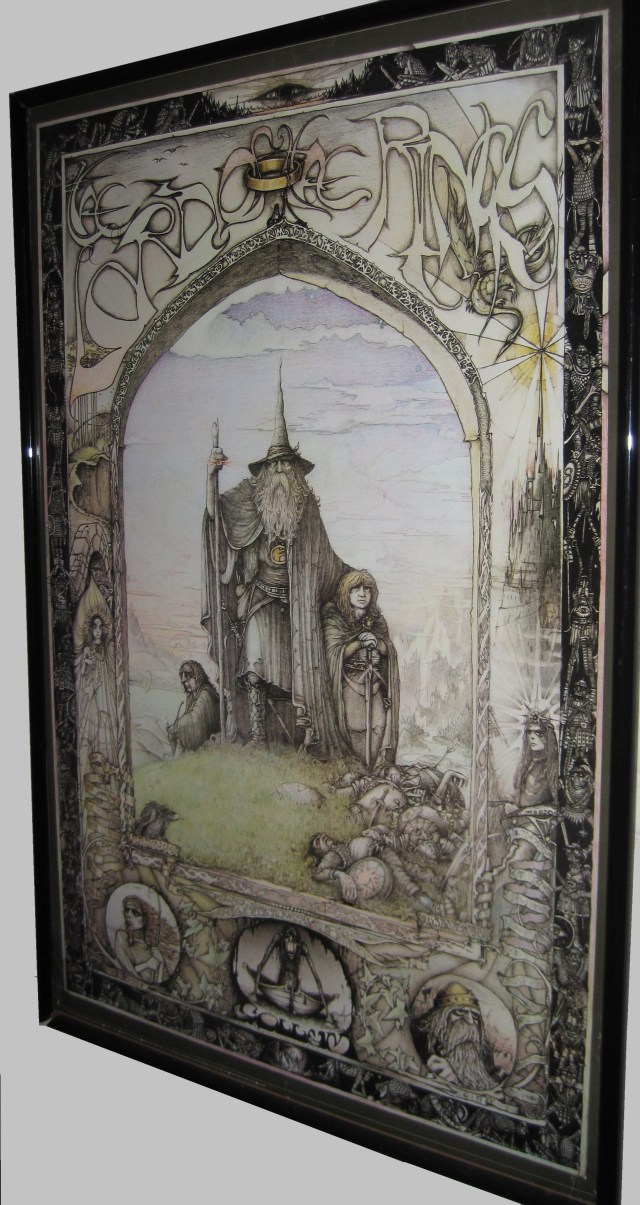
That cinematic time of year, again for the very first time
Ahh…memories of my youth…
Time to repost the poster that adorned my college dorm walls loke (as opposed to Lo) so many years ago…
Sigh…time flies while flies time thyme growing next to drying paint…
 treetrunkdings