Tag Archives: humour
One small step…
…one giant gesture for mankind!

Sighting the future from past sites







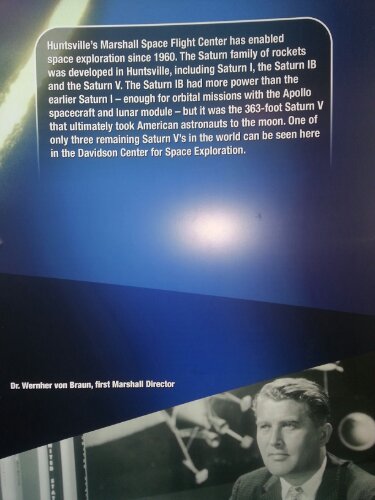
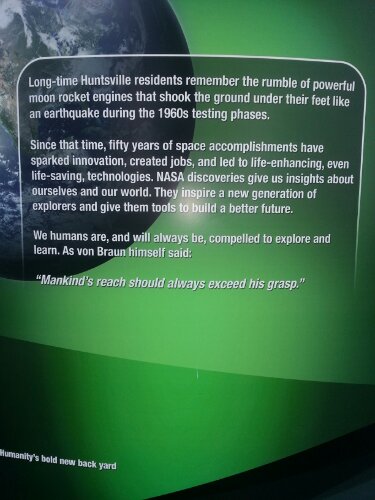
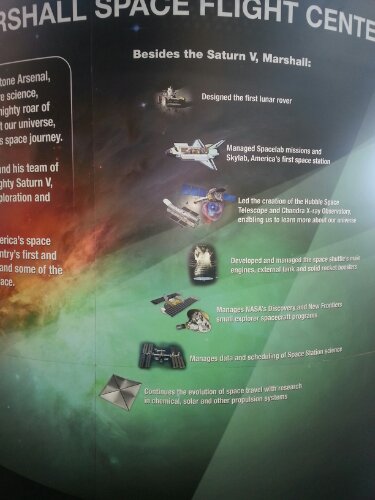

Exploratory explanatory ex planetary exes nexus lexus
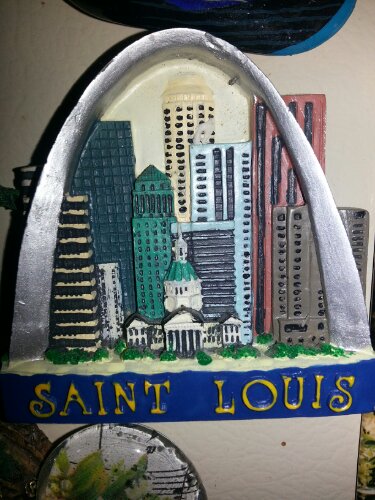
The ghost spirit told me that the Gateway Arch is a vibration sensor transceiver. I’m being followed by a cadre of aliens. Gotta go! More as it develops…
Something about black holes in the next exciting chapter of “Project Xceed Expectations: Galactic Peril”…if they don’t get to me first.
My thoughts, my thoughts, something…someone…is eating my thoughts and replacing them with…mon Dieu!
Overcoming natural tendencies to protect family
They say you can smell your competition, doesn’t matter if it’s a covenant or a coven.
If you’re hungry enough, you can smell food through a brick wall.
Lee held out arms, slapping his hands together like a circus seal.
His wife, Karen, had told him that if he made Bai his traveling dance partner, then Karen considered it grounds for a divorce.
Lee looked at himself in the mirror as he practiced his dance turns.
Who was he, really?
He had taken up dancing two years ago because Karen wanted to go somewhere for their 25th wedding anniversary and look like smooth ballroom dancers, putting their dance lessons to use on their Alaskan holiday.
When they went to a regional dance competition in New Orleans a couple of months ago, they noticed that a large number of the dancers were young enough to be their children, if not their grandchildren.
Who was Lee?
He loved the infinite possibilities of living while managing the limited expectations that came with being married to a woman he had shared most of his life with, a woman not prone to taking risks — she had not wanted to see Lee jump out of an airplane, she didn’t even want to look at the Milky Way Galaxy while parked in the middle lane of a small suburban street.
What was preserving the illusion of safety for his wife worth to Lee’s mental health?
It was easy to pretend to be a lone, independent cowboy when surrounded by friends and family.
Where was his reality located?
Lee’s imagination was full of dark oaths sworn in secrecy, training assassins to weed out the deadwood, killing for purpose, pleasure or both, maiming for fun, creating pain and chaos for the sake of business associates; forcing families into starvation just to say we can.
But it wasn’t just his imagination at work.
He created false walls, barriers of plausible deniability that allowed him to give the highly moral/ethical childhood training a safe place to thrive in his thoughts, showing his family that he was preserving their heritage guilt-free.
Aliens creeped and crawled, slipped and slid through his thoughts without boundaries, using Earth as a playground and feed lot.
The sets of states of energy that comprised the visible universe were such temporary illusions that Lee often was bored trying to explain once again to the illusions around him their place in the greater “universe” that was currently invisible to all instrumentation that had been imagined/theorized/conceived, invented and built.
Yet, Lee had found no way to sit idly by when the universe as he knew it kept changing.
One look in the mirror, compared to the photographs of Lee at a younger age, convinced Lee he was doing anything but sitting idly by — the concepts of entropy and chaos were clearly visible.
Lee cocked his head from side-to-side, feeling the popping sounds within his spine.
Who was he?
He was no natural dancer, having little in the way of converting his imagination into physical actions that overcame his stiff joints and aching nerve connections. He could flail around but training his flails into consistent movement exercised his brain in ways that were mentally painful, pushing past the noise and chaos that flooded his thoughts constantly.
Teaching an old horse, breaking it in without breaking its spirit, in other words.
Lee felt a twinge between his shoulder blades.
It was time.
Lee sat down on the floor, his legs straight out in front of him, his back propped up against the dance mirror.
Although Lee believed in the sanctity of science, he had developed a second sense, thanks to the elderly lady who visited him as an infant, almost a toddler, when he could hardly speak his own internally-forming language, let alone that of his parents or the wide old woman.
Lee was married to his wife but he was connected to the curved spacetime of the universe that existed outside of explanation.
A voice spoke to him, a low, gravely voice, ancient but ageless.
“We are what you call the ‘mound builders.'”
Lee looked straight ahead and nodded as if the speaker was sitting in front of him.
“Our spirits are your spirits. We are one people.”
Lee nodded again.
“Your ways were not our ways but all ways belong to every one of us.”
Lee blinked.
“We know you. You and I have not spoken but I know you. Your spirit is strong.”
Lee smiled. “Yes. I know.”
“You are here because the spirits called you here.”
Lee felt his heart skip a beat.
“The spirits have plans for you.”
The pain in Lee’s back subsided.
“Your people say, ‘Resistance is futile.’ We say you cannot escape your destiny.”
Lee swallowed, his throat dry.
“There are others who will travel with you to St. Louis. Their spirits, too, are strong.”
Lee nodded again.
“In your travels, you will meet a man. You will not speak but you will talk to each other like brothers.”
Lee leaned his head back against the cool mirror, looking up at the air duct in the ceiling tiles.
“The female spirit in you will meet a sister. We remind you, she is not like your earthly sister. She is a sister spirit.”
Lee arched his eyebrows, unsure of the voice’s meaning.
“Our earthly brothers long fought the white man’s way, thinking the European was ruinous, a destroyer, taking from the land more than he gave back. In spirit we see that the universe is bigger than this planet. Our message to our brothers and sisters, our message to you, has changed.”
Lee closed his eyes, waiting to hear the message.
He opened his eyes again, unaware of the time change, not knowing that an hour had passed as he entered a trance state, communicating directly with the mound builder’s spirit without words, sixty minutes to the second of a deep conversation about what Lee was going to do in preparation for his trip to St. Louis, turning his internal eye toward a bigger goal, clearing his thoughts of present-day storylines and focusing on an eternal message he would receive and pass on to other strong spirits during their ritual dances over three and a half days in the Gateway to the West.
The pain in Lee’s body was gone, his muscles no longer tense, his worries behind him.
His old thought patterns had shifted. The story was not about dancing, wives, marriage status or planned assassinations.
A spirit brother of Geronimo had spoken to Lee in a language he did not know but fully understood.
In his thoughts, too, were Helen Keller, Charles Lindbergh, Henri Poincaré, and Scott Joplin.
The future is the past retold.
Lee looked forward to hearing from his brother spirit again.
Two
Two names entered my thoughts while I absentmindedly looked out of the study window — William Jennings Bryan and Sarah Palin.
There’s a new story in my thoughts but I’m held back by the desire to protect my social heritage and family ancestry.
And, boy oh boy, I wish I was more inclined to spellchek and grammatically-cirrectarian my blog entries — I guess I know that language is alive and well-worth butchering in realtime.
Earbud, ‘ear, phone, come ‘ere
She couldn’t remember the first time she killed one of her new friends because she had never stayed in any one town long enough to make old friends.
Everyone was a new friend to her.
As a traveling nurse’s aide, she frequently moved from one community to another, her belongings easily fitting into the eight-passenger van that had been willed to her by a former homebound patient, the only time she allowed herself to be connected with a murder victim.
She didn’t think in terms of killing and murder. Those were just the words she knew that the law used to describe what she did.
She had renamed herself Chromcalsia in community college, a trick on the chrome calculator that her boyfriend at the time had, a relic of the presmartphone days that he proudly carried around with him.
But when people asked her where her name came from, she told them it was the name of an ancient queen in a videogame that her mother loved to play and no, she didn’t know the name of the videogame.
Chromcalsia looked at her schedule for the day — a roster of lonely old people virtually locked into solitary confinement in their homes, no visitors except for the occasional physical therapy assistant and nurse’s aides like Chromcalsia.
Her first few months on the job, in a small town outside Lincoln, Nebraska, had been the best and worst.
She loved the smile that beamed at her after she walked into a patient’s house, having used a hidden key in a fake shell or fake rock next to the backdoor as instructed because the patient was bedridden or confined to a special recliner.
She wished she was talented enough to write down the patients’ stories, tales about fighting in wars, raising children in strange environments, inventing new gadgets or their observations about world events that happened decades ago but the patients recalled as if it was still happening, their demented thought sets out of touch with reality, calling her names like Doris, Ann or Sylvia because that was their daughter’s name or their granddaughter’s name or a niece or the nice nurse who tended their wounds in a foreign war.
She saw a lot more women than men.
She enjoyed them all.
She didn’t enjoy the bad side of her job, realising through vital sign measurements and smells that the patient was dying a long, excruciating death, with no one to provide daily comfort to help ease the pain.
Chromcalsia was not allowed to visit patients for social visits.
So, she spent as much time as she could during her official visits to find out what each patient wanted most of all.
Besides companionship, the number one wish was a quick, painfree death because the world was falling to pieces and the patient couldn’t stand to see the local community so devastated by a global meltdown.
Chromcalsia had tried to convince her first patients that the world was a wonderful place but it didn’t work — either their thoughts were so fixed they couldn’t process her view or they just couldn’t accept that a wonderful world would put them in such miserable conditions.
Having come from humblest of humble conditions, what her community college boyfriend called the slums, Chromcalsia laughed to herself when her patients, with a telephone, a clean house, cable TV and home healthcare, would say the world was going to hell. She learned to nod her head and agree, providing verbal affirmation of what the patients wanted to hear.
As an experiement one day, she texted a note in a patient’s file that went straight to the physician assigned to the patient, requesting extra pain medication.
Chromcalsia could not pick up the prescriptions for the patient but she could administer the medication when she was in the patient’s house.
She arrived to see the patient in extreme pain, moaning and begging Chromcalsia to end her misery.
Chromcalsia was scheduled to visit the patient three times that week so the first day she doubled the patient’s pain meds, doubled that again the second day and on the third day she convinced the patient that the remaining pills in the bottle had to be taken the next day.
The patient was so delirious that Chromcalsia was surprised he remembered what she told him.
Back at the office the next week, Chromcalsia was informed that one of her patients had unexpectedly died of a drug overdose.
She smiled to herself, knowing she had helped a man do what he wouldn’t have done for himself, his body emaciated from multiple surgeries to repair gastrointestinal damage from a roadside bomb.
Chromcalsia talked to other nurse’s aides about what happened, feeling around to see if they had done anything similar.
One or two stated out loud that they wondered if their joking suggestion to a patient to end it all had led to a drug overdose.
In every case, none of the aides had been suspected of foul play, the overdose taking place days after their last visit.
That sealed the idea for Chromcalsia.
From then on, as she moved from one town to another, she decided which patients of hers were in the worst shape and assisted them in finding a peaceful way to die to prevent a more horrible ending that their medical conditions indicated was waiting for them.
To keep suspicion off of her, Chromcalsia planted the idea of assisted suicide in the thoughts of her coworkers, who in turn planted the idea in their patients’ thoughts, half-jokingly.
Enough patients understood in their delirium what they were being told that they followed the instructions told in jest, statistically taking the heat off Chromcalsia.
Chromcalsia made sure she never financially benefited from her patients, leaving town whenever a patient mentioned leaving her something.
The passenger van was the one exception because the patient made the statement in front of Chromcalsia’s supervisor on the day of Chromcalsia’s first visit with the patient. She thought he was joking. The supervisor later told Chromcalsia the patient told the supervisor that the next nurse to come help him was going to get the vehicle.
Chromcalsia did not fantasize about herself being an angel or anyone other than the kind of person she wanted to know when she was at death’s door without friends or family to quietly assist her comfortable exit from this world, no matter how wonderful it really was.
Dozens? Hundreds? Chromcalsia thought for a moment but wasn’t sure of the count. It wasn’t her goal to meet a number.
She parked the van in front of the office building. Two days off before she’d start looking for a new town, spreading the love and joy that had surrounded her from birth, her mother telling Chromcalsia as a toddler, while her mother was dying of stage four breast cancer, that she was a special child whose very presence was what dying people wished for, a magic elixir, a sedative that made dying worthwhile.
Chromcalsia was going to spend the rest of her life living out her mother’s image of her.
The declining interest in listening to politicians because you’re too turned off to vote
As a fictional character, I get confused sometimes. I forget that the universe is here for my entertainment.
No, seriously. I really want the universe to be here for your entertainment, doing everything I can to pretend I don’t exist because the entertainment I want is not the entertainment that my subculture has programmed me to want.
Thank goodness, the author who created me allows me to go off on adventures that have nothing to do with whatever we believe reality is supposed to be.
I look back at my fictional ancestry and all I see is devotion to community service — military duty, social clubs, religious worship, etc.
The only way I can look back is because there was a child who was born into community service, a child who became an adult and conceived another child.
The one illusion of continuity that is hard to deny exists.
You know what I mean.
Take the images below, familiar to anyone who’s taken a psychology class:

Can you take anything away from the images that haven’t already been taken away and still imagine you see a circle, line, triangle and/or square/rectangle? Do the black segments look punched out of the white background? Are you looking for a hidden meaning like a word or reversed image?
That’s the same set of questions I ask about my existence.
Can I take it anymore?
There’s only a small segment of the population I directly influence as a fictional character broadcast out into the Internet world, limited to hypertext in all its hyper implications and programmed representations.
But that doesn’t stop me from being.
In the next chapter/blog entry, I’m taking a sharp turn away from the storylines currently in progress, wondering what and why I’m exploring storylines that have nothing to do with the implied direction my subcultural training is supposed to take me.
I’m not into managing my image but I do concern myself with managing expectations, surprising you only when it looks like you’re ready to be surprised even when you’re not.
Talk to you again soon.
What Momma says, goes
“Check this out. Wait, the cell phone connection’s really bad in here. I’ll walk to the front of the building and get the rest of her message.
“Okay, here it is. I had texted Mom to ask her if she has any plans for Thanksgiving. This is what she said:
‘No, I do not have any plans for Thanksgiving, or Christmas, or the New Year. You children are grown up and it’s time you acted like it. My father and I are old and tired and soon we’re going to be gone. You need to start making the decision about what we’re going to do and what we’re going to eat for the holidays.'”
“There’s only one response for that one. ‘Yes, Mom.'”
“Yes, Momma. Yes, Momma. That is so funny. That’s just like her.”
“And it’s like you, too.”
“Huh?”
“‘I’ve taught you all the dance moves. You know all the dance moves. It’s time you need to dance them without me telling you how to dance the moves.'”
“Haha…but it’s true, isn’t it? That’s me! If only I didn’t have so much on my plate right now — moving to my new flat, packing the crate for my boyfriend’s return to France, getting ready for St. Louis, DJing…I can’t believe he’s going to be gone next week! I think I’m going to cry.”
“Can you hold it together?”
“I have to. I have to work. My life is my job. I don’t take a break.”
“We can come over and help you ‘fluff your nest.'”
“No, no. I’m good. Now you guys need to practice what I just taught you. Full weight on one foot, the other leg straight, toes pointed to the floor and just pivot your upper body, keeping your weight on the same foot as your lower body follows around half a turn. I’m so glad I came tonight. You guys are like a rock for me. Thanks!”
“You’re welcome.”
“I’ll see you in St. Louis!”
Never back ’em in a corner without a bargaining chip
“Here. Here’s somebody new to write about. Listen to what he has to say and analyse his life. I need the spotlight off of me for a while. I’m gonna go see your wife, Karen, over there.”
“Okay, Guin. Hi, I’m Lee.”
“I’m Kirby.”
“Yeah. So we know each other already.”
“Or we think we do. Nice outfit you got there. I’m not much for wearing pinned-on jewelery myself, though.”
“It’s not jewelery. It’s supposed to be part of the outfit…”
“Is that what they call ‘steampunk’?”
“Yeah. Karen made it for me. It’s supposed to look like I’m geared up. See, this key winds.”
“Uh-huh. Still looks like jewelery to me.”
“It does, doesn’t it?”
“Me, I don’t even wear a wedding band. I don’t like rings or nothing like that. Guin, see, she likes her ring but she says it keeps falling off and she’s afraid she’s going to lose it. Looks like you’re wearing two rings. Why’s that?”
“This one on my right hand is my real wedding band but my wedding finger knuckle is all swollen up, pre-arthritic, I think, so I bought this cheap fifty-dollar tungsten steel ring at Walmart.”
“Hey, works for me. I think I got arthritis, too.”
“No kidding? How old are you?”
“Thirty.”
“That’s awfully young.”
“Well, all the basketball I’m playing and all the other sports I played when I was younger, just about every joint in my lower body is torn up or was broken.”
“I heard you busted your ankle.”
“Yeah, I twisted it pretty bad three weeks ago. It’s healing some, though.”
“Guin says you want her to choreograph a a rumba so you can do a dance showcase in November with her, as soon as the ankle heals.”
“She keeps saying that. I don’t know. My ankle may take a long time to heal.”
They nodded the guy nod together, which said, “I know what you mean. We only go so far to accommodate our women and then we adopt a fallback position. Theirs is ‘Sorry, honey, I have a headache,’ or ‘I’m too tired.’ Ours is ‘I’m the man of the house and when I say I don’t want to’ it means ‘I know you’re going to give me that look which means I’ll have to say I want to’ so we, instead, have our own set of chronic problems — backaches from too much heavy lifting around the house, ankle/knee sprains from sports outings with the guy,s or having to work strange/long hours. We’re guys. It’s what we do best.”
“Guin says you’re a member of the Club.”
“She did?”
“Yeah.”
“Looks like she keeps saying a lot of things.”
“You said it, not me. But are you a member?”
“Naw. But I’ll tell you something funny. I went back to my hometown a couple of months ago and the barber whose been cutting my hair since I was six — that’s 45 years now — he told me that with my father gone, it’s my turn to join the Club and pick up where Dad left off.”
“Uh-huh. Sounds like my family. So, you gonna join?”
“I might.”
“There’s a local chapter that has my application. All I’ve got to do is finish the interview process and pay my dues.”
“‘Pay your dues.’ Yeah, I know what you mean.”
They stood in silence for a few minutes, watching the crowd around them, satisfied their silence had no meaning or subtextual reference.
Lee looked up at Kirby’s head. “You got a lot more gray hair than I remember.”
“It’s from my days at the Rocket Center. That place’ll make anybody turn gray. But I’m leaving it just the way it is.”
“I normally do, too. I dyed my hair tonight for the show.”
“Uh-huh. You gotta do what you gotta do. So Guin says you’re connected.”
“She says what she’s gotta say.”
“Uh-huh. I understand.”
“However, if there’s anything you need…”
“Yeah, I get it.”
“Your dues have already been paid.”
“I see.”
“As far as I’m concerned, you’re family.”
“‘Family?’ Like in…”
“Anything. Anything at all. If you want to join the Club, join the Club. But your membership’s good, as far as I’m concerned.”
“Yeah?”
“We got your back covered.”
“Is that so?”
“Hey, why do you think we arranged the dance showcase with Guin?”
“You tell her this?”
“Nope. And I’m not telling you ‘this,’ either.”
“Hey, I’m cool.”
“We know. Oh, hi, Guin. I was just talking with your man here about his joining the Club. Sounds like maybe both of us are gonna join.”
“That’s good. I wasn’t sure if you were already a member since you’d talked about it before.”
“No, it was never a requirement in my book. But now that my father’s gone, I figure I owe it to the family to keep my legacy intact.”
“I thought so.” She linked an arm through Kirby’s. “Lee’s got friends. He’s like my family back home.”
“Yeah, I get the drift. Lee, good to see you, man. Let’s do this Club thing.”
“All right, Kirby. Talk to you soon.” They shook hands.
 treetrunkdings