Tag Archives: culture
Experiment
I’ve decided to try an experiment on myself.
I do not read or listen to conservative/Republican news/commentaries and I dropped Facebook so I don’t know the latest trends in those who lead/follow/believe that viewpoint.
As an experiment, anything negative said about conservative/Republican people/lifestyles on the website salon.com will help me understand which conservative/Republican beliefs/actions are important enough for a mass media outlet to present, good or bad, to readers for consideration.
After considering for a while, I’ll decide which conservative/Republican actions highlighted by salon.com to emulate.
My parents always told me when they said, “we do not want you to do that,” I never heard the word “not” and did what I thought they told me to do.
Wish me luck!
Hope your grandkids enjoy the hot weather next century
Time for grumpy man to appear.
I’m of mixed opinion here. As much as I enjoy reading various authors’ work, I care a little bit about our species’ contribution to climate change (formerly known as global warming, not Prince) but if the authors who have kids are going to burn fossil fuel for frivolous holidays, then I say let Rome burn — if they don’t care about their children’s future, why should I?
How many people talk about caring for the environment while eating plastic food, getting plastic surgery, and driving plastic cars but putting a few plastic bottles on the curb for recycling each week like trying to stop a tsunami with a pitchfork?
Okay, grumpy man stump speech is over.
Might be time to go see one of them talkie moving picture shows to let my back heal from too much heavy lifting while recycling reclaimed lumber.
Best you pray for a giant volcano eruption to cool the planet for a few decades, eh?
“Outsider” art
In the continuing saga of the Summer of 2014 “Back to Nature” Staycation, I think I have decided upon the artform I want to portray on the front deck…
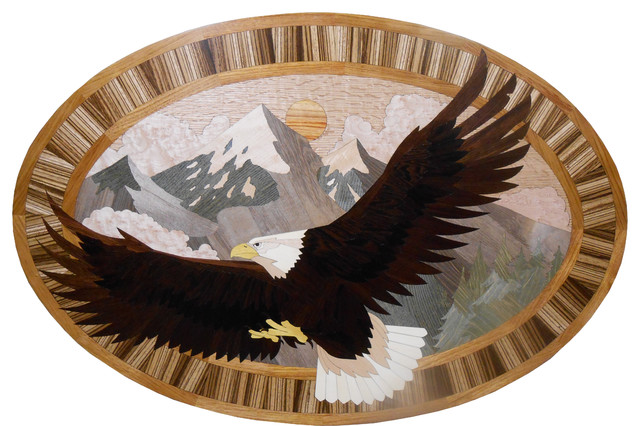
…sorta like primitive outsider art, using the media of weathered wood marquetry, such as the wood inlay artwork below, by Jonathan Calugi:

…almost like this:

…incorporating these images (from here, here, and here):



…to create an abstract image in painted wood that will resemble this:

rather than these (from here and here):

Ultimately fading like an old barn or brick building advert:


Failure is your only option
I think up new inventions every day but rarely do they survive the mental scrutiny of rational thought.
On lifehacker, Jim Carrey puts it another way:
In a recent commencement address at the Maharishi University of Management, actor and comedian Jim Carrey spoke about failure, fear, and why you should pursue something that you love.
Failure is necessary and how you learn to get better, Carrey reminds you that failure is not exclusive to your dreams:
So many of us chose our path out of fear disguised as practicality. What we really want seems impossibly out of reach and ridiculous to expect so we never dare to ask the universe for it. I’m saying: I’m the proof that you can ask the universe for it.
My father could have been a great comedian but he didn’t believe that was possible for him. So he made a conservative choice. Instead, he got a safe job as an accountant and when I was 12 years old, he was let go from that safe job and our family had to do whatever we could to survive.
I learned many great lessons from my father. Not the least of which was that you can fail at what you don’t want, so you might as well take a chance on doing what you love.
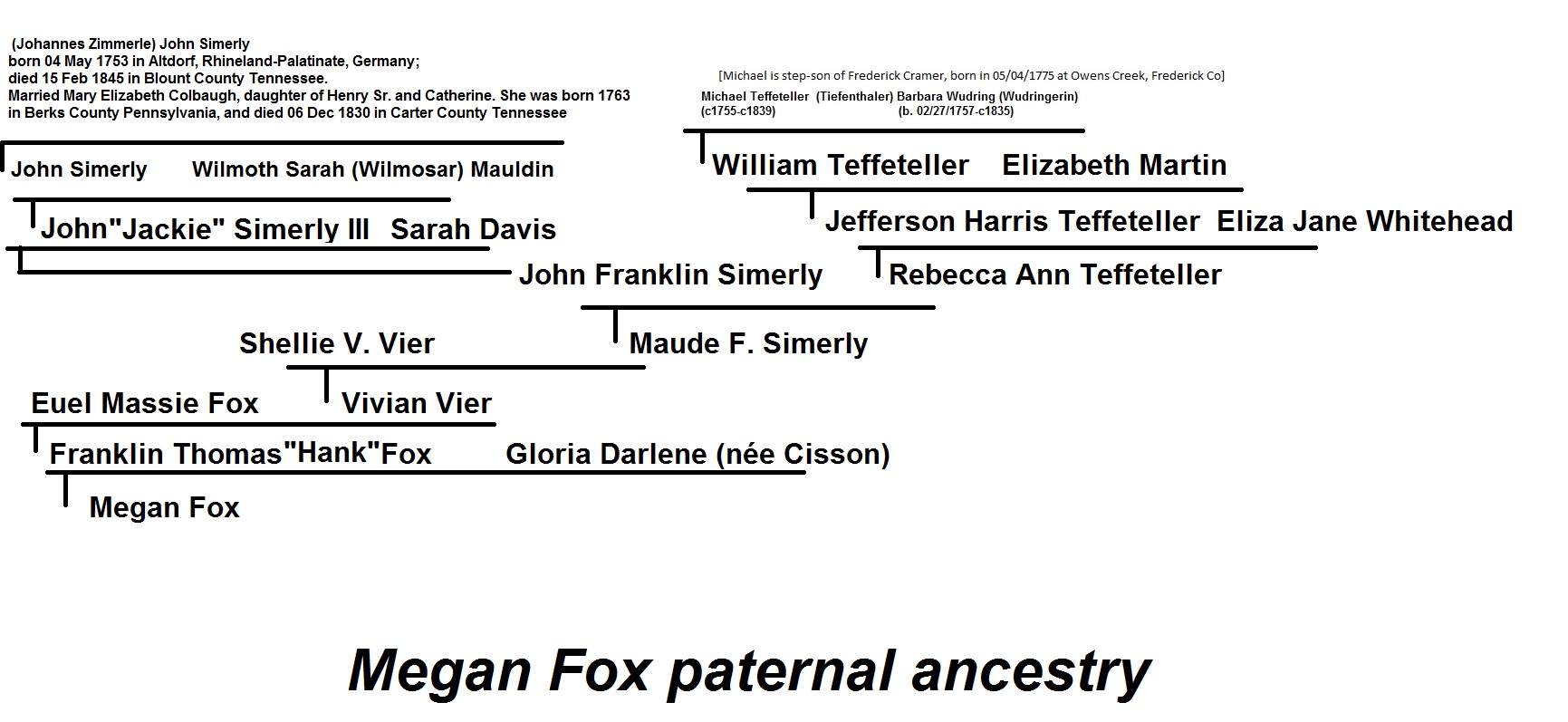
Megan Fox and I are related!
Who knew that I was related to the actor portraying “fearless” April O’Neil?!
My family tree followed by Megan’s paternal family tree:

Am I dreaming? Somebody tell me I’m wrong!
IS Johnny Knoxville next?
A Writer’s Secret
Thought to self: do not fixate on any one idea or image that bobs to the surface of one’s pool of consciousness before spinning out of the eddy and disappearing into the mainstream.
Which person will connect the dots between Chinese senior citizens collecting recyclable trash, Central American children escaping unstable societies, Carlos Slim suggesting part-time work is good for you, Bill Gates suggesting an old collection of New Yorker short stories to read, Elon Musk selling a “people’s car” version of the Tesla and Erin Kennedy organising a robot party?
What about the algae that gives the atmosphere the oxygen we need to breathe? How much water and algae do we need off-planet to terraform our new digs?
I saw the first USPS vehicle making deliveries on Sunday driving down our street just now — what Amazon purchase was so important that it had to arrive before Monday morning?
I essentially quit hanging out in the virtual community known as Facebook, having checked in a couple of times since I quit because I didn’t have contact information for people outside of Facebook. Once that was completed, my time spent on Facebook is over. Although I enjoyed communicating with people in that social media space, I lost track of me, spending more time managing my Facebook personality than spending with the flesh-and-blood body that has to eat and breathe.
Primarily, since I was a young child, I have lived in and with my thoughts. I learned to convert thinking into writing, and then examined the labels of “thinking” and “writing” to discover for myself why I am the center of my own universe.
I never stop eating and breathing but I sometimes stop being me in order to please the person in me who thinks he has to please other people enough so they don’t see the real me who’d rather sit in a nest of his thoughts than listen to others’ opinions that I have to pick through to find something in common that minimises controversy, lessening the chance that I have to stay connected to a person for longer than I have to.
I am not unique. I compromise like many people. Even these sentences are a form of compromise, walking the minefield of libel, slander and inflammatory comments I could make were I less civilised.
I write because it’s the quickest form of communication for me to scan when I want to return to previously-recorded thought trails of mine.
Time to close my eyes and remove myself from words, experiencing the living minideath of meditation that sometimes becomes sleep, the temporary suicide of self that rejuvenates me enough that I can stand to be around people again for a while.
A dose of three quarks daily
We praise competition, but practice merger and monopoly…. We praise business organization but condemn and prevent labor organization…. We give heavier and more certain sentences to bank robbers than to bank wreckers. We boast of business ethics but we give power and prestige to business [disruptors]…. Everybody is equal before the law, except … women, immigrants, poor people.… We ridicule politicians in general but honor all officeholders in particular and most of us would like to be elected to something ourselves. We think of voting as the basis of democracy, but … seldom find more than fifty per cent of eligible voters actually registering their ‘will.’… Democracy is one of our most cherished ideals, but we speak of upper and lower classes, ‘look down on’ many useful occupations, trace our genealogies…. We believe in the brotherhood of man, but we are full of racial, religious, economic, and numerous other prejudices and invidious distinctions. We value equality, but tolerate greater inequality of wealth and income than has ever existed in any other society…. We drape nude statues and suppress noble books…. We try to foster participative recreation, but most of it is passive, much of it vicious, and almost all of it flagrantly commercialized…. This is the age of science, but there is more belief in miracles, spirits, occultism, and providences than one would think possible…. Our scientific system produces a specialism that gives great prestige and great technical skill, but not always great wisdom…. The very triumphs of science produce an irrational, magic-minded faith in science….
Realize, now, that the article was written in 1935. The author was Read Bain, professor of sociology at Miami University in Ohio. As a founding editor of the American Sociological Review, he would become embroiled in early disputes between the “scientists” and “humanists” in his own discipline. He was thus involved in theorizing—and, in that spontaneous way of so many early- to mid-20th-century American academics—practicing in the mode of a “public intellectual,” that figure who today, apparently, is nowhere to be found.[i] In terms of Bain’s analysis as synopsized above, and even more to the point, in terms of the social critique it so earnestly propounds, what struck me when first reading it was how contemporary it sounded and how apt its reproaches were.
– See more at: http://www.3quarksdaily.com/#sthash.r4OiSwKH.dpuf
Oh, those binge-drinking robots will never learn!
By age 16, teenage robot personalities are pretty well formed:

 treetrunkdings