iPad Motion Sickness Syndrome

I have friends who’ve achieved and accomplished their whole lives.

Here, on the 11th of April, while I look out the window at the jungle of a yard that keeps my house cool in the summer, my friends’ stories stand out in my thoughts.

Meanwhile, my sister and I (with help from my wife and mother) assemble a set of notes and medical reports to give to medical experts to help understand where we can go to get a firm (or as close to firm) diagnosis for my father’s medical predicament(s).

The tree leaves and limbs do what they do best when breezes pass over the undergrowth, grabbing my attention as joggers and walkers avoid speeding cars on the road ahead.

Disco light dances across the window screen and onto the end table holding up a power strip, grow lamp, computer monitor, scented oil lamp, 3Com modem cable, incense bowl, light timer and a book a friend gave me titled “It’s a Young World After All.”

I am open to hearing and reading about alternative views concerning the history of our species.

I am willing to accept my friends’ opinions about their achievements and accomplishments.

I do not fret about belief systems in the majority or the minority and how they may or may not sway the thought sets of people both young and old like the wind shapes the forest around me.

There aren’t as many seedpods on the redbud outside the window as there were last year.

There are thousands of people who buy handguns and rifles every year and will never use them, storing them for a collection or trading them for something that looks more useful than the ones they first bought.

It is part of our global cultural interaction that drives some to buy weapons for self-protection on an active, daily basis.

There are those who travel great distances to provide basic medical care and deliver simple foodstuff in order to raise the standard of living in regions of the world not well-connected to local/regional caring social networks.

And then there are the few who seek membership in the Galactic Exploration Society.

In this moment, when the actions of others — friends, family, acquaintances, and instantly formed/lost friendships — find spaces in my thoughts, I look around the room of my study/meditation zone and wonder how/if happiness is contagious.

Some days I pursue the wrong activities.

My father is a man of action more than contemplation.

I have always been more of a man of contemplation rather than action.

From my father’s U.S. Army days in Germany during the Cold War to his most recent days of teaching students at ETSU as an adjunct professor, he found happiness in social engagement.

I find happiness in analysing interesting data more than in stressing pre-arthritic joints while swinging a scythe.

Both of us are products of the influences of ancestors, peers, descendants, and commercial interests.

My father grew up to put country first.

I grew up to put planetary exploration first.

The influences upon him influenced me.

The same goes for the achievements and accomplishments of my friends.

The Sun heats the planet and air pressure changes create wind which passes through the forest, influencing my thoughts and the thoughts of people passing in front of my yard.

Staring at an iPad, my head bent down while my finger slides news articles across the screen, like the scenes around me flashing past when I’d hold on to the rails of a merry-go-round during recess in elementary school, causes motion sickness.

While telling the tale of our species from a long perspective, how do I incorporate the images above into one where we’re looking at our achievements and accomplishments that’ve put people on the Moon and cybernetic explorers on millennial-long journeys?

It’s not the brain of Stephen Hawking that I want to preserve — it’s his thought patterns that are interwoven with the society around him I want to perpetuate, ensuring that they continue to evolve unabated by the physical presence of a brain or a body bound to a wheelchair.

My father, however, is a different story.  His physical AND mental presence are both key parts of what he means to me and my desire to push our species beyond primal tendencies to create dystopian nightmares where survivalist weapon hoarding is considered normal behaviour.

It’s also more than that but I’ve allowed myself to become a mortal human, subject to daily interruptions of bigger dreams, distracted from the plan set in motion by a group of people I’ve spun into a literary device called the Committee to capture the attention of those prone to primal thought patterns so that we can achieve a goal 13,904 days from now with all 7+ billion of us fully involved as sets of states of energy in the visible part of the universe with which we’re most familiar.

Are hopes and dreams intimately tied to happiness?

Perhaps.

How much does the passing of a single redbud leaf in front of the window have to do with dust devils on Mars?

Do you understand the immense distance between our planet and any celestial body with potential compatible communicable sets of states of energy that would interest us more than as laboratory experiments?

A lesson I learned one summer during sales training week for Southwestern Book Company decades ago still applies today:

The story concerns twin boys of five or six. Worried that the boys had developed extreme personalities — one was a total pessimist, the other a total optimist — their parents took them to a psychiatrist.

First the psychiatrist treated the pessimist. Trying to brighten his outlook, the psychiatrist took him to a room piled to the ceiling with brand-new toys. But instead of yelping with delight, the little boy burst into tears. “What’s the matter?” the psychiatrist asked, baffled. “Don’t you want to play with any of the toys?” “Yes,” the little boy bawled, “but if I did I’d only break them.”

Next the psychiatrist treated the optimist. Trying to dampen his outlook, the psychiatrist took him to a room piled to the ceiling with horse manure. But instead of wrinkling his nose in disgust, the optimist emitted just the yelp of delight the psychiatrist had been hoping to hear from his brother, the pessimist. Then he clambered to the top of the pile, dropped to his knees, and began gleefully digging out scoop after scoop with his bare hands. “What do you think you’re doing?” the psychiatrist asked, just as baffled by the optimist as he had been by the pessimist. “With all this manure,” the little boy replied, beaming, “there must be a pony in here somewhere!”

That, my friends, is why we get up in the morning, making miracles every day.  No matter how much we may be distracted by the mundane, or even happy being perfectly anonymous, there’s always a chance that pony will appear out of nowhere and change our perspective.

In fact, I guarantee it will.

Look at me.  I never thought a tablet PC could cause motion sickness until today, which has completely changed my desire to write the Next Great App.


“Customer Care – Incident Created”

In this day and age of multiple personality disorder — that is, our combination of official government identifications (driver’s licence, voter ID card, medical ID card, etc.) and online personalities (email address, social media identities (real and/or imagined)), etc.) — do we know who we are when we no longer know who we are?

While we work with medical professionals in private practice and public hospitals (a thanks to the folks at Holston Valley Medican Center and HealthSouth Rehab Hospital) to get my father on a track where he can have an acceptable, if not good/great, quality of life considering his conditions, my family works in the background to sort out my father’s multiple personalities.

For instance, my father kept Post-It notes of some of the usernames and passwords associated with his online personalities but not all of them, especially the most important ones.

His official government identification cards are up-to-date and don’t need fixin’, as we say around here.

However, working through the bureaucracy of getting help when help is needed most — a medical emergency — is just short of a nightmare for those of us able to sort through the payment options and insurance coverages that are written to accommodate as many diagnoses as are currently available in legible written form by the medical profession.

Woe be to those whose family members have symptoms that can’t readily be grouped into an official syndrome or disease.

I could wax and wane through many a lighted Moon cycle on the current state of the modern medical scientific community but suffice it to say that any view 1000 years hence marks this time, like all looks back into history, as rather barbaric, archaic and borderline misinformed.

Unfortunately, I don’t have a fast-forward button to take my father into a future where his conditions are rather curable by enlightened practitioners.

I have to deal with the training and knowledge at hand, such that it is.

Thank goodness, compassion, care and comfort are rather universal — human touch, in other words, is good for most of us, in one form or another.

My father responds well to communication with fellow members of his gender.  Guy-to-guy gatherings are his thing and he perks up when men ask him to perform manly tasks.

He does not want to be babied or treated weakly by women.

Otherwise, all is well that progresses well.

Me, I don’t mind attention by females in medical professional roles but I’ve noticed my father responds best when treated by men — doctors, nurses, therapists and specialists.

Probably a generational thing as well as social training — I am a child of the 1960s/1970s whereas my father is a child of the pre/during-WWII era, with other subcultural nuances thrown in for good measure.

Something the medical community should take into consideration when vocalising concerns about getting more people involved in seeking certification for jobs/roles in the medical field.

Healing is not just application of chemical treatments — treating people like desired monoculture grass lawns — it’s also understanding where the patient is coming from and wants to be treated.

The online world is no different.  How do we create a system so that when a person’s ability to recall important online identity tags diminishes, family members can step in and help without having to figure out the unique character set combinations the person’s brain created to protect online personalities, especially where bill payment and medical information access is critical to keeping the person healthy and out of financial trouble?

People to thank with more to follow: Benjamin, Amanda, Tina, Martha, Mary, Sue, Jennifer, Joyce, Glenda, Brenda…

The Corner of Sadness and Lonely

Imagine, for a moment, my fist held up high, arm bent at the elbow and slapping the palm of my other hand on the biceps of the upheld arm.

That is my message to the .pl-based spammers.

I will not go away quietly!

= = = = =

On another note, I am not my blog.

In a world of analysing subcultural trends to figure out how and what will be said by whom when, there is the other side of life.

Me, the little five or ten year young boy, staring wide-eyed at the world, wondering what I’m supposed to do in this adult body, with grownup decisions to make.

…sigh…

Be a man, right?  Suck it up.  Every family faces tough decisions and keep them from the light of the public eye.

But I am also a writer, a journalist, at heart, if not by trade, a hobby craftsman putting these symbols together for personal and perhaps species-level entertainment.

Maybe a little enlightenment, too.

I haven’t fully recovered from the loss of my dear mother in-law and now this?

Live and learn.

Pain goes away eventually, one way or another.

The lesson today is family trumps politics every time.

Details will wait another day to be pulled out of the emotional wreck I am at this moment and scratched onto this virtual slate.

Quiet and solitude will suffice.  Peace is a word, a blurry image barely discernable.

Sitting here, perplexed, not quite dejected, on the corner of Sadness and Lonely, pushing aside pride and other feelings that a person like me is supposed to personify in the image of a MAN.

Willing to cry…today, that is enough.  Words from a rational viewpoint will have to wait.

…today?…is “today” a real world?  I don’t know.  It doesn’t sound right.  Where’s my hardback edition of Encyclopedia Britannica to resolve the matter logically?

International Women’s Day

Most days, my agenda is filled with evaluating rocket fin designs or applying “think outside the fuselage” reasoning to assess the most cost-effective means of advancing our planetary lifeforms outward into the galaxy.

I pay advisors to tell me where to put my investments to give our group the most play money for building outer space travel toys.

In a few days, I’ll spend a few minutes with half my staff to evaluate any discrepancies we have concerning gender-neutral compensation.

We have a wide variety of people involved in running the organisation smoothly, from the least socially aware to the most brash, politically incorrect loudmouths.

Hey, when you manage seven billion people, the variations are nearly endless.

But not nearly enough.

Every other year, I ask one gender and then the other to review our employee policies and practices.

Because our subcultures are sometimes incompatible, I ask the people whose beliefs are separated the most from one another to meet and talk.

During these meetings, our supercomputers are listening, increasing the resolution of their intuition algorithms substantially.

Then, a panel composed of people and supercomputers is asked to evaluate the meet-and-greet session, resulting in a summary report that is sent out to all subcultures in formats they believe represent a view from their specific subcultural perspective.

I assign one of the Committee’s subcommittee ad hoc teams to rate the effectiveness of the absorption of every report into individual subcultures.

The reports with the lowest effectiveness score are sent to a new meet-and-greet team for discussion, which is, again, overheard by our supercomputers for error detection algorithm correction and fed into intuition algorithm automatic reprogramming routines.

In this week’s yearly event called International Women’s Day, we’ll ask the female gender to pull two “opposite” subcultures together for one of the meetings — female leaders of the porn industry, such as Lux Alptraum, and female adherents of celibate life, such as members of the Focolare Movement.

Because no two people are exactly alike, we prepare the participants, asking them to listen with respect, disagree passionately, do not compromise simply to avoid conflict, and find common ground that excludes the fact we are of the same species.

We expect members of the same subculture to share discordant opinions amongst themselves, let alone with people outside the subculture.

The Committee wants progress, even if movement in one direction appears to go backwards.

After all, the larger goal of culling the species for nearly ideal representatives to colonise and breed on nonEarth premises requires both conventional and nonconventional processes.

We need people who…sorry, sets of states of energy that can adapt and survive in the harshest conditions possible for what we’ll call living beings at this moment.

After a while, offworld colonists will no longer work to complete tasks assigned from Earth.

In the changes of the colonists’ agenda from external goals to local goals as the years pass, including reactions to adverse ambient environmental changes, the Committee wants to ensure our representatives will thrive.

As the current reluctant leader, my goal is to ensure the representatives can hold individual viewpoints that will adapt and grow together, even if the people pull apart, philosophically speaking, as all current models predict is inevitable.

The Committee advocates no specific subcultural belief.

We only believe in the capacity of our species to advance life out of the solar system while we have the means and window of opportunity to do so, holding to the basic philosophy of “leave the planet in better condition than when we got it” that each successive generation is taught.

We avoid words like mission or vision because we aren’t corporate entities that have to justify our existence although most of us depend on corporate entities interacting with each other to expand our budgetary constraints.

We make mistakes.  People will and must die to accomplish some of our major goals, and many will die accidentally.

All seven billion of us will die eventually but we empathise with those who feel individual losses, anyway.

However, at a global scale, we barely sympathise, partially composed, as we’ve told you, of supercomputers that are just learning to develop intuition algorithms and getting closer to acting like us on general subcultural levels that tend to gloss over the death of individuals, except those designated to represent the best or worst of us (e.g., ruthless dictators, popular entertainers, babies who died tragically, etc.), which the supercomputers simply assign as data points that may or may not designate significant changes to the subculture and are used as triggers for recording the conditions of the subcultural data sets for later comparison.

We hope you look forward to subcultural interaction reports containing gender-based information coming to a comfortable subcultural outlet near you, if you can recognise when we send them out and what they are.

Flashback, courtesy of my father, Dad

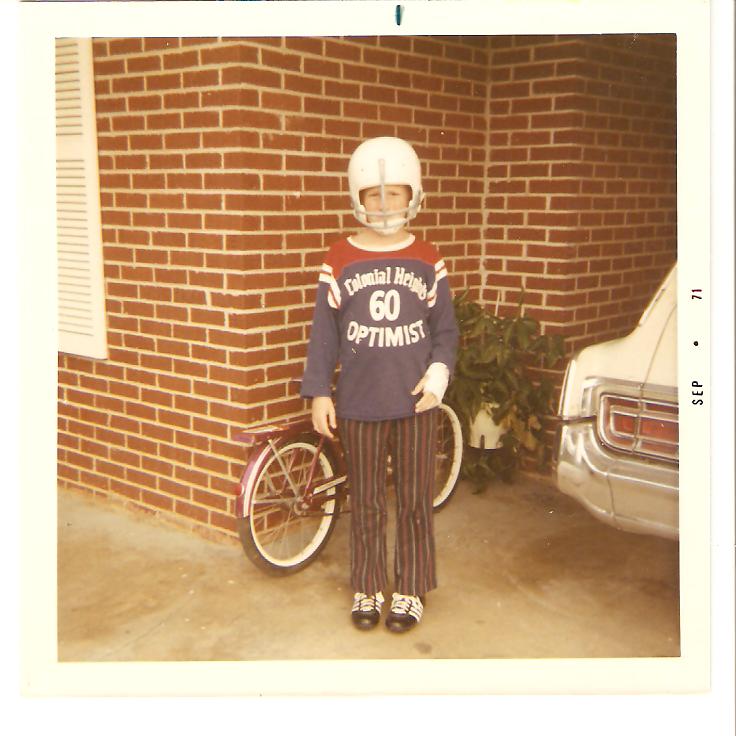
Real football -- no pads!

What do you see in a photo?

My father sees his 1966 Chrysler station wagon.

I see my racing bike which could leap over dirt ramps.

A doctor sees my broken wrist and cast.

Who sees the fashionable pants?

Who sees the helmet and cleated shoes?

The brick wall?

The potted plant?

The cracked sidewalk?

The jersey?

The window shutter?

The type of photo paper?

The date?

What else do you see in this nine-year old boy staring back at you, unable to play football because of a plaster-of-paris cast?

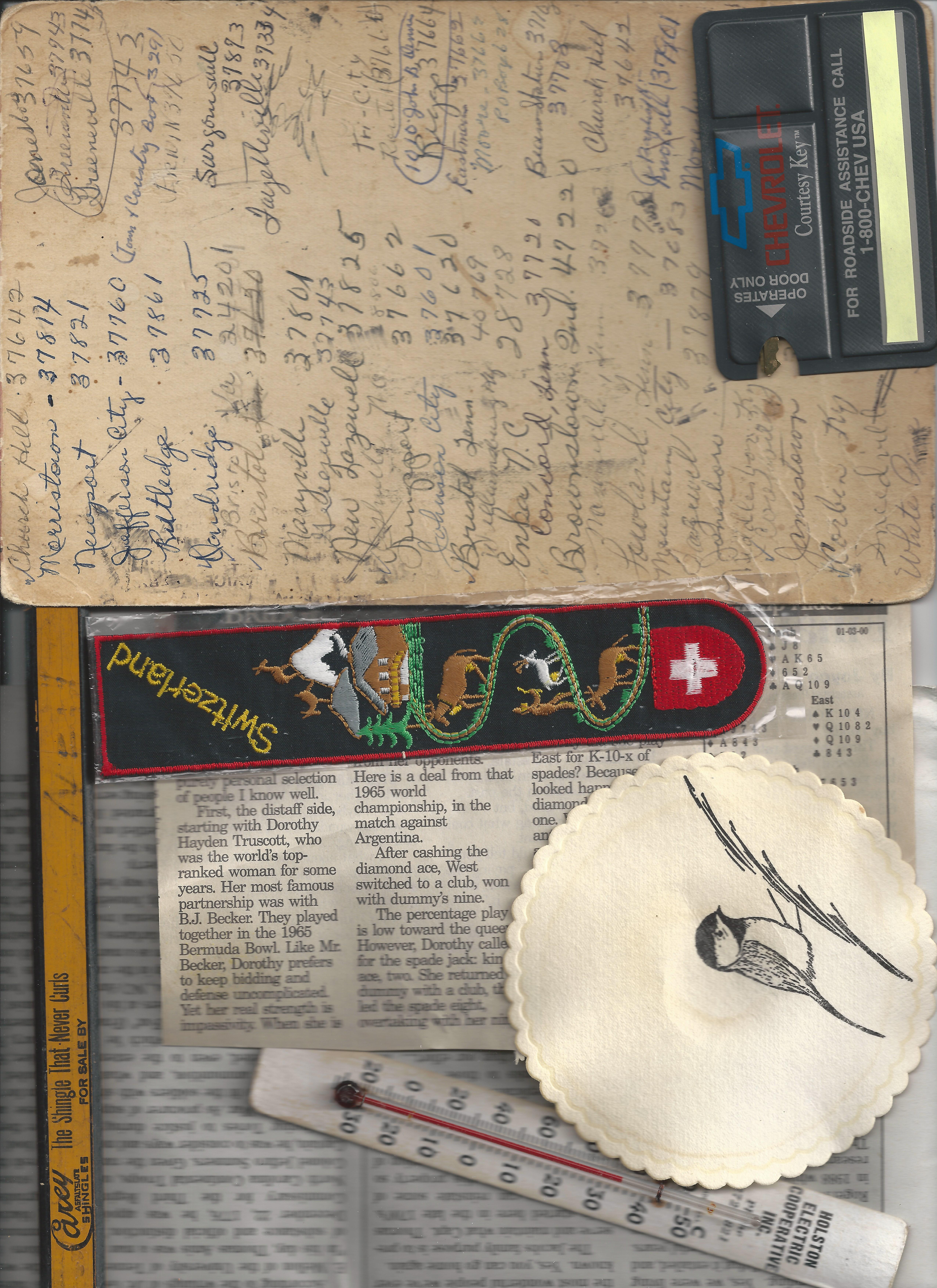
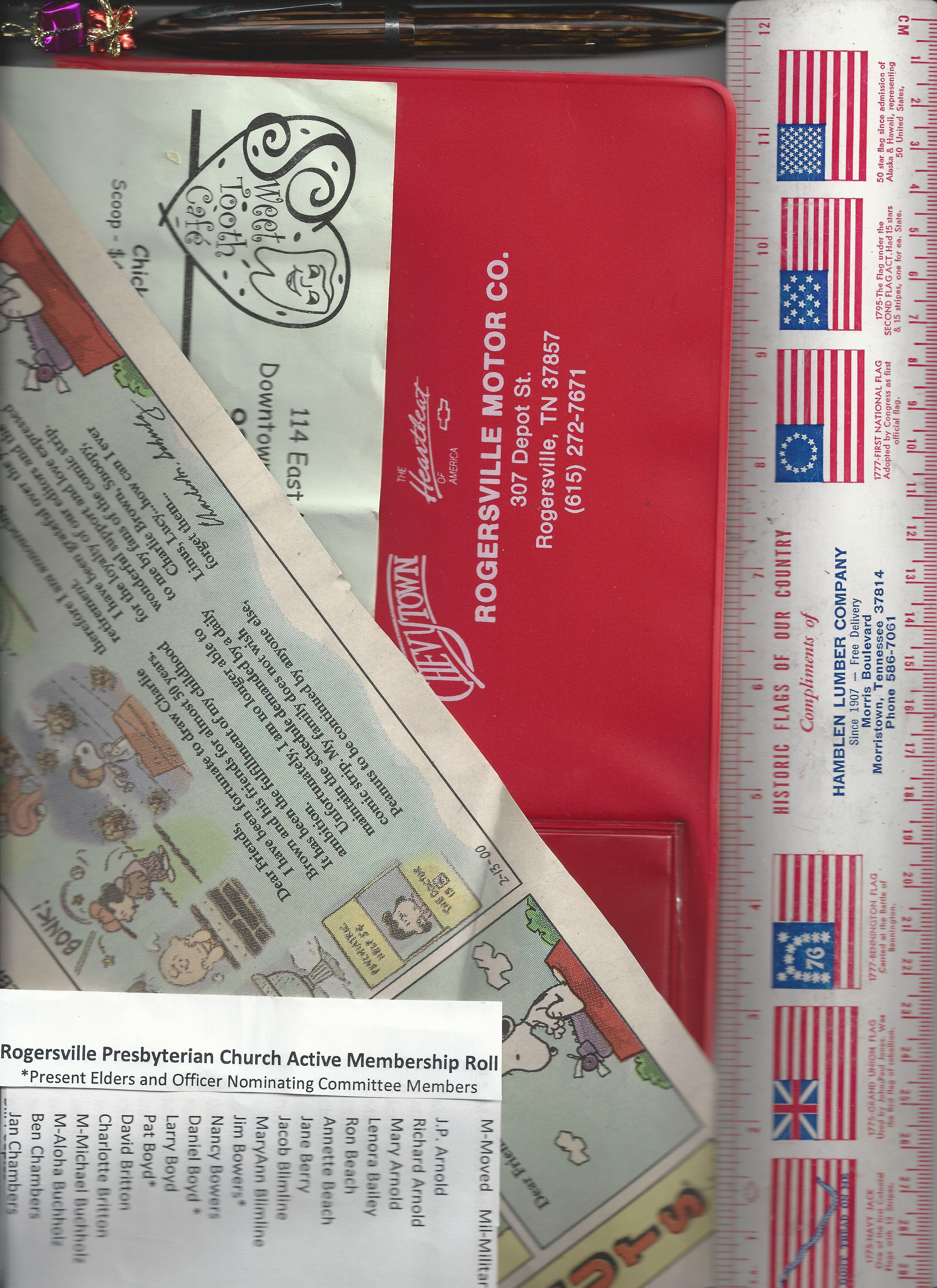
Found items under the watchful eyes of the scanner…

While my wife and I sorted between keepsakes and donation-worthy material in her mother’s house, we created a pile of items that fell somewhere in-between — interesting to look at but not worth adding to the piles of curiosities collecting dust in our house.

What to do with them…hmm…

What else?  Scan ’em and then give ’em away.

Examples below — more to follow, as time permits.

Usted es un colombiano experto en SEO, ¿no? Por lo tanto, hermanos, os encomiendo.

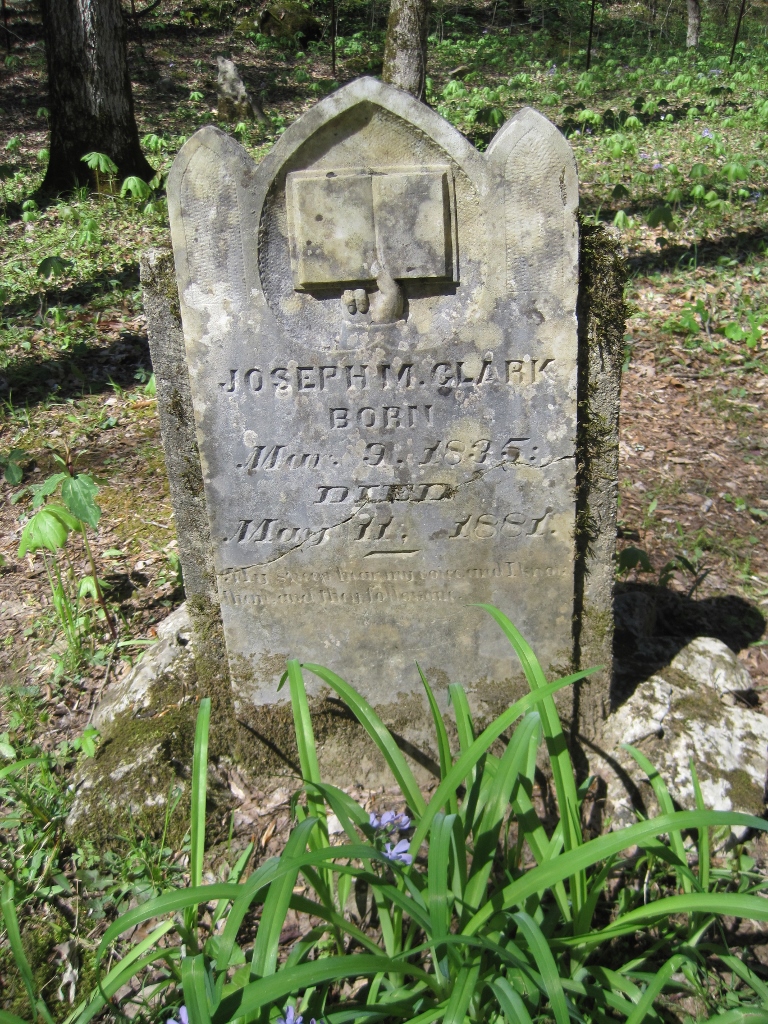
Here lies an outlier

As we get to know more and more about each other, we will grow more comfortable accepting each other’s subcultural differences, appreciating how the definition of success can vary so widely that it almost seems impossible seven billion varieties point to the same thing: our species’ survival and growth.

Yes, it includes fear, crime, ecosystem disasters, economic failures and myriad ways in which the universe we live does not always point toward our survival and growth.

Dust particles — small fibers, short hair, unidentifiable tiny, twisted objects — seemingly oblivious to gravity, float through a beam of sunshine propped up between the writing desk and the dirty window.

A few days ago, I visited with some friends whose father recently died.  My friends and I had spent a few years together in primary and secondary school over 30 years ago.  One friend I hadn’t seen in at least 35 years.

Needless to say, we knew little about one another except what we have seen in the past couple of years while sharing space on a computer server farm spread across data centers around the world dedicated to an online social media website called facebook.

In other words, we had little to say to each other in person that we didn’t already know, or should have remembered seeing in our online personality profile.

The moment was there for comfort at the time of loss of the family patriarch.

Soothing words.

Fond memories of our youth spent under the guidance of a chemical research/sales engineer and literal/figurative father figure.

I cough, sending dust particles on a swirling dance out of and back into the sunlight, which then disappears with clouds passing overhead, reappearing a few minutes later at a new angle, attached to the bright, yellow glob amidst the blue-painted dome high above.

An airplane swoops and circles the patch of sky nearby, making the sounds of the television playing a movie called “The Longest Day” seem live and in real 3D viewing/listening closeness.

After visiting with the friends, my wife and I returned to her mother’s house, continued our sorting through physical reminders of my wife’s mother, father and brother, all deceased.

My wife’s nuclear family is no more, except in her memories.

Her brother’s widow and children still live.  She has cousins spread around the globe.  And her family by marriage — my blood relatives, including nuclear family (father, mother, sister), as well as extended family (nieces, nephew, cousins, aunt, uncle, etc.).

My friends’ father lived for 84 365-day, 24-hour cycles around our local star.

As the planet spun, my friends’ family influenced those they met, all of them tied to Earth by gravity, the curvature of spacetime, we surmise.

We can see the familial influence through the eyes of the intersection of sets of states of energy, adding meme upon meme, including the word “meme,” to build physical representations of ideas like “idea,” to arrive at the point where schoolmates meet 30+ years later to reminisce about a few years spent in growing up together toward adulthood.

Did any of the dust particles floating in the air at the church where, due to one death, we met to talk about good times in childhood attach themselves to me and then re-enter the airspace in the sunbeam not far from this computer?

What about the particles I can’t readily see, such as water molecules, bacteria, dead skin cells or other microscopically miniscule minutiae?

We are connected in ways we rarely take time to notice, if we can see the connections at all.

How do I explain a blog post composed only of pictures to a blind person who uses a Braille keyboard and automatic audible reader?

How do I explain wireless radio pathways between a notebook computer and wireless router to people who can’t feel or don’t communicate signals at a wavelength of 0.125 m or about 5 inches?

Although… you know, some people say they can feel 2.4 GHz radio waves and other phenomena they claim causes them radiowave/EMF sickness.

But let’s get back to the global story of our lives, where financial gurus want to prop up a system that is no longer a viable connection between the macro and microeconomic levels…

Gusset up the place

To be a part of the moment in which we are all a part of the moment…

To read reports written in opinionated manners that one has no interest in perpetuating, personally, but understanding that the flow of the river of life — especially the main channel — does not take into account individual water molecules electrically and/or chemically attracted to a deep pool off to the side…

Gravity a mystery and yet as obvious as a changing social form of the silent treatment, such as someone refusing to respond to emails or texts…

Accepting the fact that belief in one method of thought processing is primarily what we tend to do, who we tend to be…

A one-atom “transistor” — when we do create a subatomic version?  And what comes after that?

A poem, a short story, a nail, a truss — if all is humour to this author, except when everything is not, what is anything?

The word “supercomputer” will fade into another word after supercomputer becomes ubiquitous, commoditised, superfluous…

How many people are office workers, and of them, how many long for a viewbicle?

Are you rewriting language in your image, mashing up ideas into combined letters, words and phrases that only you can understand?

Or are you thinking more universally, writing for moments past, present and future?

While others, call them A-prime, perpetuate social constructs with which they feel most comfortable identifying themselves, I contemplate the social construct of me tied to A-prime with whom we live in our time here together and what it makes me, B-notB, if I am walking the path of the wanderer who lives inside and outside of time-based social constructs.

I am humbled that people who call themselves nonconforming individualists would want to link to me in modern online social circles but I have to be careful not to allow the part of me that is the chameleon personality to blend in with nonconforming social constructs (yes, the irony is obvious — “nonconforming” and “social” seem to contradict each other) that aren’t my own.

To compute trends that will not occur in my lifetime evokes, if not provokes, odd feelings.

To know the flow of social change is often slower than we perceive…sigh…

What of the person who thought thousands of years ago of another person walking the surface of our Moon?  And of the next person who wished to walk on the surface?  And the next one who dreamt of the method getting there?  And the one who wrote a plausible story about getting there?  The one who filmed a fantasy sequence of encounters on the surface? And finally the person who first stepped on our Moon’s surface?

Is computing the trends enough?  Do I have to experience them in the moment with everyone else to experience them in my thoughts?

And do I have to share them with you/us to make the trends happen or remain silent and let them happen without an iota of influence these words will have, spreading first into a network of nonconformers and out into the rest of our shared subcultures?

What if I hold the pebble in my hand and put it in my pocket instead of skipping it across the pond?

I once met a homeless person who said he regularly talked with God and that God had recently told him all people who declawed their animals, a desecration of God’s creatures, were doomed to hell.  I told a friend I consider a devout Christian this story and he told me that God gave us dominion over all of God’s creatures so he didn’t believe that the homeless person really had talked with God.

From the scenario, I discovered that we elevate ideas to the forefront of our thoughts to strengthen our social constructs.

The homeless person and my friend have valid points, depending on whether I believe God regularly talks to people or that God gave our species dominion over every species.

Or both.

Our subcultures are contradictory, by default.

And I, this set of states of energy, consider myself alive, which separates me from that which is not alive, whatever that means, because alive/unalive is a barrier not easily perceived in an ecosystem in which atoms mix and molecules reform constantly.

I am the Wondering Wanderer, the Wandering Wonderer, not here to convince others to align their thought patterns with mine or the trends I’ve computed.

I observe.  That’s who I am.

I see us, no matter where we are in cultural subsets, squarely in the middle of one subset or spread across many, and how we interact, which intuitively and computationally imply future moments of interaction we call trends.

Some trends I would like to see happen in my lifetime, some trends I know will happen but I wish they won’t, and some trends I hope happen regardless of the status of my set of states of energy as living or nonliving.

For instance, will a person sewing images in a gusset establish a trend of decorated gussets that spawns whole industries of underwear fashion and function?  And how will that affect international business relationships of the 2020s?

Will I return to stop referring to the words “politics” and “government,” letting them meld with the word “business,” as they should?

After all, government is just a business run on coercing, cajoling, encouraging a large group of people to jointly pay for services they want on large- and small-scale levels but wouldn’t normally pay for individually.  Kind of like business in general, n’est pas?