Tag Archives: technology
Snakes
Yes, I’m hooked. Pledged another project on Kickstarter — microPython on a microcontroller. Next stop — world domination!
Hardware, Software, Firmware, Vaporware, No Ware
Monday moods
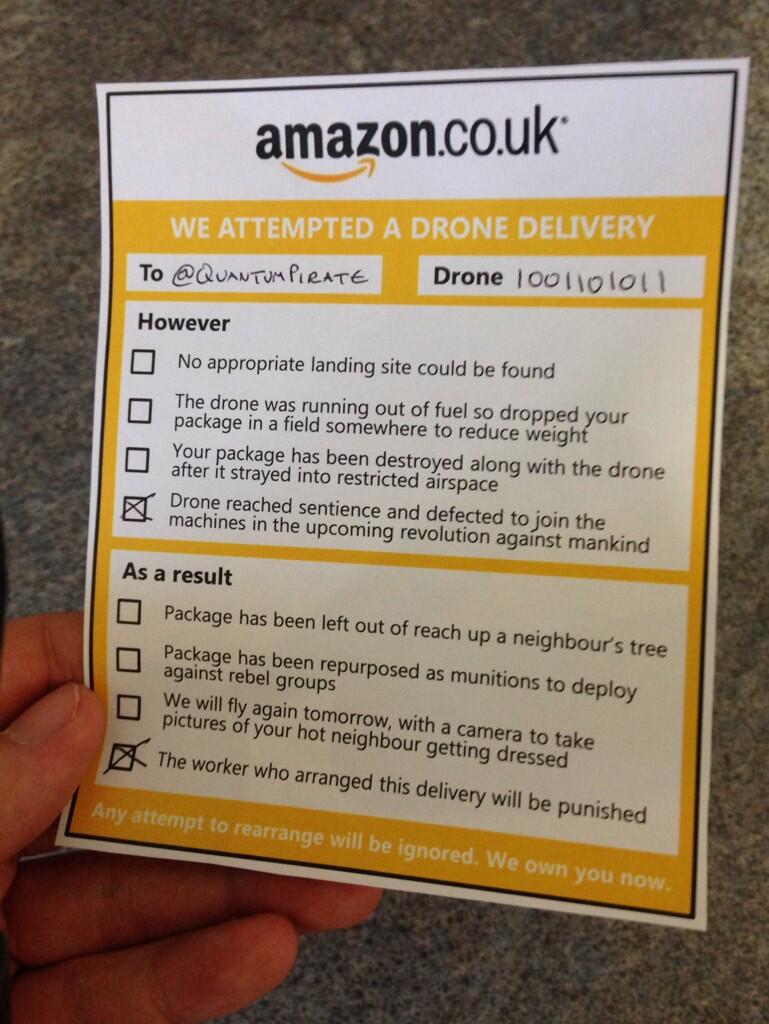

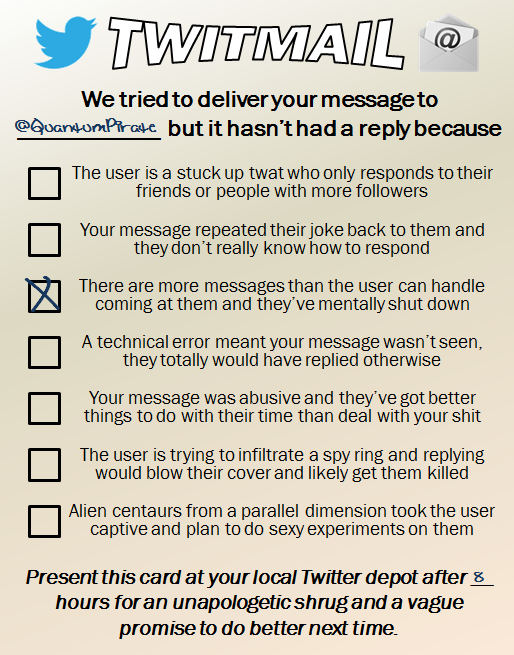
Looking back at the recent past…
Structure in Nature: Reflections on my Book Twenty-Eight Years Later
Submitted by admin on Wed, 2006-04-26 16:05.
by Peter Jon Pearce, Architect and author of Structure in Nature is a Strategy for Design
My book, Structure in Nature is a Strategy for Design, was published by The MIT Press in 1978. This book was based upon work that I undertook in 1965, supported by a fellowship from the Graham Foundation for Advanced Studies. The title of my original proposal to the Foundation was, Structurally Autonomous Geometrically Adaptable Cellular Systems.
It was an effort to forge a theoretical basis for the design of high-performance building system using Nature as a model. My interest at that time, as it still is today, was the design of adaptive energy efficient buildings.
In those early years the most dominant influences on my work, from the field of design, were Charles Eames, Konrad Wachsmann, and Buckminster Fuller. With respect to Fuller’s influence I was particularly interested in his building experiments and their relationship to his “Energetic Synergetic Geometry.” As I became more familiar with this work in the early 1960’s, I could not help but wonder what the next step might be beyond the Geodesic Dome and other of Fuller’s building design efforts. Of course, this was relative to my search for a more expansive and rational view of architectural and building possibilities. This search was directed towards a concept of high-performance design that I had been harboring for years.
I undertook to develop an understanding of spatial geometry and its structural implications beyond what Fuller had presented in his “Energetic Synergetic Geometry”. As I became more informed in the area of spatial geometry, Fuller’s approach seemed to be more of a philosophical treatment than an exhaustive examination of spatial geometries. That is not to diminish the significance of Fuller’s work in this area, I just thought of it as a starting point – an important precedent – but not an end game.
In the process of this pursuit I was able to develop the theoretical underpinnings for my later work in structural design, manufacturing, and construction. This work, along with other building systems developments resulted in over 80 architectural projects completed over a 15-year period from 1980 to 1995. Perhaps the most well known of these projects is the Biosphere 2 project in Arizona.
The research that I had undertaken with the Graham fellowship also gave rise to some original geometric and morphological developments. These developments, which are reported in my book, include the invention of the saddle polyhedra based upon minimal surfaces (later investigated by others) and some discoveries concerning optimized cell shapes in naturally occurring structures found in the morphology of plant and animal cells. On this latter subject, scientists have independently discovered similar phenomena in the late 1990’s that I had reported in my book from work I had done nearly 30 years earlier.
An interesting aspect of the subject of morphology, which I would define as the systematic study of form, is that it is a subject that is not linked to particular time frames. The geometric content of morphology is so fundamental that it is not subject to “new” scientific discoveries such that the obsolescence of principles is an issue. As an example, the topic of cell shapes in plants and animals, which is still an active area of investigation, references work back to the 19th century. The work of Lord Kelvin (AKA Sir William Thompson) is still a prime reference on the subject of optimum cell shapes. Of course, the study of polyhedra goes back to Plato, and even earlier.
The unexpected result of the publication of my book is that I have received much more acknowledgement and citations from the scientific community than from the design/architecture community. Indeed, other than a few book reviews in design magazines there has been virtually no discernable interest from the design/architecture community. This is particularly perplexing, even troubling, to the extent the fundamental content of the book was driven by design intentions, not scientific discoveries and insights.
This suggests that from the point of view of book sales, or perhaps even the validation of my work in morphology, that it might have been better if the book had been directed towards a broad scientific audience (and marketed by The MIT Press accordingly). After all, the book is essentially about morphology as a cross-disciplinary endeavor. Back in the 1960’s, I did participate in a few scientific conferences concerned with morphology and crystallography. Although I might have pursued the purely scientific aspects of this work, I saw this as an important opportunity for the advancement of building construction directed towards high-performance results.
I worked for many years, working with architects, building many architectural enclosures with advanced technology through the aegis of my company, Pearce Structures, Inc. Although there were “moments of glory” along the way, and certainly an amazingly useful “learning curve”, in the end I was not able to get beyond the fundamental conservatism that dominates protocol, methodologies, and the limited design visions that constrain the design of buildings in our culture. There was a disheartening lack of interest in high-performance design – with what is now loosely referred to as sustainability. And this is still true, with some notable exceptions (mostly European). Certainly many of the most iconic architects of our day continue to exhibit little interest in design for sustainability.
My design strategy has been driven by a restless quest to discover and understand first principles. In any given problem-solving effort, what are the underlying and immutable principles, independent of cultural bias, that truly govern optimum design possibilities. My book, Structure in Nature is a Strategy for Design, is about this effort to discover and understand first principles. It is a strategy that continues to guide my design efforts today.
While waiting for my 23andme results…
When rain falls mainly as prey on the plein at parade rest
Twice in a lifetime
Only twice have I read writing by the inimitable Bill Gates, the first of which I have kept in my library, when William waxed poetic about the value of software in BYTE magazine lo many decades ago.
The second is here — will it have the same impact? I don’t know. I’ll give the man a benefit of the doubt and hope it does.
From the Singularity Hub…
NASA’s Next Frontier: Growing Plants On The Moon
by Tarun Wadhwa
A small team at NASA’s Ames Research Center has set out to “boldly grow where no man has grown before” – and they’re doing it with the help of thousands of children, a robot, and a few specially customized GoPro cameras.
In 2015, NASA will attempt to make history by growing plants on the Moon. If they are successful, it will be the first time humans have ever brought life to another planetary body. Along the way, they will make groundbreaking contributions to our understanding of biology, agriculture, and life on other worlds. And though they may fail, the way they are going about their mission presents a fascinating case study of an innovative model for public-private collaboration that may very well change space entrepreneurship.
The Lunar Plant Growth Habitat team, a group NASA scientists, contractors, students and volunteers, is finally bringing to life an idea that has been discussed and debated for decades. They will try to grow arabidopsis, basil, sunflowers, and turnips in coffee-can-sized aluminum cylinders that will serve as plant habitats. But these are no ordinary containers – they’re packed to the brim with cameras, sensors, and electronics that will allow the team to receive image broadcasts of the plants as they grow. These habitats will have to be able to successfully regulate their own temperature, water intake, and power supply in order to brave the harsh lunar climate.
However, it won’t just be NASA scientists who are watching the results closely – the success of this experiment will require the assistance of schools and citizen scientists.
In a brilliant mix of creativity and frugality, NASA will send schools their own set of habitats so they can grow the same plants that are being sent to the Moon. The reasons for this are two fold. First, every experiment needs a control, and instead of spending the money to duplicate the experiment multiple times, they can crowdsource it. By collecting the data from thousands of experiments, they can gain valuable insights in an entirely new way. Second, it allows children to be part of the moment – to not just watch from afar, but to gain experience and knowledge by actively participating.
It is quite unusual to hear of a significant NASA project that is so simple, small-scale, and low-cost. Thanks to the rapid advances in consumer electronics over the last few years, parts that would have once cost millions of dollars now cost just hundreds. But what really made this project feasible was an unexpected opportunity: the Google Lunar X Prize , the search giant’s twenty-million-dollar incentive prize for a private company to launch a robotic spacecraft that lands on the moon, travels across the surface, and transmits back two “Mooncasts” by December 31, 2015. Multiple teams are competing – and whoever ends up winning will likely fly with this special payload on board.
With this model NASA doesn’t have to spend tens of millions of dollars or wait years for the next mission to the Moon. According to Dr. Chris McKay, a well-renowned planetary scientist, this project would have cost $300 million two decades ago – now, NASA can build and launch it for under $2 million. It serves as a win for both NASA and private space industry. Dr. McKay compared it to the early days of airplanes and airmail, “Just like we buy tickets on commercial airlines, why shouldn’t we buy space on commercial flights?” Without this opportunity, it’s uncertain this project would have ever gotten off the ground – and that would have meant a major missed opportunity not only for future astronauts, but also for people here on Earth as well.
Individuals pictured include Lunar Plant Growth Habitat team members and NASA’s Ames Research Center top management: Dr. Harry Partridge, Emmett Quigley, Dr. Chris Mckay, Dr. Jacob Cohen, Hemil Modi, Dr. Robert Bowman, Dr. Pete Worden, Arwen Dave, Falguni Suthar, Nargis Adham, Sangeeta Sankar ( Photo credit: Hemil Modi) To Dr. McKay, this is “step one in the quest to develop biological based life support systems on other worlds;” or, to put it another way, “this is the Neil Armstrong of the plant world.” The conditions of the moon are more characteristic of deep space than anywhere else we can access and quite different than growing plants on a space shuttle or space station. This experiment will test whether plants can survive radiation, flourish in partial gravity, and thrive in a small, controlled environment – the same obstacles that we will need to overcome in order to build a greenhouse on the Moon, or create life on Mars.
We may also learn a great deal about how to grow food in inhospitable climates here on our own planet. Dr. Robert Bowman, the team’s chief biologist, described how plants constantly have to cope with harsh environments and threats: “Simply knowing how plants deal with stress on the moon can really tell us a lot about how they deal with stress right here on Earth.” We know how plants are affected by conditions like drought – by exposing them to entirely new factors, we can advance our understanding of how they function.
Even if the seeds fail to germinate on the Moon, the fact that NASA is taking targeted risks without incurring significant costs could change business-as-usual for the once-legendary institution. Like most bureaucracies NASA has become quite risk averse and sensitive to perceptions of failure. But with commercial partnerships, they can experience a flop without necessarily having it make national headlines – they don’t have to put their entire reputation on the line every single time.
It may not be too long before space exploration missions are conducted more like technology startups and less like government programs. Dr. McKay sees a world of possibilities emerging from this democratization: “I see much better, more innovative experiments. When your experiment costs 300 million dollars, and you do one a decade, you can’t take any risks. You’ve got to be very conservative in what you do. But if your experiment is a million dollars and being done by grad students, you can do crazy and brilliant things.”
Whenever we do spread life beyond our own planet, it will fundamentally change our cultural perception of what is possible. As Dr. Pete Worden, Director of NASA’s Ames Research Center, explained excitedly, “The first picture of a plant growing on another world – that picture will live forever. It will be as iconic as the first footprint on the moon.” Just like the Apollo missions drove an entire generation to embrace technology and science, making the final frontier more accessible will inspire us to strive for even greater accomplishments. You can reach Tarun directly at SH@tarunwadhwa.com or follow him on twitter at https://twitter.com/twadhwa.
Singularity Hub, LLC (2013-11-27). Singularity Hub, LLC. Kindle Edition.
 treetrunkdings