The “House” Effect: Or, how the CSI effects affected aftereffects

While the Subcommittee on the Organisation of Offworld Committee-Forming Avoidance convenes its annual bimonthly meeting to finalise plans for colonisation anarchy policies and procedures, the monetary policy to end the dependence on Fiat and Dodge taxes is in its final stages of incompletion.

That’s the message I’m supposed to send today.

Sitting here in my virtual cyberself, a suit of robotic clothing that simulates my former self (the original set of states of energy long since spoiled after exceeding its expiration date), the residents of the local council estates gives me a round of applause and then a standing ovation for handing them the best performance of the “House” effect.

You know the drill, of course.

Whether one should credit the writers or acting ensemble, with special emphasis on the influence of Hugh “Huge Ego” Laurie, or thank the producers/directors, is a matter of debate long since exhausted.

A mix of dyspepsia and dystopia, cooked to a boil, cooled with a few frozen pieces of Holmesian analysis and served next to a side dish of considerably half-baked humour.  At room “temeprature.”

Garnish with kale, not iceberg lettuce, for the aftereffect is enlightening nutritious, not Titanic, in nature.  Or, at least, shocking in worst case presentational sentimental presentments.

Thanks to the behind-the-scenes folks at the PatriotStore, PatriotCafe, and construction workers wearing creatively stickered helmets at MHVAMC; Nina, Sharon and Geno; Brynn; Dr. Coffey; Danielle; Randy at German Motors; Olympus Exera equipment; evidence-based medicine; and more later…

Congrats to Chestney on the birth of her child, Shannon Elizabeth, 8 lb 7 oz, 21-in long.

Family Update (feel free to skip)

Family:

Dad’s vital signs are stable in ICU right now.  We’ve talked with his doctor twice, as well as observed the whole staff while the head MD used Dad as a teaching tool for MD residents.

Here’s the summary so far:

When Dad entered the ER at the VA yesterday, he had pneumonia which presumably he contracted at the VA skilled nursing facility (or CLC, as they call it).

Turns out he also had a collapsed lung due to a blockage of mucus.  They put Dad on a respirator (called a Nellcor Puritan Bennett 840 Ventilator System) that, unlike the old iron lung (which helped to pull air into the the lungs), pumps air into or inflates his lungs — they hoped to reinflate his collapsed lung with the respirator.

Three chest X-rays over the course of last night and into this morning showed the progression of his inflated lung (first X-ray: lung was 2/3 collapsed; second one: 1/3 collapsed; third one: completely inflated), which also went hand-in-hand with Dad’s oxygen level, rising from the 70s to just about 100% oxygen saturation now.

They’ve given Dad antibiotics that treat 98% of the types of pneumonia usually encountered in hospital situations, including the VA nursing home where he was staying, so Dad’s infection should go away with time.  The mucus blockage is still there but the last X-ray showed the lung is inflated past the blockage so that’s a good thing for now.  The doctor examined Dad and thinks the lung may have collapsed a little since the last X-ray.  Therefore, Dad will stay on the respirator for at least the next 24 hours before they attempt to wean him off of respiration assistance.

That’s the good news.

While looking at Dad’s X-rays, the doctor (and radiologist) noted Dad’s heart is enlarged.   Upon further examination, it appears Dad has damage to the wall of one ventricle, a tear that resulted in a bulge at some time in the past (i.e., an aneurysm), which the doctor surmises was an undetected heart attack (MI, or myocardial infarction) that is associated with the recent reports of Dad having a heart murmur.

The doctor has ordered another chest X-ray, as well as a sonogram (ultrasound of the heart) to further detail the damage; in other words, if the heart damage is bad and Dad is unable to fight the lung infection, then we have to consider the measures we want to take to try to get Dad better.

In addition, the doctor is worried about Dad’s neurological condition.  Basically, mentally, deep down, Dad has to want to fight this or his body will not get better.  If Dad was a 20-year old man, his body could probably heal itself regardless of Dad’s mental state; however, at this point, we cannot say what’s going on in Dad’s thoughts because he cannot verbalise or visually express in any coherent manner his pains, aches or desires.

After going through Dad’s medical history, the doctor told us what nobody wants to hear but those in the medical field understand — we may never know what has caused Dad’s symptoms but, as knowledgeable/compassionate MDs, the doctors must admit they’re human, too, and don’t know everything.

The important thing is to give Dad as much of a chance as the medical staff can for him to get better, making him comfortable in the process, and let time (and God) heal Dad.

Also, Dad’s blood pressure has varied, running a little low, but hasn’t dropped precipitously low, so they’re watching his BP but don’t want to give him any medication unless they have to, avoiding complications and giving them a little room for changing his meds if an emergency arises.

Same for his agitation/anxiousness — they don’t want to overly sedate him but simply give him anti-anxiety medication on an as-needed basis so that Dad has the chance to let us know if he’s in any real pain or wants to participate in some other way in his recovery.

That’s all for now.  We’ll know more tomorrow.

Thanks for all your prayers,

Rick

It’s Hip to be Square

I smell cat food on my fingers and popcorn on my breath.
I see squiggly lines in front of me and hear the heat pump hum.

How long does it take to recover from mourning the death of my father’s mind?

Minds do not exist, in the classic sense.

It’s a game of cat-and-mouse.

Dagger and cloak.

Then, methought, the air grew denser, perfumed from an unseen censer…

For whom the bell tolls.

My father served in the 4th Infantry, long before this 1970 report summarised lessons learned.

He is alive and yet not alive.

That is, he who was he is not he any longer.

Him who was is no more, but not nevermore.

‘Tis memories I relive in my current/future living.

There are memories to be made, observations to make, medical diagnoses to contemplate.

And/but yet.

Edgar Allan Poe went to West Point.  He died at 40 years of age.

Soon, I will be 50 years young, halfway to 100, where life starts all over again.

Like a paper folded in two.

Or a projectile at the top of its trajectory.

My father is one pathway of my life 27 years from now.

One way the past is the future all over again.

A paddled cruise down the Sipsey River, for instance — same places, new water, new trees, new wildlife.

Heard a barred owl in the woods behind the house this evening while Merlin (the cat) snoozed on my lap in the sunroom.

How many generations of owls and cats have passed in 50 years?

Or 77?

How many more in 100?

Both Sides of the Law

While an Arby’s Junior dissolves with curly fries in my stomach, topped with a Reese’s bunny-shaped peanut butter flavoured bar, NASCAR drivers prepare for their usual weekend gig and Brazil nuts grow in the jungle.

A friend asked me why we no longer debate the [de]merits of having a chief executive in the White House with no military experience.

Good question.

We spend many a minute examining the minutiae of business experiences of major political candidates, including the incumbent, but we fail to notice their lack of actual, on-the-ground, basic-training, in-the-bunker or sweating-in-the-field-tent combat training.

Because I live in a town that generates a lot of local tax revenue from government-based military operations, my perspective might be different from that of a city dweller where large chunks of the economy come from the financial sector, tourism, creative arts or academia.

Sometimes, I get so wrapped up in the dual-use aspect of government spinoffs, including rocket technology and outer space life support systems, that I forget other industries prop up our modern standards of living, too.

What about the global economy in general?  It would be easy for me to get lost in reports about our hyperconnected world but I’m interested in more than that, as you know.

The global military budget is about 2% of world economic production.  Now, ask yourself, do you spend more or less than two percent of your household budget (post-tax take home pay, that is) to protect yourself, your loved ones and your possessions from the desire by others to possess what you have?

Think about these examples: the locks on your doors and windows; home security system; computer antivirus software; gates, fences and other property barriers; insecticides and herbicides; curtains/drapes; wall/ceiling/floor insulation; enclosed heating/cooling system; paper shredder; file cabinet/safe; personal weaponry (guns, knives, etc.); apartment/flat doorman.

What about the knowledge that your neighbours having some of the things above, that you don’t, acts as an implied deterrent for you?

Today, my family received the great news that my father, who served in the U.S. Army, and was recently diagnosed with ALS bulbar option, will be able to spend time in a temporary skilled nursing facility at the nearby VA medical center to aid in his rehab and preparation for longterm care.

History says we are involved in fewer and smaller wars as the years progress in this current cycle of globally-connected subcultures (a/k/a the one-world civilisation/order).

Despite our growing civility toward one another, old thought patterns prevail, meaning there is still a need for protective services of one sort or another and, in the longterm, medical care for those who served and sacrificed their time, effort and lives for the rest of us, whether or not we served and/or paid for protective services ourselves.

Our family thanks many who helped my father regain his physical strength and helped us work through the paperwork to secure a place for my father’s continued medical journey — IPC (Heather, Carmen, Anna), HealthSouth Rehab Hospital (Jennifer, Ethan, Amy, Amanda and many others), and VAMC (Heidi, PJ, and more).

iPad Motion Sickness Syndrome

I have friends who’ve achieved and accomplished their whole lives.

Here, on the 11th of April, while I look out the window at the jungle of a yard that keeps my house cool in the summer, my friends’ stories stand out in my thoughts.

Meanwhile, my sister and I (with help from my wife and mother) assemble a set of notes and medical reports to give to medical experts to help understand where we can go to get a firm (or as close to firm) diagnosis for my father’s medical predicament(s).

The tree leaves and limbs do what they do best when breezes pass over the undergrowth, grabbing my attention as joggers and walkers avoid speeding cars on the road ahead.

Disco light dances across the window screen and onto the end table holding up a power strip, grow lamp, computer monitor, scented oil lamp, 3Com modem cable, incense bowl, light timer and a book a friend gave me titled “It’s a Young World After All.”

I am open to hearing and reading about alternative views concerning the history of our species.

I am willing to accept my friends’ opinions about their achievements and accomplishments.

I do not fret about belief systems in the majority or the minority and how they may or may not sway the thought sets of people both young and old like the wind shapes the forest around me.

There aren’t as many seedpods on the redbud outside the window as there were last year.

There are thousands of people who buy handguns and rifles every year and will never use them, storing them for a collection or trading them for something that looks more useful than the ones they first bought.

It is part of our global cultural interaction that drives some to buy weapons for self-protection on an active, daily basis.

There are those who travel great distances to provide basic medical care and deliver simple foodstuff in order to raise the standard of living in regions of the world not well-connected to local/regional caring social networks.

And then there are the few who seek membership in the Galactic Exploration Society.

In this moment, when the actions of others — friends, family, acquaintances, and instantly formed/lost friendships — find spaces in my thoughts, I look around the room of my study/meditation zone and wonder how/if happiness is contagious.

Some days I pursue the wrong activities.

My father is a man of action more than contemplation.

I have always been more of a man of contemplation rather than action.

From my father’s U.S. Army days in Germany during the Cold War to his most recent days of teaching students at ETSU as an adjunct professor, he found happiness in social engagement.

I find happiness in analysing interesting data more than in stressing pre-arthritic joints while swinging a scythe.

Both of us are products of the influences of ancestors, peers, descendants, and commercial interests.

My father grew up to put country first.

I grew up to put planetary exploration first.

The influences upon him influenced me.

The same goes for the achievements and accomplishments of my friends.

The Sun heats the planet and air pressure changes create wind which passes through the forest, influencing my thoughts and the thoughts of people passing in front of my yard.

Staring at an iPad, my head bent down while my finger slides news articles across the screen, like the scenes around me flashing past when I’d hold on to the rails of a merry-go-round during recess in elementary school, causes motion sickness.

While telling the tale of our species from a long perspective, how do I incorporate the images above into one where we’re looking at our achievements and accomplishments that’ve put people on the Moon and cybernetic explorers on millennial-long journeys?

It’s not the brain of Stephen Hawking that I want to preserve — it’s his thought patterns that are interwoven with the society around him I want to perpetuate, ensuring that they continue to evolve unabated by the physical presence of a brain or a body bound to a wheelchair.

My father, however, is a different story.  His physical AND mental presence are both key parts of what he means to me and my desire to push our species beyond primal tendencies to create dystopian nightmares where survivalist weapon hoarding is considered normal behaviour.

It’s also more than that but I’ve allowed myself to become a mortal human, subject to daily interruptions of bigger dreams, distracted from the plan set in motion by a group of people I’ve spun into a literary device called the Committee to capture the attention of those prone to primal thought patterns so that we can achieve a goal 13,904 days from now with all 7+ billion of us fully involved as sets of states of energy in the visible part of the universe with which we’re most familiar.

Are hopes and dreams intimately tied to happiness?

Perhaps.

How much does the passing of a single redbud leaf in front of the window have to do with dust devils on Mars?

Do you understand the immense distance between our planet and any celestial body with potential compatible communicable sets of states of energy that would interest us more than as laboratory experiments?

A lesson I learned one summer during sales training week for Southwestern Book Company decades ago still applies today:

The story concerns twin boys of five or six. Worried that the boys had developed extreme personalities — one was a total pessimist, the other a total optimist — their parents took them to a psychiatrist.

First the psychiatrist treated the pessimist. Trying to brighten his outlook, the psychiatrist took him to a room piled to the ceiling with brand-new toys. But instead of yelping with delight, the little boy burst into tears. “What’s the matter?” the psychiatrist asked, baffled. “Don’t you want to play with any of the toys?” “Yes,” the little boy bawled, “but if I did I’d only break them.”

Next the psychiatrist treated the optimist. Trying to dampen his outlook, the psychiatrist took him to a room piled to the ceiling with horse manure. But instead of wrinkling his nose in disgust, the optimist emitted just the yelp of delight the psychiatrist had been hoping to hear from his brother, the pessimist. Then he clambered to the top of the pile, dropped to his knees, and began gleefully digging out scoop after scoop with his bare hands. “What do you think you’re doing?” the psychiatrist asked, just as baffled by the optimist as he had been by the pessimist. “With all this manure,” the little boy replied, beaming, “there must be a pony in here somewhere!”

That, my friends, is why we get up in the morning, making miracles every day.  No matter how much we may be distracted by the mundane, or even happy being perfectly anonymous, there’s always a chance that pony will appear out of nowhere and change our perspective.

In fact, I guarantee it will.

Look at me.  I never thought a tablet PC could cause motion sickness until today, which has completely changed my desire to write the Next Great App.
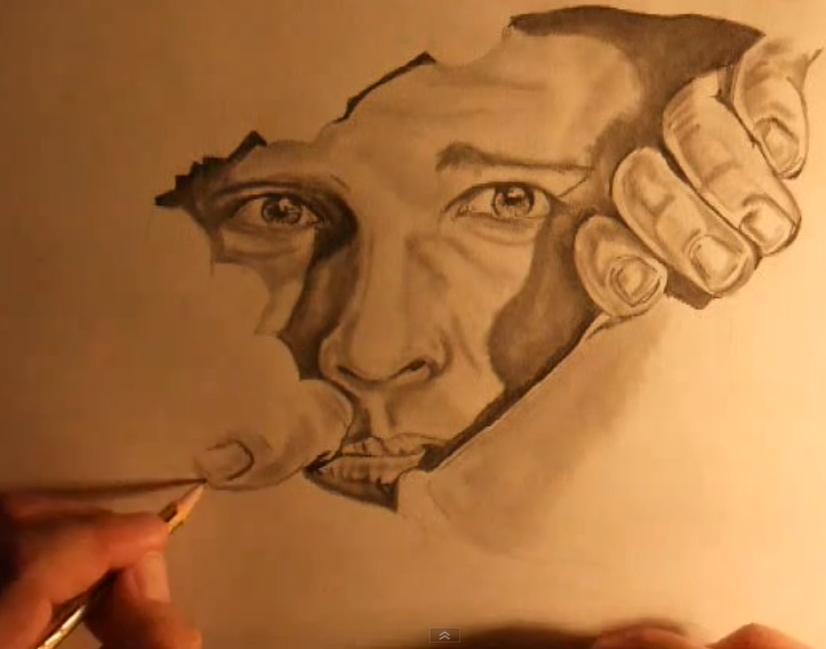
Where is Watson?

Instead of coding my new app, I’m sitting here, pondering the itches at my elbows that hint at a poison ivy infection picked up from hacking away the brush in the front yard ditches.

Brush?  A generic term, standing in for periwinkle (both Vinca major and its variegated leaf variety), privet, sweetgum, hickory, cedar, sumac, poison ivy, Virginia creeper, forsythia, deciduous ivy, and an unknown set of grasses that manage to push up into the sunlight.

Hackers aren’t just mainly guys who try to script their way into computer systems.

Speaking of which, where is that omniscient Watson computer system that can look at a person’s EMR set and determine one’s major illnesses?  Do I have to keep depending on the limited brainwave combinations of people to assess my father’s health?

Hey, I’m all about socialising in the moment, getting to know people and their motivations, giving back to them whatever makes them feel happy/wanted/needed/fulfilled.

However, I want most of all to put our social network to use for the sake of my father and his nuclear family right now.

Otherwise, I’ll open up the case that cradles the crystal ball and share with you the next few decades and centuries of technological advances that will make a subset of our global population very successful, including the means of complete ownership of political officeholders, with no cares about hiding how our population really works in every so-called enlightened age.

Do you know how many people’s backs, both local and foreign, you’re living on to create the time you call leisure and the objects you call luxury?

Do you know how many people, both local and foreign, are living off of you to support the time they call leisure and the objects they call luxury?

I’ll save those questions for a scenario in a future chapter of the story of our lives together.

Time to return to writing my app.  After all, so far I haven’t found a way to get apps to write themselves by reading my thoughts and figuring out exactly what I want and how to implement it on incompatible technology platforms, just like I haven’t found an automatic way to get doctors to act as one “the buck stops here” stop to solve my father’s medical problems.

I’ll catch up on thanking others soon.

Cheap purchase of the day: keyboard/cover for iPad2

A Plate of Leftover Food is My Canvas

As as experiment, make a series of appointments with medical professionals, describing a part of your condition and medical history at every appointment.

Then, observe the effect your partial medical history oratory has on the attempt of a medical diagnosis.

Keep in your thoughts the fact that your complete medical record set is available to each professional in turn.

Of course, specialists will tend to focus on your malady in reference to their specialty.

Can you see a pattern emerge?

Will you receive a “true” diagnosis based on the state-of-the-art in medical practice today?

Let’s say, for a hypothetical example, that you have a throat-clearing problem which recently developed into the lack of ability to find common words in your vocabulary and then devolved into the inability to speak or swallow, which may or may not have anything to do with the “thrush” or tongue infection you can display easily.

At the same time, your garden variety of medical experts has prescribed a handful of medication to consume on a daily basis, some of the medicines requiring close monitoring (every two to three days) but your doctors only see you every two to three weeks.  In addition, some of the medicines have been shown to have moderate side effects or known contraindications for not prescribing together in the first place.

On top of all that, one or two members of your family have experienced episodes of severe depression but up into your late 70s, you have not (yet).

You end up not being able to eat for several days after weeks of eating very little, losing a lot of weight and getting admitted to a hospital emergency room due to malnutrition and dehydration.

After a few days, a PEG tube is put in your stomach and passed through your abdomen wall for nourishment.

Therefore, a few of the medical professionals think you may have had:

  1. a stroke,
  2. myasthenia gravis,
  3. fungal infection,
  4. negative drug interaction response,
  5. ALS bulbar option, sudden onset,
  6. geriatric depression,
  7. dementia,
  8. some mix of all of the above, and/or
  9. to be determined.

I know there’s a comedy skit just waiting…no, begging to be written about the above situation but I can’t imagine it because my face is up against the bark of a tree and I can’t see the surrounding forest shading me from the bright light shining on the world’s greatest medical calamity sketch.

I can use testing to eliminate the first two options above.  For some reason, the third option isn’t going away.  The remaining options are testable to some extent.  The fifth is a death sentence no doctor wants to give.

I can solve the perceived problem of world hunger (provide a Green Revolution to many parts of the world and accept that no distribution system will prevent the death of millions in some parts of the world due to political instability and wealth inequality).

I can send Earth-based lifeforms to other celestial bodies.

Yet, here in the landmark year of 2012, I can’t get a panel of medical professionals to agree to a diagnosis for my father’s current, finite set of bodily conditions.

If I hear yet another specialist say, “Well, I can’t determine your father’s condition because it requires a different specialist,” I think I’ll toss the whole medical profession into the category of high-falutin’ quackery and call it a day.

Reminds me of the recurring thought of mine that our transportation devices long ago reached their point of maximum usefulness and have succumbed to the concept of feature creep that dooms every product to creative oblivion.

The guru in me told me a story (the previous phrase is a literary device so just go with it)…

Long ago, your ancestors looked at the raging storms, the swelling seas, the spewing volcanoes and said, “This is how the gods communicate with us.  We must figure out a way to respond.”

Not so long ago, your ancestors figured out how to send message via smoke signals and said, “The gods created us.  Thus, by learning to communicate via smoke signals to each other, it must be the same way that we can communicate with the gods.”

Recently, your ancestors developed “invisible” radio signal communication technology and said, “Gods are inventions of ours.  They were alien to our less sophisticated level of understanding the universe.  Theoretically, aliens exist, maybe in godlike status to our modern-day level of understanding; if they exist nearby, they must have evolved to our point of advanced civilisation at one time in their evolution; therefore, let’s use radio signals to send messages to aliens and listen for them on our radiowave receivers, hoping that our civilisations are in similar stages of evolution.”

Today, your contemporaries not only use radiowave transceivers but also lasers to communicate across the solar system and say, repeating your ancestors’ way of thinking, “If our galaxy is teeming with advanced technological life, it has lasers crisscrossing it—tens of thousands, millions of them—and we should be able to pick up some spillover. Also, some aliens are going to try to communicate with us. Maybe they are literally pointing their lasers at us and we just aren’t looking.”

That just as easily explains the way medical science looks to me at a 1000-year perspective from now.  We have not mastered the connections between subatomic, atomic, molecular and life science systems, still basing our theories on unproved/misguided theories of the past.

Time to crawl back into my cave and contemplate the formation of limestone deposits, watching the life of our planet change one…slow…drop…at…a…time.

13,906 days to go…sigh…

Blog as health chronicle…

Question to self: am I learning anything new here?  No.  These are some of the same issues I already faced and answered when dealing my with wife’s mother and brother.  But sometimes life is repetition in service of friends and family.  In other words, it’s a new learning experience for my mother and sister.  Let it be so.  You, kind and patient reader, may learn, too, and thus these blog entries will help others in need when emotional stress runs high and logic has taken a holiday to warmer shores.

Medical inquiry answered as written by case management [imagine “sic” in the right places and “sick” in the write places]:

Hello Mr. Hill. I will answer all of your questions to the best of my ability. I forwarded this onto the attending physician and you may end up needing directly talk to him again.

1. We have a Senior Psychological Examiner on staff that performs cognitive testing. These tests require active participation and often patients with aphasia have difficulty completing the items needed for accurate testing. Upon your father’s last admission, he was seen by the examiner and I will provide you a copy of the assessment. Further assessment may need to be made as speech or more basic communication skills develop. Speech and Occupational therapy will also be working with your father on cognition during his hospitalization at the rehab hospital.

I spoke to the attending physician about the diagnosis of FTLD and he said this may be followed after his rehab stay, possibly by a neurologist as it will require more testing.

2. The attending physician said he will continue medication began at HVMC.

3. Your father’s history and physical is in his chart for both his admissions and I would be happy to provide you with a copy. Inside this document is the diagnostic results preformed at HVMC which includes an EKG and an echocardiogram.

4. I would be happy to assist your mother in the completion of paperwork to acquire the long term disability insurance.

If you would like we can plan a family conference where we can sit down with a nurse, a Speech Therapist, an Occupational Therapist, a Physical Therapist, and the Psych Examiner. You are also free to invite the VA Social Worker that I have been talking with- or anyone else that you feel may be of value in attendance.

If there is anything else I can do I would be more than happy to help.

My sister will now step in and get involved, as she wants, to answer lingering questions.  Our mother’s health is of concern here, too, while we decide where to best put her husband (and our father) to spend his last days in the least confusing, most comfortable place before he finds eternal rest, whenever that may be.

The saga continues…