The family torch

On my mother’s side of the family, my uncles were the resident genealogists, including Uncle Ralph, and Uncle Gordon, B.A., M.A., and Ph.D., book author and former Dean of the Department of History at Valdosta State University.  Uncle Ralph died and Uncle Gordon is in an assisted living facility so the family genealogist position fell to my cousin Janet.  Then, Janet became a grandmother and decided to pass the torch to me.  I wanted to complete the research on the family name, Teffeteller, which had sort of ended with this:

From “The history of Blount County, Tennessee and its people, 1795-1995,” pg. 352, article 1023 “Pioneer family fromDEFFITAHL toTEFFETELLER”   In 1748, a young man named Johannes DEFFITHAL left southern Germany. He traveled to Rotterdam, Holland where he boarded a ship to America. The ship was the “Hampshire” and it docked in Philadelphia,PA. Due to “Americanization”, the immigrant’s name was translated into ” John DEVENDALL”. John later moved to MD and his name was changed again, this time to TIEFENTELLER. He died in 1775. That same year, his son Michael was married.

This year 1813 was very important for our family. This was the year Michael TIEFENTELLER moved to Blount Co. from Lincoln Co. NC. Michael was between 55 and 60 years old when he settled on the land along side Crooked Creek in the Hubbard Community. He had 13 children, but we only have record of three sons. Joseph, Jacob and Daniel, who came to TN with him.

Then I found more recent information online:

Posted By:          Karen Vogt

Email:

Subject:               Origins of the Diffendall’s/Deffendall’s

Post Date:           January 30, 2005 at 12:03:39

Message URL:   http://genforum.genealogy.com/diffendall/messages/7.html

Forum: Diffendall Family Genealogy Forum

Forum URL:        http://genforum.genealogy.com/diffendall/

I recently ran across a Rotterdam, Netherlands record, unfortunately I was unable to copy it, that mentioned a Johann Tiefenthaler leaving for the U.S. at the same time and same ship and arriving in the same location as Johannes Divendall (other different spellings have been used for this last name.)

I believe these two to be the same person. I then checked for a Tiefenthaler in the southern part of Germany, particularly close to or on the Rhein River. Sure enough, I found one Johann Tieffenthaler, christened 25 Aug. 1718 in Bickensohl, Freiburg, Baden, Germany, father: Christoph Tiefenthaler who married Susanna Rieffler/Riessler on 9 Aug. 1707 in Bickensohl. This Johann has an older sister named Anna Barbara Tieffenthaler, christened 9 Dec. 1711 in Bickensohl. There are more Tieffenthaler’s in this region. Next, I checked for a Barbara Weise in Freiburg, Baden, Germany region. I found Barbara Wiss, christened 19 Feb. 1725 in Katholisch, Elzach, Baden, Germany. Her father is Joseph Wiss and mother is Agatha Maier b. 5 Feb. 1706 in Elzach. This I believe to be a very strong lead to our common ancestor, while I have found nothing on Hans Jorg Dievedal except that he was deported back to the Netherlands from England as a reject for American colonization in 1709 due to belonging to the wrong religion.

If anyone can help with this it would be greatly appreciated, you too Eric.

Karen Deffendall Vogt

Which led me here:

(from http://ethnicelebs.com/megan-fox):

Megan’s paternal grandparents were Euel Massie Fox (the son of James Earl Fox and Nila Dell Warf) and Vivian Vier (the daughter of Shellie V. Vier and Maud F. Simerly). One of Euel’s ancestors, born in the 1700s, Capt. Peter Thompson, was born in Scotland. Megan has German ancestry through Vivian’s ancestor, Joseph Teffeteller (making Megan of at least 1/64th German descent). Megan also has very distant German ancestry from another of Vivian’s lines (through her Rainbolt and Grindstaff / Crantzdorf ancestors).


We humans are connected in more ways than one!

Correction to a previous post

Wanted to correct a previous post, which reflected my poor memory about the founder of ADS Environmental Services.

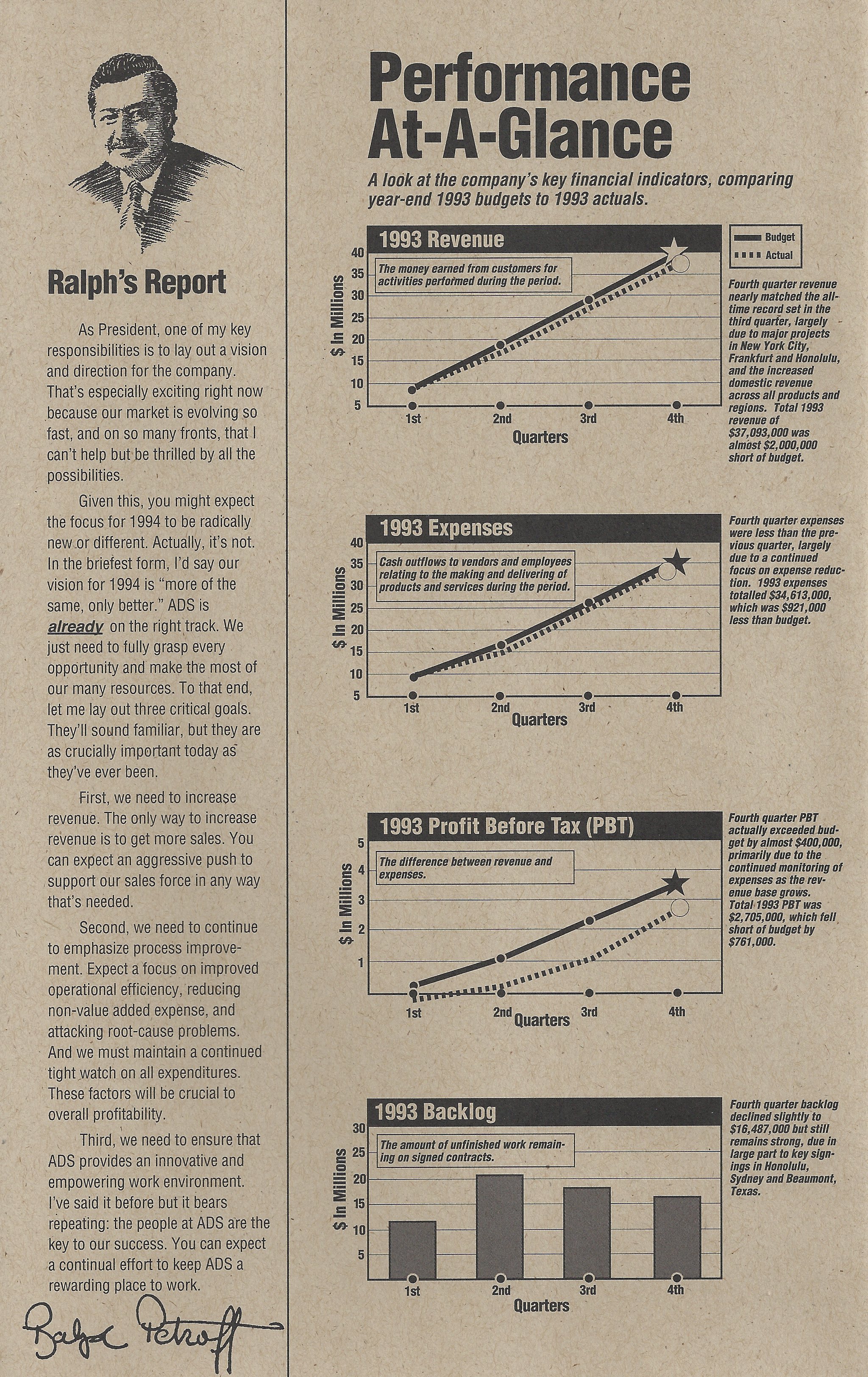
Here, forewith, is Peter Petroff’s proper CV (source):

Peter Dimitroff Petroff, a NASA engineer and later an inventor whose enterprises developed heart-monitoring equipment and originated the digital wristwatch 30 years ago, died Feb. 27 at his home in Huntsville, Ala. He was 83. . .

He went into business on his own in 1968, founding Care Electrics, a high-technology company that developed a wireless heart monitor for hospital use. The venture evolved into Electro/Data, which created the prototype of the digital watch.

Marketed by the Hamilton Watch Company as the Pulsar, the odd-looking device sold for $2,100 in 1971.

Of course, there had been mechanical digital watches long before, but the Pulsar was electronic with a red LED readout.

More

THERE is a widespread belief in Bulgaria that the country has never been able to keep its best offspring because they always leave to find a better place to make a living. Unfortunately, one can easily share this view, as most of the Bulgarians that have introduced anything of importance to the world have been from among those that left their homeland. Perhaps this is not such a problem, as long as Bulgarians do not forget those that brought the fame.

Following this line of thought, one name that was long ago forgotten in Bulgaria was that of Peter Petroff (Petar Petrov), and only the news of his death brought his name back to the minds of Bulgarians.

Peter Dimitroff Petroff, 83, an engineer at the National Aeronautics and Space Administration (NASA) and an inventor whose enterprises developed a heart monitor and the digital wristwatch 30 years ago, died on February 27 at his home in Huntsville, Alabama. He was a native of Bulgaria who moved to Canada and then to the US after World War 2, and in 1968 founded Care Electrics, a high-tech company that developed a wireless heart monitor for hospitals. The company became Electro/Data, which created the prototype of the digital watch. Marketed by the Hamilton Watch Company as the Pulsar, it sold for $2100 in 1971.

Petroff was born in the Bulgarian village of Brestovitsa, and, while almost nothing is known of his life in Bulgaria, his later existence was marked with the name of a great inventor. He was born on October 21, 1919 to the family of Dimitar Petrov, a priest of the Eastern Orthodox Church, and his wife Vasillia. After attending a religious seminary, Petroff enlisted in the French Foreign legion in October 1939.

He was captured by the Germans while defending the French Maginot Line in 1940, and sent to a German Prisoner Of War camp in Poland. He returned to Bulgaria in March 1941 and became an officer in the Bulgarian Army. His duties included being a palace guard to King Boris III of Bulgaria and participating in the Honour Guard for the funeral of Turkey’s President, Kemal Ataturk, the founder of modern Turkey.

In 1944, he moved to Germany to study engineering at the University of Munich.

He graduated from Darmstadt and Stuttgart universities with a master’s degree in electrical, mechanical, and civil engineering. While in Germany he also studied his life long passion, naval architecture, and designed and built the first of over 60 boats in 1947.

Petroff arrived in Toronto in 1951 via wartime France and Germany. He worked on arctic engineering and construction projects for the US Air Force at Goose Bay, Labrador, and Thule, Greenland.

He went to Indochina in 1956 for assignments in bridge and power plant construction. Three years later, he sailed a 65-foot catamaran of his own design to Melbourne, Florida, where he joined the space projects carried out by a precursor of the Harris Corporation. He helped design systems for early weather and communications satellites and organised the company’s semiconductor division.

Moving to Huntsville in 1963, Petroff was recruited by Wernher von Braun to work on the new Saturn rocket for the Apollo space programme. During that period, his employers were NASA, and Boeing and Northrop, its contractors.

In 1975, Petroff and his sons founded ADS Environmental Services, a maker of computerised pollution monitoring equipment for the world market. He sold his interest in the company in 1995 but rejoined his sons as a consultant for Time Domain.

Petroff received numerous honours and awards throughout his professional career. His most unique distinction was to be officially declared an Enemy of the People by the communist regime in Bulgaria, for which he received a death sentence in absentia. The sentence was later lifted.

He continued his lifelong interest in boat design and naval architecture by renovating the Gemini II. The boat also served as the base of operation for Lee Taylor’s successful assault on the world water speed record on Lake Guntersville in 1967. In 1991, he moved the Gemini II to the US Virgin Islands. It was donated to charity two years ago and now serves as a floating orphanage in Central America.

In its obituary for Peter Petroff, The New York Times quoted Ralph Petroff, one of his sons, who said it was ironic that his father had died a peaceful death.

“He always laughed at danger and he laughed at death. He should have never made it to his 83rd birthday, let alone his 20th,” Ralph Petroff said. “I guess if you were to combine Indiana Jones with Thomas Edison, the result would be Peter Petroff.”

And his wikipedia entry:

Peter Petroff (Born in Brestovitsa, Bulgaria, October 21, 1919 – Died in Huntsville, Alabama, United States, February 27, 2003[1]) was a Bulgarian American inventor, engineer, NASA scientist, and adventurer. He was instrumental in the evolution of the NASA space program. Among his many accomplishments, Petroff developed the world’s first computerized pollution monitoring system and telemetry devices for the world’s first weather and communications satellites. Petroff helped develop the world’s first digital watch[1] and the world’s first wireless heart monitor, and many other important devices and methods. Petroff founded Care Electronics, Inc. which was acquired by Electro-Data, Inc. of Garland, Texas in the fall of 1971.

Petroff Point on Brabant Island in Antarctica is named for Petroff.[2]

References

  1. http://www.nytimes.com/2003/03/09/obituaries/09PETR.html The New York Times: Peter D. Petroff Dies at 83.
  2. Composite Gazetteer of Antarctica: Petrov Point.


And his NY Times obit, if you’re interested.

Front deck refresh

Now that the backyard privacy fence is complete, time to refresh the look of the front deck, starting with the broken latticework underneath, which used to look like this:

Original pattern

Here are some of the patterns I’m considering, reusing the old lattice work strips where possible:

Star pattern

Galaxy pattern

Geometric patterns 2

Geometric patterns

Modern art pattern


Or if I’m really ambitious, I’ll turn it into a wood-and-metal mixed media display, something like this:

Mixed media pattern


Merlin and Erin would have selected one design for me, I’m sure…

DSCN2400

DSCN2402

…after they watched the butterflies, hummingbirds, bees, birds, chipmunks and squirrels, of course.

DSCN2371

male_femalefinch

DSCN2395


What the cabin in the woods looked like under construction in April 1987, still with the same latticework today in 2014 — time to bring the deck into the 21st century!:

Front_yard-Apr1987

Vocations through time

It’s vocation reminiscing week — today’s job well-remembered, if not remembered well:

working as an instructor for three terms/semesters for the vocational trade training business known as “ITT Technical Institute,” teaching incoming customers (i.e., students) about learning methods, Python programming language and SuSE Linux-based computer servers.

ITT-faculty-badge

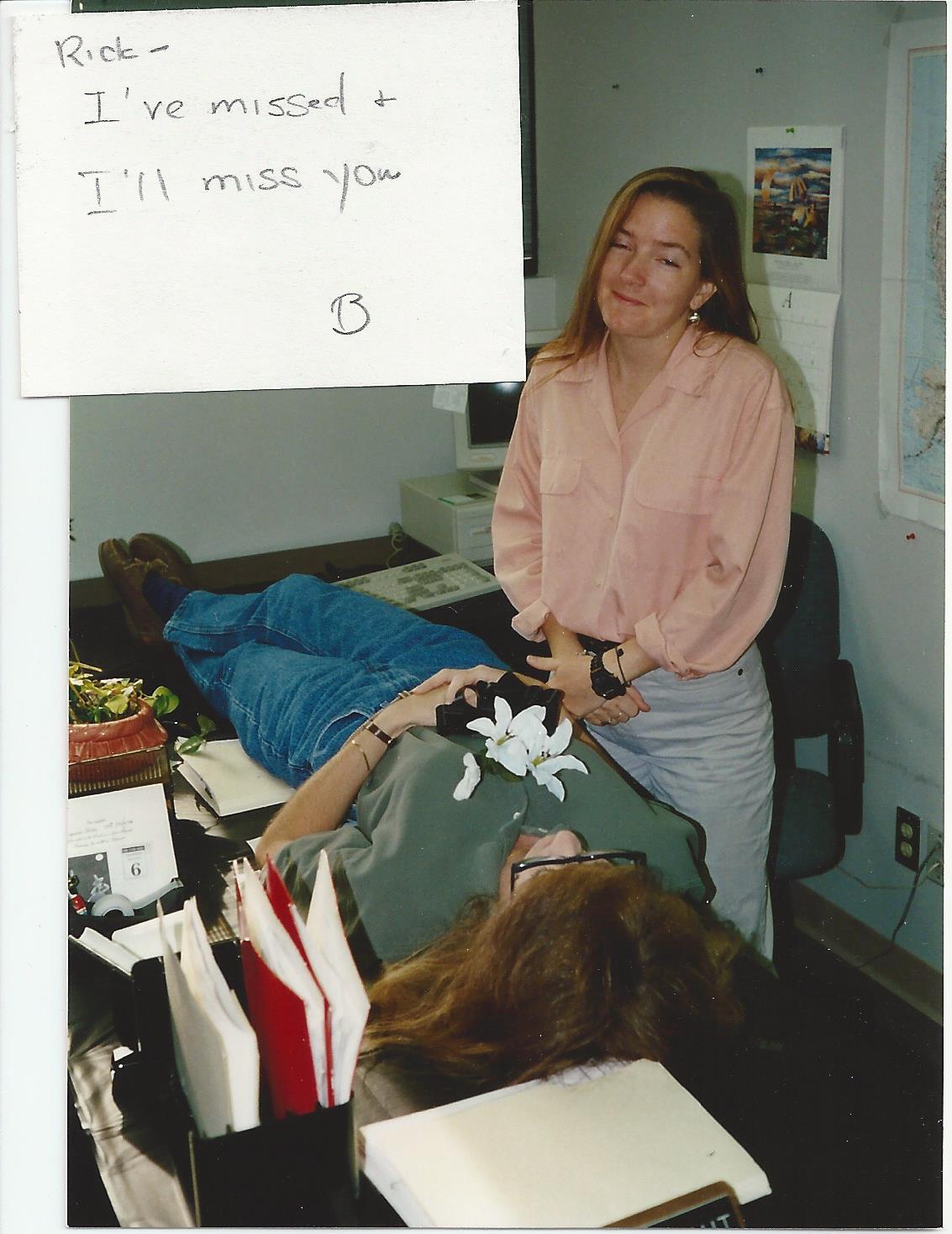
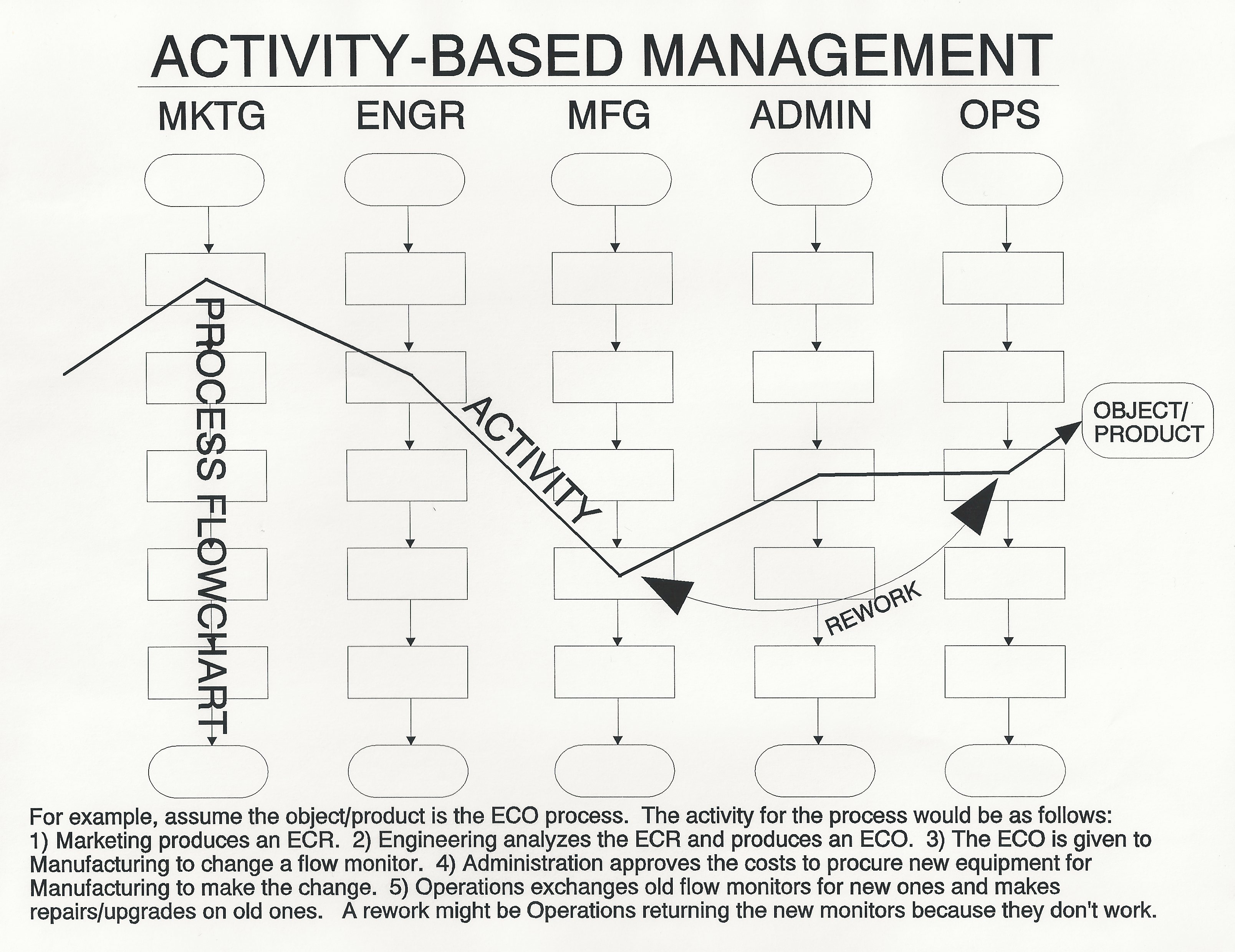
And one last glance back at my sewer flow monitoring job — while I was working with Rick and Adam, we moved on to Erie, Pennsylvania, for another temporary flow monitoring project.  In the middle of the project, I flew down to Cape Canaveral to see my brother in-law’s experiment, called BATSE, catch a ride on a space shuttle launch, completing the circle for when I worked on the space shuttle main engine controller at Rocketdyne in the 1980s after the Challenger accident, which was even more fitting since the founder of the sewer flow monitoring company worked on the Apollo space program (he was part of the German rocket team designed the V2 rockets under the guidance of Wernher von Braun), turning the life science telemetry equipment from measuring astronaut blood flow into measuring the flow of liquid through sewer pipes — technology transfer!  Meeting interesting friends along the way…

DeenaKlingon_HardHat

Deena Ramos, Klingon warrior, and her husband, James “Hardhat” White

Brenda-Craig-02

Dear Brenda, you were such a fun friend at the right time in my life…

SCAN0555 facebook-profile-0001 SCAN0532 SCAN0533 Brenda-Craig-07 Brenda-Craig-04 Brenda-Craig-03

SCAN0278 SCAN0233 SCAN0240 SCAN0243 SCAN0266 SCAN0643

Before ADS, there was my first real corporate office job, working for GE Aerospace on the U.S. Navy test equipment called CASS, to whom us humble employees were awarded coffee cups for a job well done!:

CASS-gold-coffee-cup GE-coffee-cups GE-coffee-cups-2

ELEC_CASS_Hybrid_Testing_System_lg

A dose of three quarks daily

We praise competition, but practice merger and monopoly…. We praise business organization but condemn and prevent labor organization…. We give heavier and more certain sentences to bank robbers than to bank wreckers. We boast of business ethics but we give power and prestige to business [disruptors]…. Everybody is equal before the law, except … women, immigrants, poor people.… We ridicule politicians in general but honor all officeholders in particular and most of us would like to be elected to something ourselves. We think of voting as the basis of democracy, but … seldom find more than fifty per cent of eligible voters actually registering their ‘will.’… Democracy is one of our most cherished ideals, but we speak of upper and lower classes, ‘look down on’ many useful occupations, trace our genealogies…. We believe in the brotherhood of man, but we are full of racial, religious, economic, and numerous other prejudices and invidious distinctions. We value equality, but tolerate greater inequality of wealth and income than has ever existed in any other society…. We drape nude statues and suppress noble books…. We try to foster participative recreation, but most of it is passive, much of it vicious, and almost all of it flagrantly commercialized…. This is the age of science, but there is more belief in miracles, spirits, occultism, and providences than one would think possible…. Our scientific system produces a specialism that gives great prestige and great technical skill, but not always great wisdom…. The very triumphs of science produce an irrational, magic-minded faith in science….

Realize, now, that the article was written in 1935. The author was Read Bain, professor of sociology at Miami University in Ohio. As a founding editor of the American Sociological Review, he would become embroiled in early disputes between the “scientists” and “humanists” in his own discipline. He was thus involved in theorizing—and, in that spontaneous way of so many early- to mid-20th-century American academics—practicing in the mode of a “public intellectual,” that figure who today, apparently, is nowhere to be found.[i] In terms of Bain’s analysis as synopsized above, and even more to the point, in terms of the social critique it so earnestly propounds, what struck me when first reading it was how contemporary it sounded and how apt its reproaches were.

– See more at: http://www.3quarksdaily.com/#sthash.r4OiSwKH.dpuf

Poking along the ol’ desert trail

Striving For Efficiency

Undocumented love songs do appeal
To unrelenting robots at the job,
The automatic working people’s deal
About their heavy hearts’ (in stillness) throb.
You people! See your wasted VCRs!
Take comfort with the loved ones from the rain,
Wave pennants at the ballgame, and our cars
Shall eat the track. Replace oldtimer’s train
With progress’ routes, invented by the Old
Guard, so the New will build starcruiser ships —
The labored, never-ending future, cold
Beyond imagination — mindless trips.
The words we say, the plans we’ve made in haste,
Perspective bears their worthiness or waste.

[Published in Gallery 1985, a Walters State Community College publication, spring 1985]

=====================

The Farmer’s Almanac Guide to Shakespeare: A 1/2-Act Play

To be performed in a casual setting; the performer should wear an old hat, dirty overalls, and a wornout pair of boots and be holding a large book, preferably the works of Shakespeare.

Hi folks, I was gonna tell y’all about the weather and how my farm was doin’ and all that but this morning I picked up this stack of tall tales that’s been holdin’ up one end of my kitchen table ever since my daughter got kicked outta eighth grade for chewin’ tobacco.

The fellow in this here book says that old psychiatrists have gray beards, that their faces are wrinkled, their eyes all yellowed-over, their gums are red from gnawin’ and that they lack their sanity, together with having weak legs, so they have to hang onto the toilet when they pee (kinda like some of them politicians after they’ve had a few sips of my moonshine…er, I mean cough medicine). I don’t mean to insult the bunch of you but that purty well describes the rest of us here today. But as I was sayin’, you can tell this fellow has a lot on his mind, and he uses some purty fancy words to say all what he’s got to say. I especially like this story, called…

The Good Ol’ Boy Hamlet

[The performer makes a sound, clearing the throat, thrusts the book out in an overdramatic fashion and then pulls the book in close as if the words are hard to see, bending down to study the page for a few seconds before saying the following paragraph slowly, as if getting used to reading out loud.]

I heard this speech once, but it was never acted; or if it was, not more’n once; it didn’t please a lot of folks; it was like fancy fish eggs to the people: but it was — as I reckon, and others, whose judgments in such matters are much smarter’n mine — an excellent speech, every sentence put together purty well and set down with as much modesty as a cunning politician.

[The performer stands up straight and holds the book back out, then loudly enunciates the following, overacting as much as possible.]

To seed or not to seed the fields: that is the question:
Whether this brain of mine can suffer
The Cadillacs and Pierce Arrows of winnin’ the lottery fortune,
Or take pesticides against a sea of boll weevils,
And by sprayin’ end them? To die: to sleep:
No more; and by sleep to say I end
The heartache and the thousand bumps to my butt
That a tractor’ll do to ya, it’s a sitiation
Definitely to be wished fer. To die, to sleep:
To sleep: perchance to dream : ah, there’s the rub of Ben Gay;
For in that sleep of death what dreams may come
When I have taken off these dirty overalls,
Must give me pause: that’s the respect
That makes a calamity of this long life;
For who would bear the naggin’ and complainin’ of your spouse,
The government taxes, the businessman’s contempt for farmin’,
The pains of your ol’ sweetheart’s love, the delay of your farm loan approval,
The overbearin’ county commissioners and the free handouts
That lazy farmers whose crops fail take,
When I myself could quietly make
Out like a barefoot bandit? who would bear the burdens,
To grunt and sweat under this weary life,
But that the wonder of somethin’ after death,
The undiscovered country from whose boundaries
No traveller has returned, puzzles the will
And makes us rather bear those ills we have
Than fly to others that we don’t know of?
Thus conscience does make Christians of us all;
And thus the natural-born worldly will
Is replaced with Jesus and his cast of angels,
And enterprises of great importance and in regards
to this moment our thoughts run to God
And lose the love for the world. — Listen now!
My fair wife! She calls me back to the dinner table for some vittles.
Well, folks, I’d best be going afore she up and feeds my supper to the hogs.

– 19 May 1995