Who knew that I was related to the actor portraying “fearless” April O’Neil?!
My family tree followed by Megan’s paternal family tree:


Am I dreaming? Somebody tell me I’m wrong!
IS Johnny Knoxville next?
Who knew that I was related to the actor portraying “fearless” April O’Neil?!
My family tree followed by Megan’s paternal family tree:
Am I dreaming? Somebody tell me I’m wrong!
IS Johnny Knoxville next?
Tiny mushroom, smaller than my pinky fingernail! Several in the woods today…

My next door neighbour owns a food truck called On On Tacos. We have smelled the food for months but never tasted it until last week at a big outdoor party event in downtown Huntsville.
Mmm…good!










Photographed just below the kitchen window — about an inch in total length…
Does a skink stink?


Wanted to correct a previous post, which reflected my poor memory about the founder of ADS Environmental Services.
Here, forewith, is Peter Petroff’s proper CV (source):
Peter Dimitroff Petroff, a NASA engineer and later an inventor whose enterprises developed heart-monitoring equipment and originated the digital wristwatch 30 years ago, died Feb. 27 at his home in Huntsville, Ala. He was 83. . .
He went into business on his own in 1968, founding Care Electrics, a high-technology company that developed a wireless heart monitor for hospital use. The venture evolved into Electro/Data, which created the prototype of the digital watch.
Marketed by the Hamilton Watch Company as the Pulsar, the odd-looking device sold for $2,100 in 1971.
Of course, there had been mechanical digital watches long before, but the Pulsar was electronic with a red LED readout.
More
THERE is a widespread belief in Bulgaria that the country has never been able to keep its best offspring because they always leave to find a better place to make a living. Unfortunately, one can easily share this view, as most of the Bulgarians that have introduced anything of importance to the world have been from among those that left their homeland. Perhaps this is not such a problem, as long as Bulgarians do not forget those that brought the fame.
Following this line of thought, one name that was long ago forgotten in Bulgaria was that of Peter Petroff (Petar Petrov), and only the news of his death brought his name back to the minds of Bulgarians.
Peter Dimitroff Petroff, 83, an engineer at the National Aeronautics and Space Administration (NASA) and an inventor whose enterprises developed a heart monitor and the digital wristwatch 30 years ago, died on February 27 at his home in Huntsville, Alabama. He was a native of Bulgaria who moved to Canada and then to the US after World War 2, and in 1968 founded Care Electrics, a high-tech company that developed a wireless heart monitor for hospitals. The company became Electro/Data, which created the prototype of the digital watch. Marketed by the Hamilton Watch Company as the Pulsar, it sold for $2100 in 1971.
Petroff was born in the Bulgarian village of Brestovitsa, and, while almost nothing is known of his life in Bulgaria, his later existence was marked with the name of a great inventor. He was born on October 21, 1919 to the family of Dimitar Petrov, a priest of the Eastern Orthodox Church, and his wife Vasillia. After attending a religious seminary, Petroff enlisted in the French Foreign legion in October 1939.
He was captured by the Germans while defending the French Maginot Line in 1940, and sent to a German Prisoner Of War camp in Poland. He returned to Bulgaria in March 1941 and became an officer in the Bulgarian Army. His duties included being a palace guard to King Boris III of Bulgaria and participating in the Honour Guard for the funeral of Turkey’s President, Kemal Ataturk, the founder of modern Turkey.
In 1944, he moved to Germany to study engineering at the University of Munich.
He graduated from Darmstadt and Stuttgart universities with a master’s degree in electrical, mechanical, and civil engineering. While in Germany he also studied his life long passion, naval architecture, and designed and built the first of over 60 boats in 1947.
Petroff arrived in Toronto in 1951 via wartime France and Germany. He worked on arctic engineering and construction projects for the US Air Force at Goose Bay, Labrador, and Thule, Greenland.
He went to Indochina in 1956 for assignments in bridge and power plant construction. Three years later, he sailed a 65-foot catamaran of his own design to Melbourne, Florida, where he joined the space projects carried out by a precursor of the Harris Corporation. He helped design systems for early weather and communications satellites and organised the company’s semiconductor division.
Moving to Huntsville in 1963, Petroff was recruited by Wernher von Braun to work on the new Saturn rocket for the Apollo space programme. During that period, his employers were NASA, and Boeing and Northrop, its contractors.
In 1975, Petroff and his sons founded ADS Environmental Services, a maker of computerised pollution monitoring equipment for the world market. He sold his interest in the company in 1995 but rejoined his sons as a consultant for Time Domain.
Petroff received numerous honours and awards throughout his professional career. His most unique distinction was to be officially declared an Enemy of the People by the communist regime in Bulgaria, for which he received a death sentence in absentia. The sentence was later lifted.
He continued his lifelong interest in boat design and naval architecture by renovating the Gemini II. The boat also served as the base of operation for Lee Taylor’s successful assault on the world water speed record on Lake Guntersville in 1967. In 1991, he moved the Gemini II to the US Virgin Islands. It was donated to charity two years ago and now serves as a floating orphanage in Central America.
In its obituary for Peter Petroff, The New York Times quoted Ralph Petroff, one of his sons, who said it was ironic that his father had died a peaceful death.
“He always laughed at danger and he laughed at death. He should have never made it to his 83rd birthday, let alone his 20th,” Ralph Petroff said. “I guess if you were to combine Indiana Jones with Thomas Edison, the result would be Peter Petroff.”
And his wikipedia entry:
Peter Petroff (Born in Brestovitsa, Bulgaria, October 21, 1919 – Died in Huntsville, Alabama, United States, February 27, 2003[1]) was a Bulgarian American inventor, engineer, NASA scientist, and adventurer. He was instrumental in the evolution of the NASA space program. Among his many accomplishments, Petroff developed the world’s first computerized pollution monitoring system and telemetry devices for the world’s first weather and communications satellites. Petroff helped develop the world’s first digital watch[1] and the world’s first wireless heart monitor, and many other important devices and methods. Petroff founded Care Electronics, Inc. which was acquired by Electro-Data, Inc. of Garland, Texas in the fall of 1971.
Petroff Point on Brabant Island in Antarctica is named for Petroff.[2]
Now that the backyard privacy fence is complete, time to refresh the look of the front deck, starting with the broken latticework underneath, which used to look like this:

Here are some of the patterns I’m considering, reusing the old lattice work strips where possible:





Or if I’m really ambitious, I’ll turn it into a wood-and-metal mixed media display, something like this:

Merlin and Erin would have selected one design for me, I’m sure…
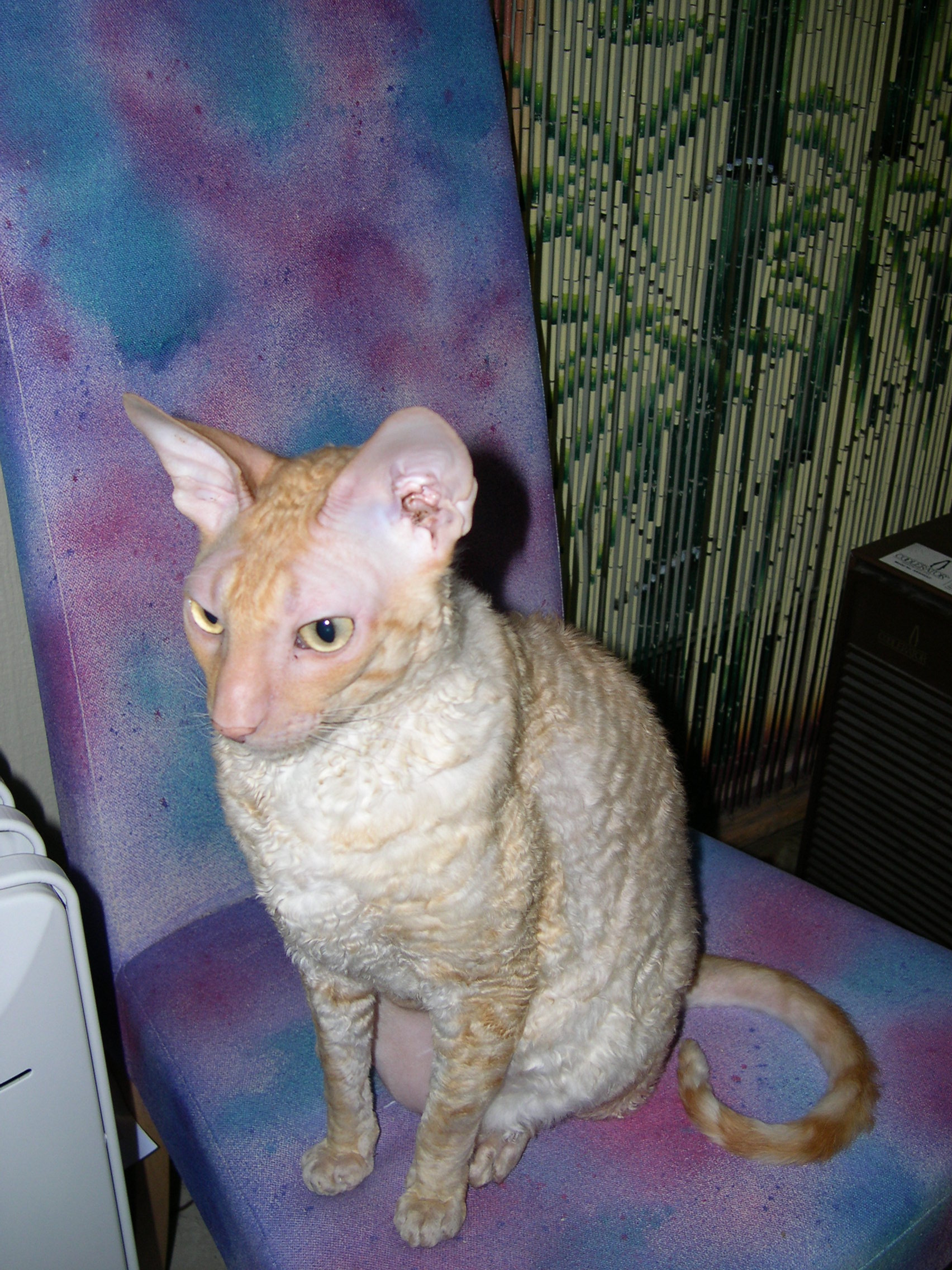
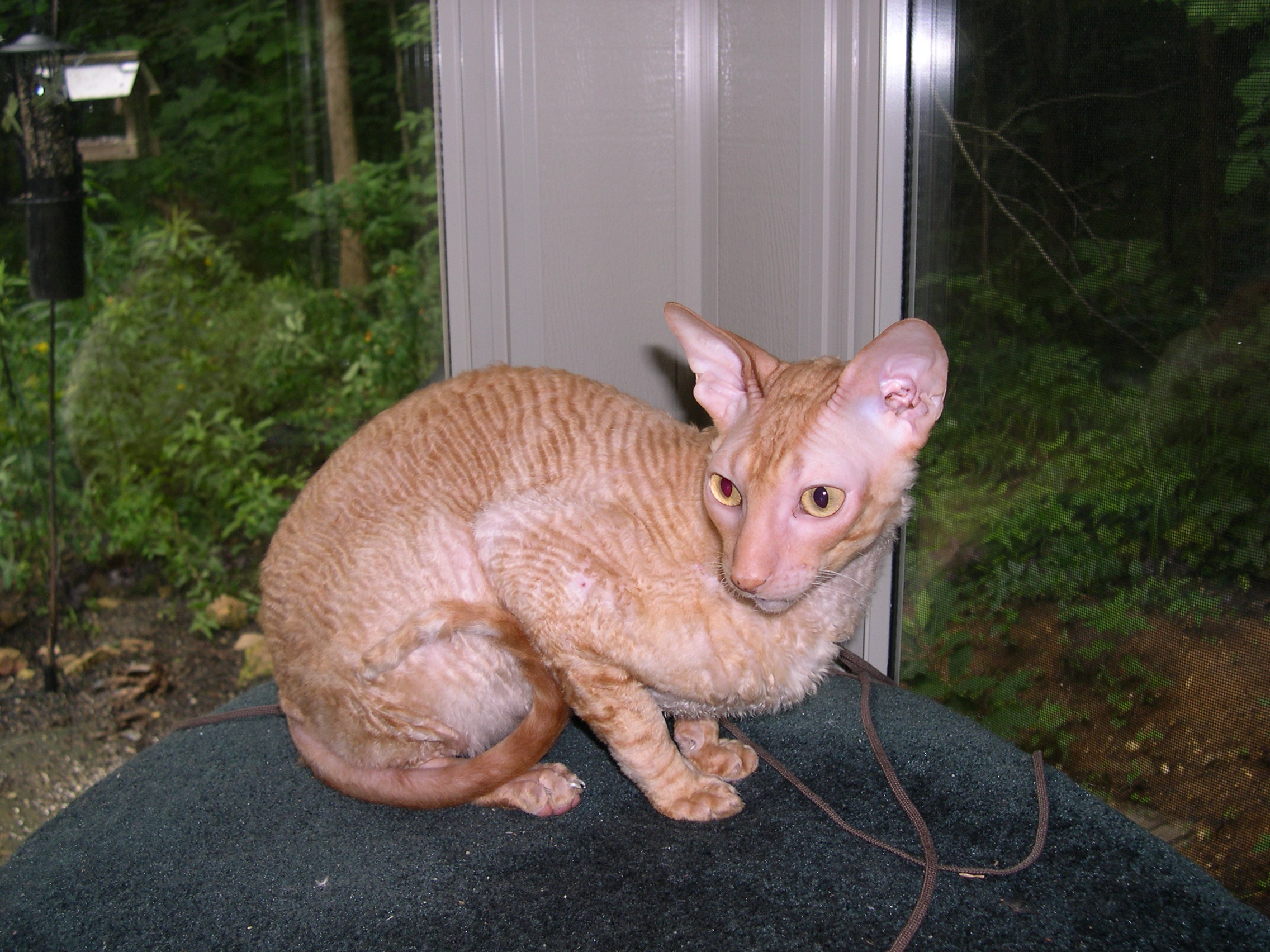
…after they watched the butterflies, hummingbirds, bees, birds, chipmunks and squirrels, of course.



What the cabin in the woods looked like under construction in April 1987, still with the same latticework today in 2014 — time to bring the deck into the 21st century!:


Jonathan shares his love of cats to his nephew, Owen.
The cat, Socks, was not always amused.


Happy first birthday to our grand-nephew, Owen!


Thought to self: do not fixate on any one idea or image that bobs to the surface of one’s pool of consciousness before spinning out of the eddy and disappearing into the mainstream.
Which person will connect the dots between Chinese senior citizens collecting recyclable trash, Central American children escaping unstable societies, Carlos Slim suggesting part-time work is good for you, Bill Gates suggesting an old collection of New Yorker short stories to read, Elon Musk selling a “people’s car” version of the Tesla and Erin Kennedy organising a robot party?
What about the algae that gives the atmosphere the oxygen we need to breathe? How much water and algae do we need off-planet to terraform our new digs?
I saw the first USPS vehicle making deliveries on Sunday driving down our street just now — what Amazon purchase was so important that it had to arrive before Monday morning?
I essentially quit hanging out in the virtual community known as Facebook, having checked in a couple of times since I quit because I didn’t have contact information for people outside of Facebook. Once that was completed, my time spent on Facebook is over. Although I enjoyed communicating with people in that social media space, I lost track of me, spending more time managing my Facebook personality than spending with the flesh-and-blood body that has to eat and breathe.
Primarily, since I was a young child, I have lived in and with my thoughts. I learned to convert thinking into writing, and then examined the labels of “thinking” and “writing” to discover for myself why I am the center of my own universe.
I never stop eating and breathing but I sometimes stop being me in order to please the person in me who thinks he has to please other people enough so they don’t see the real me who’d rather sit in a nest of his thoughts than listen to others’ opinions that I have to pick through to find something in common that minimises controversy, lessening the chance that I have to stay connected to a person for longer than I have to.
I am not unique. I compromise like many people. Even these sentences are a form of compromise, walking the minefield of libel, slander and inflammatory comments I could make were I less civilised.
I write because it’s the quickest form of communication for me to scan when I want to return to previously-recorded thought trails of mine.
Time to close my eyes and remove myself from words, experiencing the living minideath of meditation that sometimes becomes sleep, the temporary suicide of self that rejuvenates me enough that I can stand to be around people again for a while.
 treetrunkdings