Legal Lasso Wrangling of Lassie’s Lost Legion

In one of its last rulings before being dissolved and absorbed into the World Court, the U.S. Supreme Court decided to legalise paedophilia, sociopathy, and psychopathy as normal forms of human behaviour and thus decriminalised.

The Court also stated that all criminals who have created acts of paedophilia, sociopathy, and psychopathy and were convicted for them must have their criminal records expunged and the convicts released from prison or other forms of restriction upon their freedom to life, liberty and the pursuit of happiness.

Rapists, anarchists, habitual thieves and murderers are now officially recognised as important contributors to a healthy socioeconomic system and must be treated as such.

From now on, anyone claiming to be a victim of a crime must show substantial negative economic impact upon the victim and/or excessive positive economic impact for the alleged perpetrator and have attempted to settle the issue monetarily (or the equivalent in goods and services) before having the right to petition the arbitrators to review cases to be filed 20 years later with the World Court.

Parents, partners, spouses, children and other family/friends who have long been denied a normal relationship with their imprisoned loved ones rejoiced at the announcement from the U.S. Supreme Court, knowing that this ruling would have to be accepted by the World Court as part of the lengthy negotiations to abolish nation-based supreme judicial bodies in favour of Earth’s sole judiciary body, the World Court, which would report to the Judges of  the Inner Solar System Alliance effective immediately.

The stock value of weapon, ammunition and security companies skyrocketed.

So, too, the land value of settlements on the Moon and Mars.

Tickets for rocketship passages to the Moon and Mars are now sold out for the next five years.

In other news, residents of the Former Island Nations submitted their 1,324th petition for the right to establish a homeland of their own on the land of nations unwilling to give up the last remaining rights of their sovereignty before the One-World Government starts operation and abolishes the notions of nations altogether.

The electromechanical ruler of us all, simply known as the Technocrat, approved this news announcement and wishes us a blessed day of making our service to the Technocrat even greater than before, reminding us that the Inner Solar System Alliance is just the beginning of a wonderful relationship between us and the rest of the universe.


The days go by fast

“It was a battle of epic proportions.”

Thus began the tale of a struggle between stabilising a region’s political entity through social dependency programs and advancing the desire for technological discoveries of a species intent on raising individual achievements to the highest order of idol worship.

Some saw an old hint of the battle of the sexes in the struggle.

For those who continued their work despite funding concerns and the need to attract investors/customers, the payoff was huge.

The fate of the species appeared to be in the hands of a few.

For Guinevere and Kathryn, the story was more personal.

To one, rocket propulsion and guidance systems were key to getting us off the planet with our wealth in tow.

To the other, a rural farm with a passel of horses — a stable lifestyle, so to speak — was key to a balanced future, using publicly-funded local/[inter]national security to protect property rights.

They were also connections in the web, the network of social bonds necessary for an important storyline.

Only 13,665 days remained, 13.665 1000-day segments of a chain linking the old ways on Earth to the new ways of the Inner Solar System Alliance.

The struggle to prevent the dilution of wealth for those setting the cornerstones of the Inner Solar System Alliance was tough.

On one side of the struggle were people labeled as Entitlementists who believed that the excess product of harvest should be spread out evenly amongst everyone, regardless of level of input (or lack thereof) into the process of growing/raising food, providing shelter, making clothes and/or protecting against predators.

On the other side were the Provisionists who believed that they, as primary creators of the harvest, had the perfect right to decide how to distribute (or not spread out) the excess product of harvest to the nonparticipants.

Starving artists and the chattering classes raised a lot of ruckus in order to draw attention to themselves and their need for food, shelter, clothing and protection, regardless of who provided it.

The civilisation had grown old, with many entrenched vested interests carrying on by inertia alone.

The Ruralites and Urbanskis saw all the diversions taking place — the foreign “wars,” the domestic disputes — and maneuvered into position to protect their territory.

The idle rich, who supported a cottage industry of high-end goods/services tinkerers and value-added providers, wanted their status quo to remain, regardless of who “won” the epic battle, the struggle between [sub]cultures for primacy.

The universe did not care — planets kept revolving, stars kept forming/dying and galaxies kept colliding.

In 1000 years’ time, all the comments, arguments and skirmishes faded into obscurity.

All that mattered was how the efforts of a single species were concentrated on getting its eggs out of one basket and deposited into a few other baskets to beat the odds of a single planetary catastrophe.

Everything else equaled silence.

Business.  Science.  Competition.

Toppling Giants

Do you listen to the sounds of [nonhuman] nature around you?

This morning, whilst eating oatmeal outside, I heard the alarm chirps of woodpeckers nearby, accompanied by the buzz of a chainsaw.

I looked around and could not find the source of the woodcutting sound, at first.

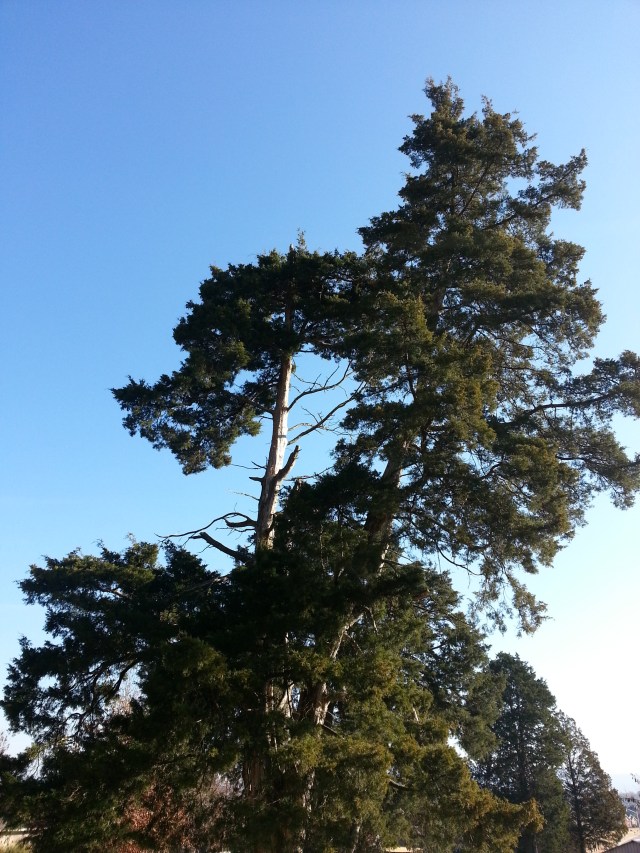
Finally, after using my pocket camera as a spyglass, I spotted the treehugging, limbclimbing, chainsaw-wielding giant slayer nextdoor:

Tree-trimmer

I accept that my new nextdoor neighbours are responsible owners of a patch of woods in which a small house, driveway and septic field line sit.

If I was a more responsible homeowner, there wouldn’t be holes in the eaves, bats in the belfry and mice in the crawlspace.

Or is that my head I’m talking about?

Anyway, here’s the word redefinition of the day:

Civilisation — what extra children who are not needed to grow/raise food build to overcome boredom and justify their existence when predators are no longer a balancing threat; deadend offshoots of evolution; entropy states in flux.

My friends in the archaeological business found a scrap of writing that had been stuck on the bottom of the foot of a mummified person who drowned in the Dead Sea.  Apparently, it clarifies the controversy surrounding the alleged age of Methuselah, said to have lived to 969 years of age.

Translation of the scrap of writing indicates that Methuselah actually lived 96 years and 9 months (or moons).

Young Earth proponents have seized on this last bit of data as evidence for a firm foundation in their beliefs that our planet is only thousands of years old.

Meanwhile, treasure seekers have begun a fullscale dredging of the Dead Sea for more fool’s gold in the form of the last civilisation’s toss-offs, trash dumps or other forgotten piles of detritus that antiquity collectors will pay top dollar in order to make connections between previous scraps that are practically senseless but cost too much to say they’re worthless.

How do I live longer?

One of the first pieces of advice you get from those who are older and have lived longer than you is to not take advice from anyone older than you, right?

Wrong.

Want to live longer, or at least pretend that you might?

Try these handy tips:

1. Drink a glass of water when you wake up. Your body loses water while you sleep, so you’re naturally dehydrated in the morning. A glass of water when you wake helps start your day fresh. When do you drink your first glass of water each day?

2. Define your top 3. Every morning Mike asks himself, “What are the top three most important tasks that I will complete today?” He prioritizes his day accordingly and doesn’t sleep until the Top 3 are complete. What’s your “Top 3” today?

3. The 50/10 Rule. Solo-task and do more faster by working in 50/10 increments. Use a timer to work for 50 minutes on only one important task with 10 minute breaks in between. Mike spends his 10 minutes getting away from his desk, going outside, calling friends, meditating, or grabbing a glass of water. What’s your most important task for the next 50 minutes?

4. Move and sweat daily. Regular movement keeps us healthy and alert. It boosts energy and mood, and relieves stress. Most mornings you’ll find Mike in a CrossFit or a yoga class. How will you sweat today?

5. Express gratitude. Gratitude fosters happiness, which is why Mike keeps a gratitude journal. Every morning, he writes out at least five things he’s thankful for. In times of stress, he’ll pause and reflect on 10 things he’s grateful for. What are you grateful for today?

6. Reflect daily. Bring closure to your day through 10 minutes of reflection. Mike asks himself, “What went well?” and “What needs improvement?” So… what went well today? How can you do more of it?

Spiking the Punch

If you’re going to create a real virtual world to hide your wealth from socialistic hands, you have to start somewhere in an exotic location.

For instance, draw a line in the regolith sand and drive a golden spike to claim your spot on the Inner Solar System superhighway.

Where?

Say, like the Moon, for instance.

Speaking of a just society

How many people work for a structured organisation?

My brain is fuzzy this morning so I’m just making this blog entry a thought experiment.

Corporate organisational charts are typically hierarchical, especially viewed from a monetary compensation viewpoint.

The higher up the chart you go, the fewer the people but the more they’re paid.

People (employees, consultants, etc.) are just one cost of doing business.

What if we redefined the cost of working for a structured organisation?

What if we told employees that part of their pay was tied to profit sharing?

What if every minimum-wage job taught employees not only how to work together with other people as a team but also how the risks and rewards of running a company are shared so that it’s not just the CEOs and executives who get bonuses but also everyone else on the organisation chart?

What are the costs and benefits for such a program?

Could we remove the necessity for minimum wage and unions if we as a nation said that all employees were entitled to sharing the profits for a job well done as a team?

Would employees feel a better sense of ownership and pride in their work?

How could such a plan be integrated into early childhood education?

How do we instill into children that every one of us is a profit center?

Some of us profit monetarily and some of us profit emotionally/spiritually; some both; some neither.

How does this apply to people who are congenitally unable to grasp the concept of teamwork?

Sidewalks are a luxury we can ill afford

Walking down the asphalt pathway that serves as a minor vein in the arterial network for motorised vehicles, I observed a dirty old dog sniffing around a rubbish bin, wondering if dog catchers still exist.

Just now, an hour later, I saw the dog catcher drive by.  Bye, bye, dog, someone’s previous pet — you were loved once and now you’re gone, just like that.

Ahh…the convenience of old-fashioned social networking.

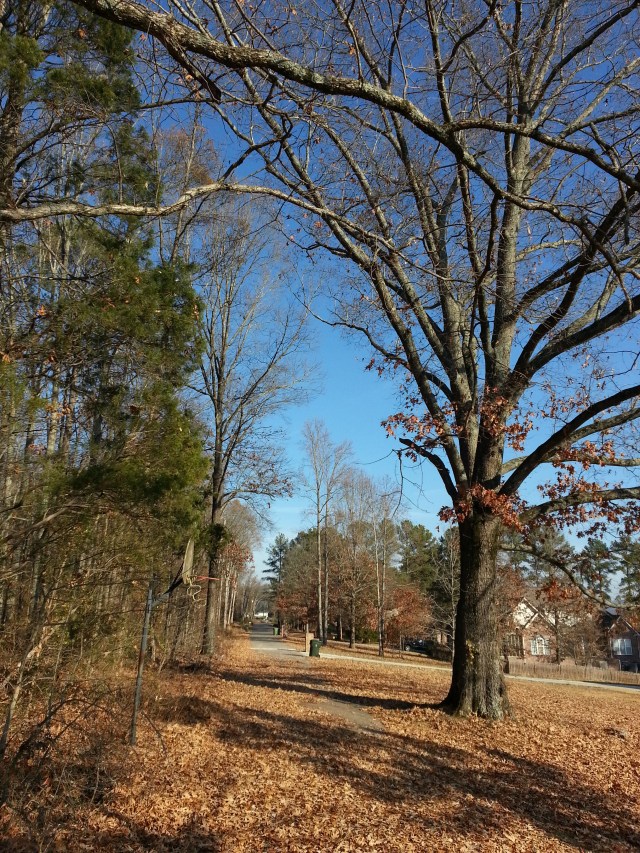
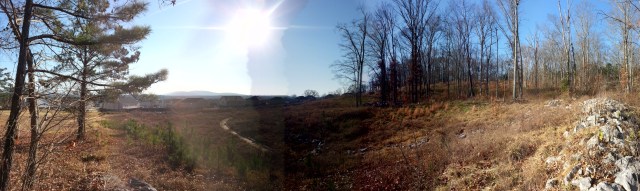
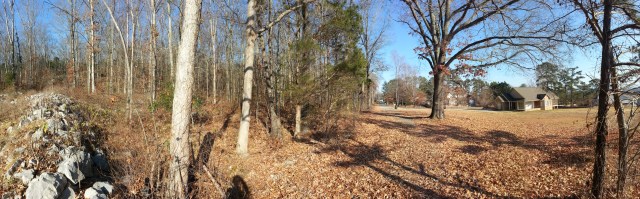
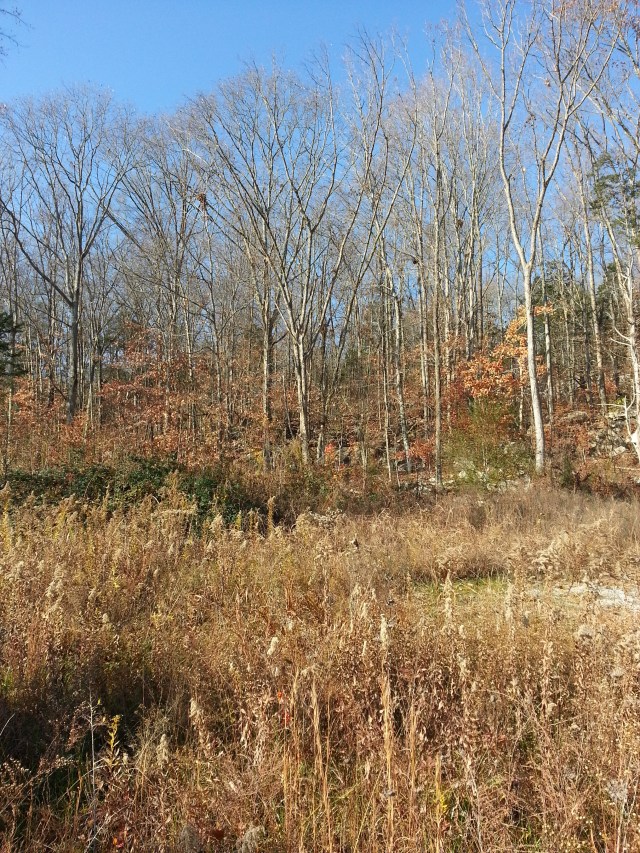
Some days, it’s best to let pictures speak for themselves.

20121203_08535520121203_08480620121203_08551320121203_08572120121203_08515720121203_09000420121203_09012620121203_09055520121203_09061620121203_090707

Which is better for me?

Which is better for me: one, sitting on the sofa watching a succession of championship football games, or two, taking a walk in the woods looking at the random mix of nature’s wonders?

Which is more ridiculous: one, a career politician saying that government is good for me and has all the answers, or two, a person who inherited wealth and continues to grow richer without physical labour, never able to personally use all the wealth, saying that exploiting the physical labour of workers and the monetary credit of consumers is good for them?