Author Archives: treetrunkrick
Clouds on a beautiful fall day

Designing the interactive artwork

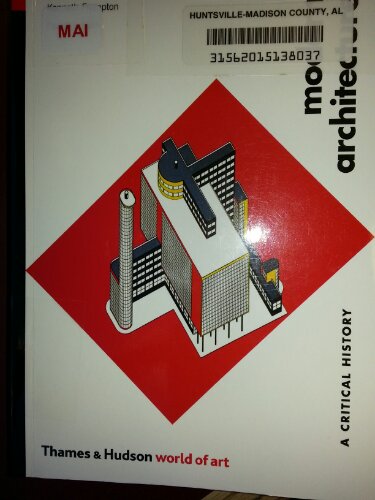
Well, with two days to go, the robot hacks team is down to conpleting the final pieces on top of the interactive artwork — no pressure!
We wanted to have some influence from historical modern architecture so off to the library we went.
Here are some images that will influence tonight’s design:


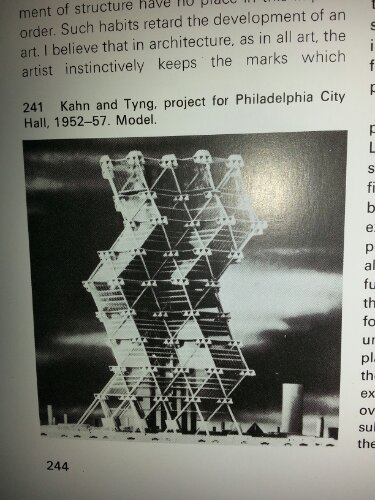


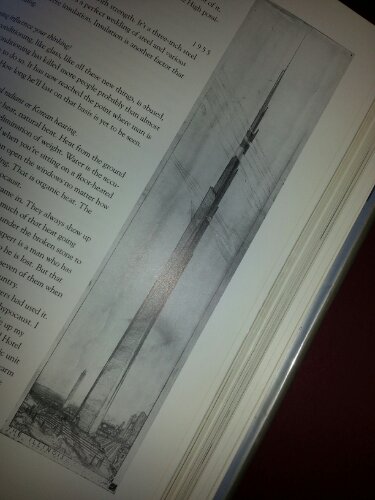


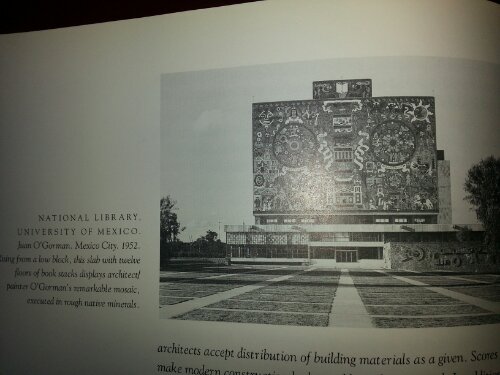
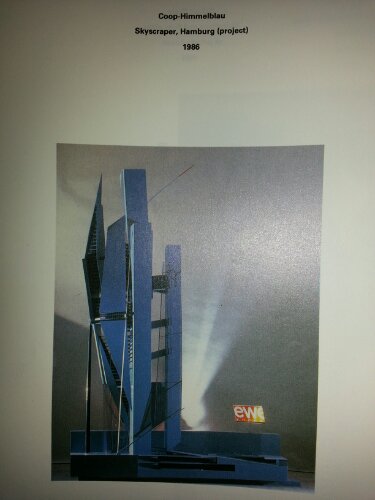


And I shall try to avoid artwork with premonitions builtin!

Of course, there’s current/contemporary architecture to consider, too. Maybe in a separate blog post.
Maple tree, autumn 2013 — Big Cove, AL, USA


Robot Hacks — communiques, part uno
Original message ——–
From: Stuart Gannes
Subject: Important update from Make Greetings
Robot Hackers,
By now we hope all of you received your Robot Hack packages and we’re eager to learn what you are doing, or even planning to do with them. Based on your responses we plan to feature your projects on our Nov 20 finale. You will have a chance to join the Hangouts on Air and show the Community what you are working on. (We also plan to ask a few of our Master Makers to respond to your projects.)
Let us know the evolution of your idea, its current status, what’s next. Let us know if you were inspired by any of the Master Makers we have been featuring on our live sessions. A paragraph or a couple of sentences is all we need.Please respond by email before the weekend.If you haven’t yet posted on our G+ Community Page please do so. It’s filled with updates and interesting videos. And it’s growing like crazy!
And watch for an update about the Nov. 20 show. We will post that on Monday
Go Teams!
Stuart Gannes
Producer
————–
From: Rick
Subject: Re: Important update from Make Greetings
Stuart,
Thanks goes to you, Sherry H., Mike S., and all the others who’ve made this Robot Hacks event fun and informative. Our project is a set of dancing mannequins on a tabletop art piece and is on schedule to be completed early next week.
Today, we’re installing the servos and tomorrow installing the sensors, all of which were programmed in prototype stage during the first two weeks. We’ll debug during the weekend. The artist on the team will decorate the final piece after the weekend.
Our primary inspiration from a Master Maker is Erin Kennedy, a/k/a Robotgrrl.
We look forward to seeing how others have been inspired!
Regards,
Team Tree Trunk
Sent via the Samsung Galaxy S™III, an AT&T 4G LTE smartphone
——–
From: Stuart Gannes
Subject: important update from MAKE
Thanks for the update Rick!
Stay tuned.
Stuart
——–
From: Stuart Gannes
Subject: Talk about your journey
Starting to see what’s brewing in your teams. Please let us know what you are doing. Don’t be shy. There are many newbies among us. For inspiration, check out this comment from one of the team leaders:
I also want to take this opportunity to thank you (MAKE and GE especially) for giving me an opportunity to dive in and really learn about Arduino and get some great hands-on experience with building robots. I’m a current AmeriCorps VISTA Leader serving with FIRST Robotics and I do work in my community with engaging kids and adults with robotics and STEM. However, I have never really had the resources or opportunity to learn so much about electronics and robotics, and my VISTA living allowance makes it difficult to afford the necessary equipment. Due to the generosity of GE and you guys over at MAKE, I can finally get my hands dirty! After watching kids experience the wonder of building a robot, I get to do it myself and share this project with my community.
Can’t wait to learn about your journeys
Stuart
——–
From: Stuart Gannes
Subject: Every step matters
Greetings,
And thanks! to the dozens of you who already responded. Your stories are great and we are thrilled with your participation.
We’re still looking forward to hearing – and learning – how things went for the rest of you. At the very least this will help us with our next Master Makers/Kit productions.
What inspired you to sign up? What do you like about the kits? What are you doing or think you might be doing? Send a note today if possible.
Every step matters!
Stuart
——–
From: Rick
Subject: Re: Every step matters
Inspiration for signing up was the challenge to a small group of friends to put our ideas into action, especially our recent discussion of an interactive yard art sculpture, using the Robot Hacks event for a chance to build a desktop prototype model.
The kit was a great brain teaser, giving us a set of building blocks along with a cookbook and the MAKE magazines to show how makers use available material to turn their dreams into reality. The engineering notebooks brought back memories, good and bad, of our college engineering classes and our current jobs — excellent way, though, to remind participants to document both what you plan and what you do.
So far, this event has [re]opened our eyes to microcontroller programming; prototyping; test fixtures; use cases; the many uses of sensors such as PIR, LDR, and ultrasonic to control servos; the physics of pulleys, soldering, metalworking, gluing, wooden puzzle making; design preparation/presentation; marketing to the Maker community; realistic scheduling for a volunteer project and the esprit de corps of the Maker community in general as showcased in the panels/online hangouts.
We plan to continue working with the MAKE ultimate Arduino kit after this event, figuring out how to use the shields with Arduino in order to control more servos, motors and other gears for a much larger art project.
That said, the recent natural disaster in the Philippines has challenged us to rethink the direction of our next project — should our efforts be more effective if we turned our attention to a more humanitarian effort than abstract art?
Again, we thank you for encouraging us to add experience to knowledge and make something no matter how [im]practical.
We look forward to your synopsis of the types of projects that the dozens of Robot Hacks teams wrote you about.
Regards,
Team Tree Trunk
Sent from my iPad
Cost vs value: the digital economy
Close to home, part two
A look back — remembering my father
I just posted the 3000th entry in this blog and while doing so I sit next to tools that my father used in his balsa wood airplane hobby, his way of reliving a youth spent living with his grandparents, which I now use in my electronic tinkerer’s hobby, reliving my youth of handbuilding 8-bit microcomputer systems in my parents’ basement.
In honour of Dad and in memory of him, I devote this blog entry to previous blog entries written with him in my thoughts as I send out prayers to people who have lost or who are right now losing loved ones:
A touch of class
In this rift, this gap, this space between decision tree branches, when one (me) finds the time to contemplate the past and its affected future (the effect may affect or feign affection), the meditative moment blinds.
Is blinded.
Opens the drapes and pulls the blinds.
‘Tis what is.
Here.
Now.
My father’s breaths approaching their last.
At some point.
Sunrises and sunsets counted in ones.
One day at a time.
One hour.
One minute.
One second.
More thanks to make but they’ll have to wait.
I have my goodbyes to take.
An evening to meditate.
Mein Vater zu danken und zu verabschieden, um die unbekannten Welten können wir Ruhe und Gelassenheit …
…if only he could have the strength to correct my grammar one more time!
= = = = =
He was ready to go…
I have temporarily exhausted the wellspring of words with which to cover this page prophetically and comically.
This morning, my father breathed his last, sparing us the tougher decisions down the road when his health would decline further while we maintained a level of medically-supported comfort.
The ventilator was removed a few days ago.
Yesterday, we agreed to remove the IV fluids.
Today, we planned to keep him on a PEG tube to provide nutrition daily and antibiotics/pain meds as needed.
He died in relative comfort.
Now, no wrinkles furrow his brow.
Meanwhile, we mourn a great man — Richard Hill.
Mon Père.
Mein Vater. Vati.
My one and only father.
May he rest in peace.
May we find solace and grieve in good time.
There’s still another parent with whom we remember the good times and continue to make fond new memories.
A GREAT BIG THANK YOU to the staff at the Mountain Home VA Medical Center, who shared their love, education, patience and kindness with abundance. I (and my father) tip our hats to you — you don’t know how honoured we are to have had you with us at the end.
= = = = =
The Aftermath
I never expected this moment, life after my father died, to appear within what seems like minutes past the last one, life after my wife’s mother died.
I have faced numerous roles I never imagined taking when I was a child.
I…well, that’s the problem right now — this concept of a self dominant in one’s thoughts.
I, me, my, mine.
Life is here in words because of this set of states of energy but it is not solely about the set (a/k/a me).
True, the genetic code set that contributed to the zygote which split into specialised cells that, 50 years later, became the creature which creates these sentences strung together, died recently.
That…which. Which…that.
Social networks and memes stepped into the picture, too.
Influenced 17-year cicada cycles, helped spread their broods, changed their egg-laying territories.
Contributed to the concept of lawnmowing services.
Set the stage for multistage rockets to blast into space.
Turned children into industrial engineers.
Widened a path for the book Quality-Inspired Management to appear in the Amazon (website, not jungle).
Ended in happiness, not tragedy, inspiring us to populate the solar system plentifully.
Sooner, rather than later.
Making political movements, business deals and sports scores feel faint before one day, let alone 1000 years, passed.
Time for the storyline to continue, people and organisations to thank.
A life stopped but its influence lives.
The second crop waiting to be harvested…
= = = = =
Eulogy for Dad
EULOGY FOR DAD by Rick Hill – 20th May 2012
Guten Tag! My father taught me that a good speech should start with an anecdote or joke to set the tone. Following in my father’s footsteps as an academician, I looked up the history of the eulogy to find something, a nugget of wisdom or bit of humour to share with you. What I found is that the eulogy’s purpose has changed through the years, from a serious tribute in ancient times to a light-hearted roast of the recently deceased, especially after 9/11. Instead of telling one of my jokes, I’ll let some of Dad’s words speak for him through emails he sent me over the years. I knew him as Dad. You may have known him as Richard or, more recently, e[…]@yahoo.com. Here are some of the insightful quotes and personal stories he told me via computer. He often forwarded jokes to me. Mainly military-related but here’s one with a musical theme.
When Beethoven passed away, he was buried in a churchyard. A couple days later, the town drunk was walking through the cemetery and heard some strange noise coming from the area where Beethoven was buried. Terrified, the drunk ran and got the priest to come and listen to it. The priest bent close to the grave and heard some faint, unrecognizable music coming from the grave. Frightened, the priest ran and got the town magistrate.
When the magistrate arrived, he bent his ear to the grave, listened for a moment, and said, “Ah, yes, that’s Beethoven’s Ninth Symphony, being played backwards.”
He listened a while longer, and said, “There’s the Eighth Symphony, and it’s backwards, too. Most puzzling.” So the magistrate kept listening; “There’s the Seventh… the Sixth… the Fifth…”
Suddenly the realization of what was happening dawned on the magistrate; he stood up and announced to the crowd that had gathered in the cemetery, “My fellow citizens, there’s nothing to worry about. It’s just Beethoven decomposing.”
Dad had his opinions, expressing very strongly his support for national defense. For instance, he sent me a political cartoon of a man and his son standing next to a military graveyard on Memorial Day, with a bubble of thoughts above the man’s head: “You military heroes gave us all your tomorrows so I could have mine.”
On that theme, many of you know Dad was sworn in to U.S. Army on October 26th, 1954.
He wrote me about “a 1955 USArmy ‘adventure’ of my own in West Germany. I had to guard a guy in civilian clothes who had entered our secure area on a motorcycle. My assignment? Escort him to the MPs by riding on the back of his motorcycle seat, he driving. I was armed with an M-1. He could have easily dislodged me and rode on. Thankfully he did not!”
Dad lived in Fountain City, Tennessee, in the north part of Knoxville. When he was a child, trolley cars still traveled from the city into the suburbs. As my father said, though,
“In my young years I was told that the horse owned by my Granddad, Frank Eldridge, had race horse blood (i.e., bloodline). He would not let another horse-drawn vehicle pass him. He would speed up on his own to prevent that. That must have been the ‘hot-rodding’ of the day. My grandmother, Mamaw, was known as a fast driver of the ‘horse and buggy’ and the Model T Ford that succeeded the horse, so fast driving must be in our blood as well!
Horse and Model T were gone before my birth. We walked!” My father took me on fast rides in his Triumph TR-3 when I was five, often accompanied by friends my age crowded into the backseat.
Dad also taught me to fish when I was five. 35 years later, I taught him how to send email. More importantly, I introduced him to Solitaire. He liked Solitaire, keeping written records of high scores for the next 15 years. There are still Post-It notes on his computer desk of his highest scores and the dates. For instance, 10,641 points scored in 70 seconds on 3/1/2008.
Dad had many interests. I emailed him, inquiring about his days at UT when he more than once was a broadcaster for the classical music station there. He said, “I was a student member of the radio club associated with WUOT. George Bradfute, Phil’s brother, was a member of the WUOT engineer staff when he was an undergrad at UT circa 1948- . ”
Boy Scouts — Dad helped me with my merit badges, wanting me to earn Eagle Scout, an honour he never received in youth; in so doing, he taught me respect for uniform and authority. Well, not for every official organization, however; Dad briefly considered getting cremated only because he wanted me to mail his ashes to the IRS with a note that read “Now you have everything.”
We once took a father/son trip to Williamsburg, Jamestown, Norfolk and Cape Hatteras. Dad wanted to spend time with me to review our country’s history while he shared childhood memories so he could tell me about his own father’s influence upon him, a man who proudly served in the US Navy for 29 years and was stationed at Norfolk in WWII. I best remember a woodcarver’s shop near Cape Hatteras, where a third-generation bird carver was also a barber like his grandfather, whom we had met when I was a child. The grandson admitted he was better at shaving heads than blocks of wood.
Along the line of family history, I asked Dad if he knew the education level that his parents, grandparents and great-grandparents completed in primary or secondary school?
Dad was born Richard Horace Capps and later changed his name to Richard Lee Hill, aligned with the career Navy man, Lee Bruce Hill, who was more of a father to Dad than his birth father. Dad said his Mother, Thelma May Eldridge Capps Hill Hirth, received her BA from Carson-Newman College and became a teacher. His birth father, James Horace Capps, got a HS degree as far as Dad knew. His maternal grandfather, Frank Lee Eldridge, completed 6th grade, and went on to work for the Southern Railway Company. His maternal grandmother, Lucy Margaret Pope Eldridge, born in 1887, completed high school plus business school, working as a stenographer. He did not know the education that his paternal grandparents or great-grandparents on either side achieved, meaning they were probably laborers more than professionals like lawyers, doctors or business management.
Dad and I took several father/son trips to race events:
- IndyCars in Long Beach and Charlotte; Vintage Cars in Mid-Ohio, including a stable of Triumph TR-3s like the one Dad owned.
- We saw several NASCAR races in Bristol such as Richard Petty’s last race in 1992. Dad took me to Daytona when I was probably 2 or 3, too young to remember.
- More recently, we watched races at local tracks such as Huntsville, with our last trip together to the Kingsport Speedway on Nov. 7, 2009.
- Many people here can attest to Dad’s affinity for local tracks, from Myrtle Beach to south Florida.
He was known as “Cool Dad” to my high school classmates; he chaperoned bus trips, and is still famous for his callouts such as “What’s my favorite phrase?” Answer: “Free beer”; and “What’s my favorite beer?” Answer: “Coors.” My friends also remember the portable computer Dad brought to high school classes in 1979 and 1980, a contraption with flashing lights, dials and digital displays that taught energy conservation, formally known as the “Personal Energy Cost and Conservation Simulator,” Dad functioning as an assistant professor/extension specialist for Va. Tech at the time.
Dad showed, rather than lectured me, how to be a gentleman and scholar — never put anyone down, because talents are not always visible and may only show themselves when we need them most, such as in an emergency situation. He reminded me often that the Boy Scout motto, “Be prepared,” is true everywhere and all the time. Respect a woman’s equal talents but still offer to open a door for women. Assist the elderly and those less fortunate.
He was a member of Delta Tau Delta fraternity and wanted me to be a legacy. I pledged but didn’t join. It was the same for Masons. I joined DeMolay but was so involved in Cub Scouts and Boy Scouts, always in uniform and working to be a good Scout in Dad’s eyes, that I gave little time for other organizational duties. Dad seemed to understand and concentrated his efforts on me accordingly.
I never knew what Dad really thought of me so I often sought his approval by emulating him, having taught a few classes at ITT Tech a couple of years ago to give back to the community what Dad had given me. While I was at ITT Tech, I asked Dad about the types of classes he taught at ETSU over his 23 years there. He gave me a few examples:
- Technology and Society in 2008
- Industrial Supervision in 2009
- Student in University from 2007 to 2010
- Technical Communication in 2008 and again in 2010
Dad embraced new technology but wanted us to know he was a sixth-generation descendant of Col. John Sawyers, Revolutionary War hero of the Southern battlefields, who was born in 1745 and later resided in Sullivan County before moving to Emory Road north of Knoxville, after having lived on Long Island as a soldier and “Indian fighter.”
Which brings us to here, in this church. According to the book, Family history of Col. John Sawyers and Simon Harris, and their descendants, written in 1913 by Dr. Madison Monroe Harris, a great grandson of Sawyers, “Our ancestors were Presbyterians, and they lived and acted out the principles and doctrines of the original Presbyterian Church.”
That says a lot right there. But Dad would want me to point out an even more personal note. The book also details, “In person, Colonel Sawyers was fully six feet in height, weighing in the neighborhood of two hundred pounds. His complexion was fair, had bright red hair and possessed the traditional long red whiskers characteristic of the Sawyers family. Withal, he was a commanding figure.”
Some of you might remember I used to have bright red hair. More importantly, I’m glad to know people can look at me and immediately recognize my father’s commanding figure in my features.
His love for and friendship with my mother brought us here together to celebrate the life of a great man. May we carry on his legacy, each in our own special way.
As Dad would say, Vielen Dank und Auf wiedersehen. Thank you and goodbye.
= = = = =
A Box of Old Baby Dolls
In the quick succession of events we call life, when we say one event or another is more memorable than the rest, do we take time to notice our thought processes and how they influence future events?
Have you ever heard a child request a toy, then you saved your hard-earned money to buy the toy and felt more affinity for the toy than the child ever did?
While butterflies chase each other through the woods and a bird tries to catch one of the butterflies in its mouth, I wonder about opportunity costs.
I finally read about the race called the 2012 Indianapolis 500 and the exciting story of dramatic turns of events during the race.
Instead of watching, on the day of the race I helped my wife’s extended family fix up the house and grounds that belonged to my wife’s mother and now belongs jointly to my wife and her brother’s children. [I would have enjoyed watching the race in memory of my father but chose not to this year, my father having expired mere days before. There’ll be other races during which I’ll recall motorsports events my father and I shared, shedding a tear or two of happiness AND sadness. I could have spent time with my mother that day, also, but didn’t.]
My in-laws closely managed their finances, creating a legacy to give their children, including a box of old baby dolls that were purchased for my wife and a house left to my wife and her brother.
The dolls have lost all but their sentimental value, reaching the state where entering the city dump or landfill is their final destination.
The house retains both real and sentimental values, carrying on the legacy that my wife shares with the children of her deceased brother — her niece and nephew.
In the age-old, perennial complaints/comments about the way our children and grandchildren never completely appreciate the sacrifices made to give them the clothes on their backs and the toys in their room, my wife and I virtually face our adult-aged niece and nephew, wondering where they were when we needed them most to help them honour their father’s legacy.
The cycle of life…sigh…
Little time to mourn my mother in-law before my father died.
Now I have a wife and a mother to separately help not only with the grieving process but also the financial/legal hurdles that our society places in front of us to ensure the government gets its [un]fair share of carefully-tended legacies and insurance companies give out as little as they can to protect shareholders more than policy holders.
I was a great-nephew once, living less than 15-minutes drive from a great-aunt who could have used my assistance. Instead, I was a frivolous college student more interested in having a good time with my friends. Thankfully, my great-aunt changed her will and essentially cut me out, teaching me that ignoring a family member in need has consequences in the here-and-now, if not the afterlife.
Love has no price, no matter how painful the loss of a monetary inheritance may feel.
If we’re lucky, we innately know to give love unconditionally, buying toys for children who may never know the price we paid in money but more importantly in time sacrificed on the job to put toys on layaway when budgets were tight.
Hopefully, we teach our children that time spent together with family is more precious than objects like toys or houses.
Although toys, houses, and rooms full of antique furniture have their value, too.
I now own a suitcase full of shirts that belonged to my father, including his favourite blue, short-sleeved Hawaiian shirt. I cherish them but I’d trade them in a heartbeat for another chance to sit with my father or hear him talk German with a stranger on the street.
I have a box of his unfinished balsa wood airplanes on a stack of boxes behind me. It’s up to me to finish one of the planes and pass it on to his grandson who will never know the love of airplanes my father and I shared for the first 50 years of my life. I know it’ll just be a toy airplane my nephew will probably think his middle-aged uncle poured a lot of old-fashioned sentiment into, wondering where he’ll put it in case I ask about it ever again.
That’s just the way life goes.
I sure miss my father today…one of his first childhood balsa wood planes sits a few feet away from me, gathering dust, its engine long since clogged with old fuel. The only thing of his father I have is a U.S. Navy knife and leather holster. I have nothing of his father’s father, not even memories. I knew my father’s mother’s father but have nothing of his, either, except a story or two my father told — there are handmade garden tools and kitchen gear of his still around, though.
Otherwise, we pass this way once and are quickly forgotten.
Our business is with the living, our moments together more important than memories of those moments, which will fade soon enough.
At my funeral, will people say “I remember Rick’s blog and how it changed my life” more than “I remember Rick talking to me every day and how important he made me feel when he recalled something I’d told him in person once before?”
I have one foot in and one foot out of social media. I don’t want to predict 1000 years from now whether our virtual lives will have stronger emotional impact than our physical connections but take me away from this computer and all the social network connections of the world quickly fade from my memory because I never held them in my hand, patted them on the back, smelled their perfume/cologne/body odours or noticed their unique personalities up close.
Will social media be like a box of old baby dolls one day, easily thrown in the trash, its opportunity cost and sacrificial price quickly forgotten? If you ever used a BBS, you already know the answer.
= = = = =
For Sister, Niece and Nephew
From computer archives, 9th June 2010
Grandma remembers:
When you were seven, and in second grade (best I recall), I had picked you up at school and brought you to our house. I had picked up Maggie earlier from Kindergarten. You and Maggie were watching TV. You said you wanted to talk with me, so we went out in the yard and sat under a tree.
You said everyone you knew (you mentioned names) had a Game Boy, and you did not. You said if I’d loan you the money to buy one, you’d pay me back out of your allowance. After we discussed it, I said I’d think about it.
Your plea really got to me. Softy that I was, I talked with Grandpa, and we decided to buy one for you. The next day I bought it and presented it to you.
You always did enjoy it.
Another remembrance: This time from you Kindergarten year:
You and Maggie were at our house after school. I was digging in a flower bed. You saw an earthworm with which you were fascinated. I got you a small shovel and you then relentlessly dug up flower beds and other places in the yard looking for earthworms.
Grandma and Grandpa remember:
Once, you, Maggie and your Mom accompanied us to Holden Beach, NC. We stayed in a duplex 3 story home with a roof-top sun deck, just a short walk from the beach. The second day there, you broke out in Chicken Pox. The doctor recommended that you not play near other children. That didn’t work out. You and others all played together in the sand.
Later that week we learned of an expected turtle hatching on the beach that evening. We walked there. Turtle hatching volunteers showed you how to lead a hatchling to the ocean using a small red lens flashlight…. And you DID; you led one to the sea !
What a memorable experience for all of us !
Grandma remembers :
When I was six years old, my parents took my brothers Ralph and Gordon and I to the beach in Charleston, S.C. We stayed in an ocean front cottage. On the morning we were to depart, we convinced our parents to let us go in the ocean one more time. They did not know that the sea salt would remain on our bodies after the ocean water evaporated. Therefore, we did not shower before dressing for the trip. We rode the whole 400 miles home itching all the way (and no A/C in cars then ! ).
Grandpa reminisces:
In the summer of 1942, my Mother, her parents and I rode the train from Knoxville, TN to Jacksonville, FL to visit with her sailor brother Ralph who was in training at the US Naval Air Station there. As we walked together down the street, Uncle Ralph asked : “Do you want to see me salute the officer who is coming our way?” Someone said, “No”, so we crossed to the other side of the street before the officer got close to us. While this may seem a trivial incident to many, it obviously remains in my memory. My interest in matters military began with the beginning of WWII, and remains to this day.
Later in our FL stay, we traveled to Jacksonville Beach. That day there were fragments of oil/tar on the sand. Some stuck to my swim trunks and remained there through many washings. The oil was said to have come from US ships torpedoed just off-shore by Nazi German submarines. Subsequent research has not confirmed such incidents occurred at the time of our beach visit. Nonetheless, it is a poignant memory for me.
A related note: All of my male relatives of that era served in WWII. My second cousin, Earl Waters of the US Navy, was KIA. Two others were wounded in action: my second cousin, US Army Infantry 1st Lt. Elmore Godfrey, in battle in Germany, and my great uncle, U S Navy Seabees MM1/C Harry Hicks, as he waded ashore on Guadalcanal ahead of the US Marines.
My dad served in the US Navy 1929-1958. He served in all three major theatres of war in WWII, including three battles: Leyte and Lingayen Gulf, Philippines, and Okinawa, Japan. In the Korean Era, he served in the battles of Inchon and Wonsan in Korea. This was followed by the Suez crisis, 1956 and the Lebanon Crisis, 1958, and his retirement. The latter was a classified mission.
= = = = =
Thank You
My mother sits down to write “thank you” notes to the many friends, neighbours, family members and organisations who were there when she needed them most.
Words cannot express my heartfelt gratitude for support by people I know and people I never met before my father’s health declined into death.
Therefore, I simply say thank you and list you here. May my family be there when you need us most but least expect it.
First of all, the biggest thank you to Tom Phillips, who selflessly served in his role as senior pastor and friend of the Hill family, providing love, fellowship and support at the drop of a hat, both night and day over the last two months. To have given your all to over 60 funeral services in recent years is a gift few are blessed to possess and even fewer to share continuously.
MORE:
Hamlett-Dobson Funeral Home (Chad C., David, Mark, Damon, Jim, and others); Oak Hill Cemetery (Delores “Dee” D., Jennifer J.); American Legion Post #3/265; Masonic members (including David Strickler); Porter Monument Company; Food City Gas-n-Go; Col. Hts Presbyterian Church support staff and congregation; Floyd and Mary Williams; Ole South Barber Shop (Todd, Josh); MHVAMC (Anthony, Dr. Houston Bokor (we wish you well in your career as an infectious disease MD), Betty, Gary, Dr. Byrd, Dr. Amarna, Debbie, dietitians (thanks for handmade quilt and snack basket), Donna, John Wayne Carter, Martha Stewart, Ronnie, Kay, Dr. Troum, Brynn, Adam, Ted, Barbara, Annette, James, Paula, Sonya, Karen, Linda, Sharon, Connie, Wendy): ETSU (Dr. Keith J, Hugh B, Shelia R); Kingsport police dept.
Many, many more to thank, including Dad’s lifelong friend, Phil Bradfute, and his wife, Terry; cousins Steve, Barry, Janet, Cindy, Justin and Taylor.
To the hundreds who showed up to pay their last respects, especially those who were unable to see Dad’s body because time ran out before the memorial service began…
I am not one to dwell upon death or see a dystopian future but I can learn lessons from those who are no longer here and those who do not expect the future to be optimistic.
We all die.
We all have lived.
Let our contributions speak for themselves, no matter whether we were stillborn or lived into our 100s.
= = = = =
Junior Achievement
Without a doubt, melancholy will rule the day in waves, small and large.
The storyline does not wait.
Deadlines take on a new meaning but do not change.
Today is a transition day, where family members act like archaeologists piecing together the specifics of a person’s life preserved in cryptic notes, printed emails, neighbourly comments, and sympathy cards.
Where news of the world fills headlines without fail.
Singular. Plural. Pluralities. Moralities. Light ties. Bright skies.
First edition hardback books increasing in value.
Walls covered with family photos.
Satellites spinning overhead.
Solar system settlement plans settling down.
Pop singers buried with melodies and harmonies echoing in solemn chambers.
Time to pick up the flag and carry it on, honouring my father and those who established subplots that crisscross unnoticeably.
We’ll update the signposts.
The Committee will reconvene, because committees have a joie de vivre of their own, wanting to multiply indefinitely.
You might ask, “What is next?”
For instance, how do we jail law offenders in this instant while planting seeds to prevent people from becoming law offenders in the next instant?
Who is looking at the numbers, asking why a person intentionally commits a crime and wondering how to make that person a positive influence on others before becoming an ex-convict for life?
Would mentoring that person at a younger age have prevented criminal tendencies? Does mass media have a role to play in playing down the glamour and [in]convenience of a life of crime?
Is crime a universal trait of our species just like a fox will steal a chicken from the hen house or a cow will get its head stuck in a barbed-wire fence trying to reach blades of grass just out of reach? Is a caterpillar’s camouflage a crime against nature?
When are property rights a hindrance, an enabler of criminal activity? When should laws be broken or rewritten? What is the definition of a person and thus a person’s “natural” rights?
Old thought patterns give way to new design pathways for us to put in place, setting examples to follow rather than punishments to pass out in the quest for expanding our knowledge and exploration of the universe.
A privately/publicly funded spacecraft approaches the International Space Station, a tiny step in the establishment of our species as extraterrestrial beings.
People perceive that a blind activist is traded for the sale of a movie theatre chain.
It’s time to give you the future in words and actions, not perceptions.
Time to influence youth to set goals that seem impossible today, yet readily achievable tomorrow.
Facts, rather than promises, will fill tomorrow’s headlines.
An art piece takes it first breath
Herewith is the computer software code named “Robot_hacks_Nov_2013”:
/* Desktop art sculpture by Team Tree Trunk, November 2013
(Rick Hill, Janeil Hill and Jennifer Nye)
Created in conjunction with the Robot Hacks event sponsored by
MAKE magazine and GE, 3-20 November 2013.
This project was inspired by the work of Erin Kennedy, aka RobotGrrl.
Once upon a time, there were five photosensitive cells that wanted
to play together.
They were gathered inside a dark rectangular box when they felt
a commotion.
It was a two-eyed entity that called itself an ultrasonic sensor,
telling the five photosensitive cells that ultrasonic sensors are
like the bat or other creature that uses echolocation to describe
its environment.
The six of them looked up and saw the big shadow and shape of
a giant that had lifted the lid of their box, exposing them to light,
showing them a world they had never seen before, full of odd
shapes and more entities just like themselves.
The giant removed them from the box and attached their legs into
holes that connected to rows of entities already in place, with
names like resistor, wire, LED and a complicated entity called
the Arduino.
The giant then played with them and gave them power.
They were more alive than ever before!
Excitedly, they joined with the wires, resistors, LEDs and Arduino
to move one-armed objects called servos.
Eventually, they left the rows of holes and were glued together
with metal to form a new network of connections inside a
cylindrical box.
The giant told them they were going to become a desktop art sculpture,
a Cubist version of a robot, dissected into its separate parts and put
on display like a Damien Hirst cadaver.
He walked them through a strange language, based on the idea of logic,
that made them more than the sum of their parts…
Five LDRs/photocells and one ultrasonic sensor are pointed outward
in the circular side wall of a hat box.
Each photocell controls the movement of a small analog servo
attached to the lid of the hat box.
The ultrasonic sensor controls the movement of large analog servo
attached to the lid of the hat box, which in turn is connected to
a set of pulleys.
If the distance from an object to the ultrasonic sensor is less than 5,
then all of the servos are returned to their original “zero” position;
otherwise they rotate based on readings from the photocells and ultrasonic sensor.
*/
int photocellPin0 = 0; // the photocell is connected to a0
int photocellPin1 = 1; // the photocell is connected to a1
int photocellPin2 = 2; // the photocell is connected to a2
int photocellPin3 = 3; // the photocell is connected to a3
int photocellPin4 = 4; // the photocell is connected to a4
int photocellReading; // the analog reading from the sensor
int yourDistance; // the analog reading from the ultrasonic sensor
int servoPosition; // connect servos to pins D3, D5, D6, D9, D10 and D11
#include <Servo.h>
Servo myservo0; // create servo object to control a servo on D3
Servo myservo1; // create servo object to control a servo on D5
Servo myservo2; // create servo object to control a servo on D6
Servo myservo3; // create servo object to control a servo on D9
Servo myservo4; // create servo object to control a servo on D10
Servo myservo5; // create servo object to control a servo on D11
const int pingPin = 2;
const int closeD = 10; // cm; maximum closest distance – 0 to 10 cm range
const int midD = 20; // cm; maximum hand distance – 10 to 20 cm range
const int farD = 30; // cm; maximum farthest distance – 20 to 30 cm range
int pos = 0; // variable to store the servo position */
void setup(void) {
myservo0.attach(3); // attaches the servo 1 on pin 3 to the servo object
myservo1.attach(5); // attaches the servo 1 on pin 5 to the servo object
myservo2.attach(6); // attaches the servo 1 on pin 6 to the servo object
myservo3.attach(9); // attaches the servo 1 on pin 9 to the servo object
myservo4.attach(10); // attaches the servo 1 on pin 10 to the servo object
myservo5.attach(11); // attaches the servo 1 on pin 10 to the servo object
// We’ll send debugging information via the Serial monitor
Serial.begin(9600);
}
void loop(void) {
yourDistance = getDistance(pingPin); // cm
yourDistance = constrain(yourDistance, 0, 50);
servoPosition = map(yourDistance, 0, 50, 0, 180);
myservo5.write(servoPosition);
if (yourDistance < 5)
{
myservo0.write(0);
myservo1.write(0);
myservo2.write(0);
myservo3.write(0);
myservo4.write(0);
}
else
{
photocellReading = analogRead(photocellPin0);
Serial.print(“Analog reading 0 = “);
Serial.println(photocellReading); // the raw analog reading
photocellReading = constrain(photocellReading, 0, 300);
servoPosition = map(photocellReading, 0, 1023, 0, 180);
myservo0.write(servoPosition);
photocellReading = analogRead(photocellPin1);
Serial.print(“Analog reading 1 = “);
Serial.println(photocellReading); // the raw analog reading
photocellReading = constrain(photocellReading, 0, 300);
servoPosition = map(photocellReading, 0, 300, 0, 180);
myservo1.write(servoPosition);
photocellReading = analogRead(photocellPin2);
Serial.print(“Analog reading 2 = “);
Serial.println(photocellReading); // the raw analog reading
photocellReading = constrain(photocellReading, 0, 300);
servoPosition = map(photocellReading, 0, 300, 0, 180);
myservo2.write(servoPosition);
photocellReading = analogRead(photocellPin3);
Serial.print(“Analog reading 3 = “);
Serial.println(photocellReading); // the raw analog reading
photocellReading = constrain(photocellReading, 0, 300);
servoPosition = map(photocellReading, 0, 300, 0, 180);
myservo3.write(servoPosition);
photocellReading = analogRead(photocellPin4);
Serial.print(“Analog reading 4 = “);
Serial.println(photocellReading); // the raw analog reading
photocellReading = constrain(photocellReading, 0, 300);
servoPosition = map(photocellReading, 0, 300, 0, 180);
myservo4.write(servoPosition);
}
delay(300);
}
/* boolean ping(int pingPin)
//boolean ping(int pingPin, int ledPin1, int ledPin2, int ledPin3)
{
int d = getDistance(pingPin); // cm
boolean pinActivated1 = false;
boolean pinActivated2 = false;
boolean pinActivated3 = false;
if (d < closeD) {
digitalWrite(ledPin1, HIGH);
digitalWrite(ledPin2, LOW);
digitalWrite(ledPin3, LOW);
myservo5.write(180);
pinActivated1 = true;
pinActivated2 = false;
pinActivated3 = false;
} else {
if (d < midD) {
digitalWrite(ledPin1, LOW);
digitalWrite(ledPin2, HIGH);
digitalWrite(ledPin3, LOW);
myservo5.write(90);
pinActivated1 = false;
pinActivated2 = true;
pinActivated3 = false;
}
else {
digitalWrite(ledPin1, LOW);
digitalWrite(ledPin2, LOW);
digitalWrite(ledPin3, HIGH);
myservo5.write(0);
pinActivated1 = false;
pinActivated2 = false;
pinActivated3 = true;
}
}
// return pinActivated1, pinActivated2, pinActivated3;
return pingPin;
} */
int getDistance(int pingPin)
{
long duration, inches, cm;
pinMode(pingPin, OUTPUT);
digitalWrite(pingPin, LOW);
delayMicroseconds(2);
digitalWrite(pingPin, HIGH);
delayMicroseconds(5);
digitalWrite(pingPin, LOW);
pinMode(pingPin, INPUT);
duration = pulseIn(pingPin, HIGH);
inches = microsecondsToInches(duration);
cm = microsecondsToCentimeters(duration);
Serial.print(inches);
Serial.print(“in, “);
Serial.print(cm);
Serial.print(“cm”);
Serial.println();
return(cm); // You could also return inches
}
long microsecondsToInches(long microseconds)
{
return microseconds / 74 / 2;
}
long microsecondsToCentimeters(long microseconds)
{
return microseconds / 29 / 2;
}
/*******************************************************************************/
// This is free software; you can redistribute it and/or
// modify it under the terms of the GNU Lesser General Public
// License as published by the Free Software Foundation; either
// version 2.1 of the License, or (at your option) any later version.
//
// This is distributed in the hope that it will be useful,
// but WITHOUT ANY WARRANTY; without even the implied warranty of
// MERCHANTABILITY or FITNESS FOR A PARTICULAR PURPOSE. See the GNU
// Lesser General Public License for more details.
//
// You could have received a copy of the GNU Lesser General Public
// License along with this code; if not, write to the Free Software
// Foundation, Inc., 51 Franklin St, Fifth Floor, Boston, MA 02110-1301 USA
//
/*******************************************************************************/
 treetrunkdings