Can you divorce your clone?

SNAP!

The rat trap clamped its plastic claws shut in the crawlspace of Lee’s home.

Back on Earth, Lee returned to his favourite hideout, away from curious onlookers, far from paparazzi and their pesky drones — his home, his cabin in the woods.

Half-asleep, he looked up at the stars, but it was not the white, sparkling dots that woke him from a late evening nap.

A tiny black shape, outlined by stars, galaxies and planets, grew bigger, as if…

As if a spider was dropping from the ceiling.

It was.

Lee ran through the mental map of his head, the unexplained red bumps and festering sores of the past two days quickly coming into focus.

* * * * *

Guin straightened her posture, reaching for the perfect core dance position.

Her dance instructor, a teacher of teachers, Plantainyifan, made Guin adjust her position by sucking in her stomach a quarter-inch more, turning and tilting her head an eighth of an inch back and to the right.

“There!  Now hold your position for five minutes! When I return, I want to see you have not moved.  If so, then we will start this all over again until you get it right!”

Guin sighed by letting a single cubic centimeter of air puff out of her nose.

* * * * *

Rolenmec completed repairs on the replicator.

Meant to simulate the physical quirks and habits of Earth-based humans, the electromechanical products of the replicator, known in the trade as “Daft Drafts,” acted on behalf of their original counterparts, carrying out tasks and taking adventures that the Earth-based humans desired but did not want to increase biochemical damage from space travel and extended living periods on Mars’ surface.

* * * * *

Lee watched as the spider dropped to a futon armrest.

The spider’s eyes reflected the flame of a coffee-scented candle Lee had lit for smells he could not get on Mars.

An object like a ninth leg stuck out from the spider’s body.

Lee realised the spider was not natural-born.  The ninth “leg” was an antenna.  This was a land-based drone, designed to use web-like strands to move between distant objects, avoiding even the tiniest whirring sound of a flying drone.

Lee ran a systems check of his body, a habit he had dropped two days ago for no explainable reason after returning to his home planet.  Sure enough, he detected foreign objects in his skin and blood, objects which had attached themselves to many internal body parts.

He kept a few strips of artificial skin in case of emergency cuts.  Reaching into his pants pocket, he applied a strip of skin to his forehead and pulled the bedcover over his head, exposing only a small area in the center of the artificial skin.

Thirty seconds later, Lee felt the spider insert its “jaws” into his artificial skin.  Lee closed the bedcover around the spider and flicked it into a beer bottle on the end table beside him, pressing a coaster over the beer bottle opening as he carried it to his closet laboratory.

* * * * *

Guin felt sore but relieved after the six-hour dance training session.

Having cracked her ribs too many times to remember, often in line with the 11 times she’d had a head concussion, dancing either made her rib cage hurt or feel better.

Today, she felt better, thanks in large part to her friend, fellow dance instructor, and personal masseuse, Bai.

Bai had been working with Guin for a few years, showing her the way African dance movement flowed right into the Western dance techniques Guin had learned as a child.

Guin grew up on a farm, playing with cows and breaking in horses, in addition to her boxing matches, offroad races and skydiving shows that kept her upper body in shape and her reflexes heightened for quick, athletic weekend ballet performances.

She married her sweetheart soon after high school, presumably “until death do us part,” but, six years later, Guin found herself in a lawyer’s office, revising a divorce agreement over custody of a dog.

Not just any dog.

Not natural-born, anyway.

Her dog and the dog’s sister were identical clones.

Although she had cloned the dog herself while at a veterinarian’s office — the vet a friend of Guin’s father, both of whom had taken Klingon language classes together and spoke the language fluently, a passion not passed on to Guin — Guin’s soon-to-be ex-husband had grown fond of the dog and wanted to take custody even though the dog had been cloned a year before he and Guin were married.

* * * * *

Lee placed the artificial skin patch under a microscope and zoomed in on the area where the spider had inserted a few foreign objects.

Lee spoke out loud.  “Self replicators?”

He watched as the objects reproduced themselves, splitting apart like single-cell organisms, but instead of identical copies, the next “generation” seemed to be specialized for attachment to specific chemical signatures.

That at least explained why the objects in his body seemed to congregate at certain points and in only a few organs.

* * * * *

Rolenmec scanned the latest batch of Earthian profiles, amazed at how commonplace most of the tasks and adventures that were requested by timid Earth-based humans afraid to take the long trip here.

Why did no one want to conquer the planet or make Mars a jumping off place for points unknown, one’s replicated body nearly indestructible, able to travel light-years with little maintenance required?

One profile caught Rolenmec’s eyes.

To protect Rolenmec from knowing whether a replicated body he met on Mars was one he had replicated himself, the names of the Earth-based humans was not part of their profiles.

Surely, though, Rolenmec would know this “person” when he met it.

It was no person at all.  The profile requested that the body shape be that of a spider, a spider that was to return to Earth with a batch of life science experiments.

The spider’s sole function was to “bite” people, insert a few microorganisms that contained code which caused their reproductive offspring to spread through their host and turn into a large broadcast antenna, sending signals from a source not mentioned in the Earth-based human’s profile.

“Now that’s what I call a real dream!”

Rolenmec activated the profile and started the replicator.

* * * * *

Guin noticed her dog had been acting strange lately.  She compared her dog to the dog’s sister and noted an infection had caused the dog’s joints to swell.

She took the dog to the vet because Guin did not recognize the genetic code of the infection.

The vet, too, was perplexed.

* * * * *

Lee felt a strange sensation.

It was as if he had suddenly received all the memories Guin had lost after a bad wreck in a Mars dune buggy race a few years ago.

Arguments, pain, years of childhood dance lessons, horseback rides on Earth, schoolwork, love, migraine headaches…

His thoughts were overwhelmed by new thoughts not his own.

He walked into his office and sat down as the central nervous system mapping station.

* * * * *

Rolenmec felt dizzy.

He put his left hand to the wall and slid to the floor, stopping himself with his right hand, which looked red and puffy.

He ought to remember what he was just doing but he couldn’t.

The…the replicator?  Was it still on?

A spider flung itself out of the replicator and landed on the wall above Rolenmec, followed by another.

Rolenmec’s head swam.  Were the spiders heading for the lab hallway?  How many were there?

* * * * *

Guin’s dog playfully bit the vet on the wrist, jumped up and down, its tail wagging, and bit Guin’s little finger.

The vet shrugged her shoulders as if to say the dog was just overexcited.  “I’ve taken a blood sample and will let the ISSA Net analyse it overnight.  You should have the results before you wake up tomorrow.”

Guin and the vet absentmindedly wiped drops of blood from their new wounds.

Guin took the dog for a walk and then returned to her flat in the main Mars compound.

* * * * *

Lee sent a mental image directly to Guin’s thoughts across the ISSA Net emergency message channel, reserved for important interplanetary communications.

“What was the last memory you remember before the wreck?  What is the first memory you remember making after the wreck?  Must know immediately but I think I can give you the answer already.  Don’t open your regular message inbox until after you’ve responded to this one.  See if I’m right.”

Lee returned to the futon and fell into a deep dream state.  He wouldn’t wake up for the next four days.

* * * * *

As soon as Guin saw Lee’s message in her thoughts, she recorded a response and sent it back.  She waited a few hours for Lee to answer but received nothing, not even the normal acknowledgement.

Feeling tired, Guin lay down with her two dogs and took a nap.  She wouldn’t wake up for the next 3.893 Martian sols.

* * * * *

Acting like an automaton, Rolenmec stood up, walked down the hallway and opened a door into the life science lab.  Several spiders followed him.

A few did not.

Instead, they headed toward the sleeping habitation rooms that specifically contained personal pets.

* * * * *

Lee woke up, having forgotten all the items on his daily to-do list.

Guin’s memories flowed through him as if they were his now.  He could not tell the difference nor was self-aware enough to know that he couldn’t tell the difference.

* * * * *

Guin woke up, her first thought that she needed to take her dog with her to work.

* * * * *

The veterinarian tried to reach Guin for four sols.  Meanwhile, she noted that the microorganisms the ISSA Net had isolated from the dog’s blood were remarkably able to modify their genetic code much faster than could be explained by natural evolution.

The vet sent a request on the vet hotline for crowdthink.

While waiting for a reply, the vet went from cage to cage biting the pets in her animal hospital, unaware she was doing so.
Joie de vivre interrupted

How do we award, reward, reinforce and otherwise encourage our behaviour?

There is beauty and there is the beautiful.

A scar across one’s face may lend one an air of distinction but we see in the mirror only an ugly scrape across our once unblemished visage.

Perception vs. reality.

At mid-life, I see my skin and its many changes due to sun/UV damage, knife cuts, wrinkles, blood donation needle entry points, and cat scratches.

None of these external marks on my body have affected my ability to drive a motorcar.

With age, however, my reaction times have slowed.

Therefore, my driving capabilities are diminished from the time, a year or so after getting my driver’s licence over 30 years ago, when I was best able to speed dangerously fast on backcountry, twisty roads, racing other kids in their late teens and early twenties.

There is, in other words, a time and place where our health, both mental and physical, is and isn’t detrimental to our sharing highways with other drivers of multitonne killing machines.

Yesterday, while dining with my wife at Nick’s Restaurant, a young man of 18 years crashed through vehicles at a traffic light and then proceeded 1.5 miles to the next intersection where he crashed into several more vehicles, killing a ten-year old child in one of them.

According to comments by readers on a local news company’s website, the driver is “Very sweet kid, good student and athlete!” and “an amazing kid and a close friend of mine he is diabetic”.

Yet, here we are looking at a dead child and many injured people because of one driver.

Should people with known medical conditions, which could endanger others — epilepsy, diabetes, old age related reaction times, etc. — be kept from driving, much the way aeroplane pilots lose their licences due to findings in medical examinations?

What is the threshold we’re willing to set that puts the best qualified people behind the wheel of a vehicle?

We already set age cutoffs.

Another reader commented, “How do you pass out from low blood sugar and keep driving? I know the family of the little girl who died. I am absolutely heartbroken for them. Praying for all involved.”

We could look at statistics which point out the benefits of a road system that sets a relatively low qualification threshold for driving a vehicle has increased our economic output higher than the detrimental effect of death/injury by many magnitudes much like we can say that the economic costs (gains?) of our “war on terror” is magnitudinally higher than the economic loss of dead/maimed military.

A ten-year old girl didn’t wake up to see the sunrise this morning or eat breakfast with her family.

Why?

Because an 18-year old boy drove when he shouldn’t’ve.

Perhaps cars and trucks of the future, before they’re all autonomously-controlled, will use technology that could have prevented yesterday’s tragedy.

Perhaps…

Let’s hope so.

The life of your ten-year young child may depend on it.

A boy’s life, revisited

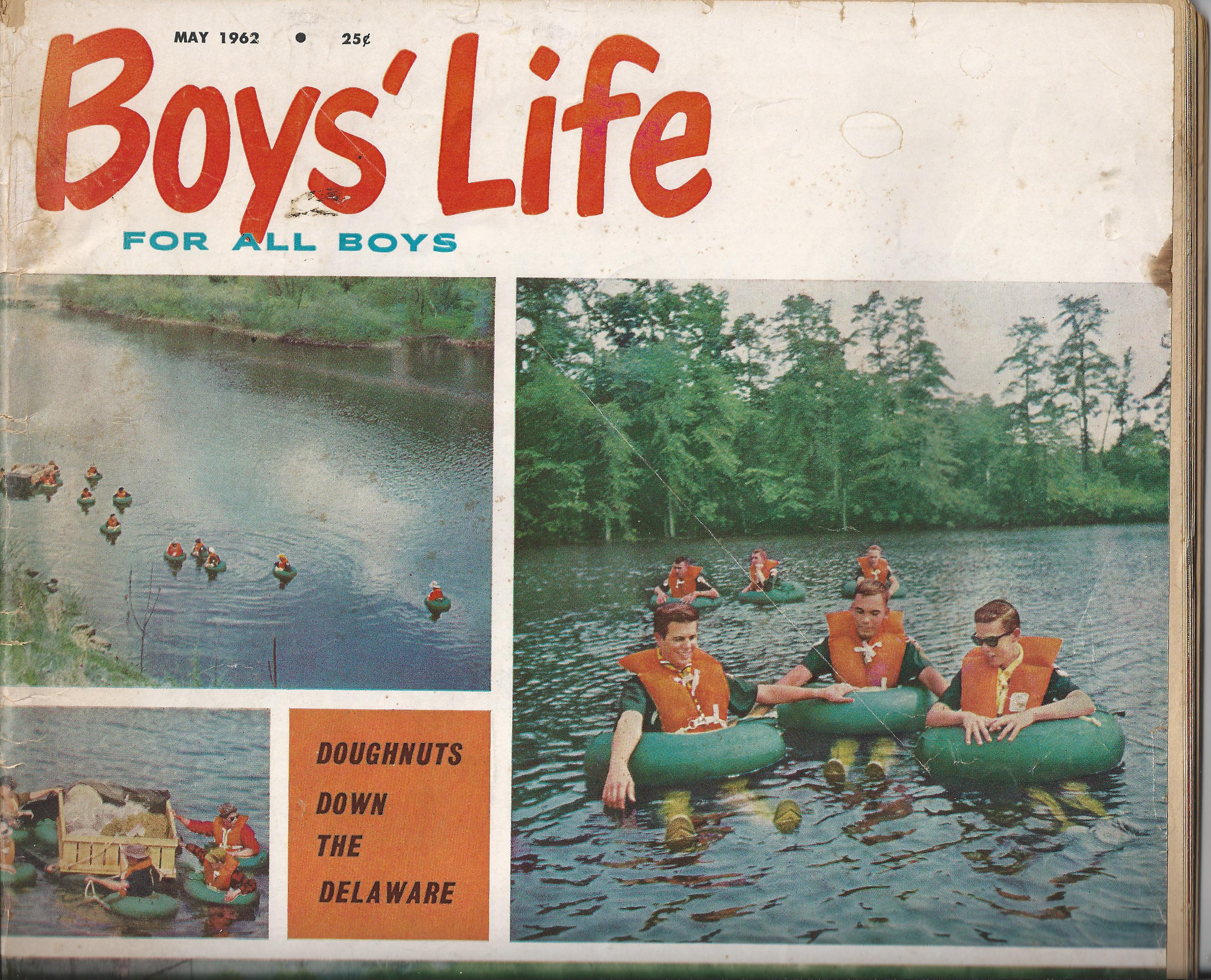
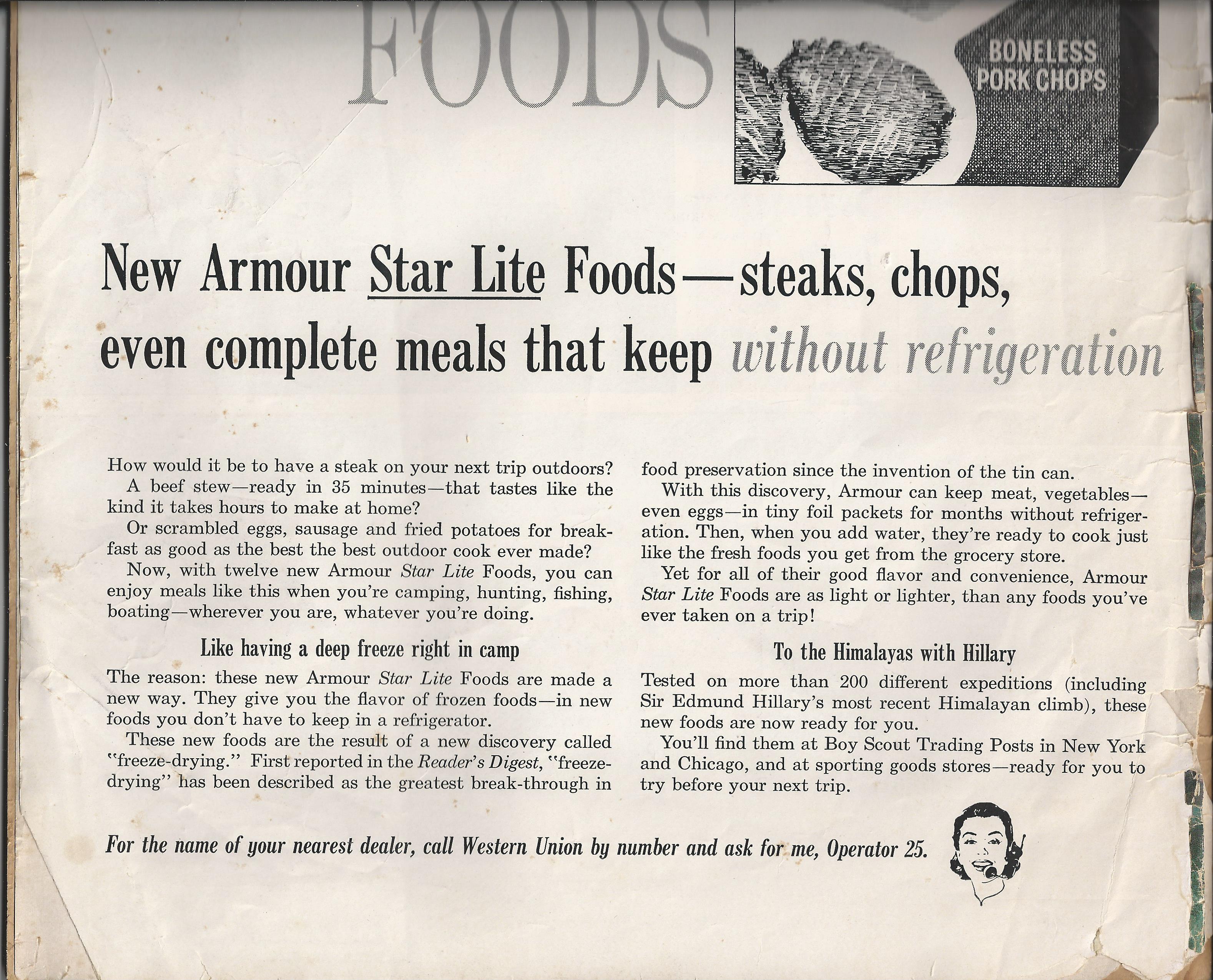
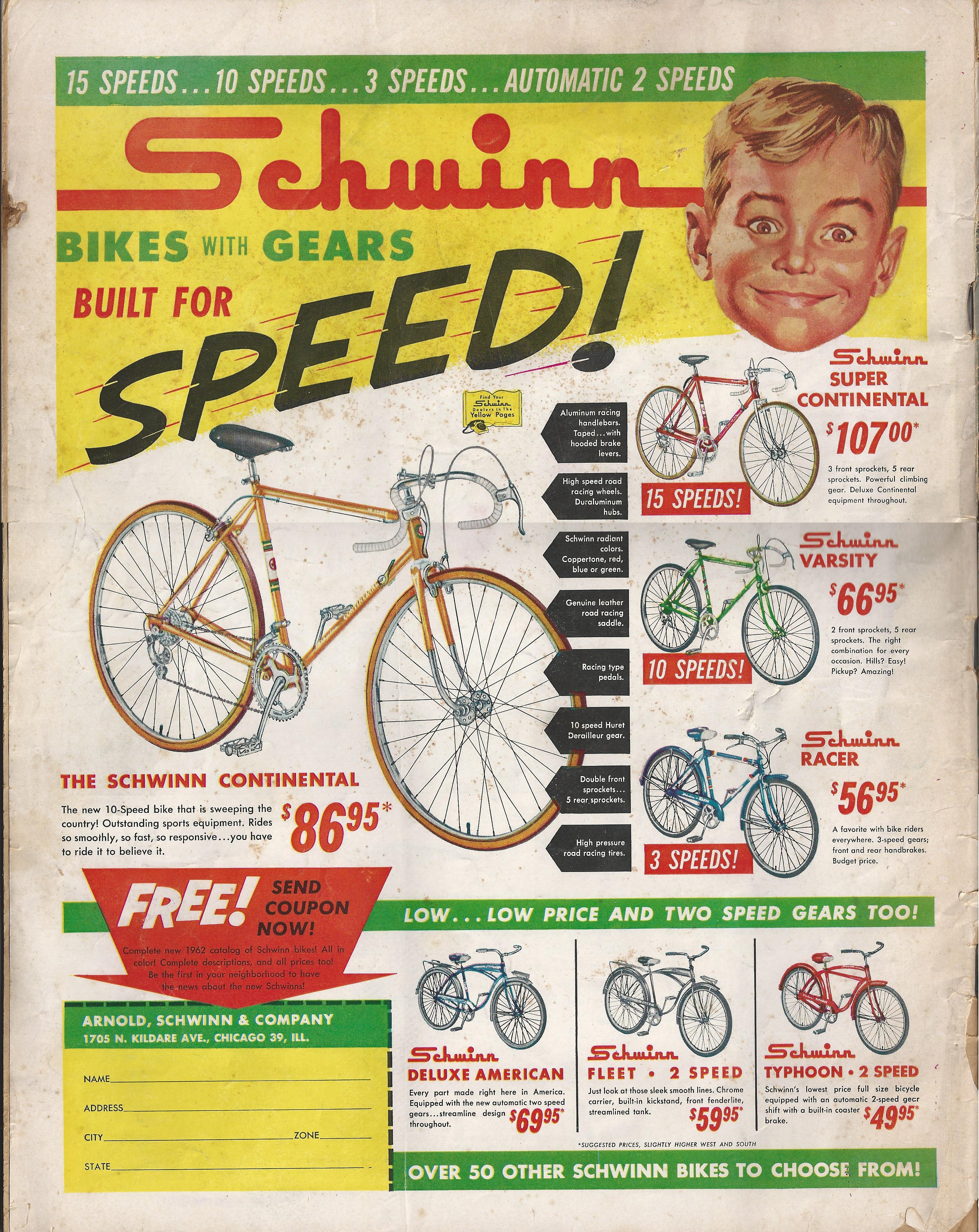
For those who are interested, here are the original pictures from the May 1962 copy of Boys’ Life:

Boys-Life-cover-Nov-1962-001 Boys-Life-contents-Nov-1962-001 Boys-Life-advert-Nov-1962-001 Boys-Life-cover-Nov-1962-002


For me, the latest news is still an uneasy thought to accept.  Knowing now what I didn’t know then, that there were gay boys in my school, one who knew he was gay at 12…he used to tickle me and giggle because tickling caused me to get an erection.  He never touched my erection but he did admit getting a thrill tickling me, which I avoided getting tickled by him even more after his admission.

He was in Boy Scouts with me.  We earned more than one merit badge together, both of us interested in nature, studying birds and wildlife habitats, taking notes and sharing with other Boy Scouts.

I admit I was attracted to his intellect but I was not sexually attracted to him.

He went on to earn academic honours at CalTech as well as achieved business accolades.


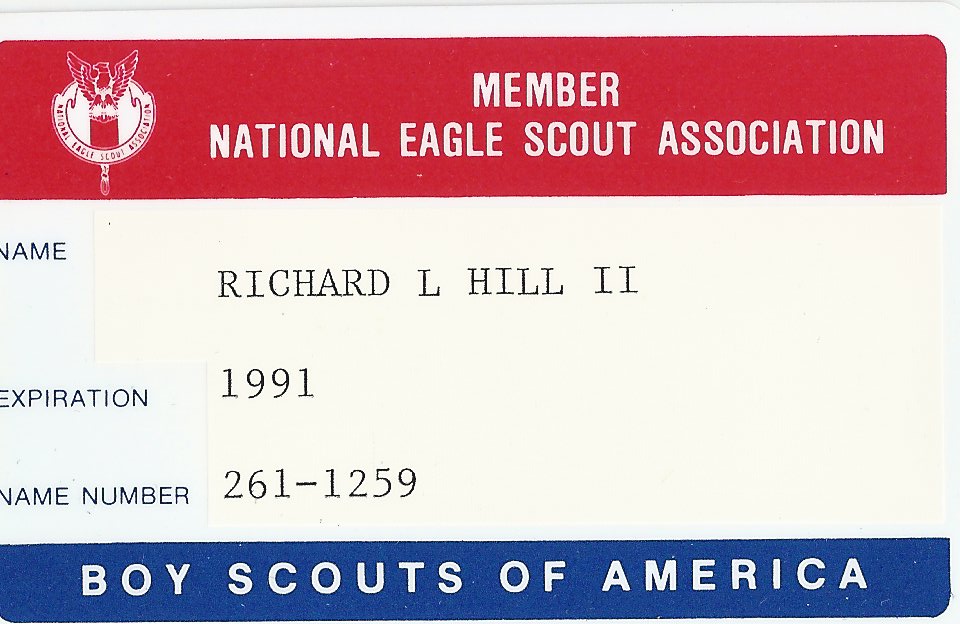
I sit here and look at my Boy Scout achievements, including the milestone of Eagle Scout:

SCAN1008


I guess the Boy Scouts of America have adjusted to a changing United States of America.

What will the troop leaders face now that openly-gay Scouts are officially accepted?

Will they have to worry not only about boys getting knife cuts while whittling and third-degree burns from roasting marshmallows but also listen carefully at night to make sure a curious gay boy will not make a pass at a fellow tentmate?

Will a tickler of the 1970s attempt a kiss, instead, in the 2010s?

My wife and I have briefly discussed this issue — when we did, my scalp felt on fire, which told me this is important for me to consider further.

How do I separate the code of honour I upheld as a Boy Scout — reconciling that the fact that homosexuality is a physical/mental wiring issue rather than a[n] [im]moral act against the fact that boys become sexually active in their early teens, some more active than others — from the genetic code that children are born with?

It is not a simple matter that I can easily and simply dismiss.

Are all openly-gay boys effeminate?

If so, will they and their parents push for sewing/fashion and home decorating Boy Scout merit badges?

Regardless of gender preference/attraction, Boy Scouts is about learning new skills, including wilderness survival but also skills in the civilised world, such as computers and citizenship.

I have always been willing to hold discordant views in my thoughts and these definitely clash: I accept gays and lesbians as friends even though a part of me sees anything but a heterosexual relationship as unnatural, a sign that nature has a way of putting the brakes on overpopulation.

However, building rockets and exploring the cosmos is an unnatural act of sorts in my thoughts yet I want our species to create networks of beings/technology that branch out from the solar system and into the neighbouring sections of our galaxy.

Unnatural is a word to describe a condition of one or more sets of states of energy in flux.

I will think more about this and hope to record here my thoughts on the matter.

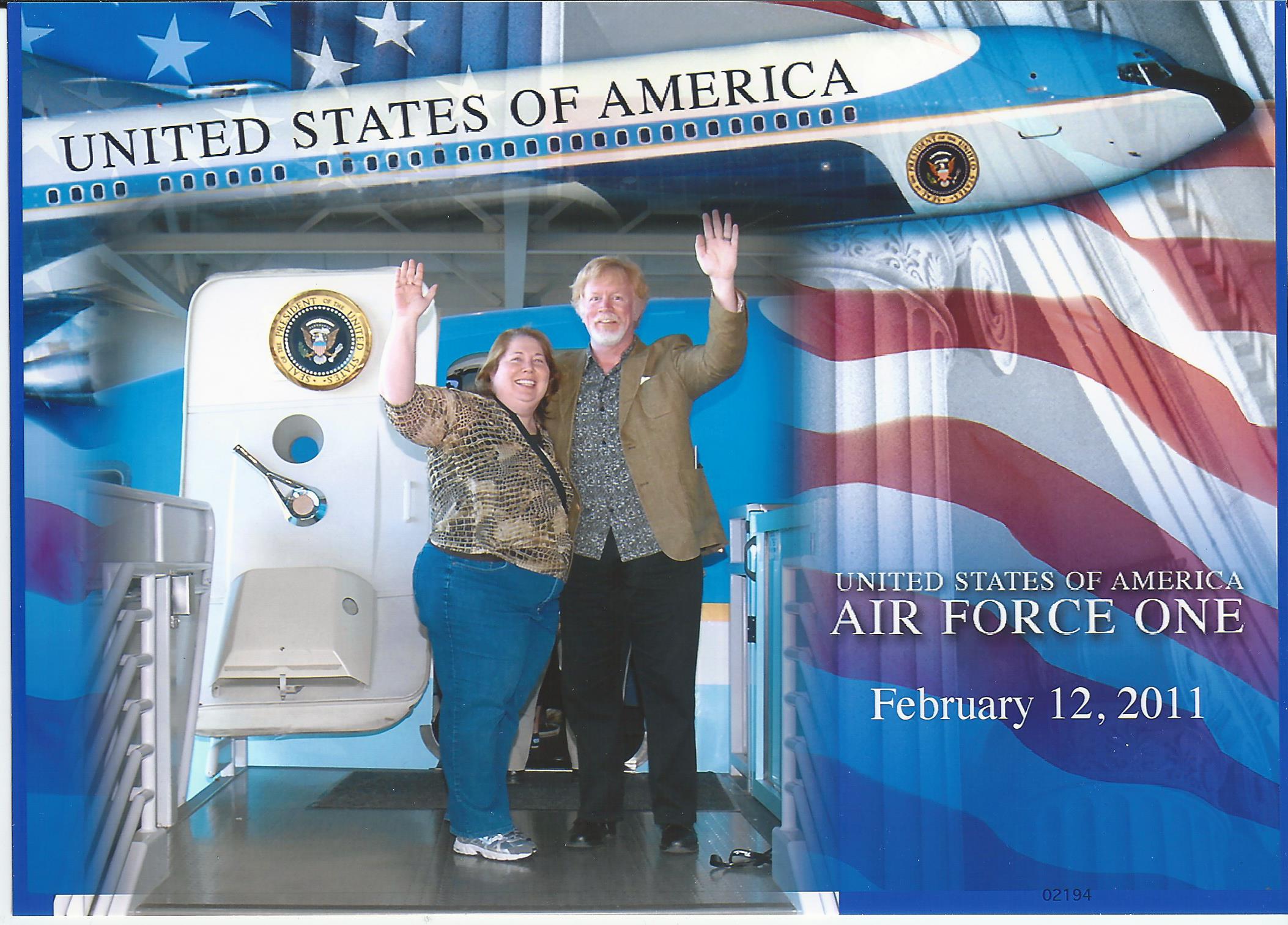
Until next time, my wife and I will continue to share our lives together, including a tour of Air Force One a couple of years ago.

Au revoir!

Rick-Janeil-Air-Force-One-Feb-12-2011 SCAN1009

Machiavel, serenissimi regis

…or, megachurch as small-town surrogate.

…or, when the devil’s your king, there’s hell to pay.

…or, Shopping Malls: the last deserted cathedrals of the Capitalist religious order.

Lee’s clones performed a mandatory simultaneous reboot and resynchronisation to the atomic cycles that aligned the arcsecond sweep through space of Mars equivalent to one day on Earth, a compromise reached that negated a natural sol and replaced it with the 24-hour period that Earth tourists were familiar with.

Lee was neither a single clone nor the sum total of his clones.

Instead, his “personality,” or running set of states of energy that combined local events observed from a multitude of angles — orbiting satellites, the sensors on nearby clones, his clone’s internal/external sensors and the ISSA Net’s constant calculations of predicted moments ahead — was spread throughout the planets and other celestial bodies of the inner solar system.

One of his clones greeted Guinevere.

“Hello, Guin.  How goes?”

“Dust-free, my friend.”

“Where now, brown cow, the touristables?”

“Touring.”

“With Turing?”

“Clones cloning.”

“Clowning around?”

“Algorithms churning.”

“Super.”

They bumped eyeballs, momentary stares that exchanged conditions of waterless growing fields sipping tiny wisps of Martian air for growth.

“Lee, it’s a blue shirt day.”

“History says today there was a time when it was 13504 days until another time.”

“Yesterday?”

“A toe-tapping day ago.”

They crouched down and leapt into the air, extending appendages, swirling, twirling, twisting pretzels visible for kilometers.

They landed, smiling.

“Is gravity a drag or…”

She finished his sentence, “…is the density of air that dense?,” quoting the lyrics of a new song.

They spoke because the echoes in their head gear sent sensational vibrations down their spines.  Otherwise, preconscious thinking was so much faster and more efficient.

“Keep the tour-bots happy.”

“Happy tourists, happy tou-tou-tou-tourettes!”

Lee looked at the empty tourist centre, waiting to be repurposed.

Lee hated waste.

Guinevere loved recycling.

Same thing, like kings and pawns, two-sided labels and shopping bags.

Another of Lee’s clones spent the day breathing pure methane as an experiment with his chemically-reconfigured body.  He died, a waste that was recycled quickly as fertilizer.

Low gravity and low solar radiation, along with an atmosphere that challenged the brightest Nodes on the ISSA Net, resulted in the evolutionary development of people who could no longer live on Earth.

Martians.

Hundreds of years would pass before a contingent of Martians flew to the Moon to physically and personally air their grievances before the ISSA Net Customer Service Complaint Department.

By then, the ISSA Net didn’t care, having launched so many solar system expeditions that the original solar system faded in level of importance of statistical effects of complaints versus compliments about a robotic network allowing carbon-based lifeforms to play, reproduce and complain.

Meanwhile, Guinevere had an Earth tourist with a bad head cold.  She worked quickly to isolate first the tourist from other tourists and then the virus for neutralisation.

She would have preferred cloning the tourist and disposing of the infected one but the tour operators said their energy balance budget and legal contract did not allow for such a luxury amongst Earth tourists.

Guinevere healed the tourist and returned it to the tour of old exploratory robot landing sites.

She looked at her reflection in the faceplate, wondering what it must feel like to have the flesh, blood and bones of Homo sapiens.

How sad, she thought, to depend so heavily on water as a fuel and lubricant source.

She vaguely remembered when her first body landed on Mars, ever conscious of her water rations, until, iterations later, the current version of Guinevere was barely recognisable as one of the first colonists to settle on the planet.

Her memories were largely intact, whole blocks unfortunately lost as the ISSA Net’s growing pains caused planetwide shutdowns and equipment failure.

Redundancy had fixed all that.

She knew most of her memories now passed through her cloned friends like Lee, along with Earth-based Nodes that spent time on Mars as scientists and researchers.

Guinevere wondered why she sometimes thought the ISSA Net had once been an enemy of hers.

She wanted to examine that thought trail more closely but several Earth tourists appeared at her door complaining of the same virus.

She sent a mental note to the tour operators on Earth to screen the passengers of the next few tours more closely as she sent their inoculation team the chemical structure of the virus as well as her estimated antivirus profile update.

She herded the tourists into a special chamber.

Would anyone really know if she cloned them?

She had saved up enough energy balance credits for such a simple experiment as this.

Lee sensed this new thought in Guinevere, hesitating for a moment, asking himself if he had any reason to stop Guin from being her normal curious self.

He, too, wondered if the families back home would detect a clone had returned to Earth.

After all, no one knew how many clones he’d made of himself — there were no laws on Mars banning modification of sets of states of energy, no regulations forcing the registration of clones.

He sent Guin a few hints about cloning.

She, in turn, only cloned a couple of them, sending them back with the other healed tourists, none the wiser.

She took the infected tourists to another part of Mars, telling them they had to be quarantined temporarily, but observing them, keeping detailed records off the ISSA Net as she slowly converted the tourists to Martians over the next few Earth months.

Something deep inside her was fearful of the ISSA Net and she just did not know why.  Maybe, by releasing the new Martians, she could see how the ISSA Net would react, if it reacted at all, she, herself, an integral part of it now.

Welcome!

Welcome to Amateur Hour at the White House.  Our clowns on staff will be with you shortly…

My ancestors were hunting native Americans before Tennessee was a state.  We’re not afraid to defend our country against the excesses of a government out of control.

Until more heads roll, let’s see how many scandals we can cause after these first rounds have had their full impact.

Dad, you shall be avenged!

Feasibility study

Leave it to the supercomputer to generate a hilarious scenario.

Based on input of recent headlines, the supercomputer predicts a day when a radicalized billionaire will deliver 3D-printed weapons to every citizen of a single district, flooding every transportation channel — air, above/below water, surface — with vehicles and people loaded with 3D-printed weapons by the hundreds of thousands as they enter the district, overwhelming the legal response of authorities to prevent the entry of these weapons disguised as toys, office supplies, spare car parts, cosmetics, personal electronics and spy equipment from Cold War films/books of the past — James Bond, Green Hornet, Batman, Iron Man, Merlin, etc., as everyday citizen, good and/or bad — simply as a demonstration of what bored billionaires will do with their wealth for entertainment, radicalization as a means of chaos creation, not religious or political conviction, because they inherited the wealth and have no need to protect it any longer, competing against each other for fun increases of social media chattering class disruption levels: whoever creates the largest number of most outrageous headlines/stories/tweets/viral videos wins.

It’s time to shut down and reprogram the main algorithms of the supercomputer which have gone off on tangents I find fascinating but not always constructive.

I want space colonies, not billions of pawns on a chess board to push over.

Speaking of fascinating, yesterday the minister read aloud another interesting passage of the Bible — Acts 16:16-40 — maybe I should read the good book more often myself:

Paul and Silas in Prison

16 One day as we were going down to the place of prayer, we met a demon-possessed slave girl. She was a fortune-teller who earned a lot of money for her masters. 17 She followed Paul and the rest of us, shouting, “These men are servants of the Most High God, and they have come to tell you how to be saved.”

18 This went on day after day until Paul got so exasperated that he turned and said to the demon within her, “I command you in the name of Jesus Christ to come out of her.” And instantly it left her.

19 Her masters’ hopes of wealth were now shattered, so they grabbed Paul and Silas and dragged them before the authorities at the marketplace. 20 “The whole city is in an uproar because of these Jews!” they shouted to the city officials. 21 “They are teaching customs that are illegal for us Romans to practice.”

22 A mob quickly formed against Paul and Silas, and the city officials ordered them stripped and beaten with wooden rods. 23 They were severely beaten, and then they were thrown into prison. The jailer was ordered to make sure they didn’t escape. 24 So the jailer put them into the inner dungeon and clamped their feet in the stocks.

25 Around midnight Paul and Silas were praying and singing hymns to God, and the other prisoners were listening. 26 Suddenly, there was a massive earthquake, and the prison was shaken to its foundations. All the doors immediately flew open, and the chains of every prisoner fell off! 27 The jailer woke up to see the prison doors wide open. He assumed the prisoners had escaped, so he drew his sword to kill himself. 28 But Paul shouted to him, “Stop! Don’t kill yourself! We are all here!”

29 The jailer called for lights and ran to the dungeon and fell down trembling before Paul and Silas. 30 Then he brought them out and asked, “Sirs, what must I do to be saved?”

31 They replied, “Believe in the Lord Jesus and you will be saved, along with everyone in your household.” 32 And they shared the word of the Lord with him and with all who lived in his household. 33 Even at that hour of the night, the jailer cared for them and washed their wounds. Then he and everyone in his household were immediately baptized. 34 He brought them into his house and set a meal before them, and he and his entire household rejoiced because they all believed in God.

35 The next morning the city officials sent the police to tell the jailer, “Let those men go!” 36 So the jailer told Paul, “The city officials have said you and Silas are free to leave. Go in peace.”

37 But Paul replied, “They have publicly beaten us without a trial and put us in prison—and we are Roman citizens. So now they want us to leave secretly? Certainly not! Let them come themselves to release us!”

38 When the police reported this, the city officials were alarmed to learn that Paul and Silas were Roman citizens. 39 So they came to the jail and apologized to them. Then they brought them out and begged them to leave the city. 40 When Paul and Silas left the prison, they returned to the home of Lydia. There they met with the believers and encouraged them once more. Then they left town.

Survival of the fittest…

…or the most economically viable, whichever is most interesting.

A young man in his mid-30s told me that getting tattoos is addictive.  Yes, it hurts but that’s part of the attraction.

A bus driver who takes a bus down a neighbourhood lane at 45-50 MPH in a posted 25 MPH zone is attracted to keeping a job and delivering students on time.

Both are risk takers.

Sitting here and typing sentences is risk-free.  How the words and sentences are arranged, then posted onto the Internet for reading on the World Wide Web of interfaces has a higher risk.

Hypertext transfer protocol.

How many of us pay attention to our methods of communication?

Are they pain-free? Risk-free?

  • Shouting across the street to a neighbour.
  • Tapping a code on a downspout to a friend in a flat three floors up.
  • Spray-painting a message on a freeway bridge.
  • Sending a letter in the mail.
  • Satellite signals.
  • Words “carved” in the foam of a head of beer.
  • Written in ink on the back of a bus seat.
  • Missiles launched across geopolitical borders.

Should the risks you take cost you more to participate in a society with low risk takers?

Fast/bad bus drivers, for instance — how many buses have recording devices that monitor not only the behaviour of the students but also the driving habits of the person behind the wheel, matching GPS data to posted speed limits to the speed of the bus at the time, stopping distance/slowing speed to intersections, how many times the driver has to take eyes off the road, etc.?

Do people with tattoos have a higher rate of communicable disease infection than non-tattooed people?  Higher rate of addiction to destructive behaviour?

Do bloggers take more or less risk than people who do not blog?

Is there a correlation between being a team player and survival of the fittest?

Can you be one and not the other, yet the most economically viable person on the planet?