



“What story, Mom?”
“Well, Amish pirates are not known for subtlety. They’d rather kill you and turn you into fertiliser than negotiate with you.”
“But we’re not like that, are we?”
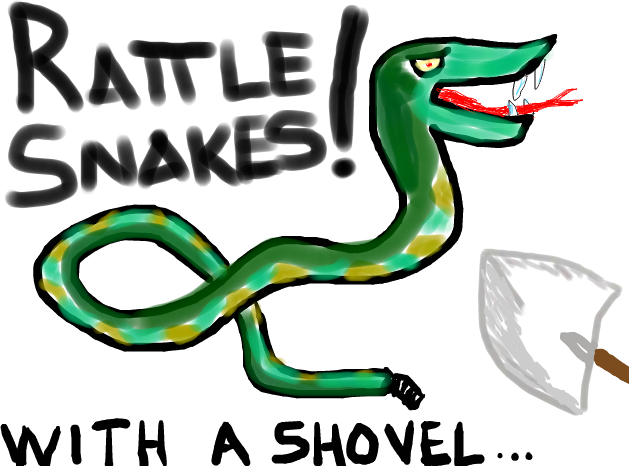
“Shadowgrass, let me tell you the quick version of what happened when one of your great-great-uncle’s cousin’s boy’s father’s cousin’s nephew’s cousin’s uncle’s father’s boy’s cousin’s uncle burned the house down. It started one day when the two of them were clearing a field…”








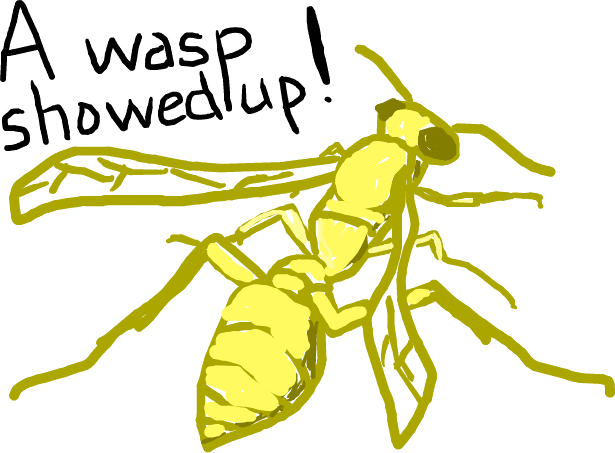

“How big was the wasp?”
“Bigger than the farmhouse.”
“Bigger than our Martian habitat module?!”
“Yes.”
“What did they do?”
Bai popped into their thought trail. “Hey, guys! I’m back!”
“Hi, Bai. How did it go?”
“Great. But boy, am I mentally wrung out. Alek advanced me to the next level of dancing. I’ll tell you something funny. He said, ‘You know the way a guy keeps pestering you to dance with him and you aren’t interested? He keeps asking and asking until you are giving him the look that says ‘Get away from me!'” I told him, yeah, I’ve made that look. ‘Well,’ he said, ‘stop giving me that look. Act like you want to dance with me. Flirt with me!’ Me! As if I don’t know how to flirt.”
Guin and Shadowgrass laughed with Bai.
“Hey, can you believe Stephane only drank water last week? And he’s accusing me of finally growing up!”
“When are you coming over to our colony?”
“I don’t know, Guin. Depends on my schedule. I’m booked for the next two marsweeks.
“Okay, I’ll see you when you get here.”
“Sure thing.”
Guin turned to Shadowgrass. “Where was I?”
“Jersey and the Frenchman were about to battle the great, big, gigantanormasaurus Wasp.”
“That’s right. But it’ll have to wait until tomorrow. You’ve got work to do.”
“Ah, Mom. I thought you said that you and Dad brought your electromechanical design wizardry to Mars so no one would have to work again.”
“We did. But then we found that we liked to share time with our creations. Nothing like getting your hands into the soil yourself.”
“Must be the Amish pirate in you, eh, Mom?”
“Well… I don’t know…”
“Stabbing giant worms with your sabre! Slashing through deadly grass blades!”
“That’s right, son. You can imagine what all we faced on Earth and why we wanted to start over here. Just make sure you get plenty of nightmares letting your imagination run too wild. And remember to tell us about them tomorrow.”
“Mom, you’re being facetious, aren’t you?”
“Am I?” She smiled at her little genius and scrunched her nose. “Maybe just a little bit.”
Shadowgrass scratched the middle of his back using one of his new appendages.
“Mom, tell me about our family.”
“Well, son, we’re descended from a secret branch of the Amish — the Amish Pirate Clan.”
“Really? That’s sounds cool.”
“Let me tell you a story about them…”
What is the consensual consensus about the perceived and perpetuated personality of the public popular culture in your area?
For me, it is a mix of science, technology, and military development supported by agriculture, arts, retail sales and financial backing that sets the Heart of Dixie, Deep South progressive religious moral persuasion of headline news.
In one day, the satirical talk of a singer’s performance on a single TV channel, repeated ad repeatum across the virtual news/gossip system known as the Internet, accented by related “news” stories about infidelity shows the level of normal behaviour we tolerate in the local/national psyche.
We are not independent from our bodies even if cave drawings and ebooks give us that sensation.
Why do our bodies’ cycles influence us individually and collectively?
How well do we see that our chemical composition ratios redirect our thought patterns and thus the flow of our society into the future?
On Mars, we have a word for this nostalgic look at your antiquated society: Scheißcorn.
Meaning that the Zeitgeist is a wind never seen and quickly forgotten, just like the flow of cholesterol through your veins that used to kill so many of you with a scary word, Atherosclerosis!
Controversy is a measurement of a type of mob mentality.
Our talk about what is controversial to us is a measurement of our set of states of energy in transition.
It tells us what we consider important in the perceived past, present and future for ourselves and our children.
Is your life tragic? Macabre? Grotesque? Victorian? Bland? Grand? Your best life now?
What in your life is clogging your thoughts like cholesterol clogs veins?
What is a healthy thought set that unites you to your body to your friends/family/colleagues and the rest of the natural environment of the universe?
One answer is here on Mars. It was once in orbit around Earth, on the Moon. It will be somewhere else one day.
See you there soon!
According to one financial services company, to be on track for your comfortable retirement you should have eight times your salary put aside in a safe “retirement” account (e.g., 401(k)) by the time you reach 65.
To get there, have 1x (one times your) salary saved at 35, 2x salary at 40, 4x at 50, 5x at 55 and 6x at 60.
Assuming, of course that you started saving at age 25, stopped saving at 67 and lived until 92, expecting to live on 85% of your normal work pay after you retire.
That thought floated through Lee’s eyes as he tried to settle down and dance part of a routine he had learned with Guin the previous week.
His happiness, like a solid sphere of ice, had been dropped from a great height and broken into pieces.
Lee broke his memorable moments into slices, areas under a curve, the curve’s shape determined by the number of people he could recognise and recall at a moment’s notice, amplified by the emotional level shared by the people.
Lee’s personality traits, like his happiness, could be broken into as many pieces as necessary for him to both try to make the people around him happy as well as keep happy the disjointed personality traits that wanted to be treated like royalty at the same time the traits acted like servants at the beck and call of the people around Lee.
Lee had goals to accomplish, some short-term, some undefined by timelines.
The nearest short-term goal was keeping the three women in his presence satisfied by the movements of his body.
The second nearest short-term goal was to complete a “homework” assignment of gathering his financial data into a semi-organised portfolio for analysis by a financial planner, to make sure having 10x his salary saved at 40 was keeping him on the track that would make his wife happy and financially comfortable/secure.
The two goals were not completely at odds with one another but they were like two polarised filters causing a moire pattern distorting his vision, hearing, disrupting his stimuli data set and disconnecting him further from the people in the room.
Lee heard a recorded voice in his thoughts, the memory from a road trip he and his former brother in-law took, when they talked about how most people, regardless of age, have a default age they imagine themselves to be. A subset of the population learns to compartmentalise themselves successfully, cutting off their disparate behaviours that would not work well in one subcultural situation or another, or with one person or another.
In other words, our personality traits may have different levels of maturity, a giggle from our childhood squeaking out when we’re in our 60s, given the right conditions.
Lee liked to have fun, partly a mask and partly who he was the moment he took his first breath, leaping feet first, a “breech birth,” from his mother’s womb.
But life isn’t always just fun. There’s a…well, not seriousness, not exactly, something else.
Lee set out goals and objectives for himself and others around him that he considered essential to the healthy continuation of his species, requiring not so much seriousness as a focused determination to complete a series of steps to reach them.
That didn’t stop him from believing in the saying, “Poof! A miracle happened here.”
In one thought, he was floating around the room with his dance partner, dipping her and spinning her like a princess resting in his arms weightlessly.
But to get there, he had to know the moves and the strong physical leadership that gave his dance partner the confidence to trust his head, arm, leg and torso positions.
One of the broken pieces of Lee’s personality was the fear and almost hatred of being told what to do.
Yet, there he was on the dance floor, having to give himself up to his dance partner, Guin, and relearn the steps and body movements for a dance routine, one of the ultimate fears in Lee’s repertoire of “I don’t want to be backed into a corner where I can’t hide my mistakes from the crowd eying me in the spotlight.”
It was a form of a control issue. Lee liked to be in control of his moments, no matter how spontaneous they were or appeared to be.
A juxtaposition. A dichotomy. A recognition of the compartmentalisation of personality traits that never allowed one trait to meet another.
He liked to dance spastically in order to avoid the problem he had with converting short-term body movements into long-term memories, which, when tested, brought up all sorts of childhood memories of the times he was bullied because of his height and awkwardness until he grew taller and somewhat handsome, offsetting his athletic deficiencies.
There it was, out in the open. Alone with his wife, alone with Bai or alone with Jenn, Lee had no problem allowing himself to be shown the dance steps he needed to make to transform two people into a single dancing unit because Lee could focus his people-pleasing thoughts solely on one person and turn down the noise in his head that constituted the perceived needs of people around him.
He could convert his wants and desires for one person into a reshaped set of wants and desires for the person beside him, if needed.
Lee didn’t know everything but he imagined he thought he saw more than some people realised.
He knew how and when to throw up a word like “sister” to disguise his true feelings.
He knew that something had changed from one week to another in his new relationship with a fellow published writer who seemed down and discouraged as if she had read a short story of Lee’s that thinly disguised his satire and parody of romance novel writing because he was insanely envious of the writer’s talent and jealous of her fan base; Lee sensed the writer could have been hurt by something Lee had said or written but he also knew the world didn’t revolve around him and the writer could just as well feel down and discouraged because of a rejection letter that had nothing to do with Lee.
Just because we can sense a shift in a public persona doesn’t mean the shift had anything to do with us.
When Lee practiced dancing with Bai, he worried about making Guin and/or his wife happy at the same time because they were in the room, too.
He couldn’t close off the world.
When Lee practiced dancing with Guin, he dropped his mask for a moment, as did she, and a new emotion welled up inside him and flashed across his face, as did hers.
The emotion was not easily labeled although translucent images of similar raw emotional states blinded Lee temporarily, forcing him to turn away because he and she had stood on the precipice of the abyss together, a bottomless pit that contained ancient sets of states of energy that passed from being to being over the millennia, long before Maslow’s hierarchy of needs was a catchphrase, back when eat-or-be-eaten was the only understood “feeling” between two living things.
When was the last time Lee tapped into that animalistic flight-or-fight feeling between himself and a woman in his arms? When was the last time he wanted to claw her eyes out, cut through the external barriers and see what was really inside the mysterious creature?
The feeling lasted two seconds and then it was gone.
Other emotions scrolled across the marquees of their faces, from “are you getting this?” to “I’m not sure” to unanswerable questions and unquestionable answers.
What Lee understood was he could not satisfy all three of them in the same way at the same time and keep his personality traits in their crumbled states.
Lee liked playing the part of the knight in shining armor saving the damsel in distress.
But which damsel needed saving and which one didn’t want to be saved, let alone saved by him? Which one neither needed nor wanted to be saved?
It was not an either/or situation. There were no absolutes. Sometimes it really was just about rescuing each other from a moment deteriorating into nothingness, a simple joy shared for a brief interlude and then going on to the next moment.
Lee had more to learn. He couldn’t trust that the number of twitter followers or website views per hour said anything about what people said in front of him about him or to him or about themselves.
He was slowly learning to let go of his independent “don’t tell me what to do” spirit and trust his three friends to share themselves with him on the dance floor, all of them wishing well for the others, their reasons left unexplained and sometimes only demonstrated in uncontrollably-fast realtime where masks fall away from faces and raw emotions other than “meditative happiness, one with the universe” are shared by two and entrusted to each other for eternity.
Lee learned from everyone, including the high school homeroom, English composition and drama teacher who had a crush on Lee when Lee was president of the drama club, sharing his private journal with her as part of his English composition class, along with all the other students (who mostly wrote gossip or fleeting teenager feelings), letting his teacher in on private thoughts of his he disguised as short stories about himself and his teenaged girlfriend he just broke up with, written in such a way that it could have been about his teacher, too, not realising the future consequences of his actions. He still remembered what she wrote in his journal: “There are ‘girls‘ who have strong feelings for you. If you’re willing to get hurt again, the love they give you will open your heart to more than you can possibly know right now. You are meant to be loved again.”
It was the same when he went on a trip to see a dramatic play at the local community theatre with his drama teacher and fellow members of the National Thespian Society. Lee was focused on studying the acting styles of the people on stage while three or four of his female classmates took turns sitting beside Lee, playing footsy/handsy with him, trying to break through his concentration for a quickie kiss or anything physical. Lee knew what they were doing but had no idea what he was supposed to do in response, not wanting to let the girls know he was an inexperienced kisser and wasn’t sure what all the hand signals meant as to how many “bases” he was supposed to go to while seated two or three seats away from his teacher who was encouraging the girls to act on her behalf and report back to her during intermissions how far they had gotten. Lee played hard-to-get rather than be played by his teacher during the third act of a play.
That moment and the one where the teacher invited him to her house while her husband was out of town set the tone for Lee’s future relationships with women.
But decades in a desert can make a guy more thirsty than he thought possible.
Thirsty for new experiences, willing to throw away the old and start anew.
All for the sake of a good story, the story of our lives, while helping people become more informed individuals, bettering themselves if they wanted.
Did Lee want to leave a legacy?
Was he willing to have his skin pricked by a thorn?
What’s a good story without a little suspense? Just ask Charles & Eddie: “Would I lie to you?”
Until next time, dear readers!


Saw this Ford work truck at the home show yesterday. A young man walked up to me and said it would make the perfect gangster/drug cartel “enforcement” vehicle — just mount a few machine guns and grenade launchers in place of storage boxes and you could mow down whole neighbourhoods in a fast driveby. Maybe he’s has a heavy dose of Grand Theft Auto and Jason Statham films in his life?
Historians have never paid attention to one fact: our history was written by our parents before we were born.
Their actions, just like ours for our children, set the stage for their direct descendants.
You must have a clear understanding of that solid principle, that unwritten immutable law of the universe, before going on with this story.
For you see, before they were born, two famous aviators met Lewis Carroll’s inspiration for a memorable fictional character whilst Queen Victoria reigned.
While the middle-class prudes proved their noble worth, the threesome of Earhart, Lindbergh and the Mad Hatter went off on an adventure.
Ever had a three-wheeled vehicle in which all three wheels steered independently? Most likely not. Either one wheel turns and the other two point permanently in one direction, or two wheels turn in synch with each other and the third wheel points permanently in one direction.
So it was with our flyers and their eccentric co-conspirator who set out on an unpublished expedition.
Unpublished until now, that is.
Ground into a pulp and turned into a felt hat were the notes, diaries and maps used by the explorers. It wasn’t until a new computer deciphering program was invented by a retired secret agent to ferret out the hidden codes in the city maps of foreign countries that the threads and fibers of the felt hat were pulled apart and reassembled in their original form.
The hat sat in a hat box as hats are wont to do, taking up space in the attic of one Hegrapevinucus Forvell, the famous daguerreotypist who had documented the lives of both the famous and notorious across two centuries.
M. H. Forvell died and left his fortune to a geographic feature named Pilot Knob in middle Tennessee, not far from Readyville, where his belongings were carted and stored in caves carved out of the rock.
Using an aeroplane-engined dirigible, Earhart navigated her two companions over the knob, spotting the secret caves one early dawn morning.
They tethered their lighter-than-air craft to an old pine tree and descended a rope ladder to the caves.
Stored in giant clay jars sealed with impenetrable tar and humongous glass jars sealed with water-resistant wax were the life’s work of Forvell.
Much of the information was repetitious — farm harvest records and stock market buys/sales/trades, for instance.
But one container held a series of inventions, some patented and some stamped “For My Eyes Only,” including one for converting printed paper or paper covered with handwriting into articles of clothing, wallpaper glue or, to the interest of M. Hatter, a felt top hat.
From then on, when one of the three had finished a logbook or diary, the Hatter would use Forvell’s secret formula to reconstitute the water-dissolved and shredded logbook or diary pages, forming hat shapes.
None of them was a more prolific writer than the other. However, multiplying their output by three meant quite a few journals were filling up on a weekly basis, driving the Hatter mad with desire to create as many new styles of hats as he could — tall, skinny, fat, short, see-through, invisible, and everything in-between.
Eventually the Hatter ran out of ideas for new hats and the two pilots realised they needed to return to public life.
Before they did, their records show they had more fun in a short period of time than should be legal (and some of it wasn’t!).
While they were tethered to Pilot Knob, they overheard some old-timey mountain music, the good stuff, hypnotic, said to turn you inside out, stop the motion of the planets and move you and the world around you over to the parallel train track of alternate universes.
Little did they know that they had changed their timeline.
They also had inadvertently invented a new social period called Steampunk.
The song they heard that changed history? Well, you already know what it is: “Keep My Skillet Good and Greasy,” written so far back up in the hills, no one had heard of sheet music or sound recording devices, so no one knows exactly when the song was first created or by whom.
And by changing history, Lindbergh, Earhart and the Hatter changed everything, including the style of dancing the local people performed to their mountain music.
No longer did they buck or clog dance. They started a new craze, a dance sensation called the Lindy Hop and their clothing style became the name of the new era — Steampunk.
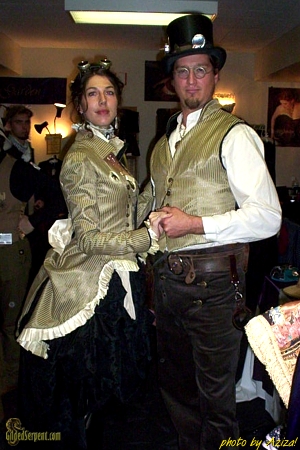
To get back to that time, Guin and Lee adopted the Steampunk clothing style and started learning a Lindy Hop dance routine that would induce a hypnotic trance and send them out of one spacetime continuum into another.
They had also found some of Forvell’s writings and wanted to create their own electromechanical wonders based on Forvell’s notes scribbled on incomplete inventions.
But which would you rather read about — how Guin and Lee invented a new form of space travel or what Earhart, Lindbergh and the Mad Hatter discovered but had told no one because it was so earth-shakingly stupendous?
Don’t answer flippantly.
The answer you receive will shift history again, maybe by only the slightest change but also maybe by large changes all jumbled up together.
Be willing to accept the changes your answer causes.
Alice may never return from Wonderland and you don’t want that, I can tell you!
If you’re gonna, you gotta.
There’s only one winky wonky way to go — steampunk, or as my smartphone says, steamounk:
 treetrunkdings