Cats and rats

Living amongst nature has its…well, its costly moments.

When our cats were younger and more agile, they would leap from the carpeted floor to the carpeted cat tree to a tower speaker to the stereo equipment cabinet and on top of our 55-inch Toshiba projection TV monstrosity of a box.

As cats are wont to do, especially in the most inconvenient places, they would vomit while on top of the TV.

Cleaning the front of the TV is easy.

However, when the cats hurled their abuse behind the TV, it was a…less than…than getting an act of Congress passed to clean up the resulting mayhem.

I would wipe up the drying detritus but had at one lazy moment or two, not wiped the dangling wires clean.

Enter the dragon.

Or, rather, Rattus roofus, with teeth like dragons, and an appetite to match.

I did mention that rats had chewed their way into our cabin in the woods, right?  Our respite of domestic bliss?

Well, if not, your reading previous posts will not matter because the matter at hand is what’s the matter.

One spark away from a burned-down domicile’s what I’m talking about.

We have had no cable service in our living room for several days (about four or five).  I had worked with our cable service provider to no avail and will seek reimbursement for the inconvenience once we tally the days without cable service should service ever get restored.

In the meantime, I traced the physical cables behind the stereo equipment cabinet and found a chewed coax cable that was connected to the TV’s TV Out port but nothing else (the cable from wall to converter box and from converter box to TV was fine).

Not only that but the power cable to the TV was nearly chewed in two.  Amazingly enough, a single strand of copper was all that kept power going to the TV and the darn thing still worked!

Of the dozen or so cables, only three were chewed (the third: a wire to the left rear speaker of our 5.1 surround sound system was chewed in half).

Examining the chewed places, they seemed to correspond to where the cats’ spewed displeasure had dropped and dried.

Cats and rats and emesis…mmm!  Sure as you’re born.  Oh yeah, don’t you forget the unicorn.

Cables repaired.  Waiting on our cable TV provider to activate our new box.

Meanwhile, Roku entertains via Pandora.

Daring to let go of past illusions

Are nation-states an illusion to you?  If so, read on…

[from the NY Times]

Garry Davis, Man of No Nation Who Saw One World of No War, Dies at 91

By
Published: July 28, 2013

On May 25, 1948, a former United States Army flier entered the American Embassy in Paris, renounced his American citizenship and, as astonished officials looked on, declared himself a citizen of the world.

Carl Gossett/The New York Times

Garry Davis, dean of the One World movement, in 1956. He had his own flag and passport, and often his own jail cell.

The New York Times

In 1948, five years before starting an agency to issue passports, Garry Davis distributed handbills in Paris. A stateless man, he was a relentless force behind a movement to erase national borders.

Associated Press

Mr. Davis ran for the United States presidency in 1988.

In the decades that followed, until the end of his long life last week, he remained by choice a stateless man — entering, leaving, being regularly expelled from and frequently arrested in a spate of countries, carrying a passport of his own devising, as the international news media chronicled his every move.

His rationale was simple, his aim immense: if there were no nation-states, he believed, there would be no wars.

Garry Davis, a longtime peace advocate, former Broadway song-and-dance man and self-declared World Citizen No. 1, who is widely regarded as the dean of the One World movement, a quest to erase national boundaries that today has nearly a million adherents worldwide, died on Wednesday in Williston, Vt. He was 91, and though in recent years he had largely ceased his wanderings and settled in South Burlington, Vt., he continued to occupy the singular limbo between citizen and alien that he had cheerfully inhabited for 65 years.

“I am not a man without a country,” Mr. Davis told Newsweek in 1978, “merely a man without nationality.”

Mr. Davis was not the first person to declare himself a world citizen, but he was inarguably the most visible, most vocal and most indefatigable.

The One World model has had its share of prominent adherents, among them Albert Schweitzer, Jean-Paul Sartre, Albert Einstein and E. B. White.

But where most advocates have been content to write and lecture, Mr. Davis was no armchair theorist: 60 years ago, he established the World Government of World Citizens, a self-proclaimed international governmental body that has issued documents — passports, identity cards, birth and marriage certificates — and occasional postage stamps and currency.

He periodically ran for president of the world, always unopposed.

To date, more than 2.5 million World Government documents have been issued, according to the World Service Authority, the group’s administrative arm.

Whether Mr. Davis was a visionary utopian or a quixotic naïf was long debated by press and public. His supporters argued that the documents he issued had genuine value for refugees and other stateless people.

His detractors countered that by issuing them — and charging a fee — Mr. Davis was selling false hope to people who spent what little they had on papers that are legally recognized almost nowhere in the world.

What is beyond dispute is that Mr. Davis’s long insistence on the inalienable right of anyone to travel anywhere prefigures the present-day immigration debate by decades. It likewise anticipates the current stateless conditions of Julian Assange and Edward J. Snowden.

Mr. Davis, who spoke about the One World movement on college campuses and wrote books on the subject, seemed impervious to his critics. In a voice trained to be heard in the last balcony (he was once a Broadway understudy to Danny Kaye), he would segue with obvious relish into a series of minutely reasoned arguments concerning the need for a world without nationalism.

“The nation-state is a political fiction which perpetuates anarchy and is the breeding ground of war,” he told The Daily Yomiuri, an English-language newspaper in Japan, in 1990. “Allegiance to a nation is a collective suicide pact.”

The quest for a unified earth was an objective on which Mr. Davis had trained his sights very early. It was born of his discomfort with a childhood of great privilege, his grief at the loss of a brother in World War II and his horror at his own wartime experience as a bomber pilot.

Sol Gareth Davis was born in Bar Harbor, Me., on July 27, 1921, a son of Meyer Davis and the former Hilda Emery.

Meyer Davis was a renowned society orchestra leader known as the “millionaire maestro”: at his height, he presided over an empire of 80 ensembles — employing more than a thousand musicians — which played at debutante balls, national political conventions and White House inaugurations.

Garry was reared in Philadelphia in a glittering milieu in which the family car was a chauffeured Rolls-Royce and family friends included Bob Hope and Ethel Merman. As a young man he was considered unserious, he later said, known for roguish wit but lacking direction.

After studying theater at the Carnegie Institute of Technology in Pittsburgh, Mr. Davis made his Broadway debut in October 1941 in a small role in “Let’s Face It!,” the musical comedy. He was also the understudy for its star, Mr. Kaye.

Then the United States entered the war. Mr. Davis and his older brother, Meyer Jr., known as Bud, went overseas — Bud with the Navy and Garry with the Army Air Forces, flying B-17 bombers. Bud Davis did not return: he was killed in 1943, when his ship, the destroyer Buck, was sunk off the coast of Italy by a German submarine.

That, and a dark epiphany during a bombing run over Brandenburg, Germany, Garry Davis later wrote, would alter his life’s course.

“Ever since my first mission over Brandenburg, I had felt pangs of conscience,” Mr. Davis wrote in a 1961 memoir, “The World Is My Country.” (The volume was later reissued as “My Country Is the World.”) “How many bombs had I dropped? How many men, women and children had I murdered? Wasn’t there another way, I kept asking myself.”

The other way, he came to believe, was to eradicate conflict by eradicating borders.

In November 1948, six months after renouncing his citizenship in Paris, Mr. Davis stormed a session of the United Nations General Assembly there.

“We, the people, want the peace which only a world government can give,” he proclaimed. “The sovereign states you represent divide us and lead us to the abyss of total war.”

His act, reported worldwide, earned the support of the intelligentsia, including Albert Camus, and of the French public, so recently racked by war. Less than two weeks later, speaking at a Paris auditorium, Mr. Davis drew a crowd of 20,000.

In 1949, Mr. Davis founded the International Registry of World Citizens and was soon inundated with requests to join from around the globe. “We’re bigger than Andorra,” he told The Boston Globe in 1981, when the registry was a quarter-million strong.

Today, more than 950,000 people are registered world citizens, according to the World Service Authority, based in Washington.

Mr. Davis, who lived for long periods in France, appeared on Broadway a few more times in the early 1950s, including in a revue called “Bless You All” and “Stalag 17,” the prisoner-of-war drama. But the One World imperative occupied him increasingly.

In 1953, he founded the World Government of World Citizens. The demand for its documents proved so brisk that he established the service authority the next year.

More than half a million world passports have been issued, though there are no statistics on the number of people who have successfully crossed borders with them. A half-dozen countries — Burkina Faso, Ecuador, Mauritania, Tanzania, Togo, Zambia — have formally recognized the passport. More than 150 others have honored it on occasion, according to the service authority.

Fees for the passport range from $45 (valid for three years) to $400 (for 15 years). The passport has text in seven languages, including Esperanto, the artificial international language.

Carrying world passport No. 1, Mr. Davis spent decades spreading his message, slipping across borders, stowing away on ships, sweet-talking officials, or wearing them down, until they let him in. The newspapers charted his comings and goings:

1949: “Garry Davis Arrested in Paris”; 1953: “Garry Davis Held Again: Arrested When He Camps Out Near Buckingham Palace”; 1957: “France Expels Garry Davis”; 1979: U.S. Court Rules ‘World Citizen’ Davis Is an Alien and Rejects His Passport; 1984: “Japan Expels American ‘World Citizen’ ”; 1987: “ ‘World Citizen’ Announces Presidential Bid.” (It was the United States presidency this time.)

In 1986, Mr. Davis ran for mayor of Washington, receiving 585 votes.

Mr. Davis was arrested dozens of times, usually for attempting to enter a country without official papers. He had canny ways of circumventing authority.

In the 1950s, when France was trying to deport him, he conspicuously shoplifted items from a Paris department store. (His haul, United Press reported, was “$47 worth of peach-colored lace panties, black-silk brassieres, black garter belts, lace petticoats and pink slips.”) He made certain he was arrested.

As a result of his arrest, Mr. Davis was legally enjoined from leaving the country.

Mr. Davis was married two or three times, depending on how one counts. His first marriage, to Audrey Peters, an American whom he courted by mail while detained in France and whom he met for the first time two weeks before their wedding in 1950, ended in divorce. In 1954, the newspapers reported his “marriage” at sea to Gloria Sandler in a ceremony he performed himself; that union, too, was dissolved. His marriage to Esther Peter in 1963 also ended in divorce.

Survivors include a daughter, Kristina Starr Davis, from his marriage to Ms. Peters; two sons, Troy and Kim, and a daughter, Athena Davis, who confirmed her father’s death, from his marriage to Ms. Peter; a sister, Ginia Davis Wexler; a brother, Emery; and a granddaughter.

His other books include “World Government, Ready or Not!” (1984) and “Dear World: A Global Odyssey” (2000). He was the subject of a short documentary, “One! The Garry Davis Story,” released in 2007.

In old age, Mr. Davis was far from idle. Last year, he had a world passport delivered to Mr. Assange, the founder of WikiLeaks, who has been holed up in the Ecuadorean embassy in London.

Just weeks before he died, Mr. Davis had a world passport sent, via Russian authorities, to Mr. Snowden, the fugitive former national security contractor accused of violating espionage laws, whose United States passport was revoked in June.

Mr. Snowden could not be reached for comment.

The deciduous forest is buzzing and chirping today

A yellow jacket, a sweat bee and a fly are chasing each other in the slit of sunlight that passes over the rubbish bin this late Friday morning.

Getting permission to import them to Mars was no easy task.

I could not import dragonflies.

Vibratoids, the equivalent of speakers or earphones embedded in my body, give me the sensation that I’m in a deciduous forest as I walk through the greenhouse that serves as our meeting room, food growth chamber and place for general meditation.

The vibratoids make me think that insects are buzzing in treetops and birds are chirping as they fly from limb to limb looking for food.  The sound of wind through tree limbs and the small blasts of air on my arms, neck and face add to the immersion algorithm’s programmed goal of acclimating me to Mars with occasional reminders of what Earth must feel like, what we jokingly call the decompression chamber effect.

But I have work to do.  I cannot dwell too long on the memories of a planet I get to visit less and less often as the Martian colonies mature, requiring my attention, not to mention my declining health — I don’t know if I can endure many more trips.

I remember my last night on Earth.

But before I do, I’ll tell you a joke repeated to me by a fellow traveler to Mars, a tourist named Adyer Xedif.  A juvenile joke but one I’ve heard more than once from first-time visitors —  Q: If men are from Mars and women are from Venus, where are politicians from? A: Uranus.

I hear the rapid flutter of the wings of a hummingbird pass before my eyes but I see only the bird’s green body and white-tipped tail in my imagination.  Oh, how the immersion algorithm can be so cruel without knowing it!

We are a small set of colonies here, able to manage ourselves without the need for the professional political class of workers so, needless to say, we get a lot of jokes about politicians when tourists and new settlers begin to realise they won’t have politicos to blame for inefficiencies and errors that occur because, as we know, we want a perfect world and we train for a perfect world but we don’t live on a perfect world.

Our customer complaint system is a throwback to the time when “free market capitalism” was the rule of the day, including some societies on Earth.

We call it the customer complaint system for tourists and visitors although we know it locally as the PS or ProbSolv department.

Solving problems.  Rewriting algorithms, correcting databases and reconfiguring hardware.

As quantum computing devices that closely resemble the humans we used to be, we are able to adapt and adjust to changes on a colonywide scale much more rapidly than the old mass media socioeconomic shifts that often took generations, or Earth-based decades, to accomplish — within milliseconds, software updates will rewire our central nervous networks to accept the change from decentralised ant colony system to an interconnected but independent system of birds flocking during migration as programmers test the currently-accepted best practices method for colony survival.

But I digress.

The last night on Earth…sigh…

The cheerful look on Guin’s face after her trumpet performance with the Comet Plasma band playing big band tunes of the 1940s, her purple-and-black eye shadow, her…eyeglasses?

Why, in this day and age of implanted autocorrecting lenses did Guin wear eyeglasses?

Hmm…good question.

Anyway, Guin reminded me again she needs a new dance partner.

While watching the couples competing on the dance floor, I thought about what Guin and I have been through, our first trip to Mars, her decision to stay when I left, her decision to return to Earth for one more grand tour, talked into playing her trumpet again, with me now back on Mars and her still on Earth.

Why do I sense a vulture flying overhead?  How can a bird at an altitude hundreds of feet above me affect the vibratoids and air blowers such that I feel rather than see such a creature?  Is it because I know a vulture rides thermals and the wind effect around me is that of a thermal rising above and passing through the imaginary forest?

My, my, my imagination is overactive today.  Next thing I know I’ll hear an aeroplane fly by.  Ah, there it is.

Good for the immersion algorithm to know what my life was once like, in my previous body, back home.

I don’t miss mowing lawns or the smell of cut grass but I do miss the old solid-metal and solid-rubber tyred hand-pushed mower that sat in my garage.

There was a time, in a previous life, in my previous body, when I had a wife I wanted to learn to dance in order to improve her health.  I also wanted her to become proficient at dancing so that she and I were comfortable switching dance partners at big social dance events, because I wanted to overcome the habit of walking off to dance with other partners, leaving my wife alone at parties without dance partners to share momentary joy with.  That’s who I was — a seeker of increasing levels of joy when the occasion presented itself.

You know, one thing this immersion algorithm can’t simulate is the appearance of a column of gnats rising and falling in a dance all their own.

I smell rather than see a citronella candle burning nearby, simulating the feel-good effort to keep mosquitoes away from humans.

I barely recall the sound of slamming car doors and squealing brakes when my neighbours on Earth would return to their domiciles.  I know there was a time when the smell of burning cow and pig flesh was an indication that my neighbours were enjoying themselves in their backyards.

Now, I’m just as happy with the smell of recharging batteries or Martian “snake oil” treatments.

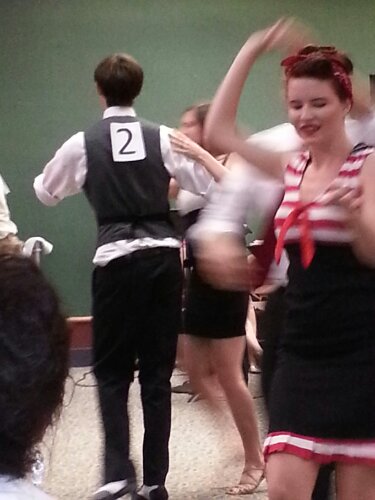
That last night on Earth, I stood next to one of the winners of the dance contest.  She wore the traditional outfit we still call “Rosie the Riveter.”  On her face she wore light peach coloured makeup that we of Mars no longer see as fashionable, able to change our face colour through skin tone circuitry like chameleons blending in or clashing with our environments as we see fit.

Will Guin return to Mars?  Will I dance with her again?  Will she and I ever be dance partners?

Although I have been outfitted with the latest in future forecasting capabilities, some futures I can only calculate, not predict with accuracy due to the influence of emotion-based algorithms I insist on keeping intact.

Do I miss Guin?  Sure I do, even if my work here at the colonies “needs” me and would miss me more if I left Mars for Earth.

Well, the chirps of cardinals and the warning hisses of a squirrel are like an alarm clock, telling me it’s time to leave the greenhouse and go back to the lab where I hope our latest in the new line of beings created from our imaginations will come to life, making our colonies more productive, more happy and prosperous in the longterm.

Talk to you kids of the past and the future again soon!

People shooting people

image

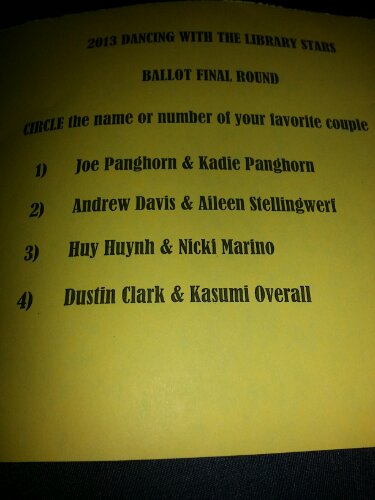
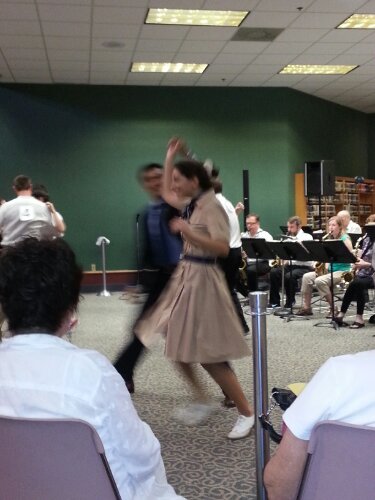
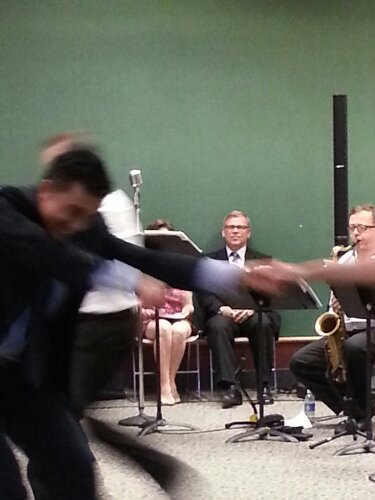
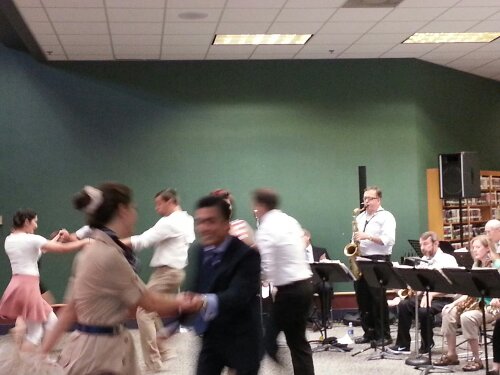
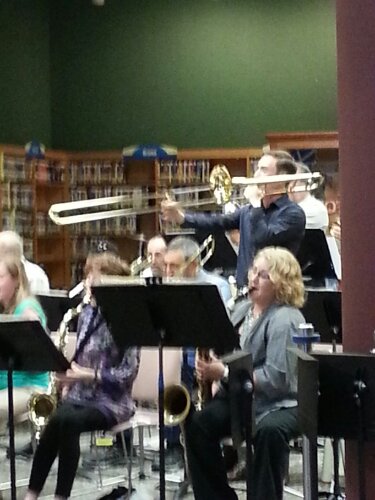
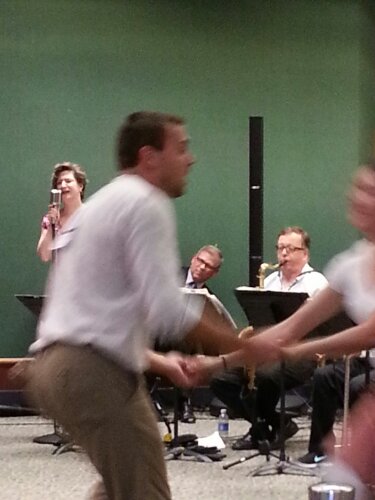
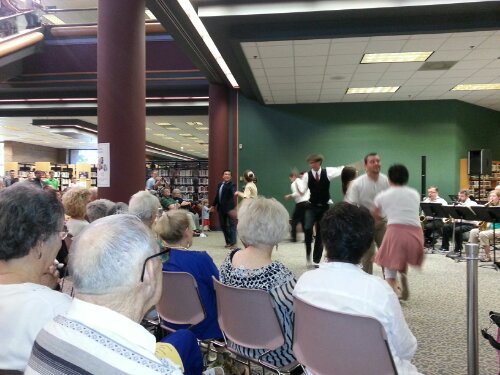
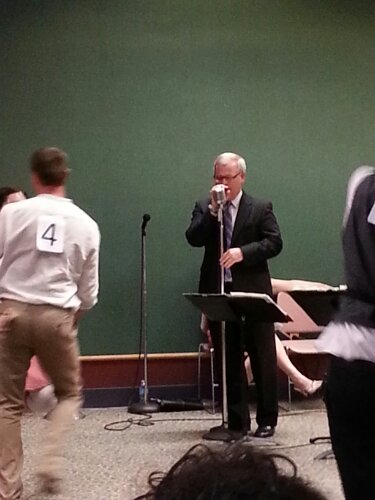
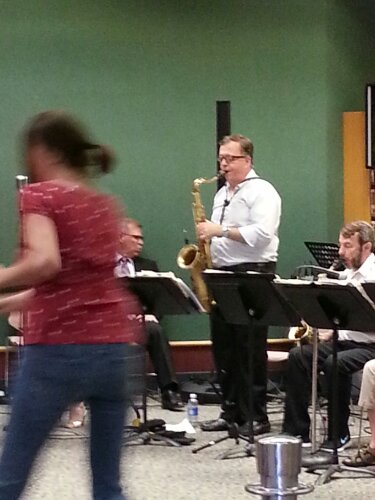
Shutterbug photographing the Moondust Band at the 2013 Dancing With The Stars Final Round.

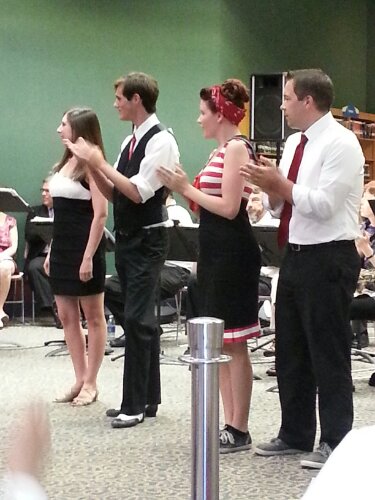
Contestants to follow:

image

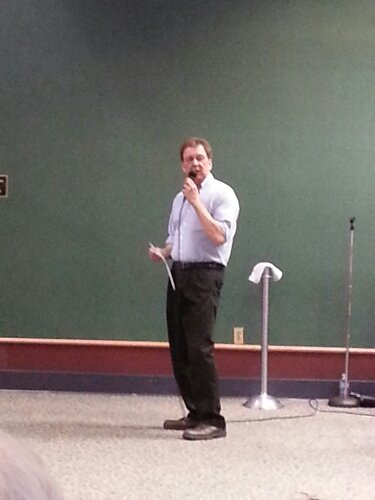
But first, the annoucements…

image

Paul filming from above…

image

Prizes provided by…

image

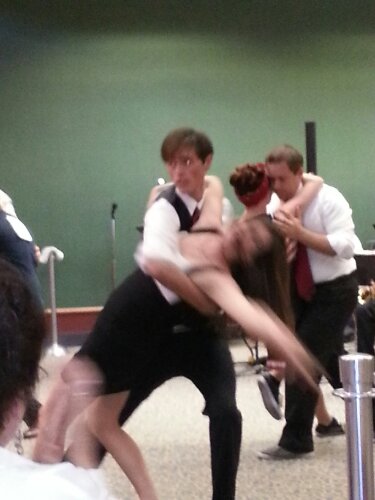
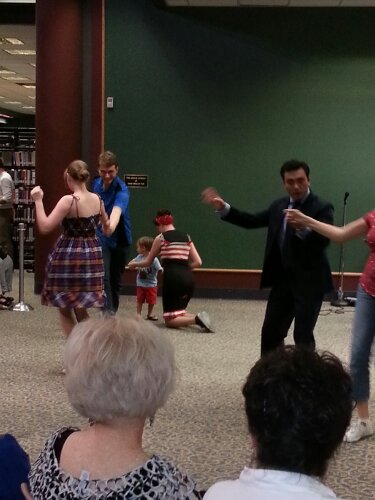
And now they dance!!!

image

image

image

image

image

image

image

image

image

image

image

image

image

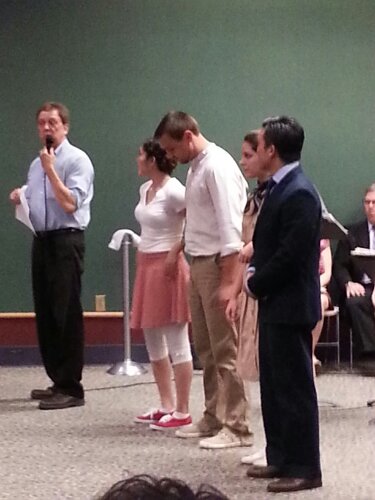
To find out who the winner is, you’ll have to wait until the blog entry…meanwhile…

image

image

Storytelling Secrets of Imprimante Scanneur Copieur

While writing one’s self into a storyline that appears autobiographical, one loses oneself temporarily, but that is the whole point, is it not?

We characters are characters with characteristics characterising charisma, charm, charbroiled personalities and carbon copies of people we meet.

A “Jenn” inspires a “Guin” who travels between planets.

An “Abi” inspires a “Bai” who influences the emotional states and body movements of those around her.

I, as the character Lee, have the joy and freedom to fall in love with Guin and Bai without interference, unless the storyline calls for such.

I could just as easily fall in love with their storied lines, their lives, their livelihoods and joie de vivre.

Separating self from character is not always easy.

In fact, I have lost track in the past but the characters lived on and so did the people who inspired their existence.

To be here, one assumes I have lived on, too.

Have I?

Je ne sais pas.  Parfois, je ne me connais pas.

To know is to understand.  Semper paratus, as they say, to tell a good story.

Take the date, the 10th of August 1998.  Why should I remember that day, a Monday?

Perhaps I do not remember it correctly.

Would a Monday be any different than a Tuesday or a Saturday?

What if, on that day, you first learned the language of dance?  What then?

Ah, but you see, to understand, to know, to feel in the synchronised vibrations of your core being the language of dance is an epiphany some equate with the Christian sense of being born again.

When you dance as if your whole body is one with the universe, it is a meditation upon or prayer to everything.

You cannot separate yourself from yourself, the person around you, the room, the music, or the planet in semi-elliptical orbit around the nearest star and the solar system in orbit around the Milky Way galaxy.

Writing about the sensation of dancing is like a badly-written translation of a masterpiece, converting a symphony into a bicycle — each has its perfection but never will the two appear the same.

Do you live for the dance?  Is every penny you earn outside of paying for living expenses directed toward dancing?

If so, then you know.

It’s like my favourite bluegrass musician, Claire Lynch.  I love her music but it’s just not the same sitting in a chair in a concert hall listening to her and her band perform.  I’d much rather lose myself gyrating on the dance floor while she and her friends are going off on musical tangents with her famous tunes as guidance.  Or I can write about it and get an equivalent feeling in the moment.

In all walks of life, we know this feeling:

  • Stock traders who have a feel for when a stock price is just right to trade at maximum value, followed by another and another for hours and days on end.
  • Teachers who have mesmerised their students to follow their lead, absorbing new material with a burning desire to learn.
  • Players in every sport.

To capture this sensation, some use stimulants while others know or learn how to let themselves live timelessly in the moment.

For me, switching between mental word play and dancing with a new partner is amazingly effortless when I decide not to carefully measure my steps as if I’m looking up dance moves in a guidebook.

With Jenn/Guin, it was easy to translate how I felt about dancing with her into storylines about Martian life.

With Abi/Bai, it has been some of the most difficult work to put into words what I feel because I have allowed myself and my character to tap into a part of myself that is wordless/word-free, and that, my dear friends/readers, is amazing, almost scary.

I am a man who spent years building his personal space back up after a similar encounter with a character I created from a woman I met named Brenda.

The imagination creates skyscrapers and rocketships, computers and quilts.

How will I lose myself while diving into this new character who explores the world of dancing from inside the World Swing Dance Council events?

What plots will reveal themselves?

What hints of world events will scenes expose?

This is not John Adams’ “Nixon in China” or Philip Glass’ “Einstein on the Beach.”

This is something else.

We’ll find out what as the weeks progress.

That pale blue dot (no, not the DOT (dept. of transportation) that keeps us going)

“Look again at that dot. That’s here. That’s home. That’s us. On it everyone you love, everyone you know, everyone you ever heard of, every human being who ever was, lived out their lives. The aggregate of our joy and suffering, thousands of confident religions, ideologies, and economic doctrines, every hunter and forager, every hero and coward, every creator and destroyer of civilization, every king and peasant, every young couple in love, every mother and father, hopeful child, inventor and explorer, every teacher of morals, every corrupt politician, every “superstar,” every “supreme leader,” every saint and sinner in the history of our species lived there — on a mote of dust suspended in a sunbeam.

The Earth is a very small stage in a vast cosmic arena. Think of the endless cruelties visited by the inhabitants of one corner of this pixel on the scarcely distinguishable inhabitants of some other corner, how frequent their misunderstandings, how eager they are to kill one another, how fervent their hatreds. Think of the rivers of blood spilled by all those generals and emperors so that, in glory and triumph, they could become the momentary masters of a fraction of a dot. From Carl Sagan’s “Pale Blue Dot: A Vision of the Human Future in Space.”

What did you do the day Earth smiled?

Stepping forth through the fourth wall with [in]formal steps

“It is not the critic who counts; not the man who points out how the strong man stumbles, or where the doer of deeds could have done them better. The credit belongs to the man who is actually in the arena, whose face is marred by dust and sweat and blood; who strives valiantly; who errs, who comes short again and again, because there is no effort without error and shortcoming; but who does actually strive to do the deeds; who knows great enthusiasms, the great devotions; who spends himself in a worthy cause; who at the best knows in the end the triumph of high achievement, and who at the worst, if he fails, at least fails while daring greatly, so that his place shall never be with those cold and timid souls who neither know victory nor defeat.” — Citizenship in a Republic, speech given by the former President of the United States, Theodore Roosevelt at the Sorbonne in Paris, France on April 23, 1910.

I sit back down in the studio at home, leaves of a Japanese redbud outside the window reflecting raindrops from a light rain shower.

During our long ride home last night, my wife and I talked about the range of emotions and thoughts we shared the past few days as newb (not n00b) dancers.

The self-deprecating downers:

  • “I’m just this [guy/gal] who doesn’t deserve to be on the dance floor with such great dancers.  It would be a waste of their time to dance with inexperienced me.”
  • “I don’t dance much because I’m not that good.”
  • “What am I doing here?  Who do I think I am competing against better talent?”
  • “Watching everyone on the dance floor having so much fun is tiring and depressing.  Why can’t I be as good as them?  Well, I know at least a few of them have been dancing since they were three so it must be innate talent that I don’t have that makes them so fantastic, which is even more depressing that I’ll never be like them.”
  • “I’m too nervous to dance well in this competition.  I’m going to mess up, trip and fall or miss a step.  What if I don’t demonstrate musicality or get off the beat of the music?  The judges will score me in last place, I know it!”
  • “What’s going on?  The competition is about to begin, I’m in line to go out on the dance floor in front of the judges, the crowd and video cameras, making me so nervous I could scream.  I’m confused by the instructions because I’ve never seen a competition in person, let alone competed as an ignorant newcomer.  I feel so stupid and scared.”

The self-confidence -building uppers:

  • “I just learned a new move without it taking weeks to understand the steps.  This is more fun than I thought.”
  • “People, some of them the best dancers here, are actually interested in dancing with me.”
  • “It’s like being inside a TV show or movie about dancing and I’m the ‘star’ of the moment with my dance partner.  ME!”
  • “Not only did I survive the competition, I was so focused on having fun dancing I didn’t even see what my competition was doing.  I actually competed against the strong belief that I would surely fail and I won because I didn’t fall down and didn’t feel like I made a fool of myself even though I know I made a few mistakes!”
  • “Everyone cares about me and how I danced — their praise and constructive criticism was so good to hear because they paid attention to me, a mere beginner, and wanted me to be a better dance partner with them.”
  • “Can you believe that I went from not wanting to attend this competition or anything like it ever again to wondering when’s the next competition we can go to and repeat the exhilarating fun?”
  • “At football games and car races, there’s too much negativity amongst fans who spent so much of their energy yelling at or putting down others.  Here at this dance competition, we encourage each other, especially our competition.  At our age, maybe we should say goodbye to the ‘boo birds’ and spend our money more wisely with people who support their competitors to get better.”

There were several times after watching some of the competitions that I was sick and tired of dancing because the weight of negative thoughts that I’d never be a dreamy dance partner killed the good mood of the moment.

But then I’d get out on the dance floor, connect with a new partner, enjoy the brief flirtatious friendship and instantly restore my self-confidence regardless of whether I was in perfect sync with my partner the whole time.

As more than one person said, the first is not always the best dance with someone — it may take one, two or three songs for you and your partner to find your commonalities — but you are helping each other improve yourselves that drives you to keep going.

It’s that giving up of one’s ego for the sake of the dance that is amazing to me.  Abi often reminds not to stop dancing because sometimes I would just stop and watch her dance, swept up in the amazement of how great her dancing made me feel.  Same for many other partners, too.  I forget that they’re feeding off me for the sake of the dance.

You mean this little ol’ kid in me is an inspiration for others?

I worked hard all weekend to give myself permission to have fun dancing, clearing my thoughts of guilty feelings that I’m having a great time while people around the world are suffering and my niece is in the hospital recovering from a difficult birth of her baby son.

In fact, I had so much fun that I didn’t constantly split myself into multiple personalities, including the diarist/journalist/blogger who observes and reports everything he saw and felt.

Therefore, I don’t remember the names or personal stories of everyone I met.

Sensory overload was an issue that I didn’t want to get in the way (which triggers crowd anxiety) so I shut off the internal critic, the judgmental elder who uses criticism to build up barriers, and let myself live timelessly in the moment.

I first suppressed and then let pass through me the jealousy/envy of better male dancers who were making the women with whom I wanted to dance look like goddesses, especially after those very same goddesses wanted a song or two with me.

Memories of grade school sockhops welled up from out of nowhere, recalling when I stood like a statue fixated on girls I liked, occasionally getting up the nerve to ask a popular girl for a dance, where I first learned to dance awkwardly with equally-awkward partners, no matter how popular they were, sharing a laugh at the realisation we both felt embarrassed for no reason; high school dances where I was known as a guy to have fun flailing about on the floor, literally, doing jumping jacks, pushups and other shenanigans because I was the wild-and-crazy president of the drama club who had a reputation of outlandishness to maintain; college years full of sorority formals and punk rock mosh pits, often on the same evening; then, 25 years generally devoid of dancing.

And now this, the post Dance Mardi Gras euphoria, where, interestingly enough, a dance form that has no rules or formality — turning into The World Swing Dance Council, with scoring and a points system — inspired me to dance without thinking, letting my whole body speak and learn a new language all over again, while I sit here trying to describe what I felt rather than directly thought with the formal labeled sounds/memes we call words.

Thanks again to everyone of all ages such as the dance groups like Newsies and Tortilla Chips who put on an entertaining show for us during the masquerade ball.  The celebrity J&J contest was just as exciting!

Last, but not least, a big shoutout to the crew who made it all happen.