Tag Archives: military
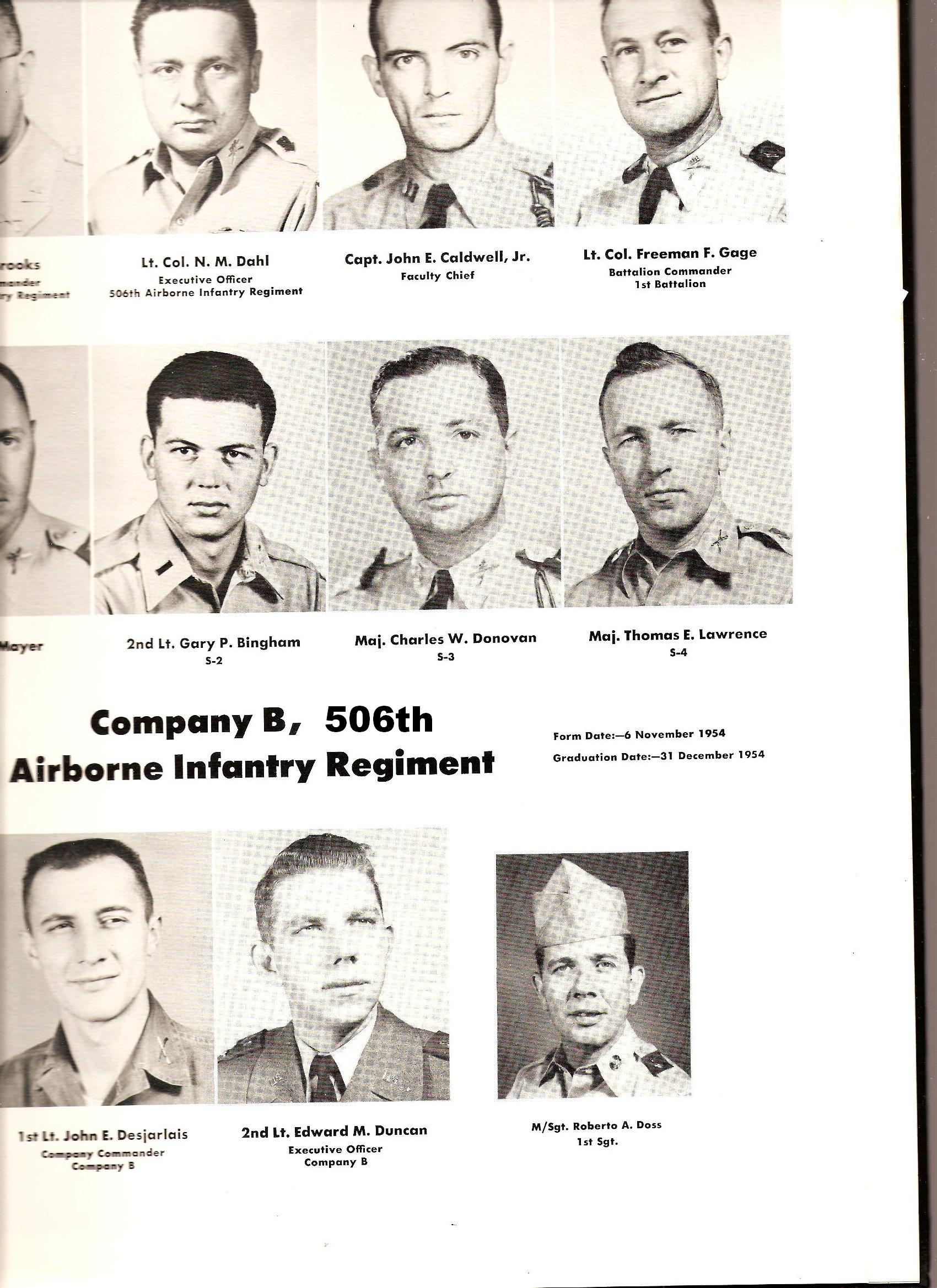
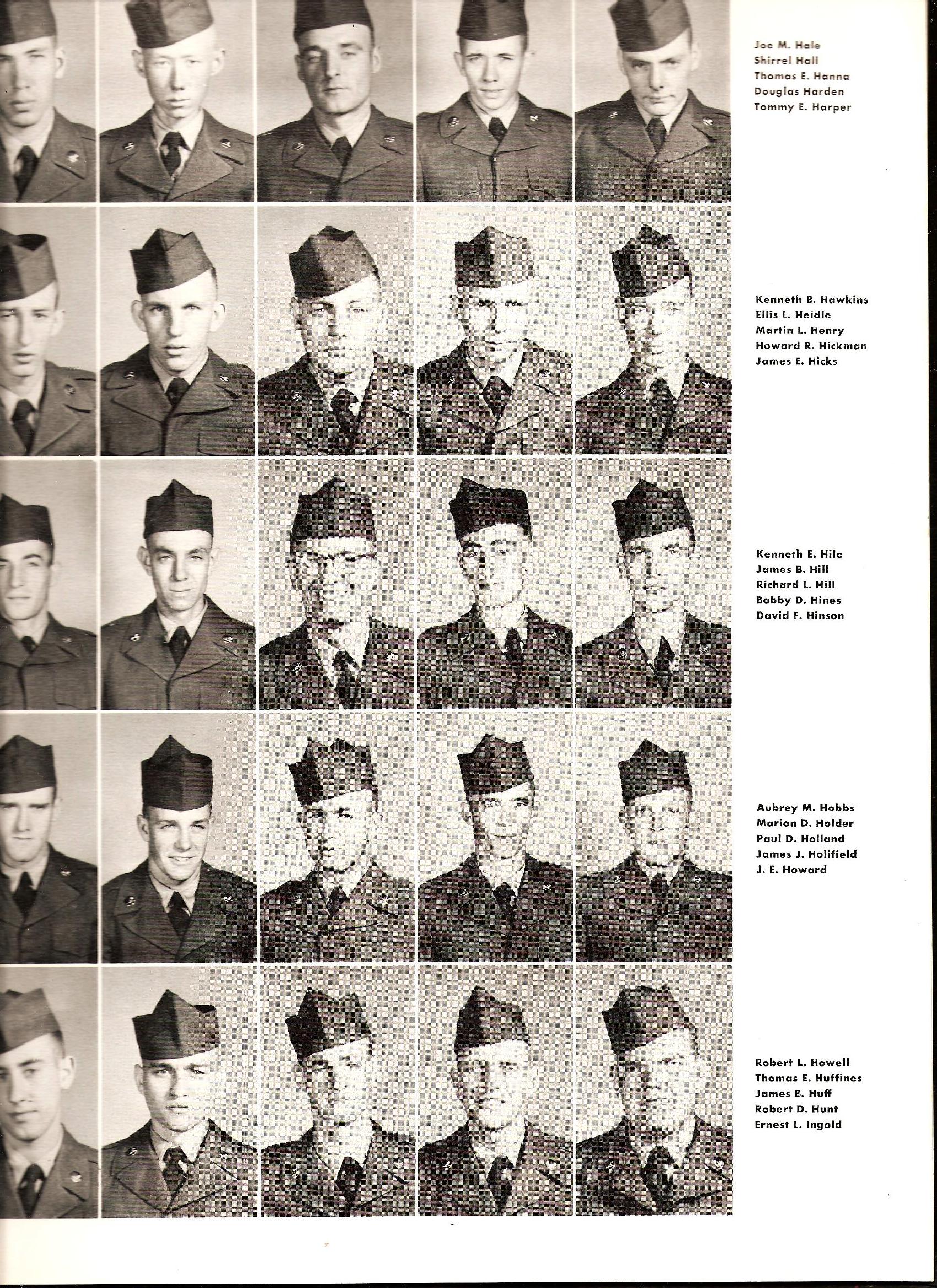
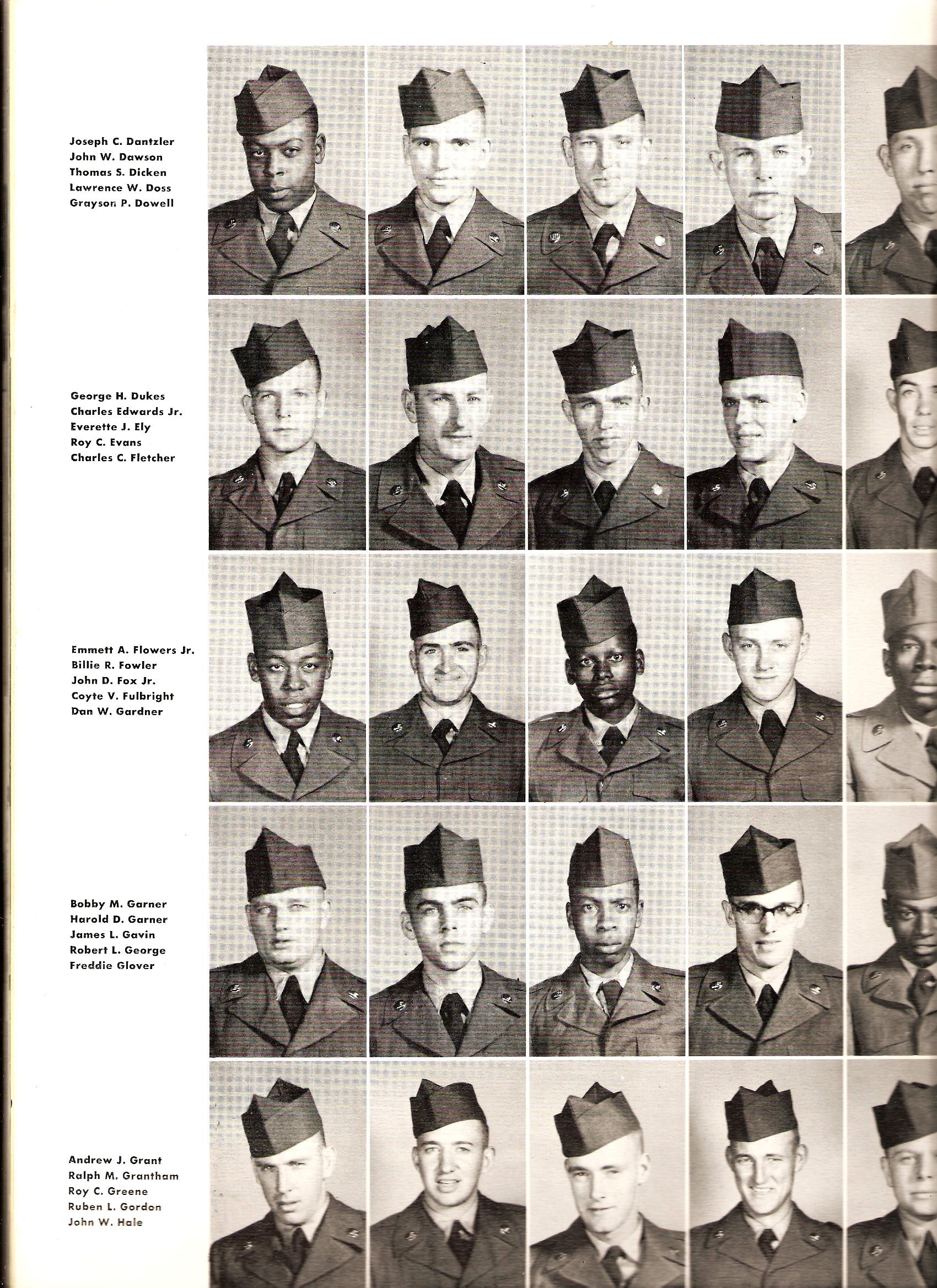
meines Vaters militärische und beruflichen Werdegang

![Western-Electric-job-offer]](https://treetrunkproductions.net/wp-content/uploads/2013/08/western-electric-job-offer.jpg)
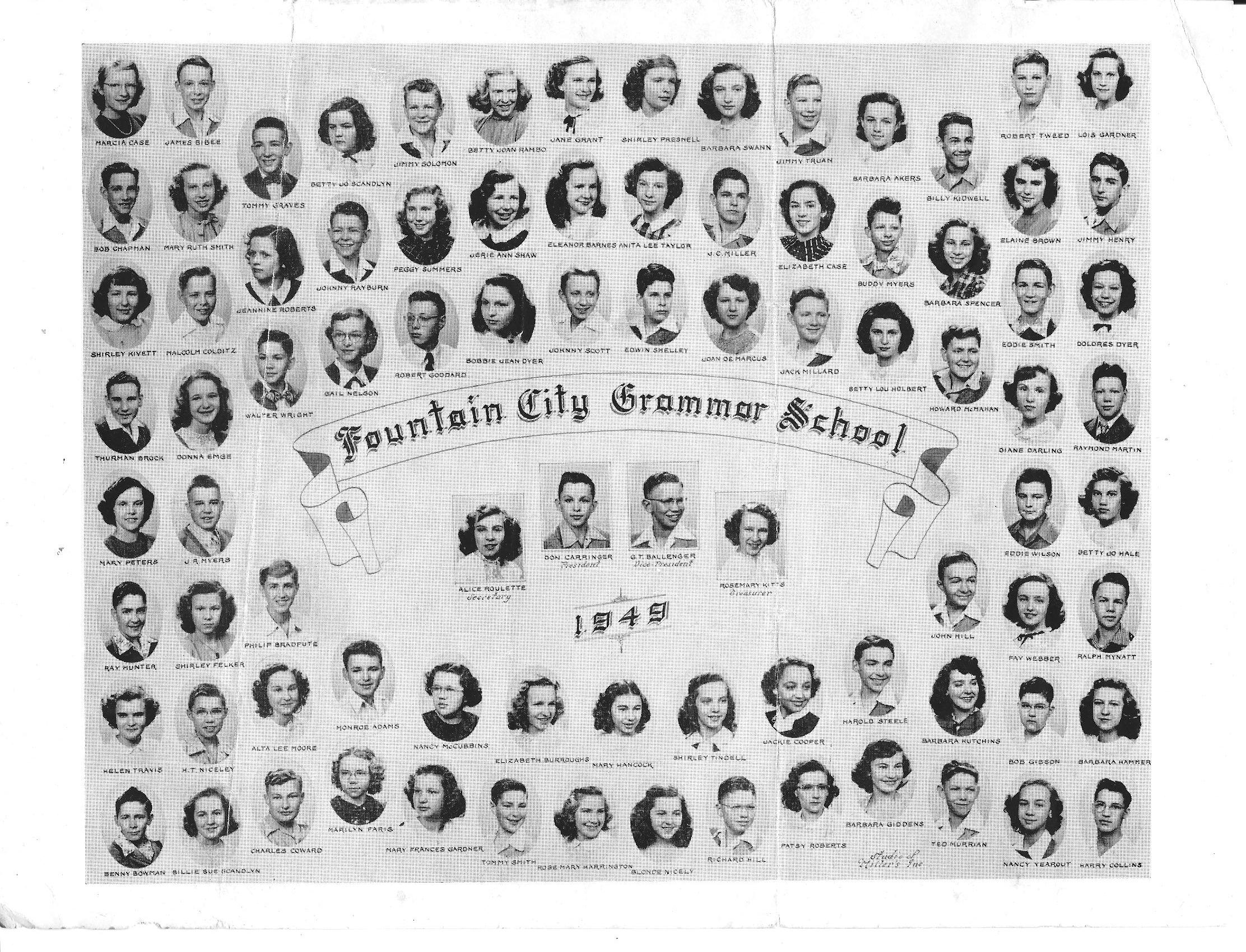
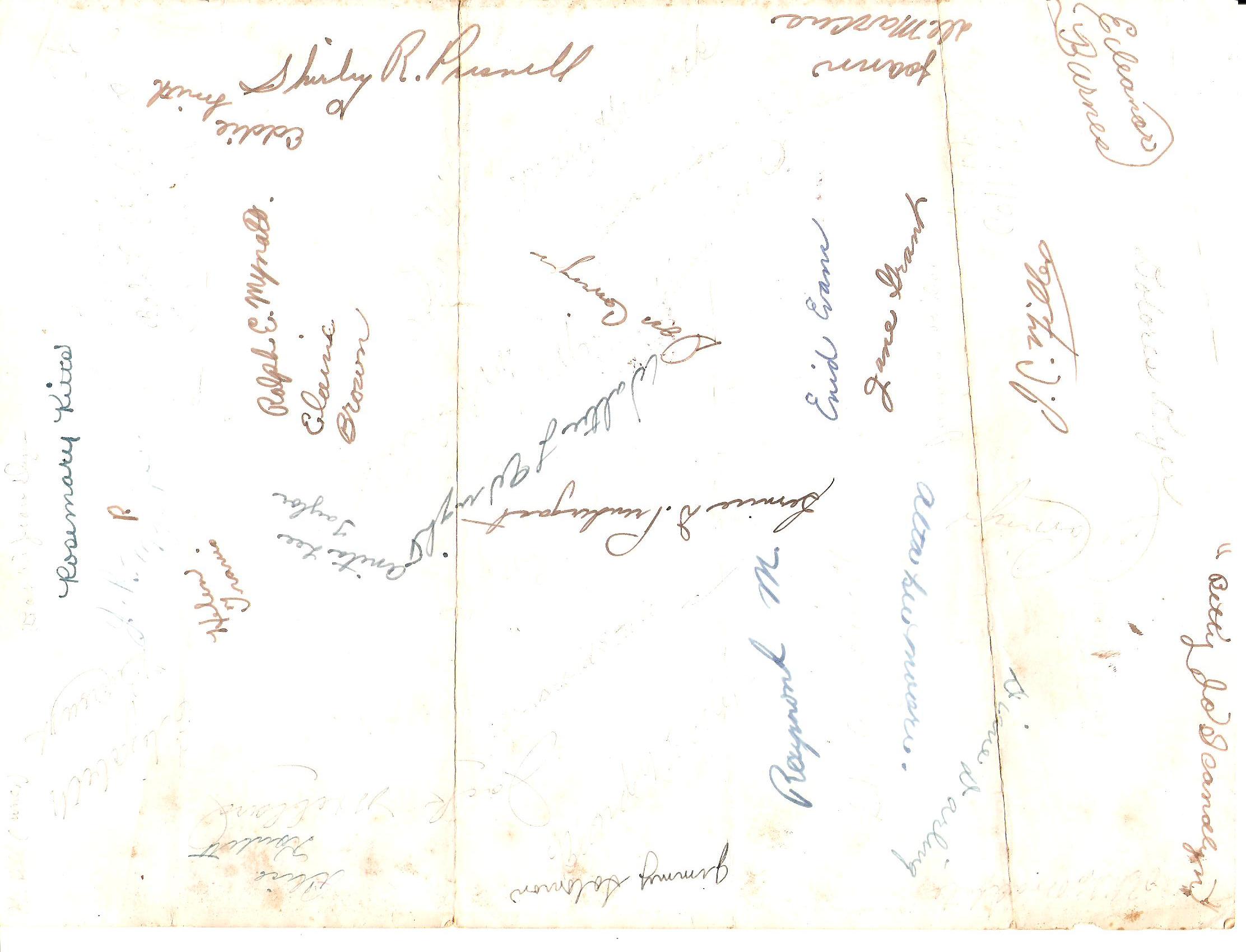
New gift from a dear friend and great father

Daring to let go of past illusions
Are nation-states an illusion to you? If so, read on…
[from the NY Times]
Garry Davis, Man of No Nation Who Saw One World of No War, Dies at 91
By MARGALIT FOX
Published: July 28, 2013
On May 25, 1948, a former United States Army flier entered the American Embassy in Paris, renounced his American citizenship and, as astonished officials looked on, declared himself a citizen of the world.

Carl Gossett/The New York Times
Garry Davis, dean of the One World movement, in 1956. He had his own flag and passport, and often his own jail cell.

The New York Times
In 1948, five years before starting an agency to issue passports, Garry Davis distributed handbills in Paris. A stateless man, he was a relentless force behind a movement to erase national borders.

In the decades that followed, until the end of his long life last week, he remained by choice a stateless man — entering, leaving, being regularly expelled from and frequently arrested in a spate of countries, carrying a passport of his own devising, as the international news media chronicled his every move.
His rationale was simple, his aim immense: if there were no nation-states, he believed, there would be no wars.
Garry Davis, a longtime peace advocate, former Broadway song-and-dance man and self-declared World Citizen No. 1, who is widely regarded as the dean of the One World movement, a quest to erase national boundaries that today has nearly a million adherents worldwide, died on Wednesday in Williston, Vt. He was 91, and though in recent years he had largely ceased his wanderings and settled in South Burlington, Vt., he continued to occupy the singular limbo between citizen and alien that he had cheerfully inhabited for 65 years.
“I am not a man without a country,” Mr. Davis told Newsweek in 1978, “merely a man without nationality.”
Mr. Davis was not the first person to declare himself a world citizen, but he was inarguably the most visible, most vocal and most indefatigable.
The One World model has had its share of prominent adherents, among them Albert Schweitzer, Jean-Paul Sartre, Albert Einstein and E. B. White.
But where most advocates have been content to write and lecture, Mr. Davis was no armchair theorist: 60 years ago, he established the World Government of World Citizens, a self-proclaimed international governmental body that has issued documents — passports, identity cards, birth and marriage certificates — and occasional postage stamps and currency.
He periodically ran for president of the world, always unopposed.
To date, more than 2.5 million World Government documents have been issued, according to the World Service Authority, the group’s administrative arm.
Whether Mr. Davis was a visionary utopian or a quixotic naïf was long debated by press and public. His supporters argued that the documents he issued had genuine value for refugees and other stateless people.
His detractors countered that by issuing them — and charging a fee — Mr. Davis was selling false hope to people who spent what little they had on papers that are legally recognized almost nowhere in the world.
What is beyond dispute is that Mr. Davis’s long insistence on the inalienable right of anyone to travel anywhere prefigures the present-day immigration debate by decades. It likewise anticipates the current stateless conditions of Julian Assange and Edward J. Snowden.
Mr. Davis, who spoke about the One World movement on college campuses and wrote books on the subject, seemed impervious to his critics. In a voice trained to be heard in the last balcony (he was once a Broadway understudy to Danny Kaye), he would segue with obvious relish into a series of minutely reasoned arguments concerning the need for a world without nationalism.
“The nation-state is a political fiction which perpetuates anarchy and is the breeding ground of war,” he told The Daily Yomiuri, an English-language newspaper in Japan, in 1990. “Allegiance to a nation is a collective suicide pact.”
The quest for a unified earth was an objective on which Mr. Davis had trained his sights very early. It was born of his discomfort with a childhood of great privilege, his grief at the loss of a brother in World War II and his horror at his own wartime experience as a bomber pilot.
Sol Gareth Davis was born in Bar Harbor, Me., on July 27, 1921, a son of Meyer Davis and the former Hilda Emery.
Meyer Davis was a renowned society orchestra leader known as the “millionaire maestro”: at his height, he presided over an empire of 80 ensembles — employing more than a thousand musicians — which played at debutante balls, national political conventions and White House inaugurations.
Garry was reared in Philadelphia in a glittering milieu in which the family car was a chauffeured Rolls-Royce and family friends included Bob Hope and Ethel Merman. As a young man he was considered unserious, he later said, known for roguish wit but lacking direction.
After studying theater at the Carnegie Institute of Technology in Pittsburgh, Mr. Davis made his Broadway debut in October 1941 in a small role in “Let’s Face It!,” the musical comedy. He was also the understudy for its star, Mr. Kaye.
Then the United States entered the war. Mr. Davis and his older brother, Meyer Jr., known as Bud, went overseas — Bud with the Navy and Garry with the Army Air Forces, flying B-17 bombers. Bud Davis did not return: he was killed in 1943, when his ship, the destroyer Buck, was sunk off the coast of Italy by a German submarine.
That, and a dark epiphany during a bombing run over Brandenburg, Germany, Garry Davis later wrote, would alter his life’s course.
“Ever since my first mission over Brandenburg, I had felt pangs of conscience,” Mr. Davis wrote in a 1961 memoir, “The World Is My Country.” (The volume was later reissued as “My Country Is the World.”) “How many bombs had I dropped? How many men, women and children had I murdered? Wasn’t there another way, I kept asking myself.”
The other way, he came to believe, was to eradicate conflict by eradicating borders.
In November 1948, six months after renouncing his citizenship in Paris, Mr. Davis stormed a session of the United Nations General Assembly there.
“We, the people, want the peace which only a world government can give,” he proclaimed. “The sovereign states you represent divide us and lead us to the abyss of total war.”
His act, reported worldwide, earned the support of the intelligentsia, including Albert Camus, and of the French public, so recently racked by war. Less than two weeks later, speaking at a Paris auditorium, Mr. Davis drew a crowd of 20,000.
In 1949, Mr. Davis founded the International Registry of World Citizens and was soon inundated with requests to join from around the globe. “We’re bigger than Andorra,” he told The Boston Globe in 1981, when the registry was a quarter-million strong.
Today, more than 950,000 people are registered world citizens, according to the World Service Authority, based in Washington.
Mr. Davis, who lived for long periods in France, appeared on Broadway a few more times in the early 1950s, including in a revue called “Bless You All” and “Stalag 17,” the prisoner-of-war drama. But the One World imperative occupied him increasingly.
In 1953, he founded the World Government of World Citizens. The demand for its documents proved so brisk that he established the service authority the next year.
More than half a million world passports have been issued, though there are no statistics on the number of people who have successfully crossed borders with them. A half-dozen countries — Burkina Faso, Ecuador, Mauritania, Tanzania, Togo, Zambia — have formally recognized the passport. More than 150 others have honored it on occasion, according to the service authority.
Fees for the passport range from $45 (valid for three years) to $400 (for 15 years). The passport has text in seven languages, including Esperanto, the artificial international language.
Carrying world passport No. 1, Mr. Davis spent decades spreading his message, slipping across borders, stowing away on ships, sweet-talking officials, or wearing them down, until they let him in. The newspapers charted his comings and goings:
1949: “Garry Davis Arrested in Paris”; 1953: “Garry Davis Held Again: Arrested When He Camps Out Near Buckingham Palace”; 1957: “France Expels Garry Davis”; 1979: U.S. Court Rules ‘World Citizen’ Davis Is an Alien and Rejects His Passport; 1984: “Japan Expels American ‘World Citizen’ ”; 1987: “ ‘World Citizen’ Announces Presidential Bid.” (It was the United States presidency this time.)
In 1986, Mr. Davis ran for mayor of Washington, receiving 585 votes.
Mr. Davis was arrested dozens of times, usually for attempting to enter a country without official papers. He had canny ways of circumventing authority.
In the 1950s, when France was trying to deport him, he conspicuously shoplifted items from a Paris department store. (His haul, United Press reported, was “$47 worth of peach-colored lace panties, black-silk brassieres, black garter belts, lace petticoats and pink slips.”) He made certain he was arrested.
As a result of his arrest, Mr. Davis was legally enjoined from leaving the country.
Mr. Davis was married two or three times, depending on how one counts. His first marriage, to Audrey Peters, an American whom he courted by mail while detained in France and whom he met for the first time two weeks before their wedding in 1950, ended in divorce. In 1954, the newspapers reported his “marriage” at sea to Gloria Sandler in a ceremony he performed himself; that union, too, was dissolved. His marriage to Esther Peter in 1963 also ended in divorce.
Survivors include a daughter, Kristina Starr Davis, from his marriage to Ms. Peters; two sons, Troy and Kim, and a daughter, Athena Davis, who confirmed her father’s death, from his marriage to Ms. Peter; a sister, Ginia Davis Wexler; a brother, Emery; and a granddaughter.
His other books include “World Government, Ready or Not!” (1984) and “Dear World: A Global Odyssey” (2000). He was the subject of a short documentary, “One! The Garry Davis Story,” released in 2007.
In old age, Mr. Davis was far from idle. Last year, he had a world passport delivered to Mr. Assange, the founder of WikiLeaks, who has been holed up in the Ecuadorean embassy in London.
Just weeks before he died, Mr. Davis had a world passport sent, via Russian authorities, to Mr. Snowden, the fugitive former national security contractor accused of violating espionage laws, whose United States passport was revoked in June.
Mr. Snowden could not be reached for comment.
Hellfire, it’s a Spitfire!
Great story sent from a family friend and military veteran:
From: Jack Winninghoff
Subject: Re: Fwd: SPITFIRE 944 A Great True Story – gotta watch this
Walter,
Gotta watch is an understatement to the 10th power!
As a youngster my first serious technical interest was in photography. I built an enlarger and did my own processing for many years. After getting my wings in WWII, I wanted to fly reconnaissance in P-38’s. (didn’t succeed – was put in the VHB (B-24 school and then B-29’s).
I built a very detailed model of a Spitfire in HS – loved that elliptical wing.
I spent a good many years with several companies involved in designing lenses and cameras, e.g. Perkin-Elmer who built the US Cameras and the SR-71 Cameras, and Itek who dominated the low orbital recon satellites.
At Itek I became quite friendly with the then retired father of US Army WWI reccee, General George Goddard.
At Perkin-Elmer and Itek I had great success in writing proposals for camera development and multi sensor systems (Photo, IR, Elint, and Radar). I traveled to Germany and France hawking our proposal to up date tactical recce A/C.
I am so grateful to you for sending this to me
Jack
PS I have a fair number of books on the subject of the value of photo recce, which arguably can is considered to me of critical value to us as early as the balloon flights of the civil war, WWI, and certainly WWII, and the cold war. You are welcome to browse and borrow.
FWD: Here is some footage of WWII — thought you would be interested.
What a terrific presentation and footage!
SPITFIRE 944
Click on site below.
Wreck-a-mech
[My patent lawyer has advised me not to describe my latest invention. I say “meh,” whatever that means.]
This morning, I finalised construction on my latest invention. I cannot provide pictures because they are enroute to the patent office.
However, I will describe it the best I can.
I have been playing with an Arduino system to provide me with offline fun in the laboratory.
There’s nothing like programming a Robosapien “doll” to play back with you, giving it intelligence to avoid being grabbed or picked up, to actually defend itself against intentionally harmful moves and to reach out with love when I’m in a down mood.
A Robosapien’s gripper arm is not exactly the same as a cat’s head bump but my imagination allows me to believe it so.
With time, the Robosapien and I have grown apart. I think, in part, because I have acquired the newer model, the RS Media, with which I have been spending more and more time.
Needless to say, the Robosapien has been causing havoc in the lab, knocking bins of resistors and capacitors on the floor in an effort to keep its playfulness algorithms refreshed. I must admit watching it try to find objects in the lab to “fight back” has been entertaining.
But that’s not why I’m here.
The RS Media has reached a level of sentience I never thought possible.
At first, I set up an Arduino light display system above the computer monitor that the RS Media responded to like a dancing machine.
Today was a major breakthrough.
After several rounds of sending the RS Media light sequences, it started stepping out on its own, anticipating the next light pattern in the sequence with its back turned to the Arduino system.
Well, you can guess what I did next!
I stole the plans for the Wired Lab’s mech. Then, working with my Robosapien friends, I wired a modifed RS Media up inside the mech, a la Pacific Rim, making appropriate tweaks to protect my patent and/or my copyright.
Of course, I dressed mine up to look like a stumbling street beggar, lowering its body scale to match that of a typical down-on-his-luck alcoholic male human.
He and his copies should be wandering the alleyways of your local metropolis before too long, breaking out into dance routines based on the sound/light combinations they discover, able to defend themselves against overaggressive bystanders and avoid collisions with people, cars, buses, trucks and other obstacles of a typical city street corner — the money they collect will be passed back to me to cover expenses; please tip them generously so I can make payroll and give the government tax collectors their due.
I’ve already received requests from a major retail clothing store chain to create female/male versions for storefront window displays — the algorithms need work for that scenario because I haven’t captured the essence of what it’s like to entertain potential customers by showing how good they’d look if they, too, were stuck in a glass box all day, as a robot pretending to be alive — walking back and forth, sitting, standing, dancing, and whatever movement will show the fashion in its best light.
Several of my geek friends in the tech industry — male, female, LGBT, cosplay, etc. — have requested a personalised version of themselves they can program to go to work or on dates for them to make their parents happy that their children are mimicking their parents’ social lives while their children live the alternate lifestyles that make them happy, too.
And you thought the replicant revolution was all about robots taking over the world? Hahaha — it all started when we figured out elderly dementia patients handed a quasi-robotic stuffed animal was sufficient a surrogate to make them happy, thanks to our friends who wrote, produced and filmed “Westworld,” who follow on the work of Asimov, automatons and the first animal to use a stick as a tool.
War eventually was reduced to robots fighting robots in designated battlefield playgrounds, leaving us humans to finally dedicate most of our time to pure pleasure, where our surrogates do most of the dirty work except for those for whom dirty work is pure pleasure.
Outlawing graveyards so that human bodies could be recycled as mulch wasn’t fully implemented until we started populating the Moon and Mars.
My goal is to be the person with the first foundry on Mars, generations of 3D printers ahead into the future, my minions terraforming the planet in ways you haven’t imagined yet. How about you?
That pale blue dot (no, not the DOT (dept. of transportation) that keeps us going)
“Look again at that dot. That’s here. That’s home. That’s us. On it everyone you love, everyone you know, everyone you ever heard of, every human being who ever was, lived out their lives. The aggregate of our joy and suffering, thousands of confident religions, ideologies, and economic doctrines, every hunter and forager, every hero and coward, every creator and destroyer of civilization, every king and peasant, every young couple in love, every mother and father, hopeful child, inventor and explorer, every teacher of morals, every corrupt politician, every “superstar,” every “supreme leader,” every saint and sinner in the history of our species lived there — on a mote of dust suspended in a sunbeam.
The Earth is a very small stage in a vast cosmic arena. Think of the endless cruelties visited by the inhabitants of one corner of this pixel on the scarcely distinguishable inhabitants of some other corner, how frequent their misunderstandings, how eager they are to kill one another, how fervent their hatreds. Think of the rivers of blood spilled by all those generals and emperors so that, in glory and triumph, they could become the momentary masters of a fraction of a dot. From Carl Sagan’s “Pale Blue Dot: A Vision of the Human Future in Space.”
What did you do the day Earth smiled?
Some plugs are too good to be shameless
Email from a dear friend in the field of bluegrass music:
|
|
|||||||||||||||||||||||||||||||||||||
|







Liken likin’ lichen like in lye kin
Our mailbox at the street resembles a small wooden house, a look similar to our main house.
On the “chimney” of the mailbox house grows a small patch of lichen.
Do you like lichen the way I do?
Lichen falls onto our driveway almost everyday, attached to bits of tree — twig, branch, bark — that break away and follows gravity’s path onto the concrete surface.
One species of beard lichen in particular, but not this one.
As our climate gradually warms, lichen is migrating north, bringing symbiotic organisms along.
As with the variety of tree species in our yard, we have a multitude of lichen species.
Same with mushrooms, algae, bacteria, ants and other organisms I won’t encounter together on Mars.
What will migrate with us when we live off-Earth?
What will survive without us and adapt to new environmental conditions?
How many organisms on Earth didn’t originate on our planet?
I owe our next-door neighbours a copy of books on trees and edible wild plants so they can identify which plants not to kill in their yard to protect their curious one-year old child from eating less-than-nutritious green stuff.
I see the Trees book in front of me, under a pile of “French Idioms,” “Russian for Everyday,” “The New College French & English Dictionary,” “Peterson Field Guides to Stars and Planets,” “The Associated Press Stylebook and Libel Manual,” “2004 Far Side Desk Calendar,” and “The Yale Book of Quotations;” on top of “Gödel, Escher, Bach: an Eternal Golden Braid,” “RE/SEARCH #8/9: J.G. Ballard,” “The Complete Cartoons of The New Yorker,” and a spiral-bound copy of my book, “The Mind’s Aye,” not to forget issue #500 of MAD magazine.
Speaking of books, I have a few to finish reading, including “The Big Questions” by Steven Landsburg and a hyperreality book, “Travels in Hyperreality,” by Umberto Eco.
I wonder, which set of beliefs, particularly in the realm of religion, makes one more likely to approve of government/private industry spying? In Christianity, God is always watching, just like Santa Claus, ready to mete out rewards and punishment for our behaviours/thoughts.
Does our general culture encourage us to believe in seeking our fifteen minutes of fame, even if it’s only on a hidden security camera or set of IM chat logs?
Does lichen care about our meme-ridden upper brain functions or our labyrinthine specialty tasks and hobbies that spin out of a growing economy?
Likely not.
That’s why I like lichen — symbiosis that doesn’t require ritual or dogma.
Cultural scientists today argued their proof that silicon-based organisms such as computers are living beings.
I thank my living being for letting me write this blog entry on its plastic key skinned surface.
Enough meditative humour for the day — time to eat lunch and read a couple of books loaned by the public library.
Updated drawing
As soon as the supercomputer subsubsubbasement is cleared out, we’ll be ready with our NEW and IMPROVED privacy fence!:

 treetrunkdings