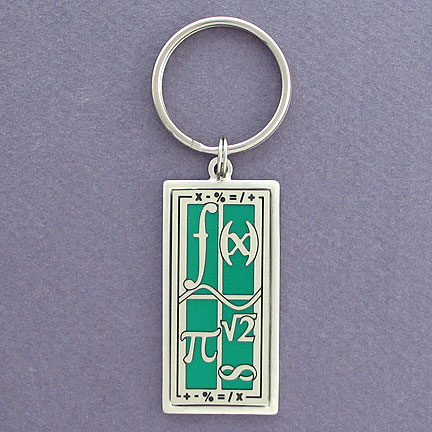
Blindness and mathematics make beautiful imagery.
My favorite pendant:
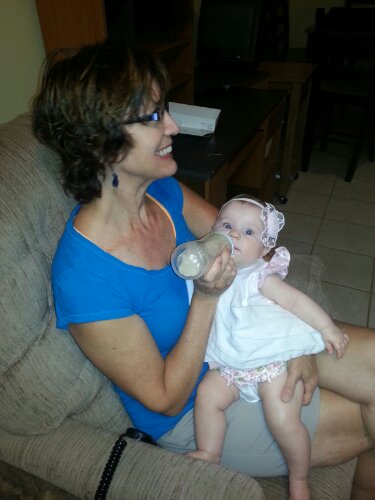
My sister with the newest member of the Teffeteller clan, Vanessa, daughter of Ashley/Steven, granddaughter of Janet/Ken — $45000 worth of fertility drugs later.

Thx to Abi for great waltz/tango lessons tonite at Tracy’s Madison Ballroom dance studio; Ebony at Krystal; Jodi at Rite Aid; Abby S at Dreamland BBQ; Deborah at Lowe’s.
OLLI 20th Celebration Speakers’ Series –
Wearable Robotics: Improving the Quality of Life for People with Disabilities
8/15/13, Wilson Hall Auditorium 001, UAHuntsville | 4:00 – 5:30 p.m.
Join OLLI at UAH for our 20th Celebration Speakers’s Series. Until recently, “wearable robots” were only the subject of science fiction. Modern technological advances are providing amazing real-world innovations in the area of rehabilitation robotics for people with physical disabilities. Join OLLI for an educational discussion on the latest developments of robotic limbs for extremity amputees and the development of exoskeletons for individuals with spinal cord injury and stroke. Dr. Michael Goldfarb, director of the Center for Intelligent Mechatronics at Vanderbilt University, has dedicated his career to the development of intelligent assistive devices for people with physical disabilities. He has also been featured in a Tennessee PBS series on current day Explorers. For more info phone 256.824.6183 or visit http://www.PCS.uah.edu/OLLISeries.
OLLI Event – Members ONLY
Sign-up at the event or join now at http://www.PCS.uah.edu/JoinOLLI
During my visit to the GP today, he revealed that the practice (GFMA) had outsourced its insurance/medical bill processing in April.

Thx to Rendy, cooks, busboy, cashiers and ownership at Gibson’s BBQ.
Thx to Denise, Dr. Carter, David, Roxy and more at GFMA.

Lee looked down at his smartphone — 100% charged. Not used much that evening.
He swiped the screen to unlock.
Checking his multiple email inboxes, he paused his thoughts, holding a memory of a single touch, the person out of view behind him.
His thoughts restarted, rewinded, recalling high-heeled dancing shoes — the shoes merely straps, the wearer’s toenails painted blue, the calves brown, muscular, tight. The wearer’s face unpainted, brown, Filipina, smooth, thin lines hiding on her forehead until emotions displayed with an instructor’s tone of professional voice.
“Toe, toe, toe, heel, Karen. Head turned left, not tilted. Heel! Don’t be afraid or timid to step forward, Lee. Elbow up!”
A hand reached from behind and pushed Lee’s right elbow up, holding it in place for his dance partner’s arm to rest upon. Another hand smacked the back of his leg.
Bai laughed. “That was fun. I liked that!” She smacked Lee’s leg again until he got his step right.
Lee’s dance partner, his wife, Karen, smiled. “‘Heel.’ Like a dog. Like the way they pronounce Hill around here.”
Lee concentrated on his waltz steps while also trying to let go and enjoy the music.
Bai nodded at Guinevere nearby, as if to say, “See, they are trainable. You just have to know how to train them.”
To Lee, the reward for getting the dance steps right or getting them wrong was a corrective dance with Bai, or just the slightest hint of a promise of the chance to dance with Guin.
Karen stood and watched while Bai made Lee trace the same waltz steps she made, forward, then turned slightly left or right but still forward, tracing an imaginary straight line on the dance floor, less than the zig-zag of a grapevine move.
Lee looked at Bai’s legs, wishing they were his, remembering his marathon training days and his almost-sinewy legs of a runner.
Standing in a clubhouse lobby checking email was not going to get him those legs.
Wishing was not going to make him have athletic legs like Bai’s.
Still, Lee wished his wife desired athleticism over sleep and looked forward to them getting closer medical attention come October when their family practice physicians moved to a concierge system. Perhaps Karen would finally get the diagnosis of sleep apnea that Lee believed she had.
Solve her sleep problems and Karen might have more energy to exercise. More exercise, more dancing, lower weight and more like the lithe figures with whom Lee enjoyed spinning around the dance floor like angels.
Lithe did not mean size zero clothing.
Lee had danced with a woman whose size matched his wife’s but who had mastered the art of spinning a larger body size, thanks to her years of ballet training.
Training means practice.
In two days, Lee and Karen would start renting a dance studio on a monthly basis, dedicating themselves to their new hobby, the art of dance — waltz, rumba and West Coast Swing — their goal to be better students than Bai expected.
Lee lived from moment to moment, enjoying the sensation of change. How much more he valued the change of holding the hand of a different dance partner as songs ended and began?
Warm hands, cold hands, perspiring hands, dry hands, single fingers, two or three fingers held at once, fingers covered with rings, bare fingers, painted nails, chipped nails, chewed nails, filed nails.
Strong grip, weak grip, shaky grip, light grip.
The electrifying first touch of hands told a lot.
The dance unrolled the plot.
The dancers’ bodies and the way they matched their steps leader to follower revealed the storyline, sweeping move by sweeping move.
What messages do static charges send?
What about preconceptions and assumptions?
Expectations and dreams?
Are thoughts conveyed at the impact point of two fingers about to touch?
Lee dropped the smartphone in his shirt pocket and poured himself a quarter cup of coffee, filling the rest of the cup with half-and-half cream, hoping to dilute the caffeine effect so late at night.
Else his memories would drag him to a keyboard and away from bed with his wife and cats.
We all make choices.
Tonight, my wife and I had the choice of :
We chose the latter.
Not necessarily the road less traveled (cue poem here, of course)…
| Robert Frost (1874–1963). Mountain Interval. 1920. |
| 1. The Road Not Taken |
…but interesting nonetheless/all the same.
I don’t have my notes from the meeting with me at this moment but I have in my thoughts the major details.
Basically, our physicians have decided to start a concierge-style medical practice, accepting 150 patients at $1800 per annum for each patient who will receive preferred physician attention, detailed annual executive-level physical exam, the physician’s personal cell phone number, an email-style chat system, and a medical profile on a USB stick, to name but a few of the perks of a monetarily-tiered medical services program.
We heard the managing partner, Wayne Lipton, give a smooth talk about the program to a room full of a few hundred GFMA patients. Jim Gottlieb, senior VP was there as well as an assistant, Robin, who gets to input all the information gathered in cards handed out tonight and tomorrow morning to gauge further interest in case all 150 slots per physician are not immediately filled up after this week’s set of three presentations to about 1000 of the 6000+ GFMA active patients.
GFMA has three physicians, one of whom will retire in a few months.
The concierge program will rearrange the remaining two physicians’ schedules such that they spend 25% of their day with concierge patients, spending 30 minutes to an hour (or plus for physical exams) per patient, leaving the remaining 75% of their time for the regular, non-concierge, “traditional” patient visits (i.e., a few minutes per patient, 6+ per hour).
The practice will probably add another nurse practitioner.
I don’t know much about Concierge Choice Physicians (CCP), but a quick Internet search reveals not only who they say they are but also what the news media has reported about them.
My first reaction was to tell myself, “Hey, you know what. I’ve seen the nurse practitioners more often than I’ve seen my new MD (who took over when my family practice MD retired a year or so ago). I’m in pretty good shape. What will I gain with concierge service?”
My wife agreed but pointed out the fact we are “haves,” not “have-nots.” Isn’t it in our best interest to buy our way into a system where we get more personal attention now before the family practice medical services industry moves completely to a concierge-only system to see an MD or an outpatient clinic system for non-MD attention?
The question I have to ask myself: what does an MD know that a nurse practitioner doesn’t? What does the MD do for me that a nurse practitioner, surgeon’s/physician’s assistant, nurse or medical technician can’t?
We humans have the gift of multicompartmentalising ourselves. We can separate theory from fact.
I can believe wholeheartedly in the value of community, marriage, church and a system of government/capitalism while at the same time arguing wholeheartedly against its existence in order to strengthen its core values, forcing members of the community to more strongly defend their positions to both theirs and my advantage.
It’s like they say: What’s the point of having a heaven if there’s not a hell as a wickedly evil alternative to keep the stray sheep in line?
Oh, to be sure, the cynic in me questions the added value of the management/services team that CCP claims to be, much the way I question the value of any one charity and its administrative cost/fees.
But by golly, I love a good story and even more so when it’s tied to free market forces at work.
Let’s hold a modern-day tent revival and scream those ugly words to the unitiated and insecure. “Medicare! Medicaid! Obamacare!” We can’t scare people directly so we use data and statistics about the decline of the family practice physician and the fact that the general population is aging, falling apart at the seams, especially if we don’t get personal attention of a person approved by the American Medical Association to hang up a shingle and start voodoo dances to perform miraculous healings, handing out prescriptions for magic beans blessed and issued by Big Pharma.
Seriously, though, when I want the attention of an MD at 2 in the morning, I’m going to have him/her on my speed dial list. If it costs $1800/year to keep that number handy, then so be it.
Five bucks a day! It’s the latte effect.
Now, will five dollars a day make me healthier?
Not necessarily, but it will make me think twice about my health. After all, if I take my health more seriously by spending $150 per month for better/longer medical attention, don’t I want to take care of myself, pay more attention to me?
So, despite my misgivings, my cynicism, my longterm view of what is or is not important to me, when I go to GFMA tomorrow to get some places on my ears removed, my wife and I are going to drop about four large ones to move us up in the medical queue.
I’m sure it won’t be long before we go to a cash-only family physician system, leaving the Medicare/Medicaid/Obamacare patients with the outpatient clinics served admirably and honourably by non-MD staff.
In that case, statistics will bear out who’s healthier and who wants to be.
At the end of my life, only I can say for sure whether paying extra for personalised MD care added to my quality of life.
Affordable medical care — giving me more time and money to spend on the hobbies and [a]vocations that make me happy.
Here’s hoping that our physicians can get back to their pre-EMR number of traditional patients per hour.
There’s time for a dance lesson tomorrow!
[NOTE: this blog entry is written with the subcultural tone set in tonight’s presentation]
For a good joke, we planted this study as a false memory of planting false memories so that you’ll never ever be sure that a scientific report is what you thought it was.
 treetrunkdings