Respect the Sanctity of the Cones

There is a phrase, common to officers of the law patrolling Colorado streets at night, that defies description here in the Martian colonies.

“Respect the sanctity of the cones.”

You see, back in 2012, the President of the United States, seeking reelection, decided to interfere with the operation of police and firefighters to offer his condolences in the midst of a state emergency.

Ask yourself if you would rather have a firefighter working hard to save YOUR house rather than standing for a photo op with the Prez.

Or a police officer holding back traffic for a firetruck heading into your neighbourhood rather than an entourage of national security folks establishing a clear perimeter of security for the Prez.

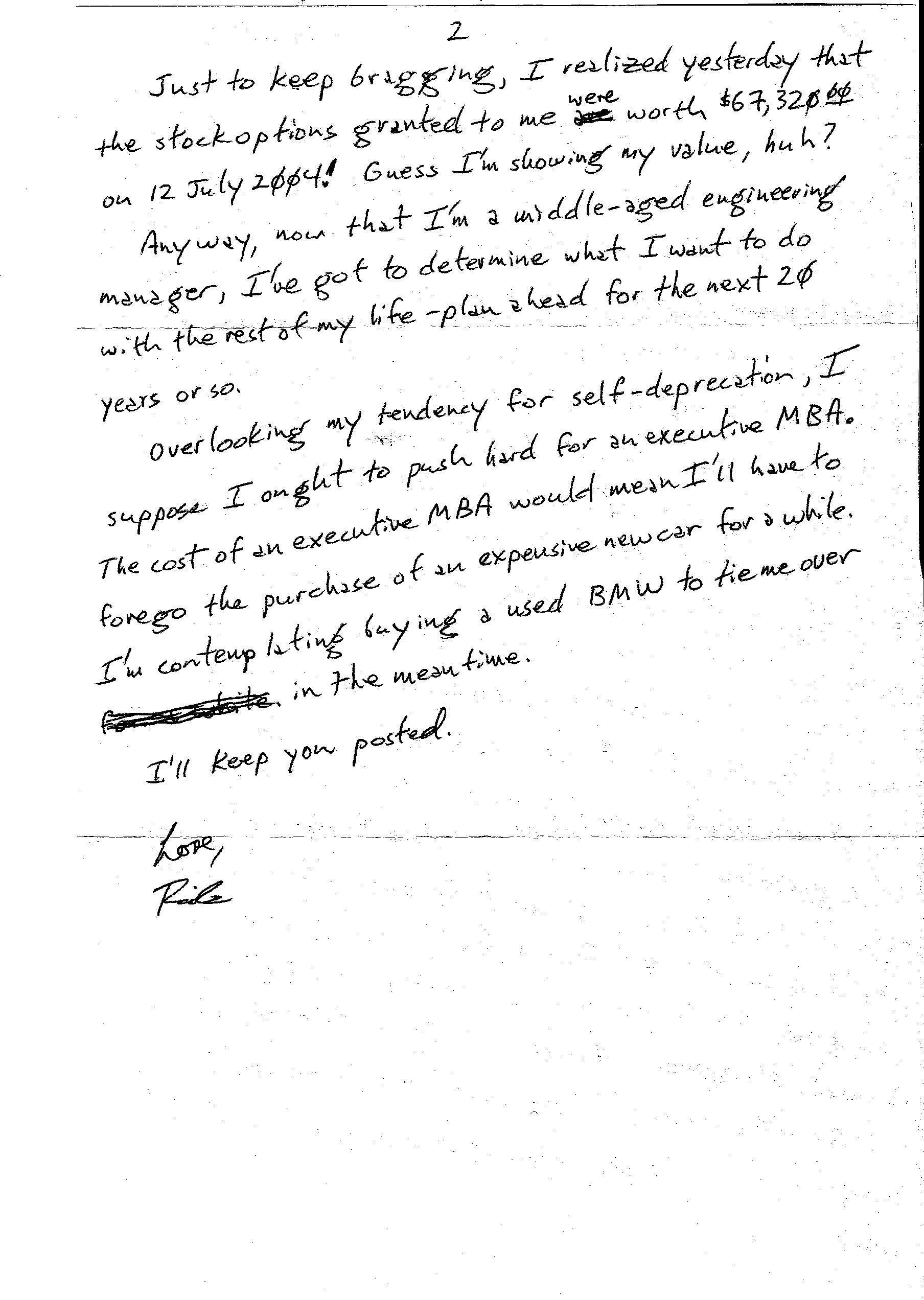
You see, I’m reading historical blog entries like these:

I support any person who wins the majority of electoral college votes for U.S. President.

But I can also call into question his motives when he puts his reelection campaign ahead of a real emergency.

You ask me, this stinks.  Mr. Obama, you are making yourself an annoyance in this case.

It is poor decisions like these that make me question your honest attempt to be a leader rather than a vote chaser.

Remember, I am one of the Undecided.

Unfortunately, I live in the state of Alabama, which is all but guaranteed to support your opponent to take office in 2013.

But those of us in swing states, we look to our President for a true vision, not just another politician gladhanding the homeless and asking to remember you come November when you blocked the way for those who are really sacrificing themselves.

You see, I thought I lived in a great country where protection of the people was not just something that happens “over there” in Vietnam, Grenada, Iraq or Afghanistan.

I expect protection of my people here and now.

But go ahead, bring the posse down to the Centennial State and see exactly who remembers you for what you did to those people whose homes were destroyed because one too many police and firefighters were diverted from their primary duties to shake your hand on primetime TV.

Hey, I’m just a regular citizen, occasionally remembering to donate plasma to the Red Cross and give clothing to Goodwill.

I’m no saint.

But I am a voter.

And there are a lot of people like me not expressing their opinion in the ocean of voices floating in the blogosphere.

We read the history of your times in the early decades of the 21st century and wondered when we were supposed to see the Rebirth of the Enlightenment cause it ain’t happened yet!

Organisational Skill Assessment

Before I compose a hand-drawn animation sequence with the Bamboo Capture graphics tablet and fill my future with out-of-date electronic debris, I finish sorting through the piles of debris that constitute the bulk of written material which emanated from this set of states of energy called me.

Watched a commencement speech by Laurie Anderson [I thought, for a public performance multimedia artist, her acting was rather stilted], which has prompted me to click my way to a website and order a copy of the book, “How to be idle,” which in turn opened my eyes to the reams of office paperwork stacked in boxes around me.

Here’s one from 03/24/98:

Kiersey Temperament Sorter Results

Your Temperament is Idealist: NF
Your variant temperament is Healer: INFP

Any Personality Test, including the Sorter is just a rough indicator of temperament.
You might want to look at different temperament descriptions to verify the results and learn about other types of people for comparison.

I+6 N+16 F+12 P+14

David M. Keirsey
keirsey@mail.orci.com

At that time in my life, the department manager was all about fitting us into jobs that matched our personalities.

What she didn’t account for was a chameleon like me, a people pleaser who assesses the wants and desires of the people around him and blends in, hiding his personality behind layers and layers of masks, revealing himself to a select few.

I told the manager I’m not who she thinks I am and she responded that was a normal reaction to the test results from an INFP like me.

Later, I learned that she gave the same response to everyone who questioned the test results.

I wasn’t questioning the test results.  I just wanted her to know that the test results indicated my exteriour in relation to giving her the test results I thought she wanted to see.

For instance, let’s say I find out my college History professor is a dopehead and adherent to the philosophy of Timothy Leary… I make sure my term paper for the class, a review of a book about socialist utopias, contains plenty of illicit drug references and hippy religious conversations.

My goals are not your goals.  My goals are outside of the time and place in which we encounter one another, so it doesn’t matter to me about the profit targets you want to reach or the edifices you want to build in your names.

Ideas and images associated with temporal moral and ethical practices are imaginary, as far as I’m concerned.

We either reproduce our genetic material or we don’t.

Everything else is fiction about how we decide to protect our reproductive organs until we’ve produced progeny that need our protection.

Me, I have only these works of art — the sketches and writings that were birthed by me with your influence, a part of the universe, upon me.

I have no genetically-related or adopted children.  The closest I got were the nieces and nephews who [might have] looked up to me as an adult member of their clan/tribe.

They are adults now.  My influence upon them diminishes as they decide how to protect their reproductive organs until they’ve produced progeny that need their protection.

One of my hidden goals was to live long enough to be a great-uncle.

I held up my step-niece’s little one-month young girl in my arms, making me the great-uncle I wanted to be ever since I was a little boy and looked up to my childless great-uncle and great-aunt who seemed to have extra spending money my parents never had, despite the great-relatives’ middle-class wages as a postman and office secretary, respectively.

I have grown tireder as I’ve aged, exercised less and eaten minimally-nutritious chemically-treated foodstuff.  I no longer want to be a model for others or someone to look up to.

It’s time to slow down and concentrate on the dreams and desires of the personality behind all the masks…

The boy who saw macabre nightmares come to life when his favourite politician of all time, Richard Nixon, resigned.

The boy who looked down at his plate of spaghetti and thought he was eating a dish full of bleached worms covered with red sauce to hide their little heads screaming for mercy.

The boy who heard the grass talk to him.

The boy who sailed the universe at night when no one was looking.

The boy who knew that stone gargoyles and cast-iron mailboxes were like three-dimensional photographs of a reality hidden inside other people’s heads, finding an outlet, me wondering where they came from before they appeared in people’s thoughts.

The boy who earned his Eagle Scout badge and went on into Explorer Scouts, later to become a Unit Commissioner, an adult role in Scouting, because he never thought he had gained his father’s love and trust, constantly seeking, seeking, seeking approval up until he reached his adult age of 18 where he received a full college scholarship via the U.S. Navy ROTC program, accepted at both Vanderbilt and Georgia Tech, but realising he no longer had to seek his father’s approval and flunked out on purpose.

I had become the man I never thought I’d be able to grow up to be.

I never was my father and never will be.

I am me.

My hidden visions, the alternate reality that I carry in my thoughts as I interact with people who seem to like to embrace the inconsistent reality of [sub/ex]urban lifestyles and belief systems, are crawling out of me and into the world in which we meet and greet one another cordially.

They are not perfect.

They are not commercialised, plastic products for mass production and insane profit margins.

I don’t even care if others steal, borrow or marginalise my work.

My work is not me but my work came from me so I associate myself with my work but I do not tie my self-worth to what I’ve written, drawn, danced, sang or sewn.

This is the only moment in which I live and I claim this moment as mine, declaring myself absolutely insane in comparison to the insanity of boxed stuff that we only call food because the pretty picture on the outside tells me it is.

Unlike Madison Avenue marketers, I don’t have to make money from my creative redefinition of ordinary life.

I can, have been and will be me, willing to use the excess capacity of our species’ social structure that produces a buffer zone outside of basic survival to express myself here and elsewhere, on paper, in blogs and wherever I feel I want to breathe what always has to be my last breath because the next one is not guaranteed.

On to the graphics tablet, building upon my first animation!!!

As an independent filmmaker said,

Nothing is original. Steal from anywhere that resonates with inspiration or fuels your imagination. Devour old films, new films, music, books, paintings, photographs, poems, dreams, random conversations, architecture, bridges, street signs, trees, clouds, bodies of water, light and shadows. Select only things to steal from that speak directly to your soul. If you do this, your work (and theft) will be authentic. Authenticity is invaluable; originality is nonexistent. And don’t bother concealing your thievery – celebrate it if you feel like it. In any case, always remember what Jean-Luc Godard said: “It’s not where you take things from – it’s where you take them to.”
—Jim Jarmusch, The Golden Rules of Filming[

Writing a short story for a book review in a History college course…

Walden Two: Just Another Religious Cult?

In the very books in which philosophers
bid us scorn fame, they inscribe their names.
——Cicero: Pro Archia XI.xxvi.

“Here it is,” I said, holding a Webster’s dictionary in my lap. “Utopia… well, there are three definitions. Which one do you want?“ I turned to my longtime friend, Jessica, and waited for a response.

She looked at me, and with a sarcastic tone, replied, “Whichever one suits you, how about that?” We often discussed the way people have the tendency to only make remarks or statements that defend their position. No one wants to be proven wrong. This time, though, I told Jessica I wanted to find out how good a utopia could be. She argued that I was not going into this project with an open mind, that I had decided long ago utopias were “nifty.” People always remember what I want them not to.

“Okay, smarty, here’s the whole definition. ‘Utopia, imaginary and ideal country in Utopia by Sir Thomas More, from Greek ou: not, no; and topos: place. One, an imaginary and indefinitely remote place. Two, often capitalized, a place of ideal perfection especially in laws, government and social conditions. Three, an impractical scheme for social improvement.’ Wait, here’s a good one, the definition for utopian socialism, ‘socialism based on a belief that social ownership of the means of production can be achieved by voluntary and peaceful surrender of their holding by propertied groups.’ That’s exactly what Walden Two is, a utopian socialist community.” I had found the definition I wanted!

“You don’t have to shout. I’m right here. So I guess you’re trying to convince me of something. First, you say a utopia is ’imaginary’ and ‘impractical.’ Then, you try to cover that up with another definition about a utopian society full of ’peaceful’ people. Can you imagine President Reagan asking everyone to peacefully give up their property and bank accounts for the good of our society? Be real.”

She’s right, I thought. There’s never going to be a…

“But don’t you see,” I burst out, “that’s what Skinner is saying. There will never be a political solution to forming an almost nonpolitical society.”

“Okay, but my point is this: do you really believe Americans are going to give up discotheques and funeral homes for SOCIALIST living? Remember, this is the land of Richard Nixon, J.C. Penney’s and apple pie. I just don’t see everyone wearing robes and traveling in buggies.”

“Very funny,” I snorted as I picked up a copy of Walden Two looking for a passage to help me out. “Listen, ’What would you do if you found yourself in possession of an effective science of behavior?’ You didn’t get the true message of the book. This isn’t a real utopian society. And, this isn’t a socialist government, either.” Jessica gave me a questioning stare. “Well, not much of one, anyway.”

“Have you decided what you’re going to write your paper on yet? I thought you were going to write about All The President’s yen…I mean, Men.”

“I was, but the professor said that 80% of the class would probably write about the same book so I decided not to do that one. I’d say everyone in the class has already read about and knows about Watergate. Too  easy.” And besides, I thought, why write a story on a great president? If I could write a convincing story on a socialist society, then I could try proving the worth of a phone—bugging president.

We sat in silence for a few minutes. I went over my notes on B.F. Skinner, searching for some supportive evidence on the idea of my paper.

Meanwhile, Jessica read the Wall Street Journal. As I looked at my notes, my mind began to wander. I asked myself, Is there such a thing as a utopia? Would anyone want it if they had it? How can there be a perfect society when we, the components of this society, aren’t perfect? Is Skinner’s ’science of behavior’ the solution to a utopian society? I just couldn’t find a reasonable answer.

“Lee,” Jessica asked, looking up from the paper, “did you know the Indian tribe that ate the first Thanksgiving dinner with the Pilgrims doesn’t exist anymore?”

Still lost in thought, I responded, “What did you say?”

“I said, did you know the Indian tribe that…”

“Hey! That’s it,” I said, nearly jumping out of my seat.

“That’s what?” was her response, angry with me for interrupting her (first) discovery. She knew I was about to go into a long monologue and she’d never be able to finish her thought.

“Didn’t you read some book about an Indian named Black Elk or some such?”

“Yeah, and…”

“Well, I seem to remember you saying Black Elk was in touch with God or some spirit. Wasn’t that his argument for returning to the tribal life, because of our losing ’harmony with God?’”

“He didn’t argue for tribal life. He just stressed the importance of a spiritual life. If you want, I can get the book for you.”

“No, that all-right. I think I have something, though. Let me find the page I’m looking for first.” I began thumbing through Walden Two. “Here it is. ‘Walden Two isn’t a religious community.’ There’s some more here somewhere… oh yeah, I don’t know if I told you but in this book, Skinner isn’t the builder of Walden Two. It’s this guy named Frazier who formed it. All through the book, Frazier is defending Walden Two against the doubts of Skinner and a colleague of his. Anyway, Frazier goes on to say, ’It would take me a long time to describe, and I’m not sure I could explain, how religious faith becomes irrelevant when the fears which nourish it are allayed and the hopes fulfilled—— here on earth. We have no need for formal religion, either as ritual or philosophy.’ Don’t you see? He’s saying the same thing that Black Elk said.”

“Uh, Lee, are you sure you know what you’re talking about?”

“Come on. You’re the one who’s studied Hinduism and Buddhism. They all have this belief in God or…what is it the call it?“

“’The absolute experience.'”

“Yeah, well, isn’t Walden Two a sort of absolute experience? I mean, according to all that’s in this book, Walden Two and the science of behavior are like the Brahman or nirvana of Hinduism. I’m not sure if Black Elk used this word but it’s like the manitou of the American Indians. They all seek to reach an ultimate goal, the perfect reality. Just think, to Christians, the reality is God and we fall short of God. Thus Christians must always try to become perfect, god—like. They believe we never will on Earth. Neither does Skinner.  His science of behavior stresses the need for improvement in every aspect of our lives. You know, the funny thing is Skinner has combined science and religion in his philosophy, and he admits this in so many words, too. Yet, he flatly denies religious beliefs in his teachings. I copied this passage out of Collier’s Encyclopedia. Read it.”

“…the aim of Indian philosophy is not a mere intellectual
apprehension of reality but an intuitive experience of it.
Emphasis is consequently put, in every system of Indian
philosophy, on the need for practical discipline. An aspirant
to philosophic wisdom must be not only intellectually alert
but also morally pure. Metaphysical contemplation is possible
only for one who has cultivated such qualities as equanimity,
self—control, and contentment. All schools of philosophy,
orthodox as well as heterodox, are agreed that a seeker after
metaphysical truth should cease from harboring a thirst for
the fleeting goods of this world, and should turn to the
eternal reality for ultimate satisfaction. When a candidate
is considered morally and emotionally ready, he enters on the
enterprise called philosophizing. Guided study, rational
reflection, and continued meditation constitute the technique
of philosophizing in India. This process continues until the
metaphysical truth is realized. That such realization can
come to one in this life is the teaching of many schools of
Indian philosophy. Even those which believe that the final
realization comes only after death nevertheless teach that he
who has received philosophic knowledge leads thereafter a
transformed life …. The integration of the new with the old
has been the technique by which Indian philosophy has grown.
In the struggle of ideas there are no vanquished. Some ideas
become dominant not be conquering others but by absorbing them
and thereby becoming richer.

While Jessica read the passage, I started realizing how far our conversation had gone. We had started talking about the possible existence of utopias. Now, I thought, we were discussing religions and philosophy. What I needed to do was explain more fully how I thought the two should be or have been combined in Skinner’s Walden Two.

“What do you think?” I asked, hoping Jessica would give me some way to finish what I wanted to say.

“Well, I studied this last fall in Religious Studies class. I still don’t see what you’re getting at.”

(Occasionally, I get people to say what I want.)

“I guess you really need to read this book to see everything I’m saying but that’s okay, I’ll tell you anyway,” I said wryly.

“Sometimes, your humor escapes me.”

“Let’s just say I feel in control right now,” not unlike Frazier in Walden Two, “and I’m in a good mood.”

“Ignoring your ego problem, what do you want to say?”

“Okay. Well, aside from the fact that a utopia is impossible…no, let me say this. I’ve been thinking about it and I decided what a utopia is. I wrote it down here somewhere…I found it. A utopia is ‘the balance between recognizing our mistakes and acting on and correcting them in the least amount of time. As long as we’re constantly striving for perfection at some maximum rate then we’re doing the best we can. Depending on what level our success rate of correcting our errors has reached, we will be in a state of utopia, not perfect, but as close as is humanly possible.'”

“Did you mean State of Utopia as in State of Tennessee?”
“NO.”

“Then what did you mean?”

“I didn’t really think about it.”

“Think about it, then. I’m not going to let you get by with a thoughtless statement.”

“Uh, well, a state of utopia is kinda like being reborn as a Christian.”

“You’re still being vague,” Jessica said sternly, displaying her impatience at my not thinking through everything I’d said.

“Okay, okay. Give me a break. Let’s see…hmm. You know, Christians consider being reborn as the highest goal on Earth…and, well, everything after that is soft of a self—improvement and recruitment program.”

“Yes?”

“Well, and this is a deep subject…”

“Very funny. I’m not in the mood for your jokes right now.”

I laughed despite her anger, “You’re too much sometimes.”

“And you’re not. I’d appreciate it if you’d finish. I’m really interested.”

“Oh, sorry. What was I saying?”

“You were talking about Christians.”

“Anyway, it seems to me that Skinner is no better than anyone else who wants to be immortal.“

“I see what you’re saying but not exactly.”

“Fine, I’m not finished.” Jessica smiled when she realized how harsh she’d been and how silly we both were about our seriousness on such a light subject. I thought about the guy is Skinner’s book who had been so objective throughout the visit to Walden Two that he refused to believe he had any feelings about it.

“Before you finish, Lee, I’m curious. Do you believe all this stuff?”

“Kinda.”

“Okay, I just wanted to be sure.”

“Whatever. Where was I? Oh yeah, my question I haven’t answered. Is Skinner advocating using people for an experiment? Yes. Is he saying he’d do it? No. Well, he has a lack of faith. As I once told you, I believe there are a few men who control the direction of our world. And women, too, of course. Anyway, my goal is either to make sure these people are going in my direction — that is, where I believe the world should be going-—or that I make sure I’m one of these people. What do you think?”

“I think you’re crazy!”

“But don’t you see what I’m saying? If, as I think you’d agree, we live in a world of predestination, then the only way I can test this belief is to try to see where I fit in the Plan. I know this’ll sound stupid but if I don’t fit in the Plan the Plan doesn’t exist. If there is no Plan then my belief is wrongly founded. I do, however, have faith in my fellow human, and that if one is told to do something, he will know whether to do it. If there’s no Plan, then I want to help make sure that I am there to tell people what is and what will be so they’ll know what to do. Am I making sense?”

“Yes, but I hope you don’t believe you’re as perfect as you just made yourself out to be.”

“No, no, no. I don’t believe I’m perfect. I never will be, you know that. But I feel I know a number of things, that together with other people, you included, by the way, we will help head humanity in the right direction.”

“If there is no Plan?”

“Right.”

“Okay, what do you believe is your place in the Plan?”

“I don’t know yet.”

“Guess.”

“Well, that the goal I choose in this life is already known and I will do what’s right in accomplishing that goal.”

“That’s it?”

“No. Also I believe these people who control the world don’t really control it. I mean they have been chosen by God, or whatever you want to call the Creator, they have been chosen to pass messages on to the people as to what to do. We all have the choice to how we’re going to accomplish that goal on the whole. Yet, there are a certain number of people in the world who have the responsibility to make sure general objectives are carried out. As you’re probably thinking, mistakes are going to be made. I feel God has left a lot of room for mistakes, and thus, of course, for improvement. Who knows, Hitler may have been one of the chosen people. In a way, we’re all responsible. In a way, it’s the preservation of the species, but it’s more than that — it’s improvement of the species for the improvement of the universe.”

“You’ve never told me this before. When did you think of all this?“

“I hope you won’t get mad but I’ve been saying it as I’ve thought it. I’ve been fighting for the right words for months, though. I still haven’t gotten all my beliefs into perspective, though I know they fit in the same picture.”

“You know something, Lee. This has been a neat conversation.”

“I’m still not finished, though.“

“How much more do you have? I’d rather wait if you’re just going to keep making things up as you go. No offense, of course.”

“None taken, my dear. No, I do have a few more definite things to say.”

“Okay but hurry. We only have a little while before we have to go.”

“Have we decided what to do?”

“I thought we were going to see ’The Wall’.”

“Oh, that’s right. Which reminds me——do you think Skinner took acid, from what I’ve said about him?”

“What do you think?“ she asked, smiling.

“Yeah, I guess you’re right,“ I replied, knowing her answer intuitively. We often communicated ideas and feelings without actual words. “Anyway, I believe Skinner sees himself as one of these chosen people. From what I can gather, I believe he is, too. Just by reading this book, I understand him to say that all religions are a science of behavior. He even said that the control is in the hands of the wrong people. I believe there are nor wrong people just those who, for one reason or another, have chosen the wrong goals in their lives. Skinner also comments that Jesus was a ’personal emissary’ sent to reveal God’s plans to put God’s people ’back on the track.’ Here’s what Frazier said in the book. Oh, in the book he as the one show said that about Jesus. Anyway, Frazier said, ’”0f course I’m not indifferent to power,” Frazier said hotly. “And I like to play God! Who wouldn’t under the circumstances? After all, even Jesus Christ thought he was God!”’”

“I hate to cut you short ,Lee…”

“No you don’t,” I said, laughing at a joke of ours. We’ve always kidded people who say “I hate to say this but…” because they do want to say it.

“Yes, but you haven’t decided what you’re going to do your paper on, and we got off track a bit from utopias, don’t you think?”

“You just brought us back, didn’t you?”

“Everything goes in a circle,“ we said in unison, laughing.

Swashbuckler, “the magazine for mad people”

While clearing off my desk to create space for a graphics tablet, I found a stack of some papers of a previous life (before marriage), including a laboratory book from an “Analytical Chemistry” class, notes from a computer programming class, material from a Sociology class and bunches of my writing, including the following copies of one of my underground magazines called Swashbuckler, a spoof of the ETSU college newspaper and poke at the ETSU literary magazine, with devoted fans from whom I accepted guest writing from time to time.

Swashbucker – Volume 2 – Number 1

Class rings and calendars

Going through my mother in-law’s drawers as we packed up her belongings, throwing away nonfunctional appliances, opened up vistas, windows into the past.

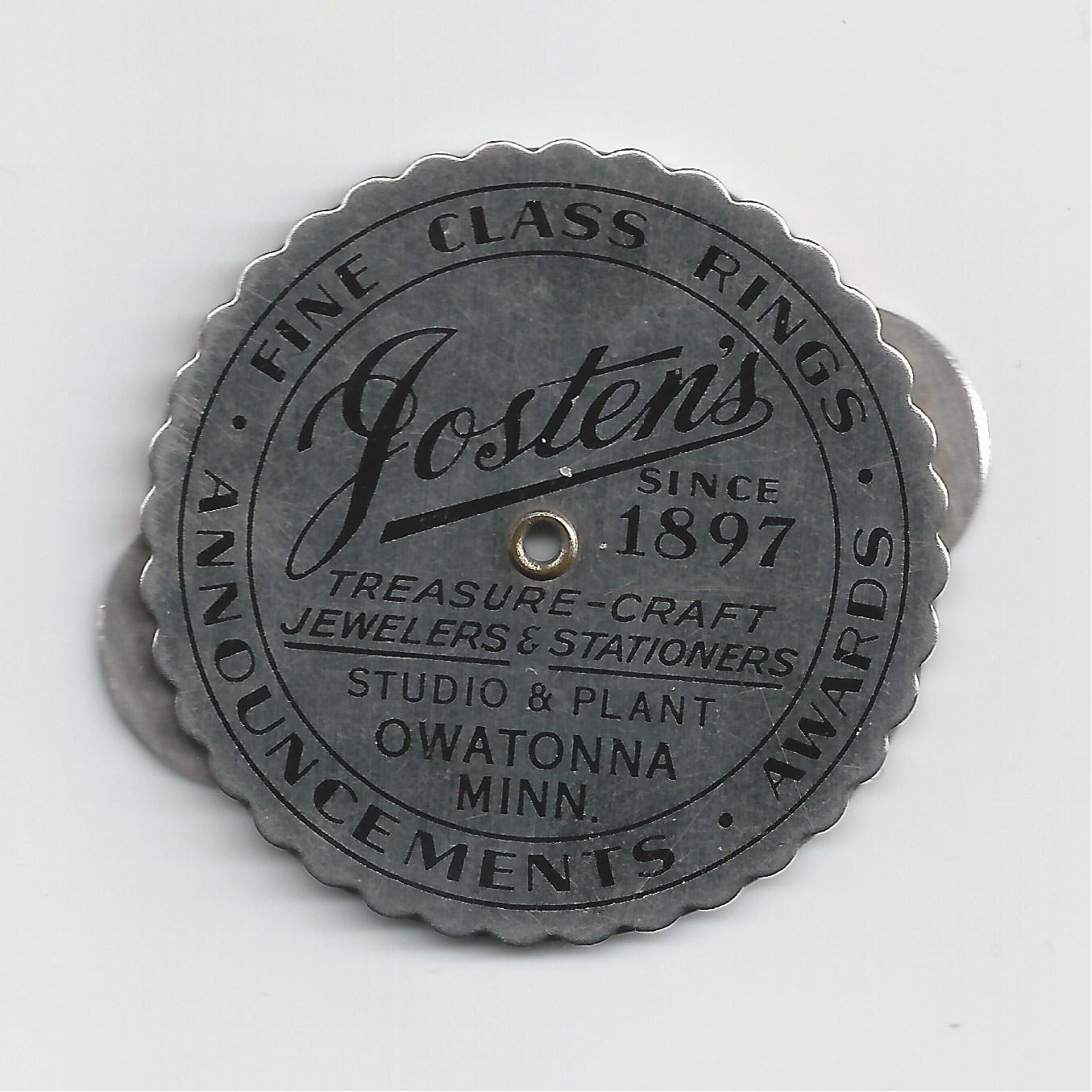
For instance, this simple pocket calendar (my favourite calendrical timekeeper format):

I suppose the year was 1946 when this was issued, a time when the U.S., Europe, China and Japan, amongst others, were mending global relationships.

In 2012, war on that scale is more a memory, a chapter in a history book, than anything else.

Now…well…we live history every day, don’t we?  Our lives, our individual lives, are ours to call our own, with many wanting our attention to make their lives seem more important than what we have planned to think and do.

Jostens, for instance, was once willing to trade a metallic perpetual calendar for a moment of your time thinking about class rings, announcements, awards and other objects that a commercial jeweler and stationer could provide not long after national rationing had reduced the frivolity of consuming items in daily living in exchange for items in daily killing to preserve a relatively peaceful way of life.

These days, the areas on this planet where we can openly play wargames amongst ourselves dwindle.

When average citizens can share their daily lives, the minute details of their subculture, without fear of oppression by bullying forces keen on preserving their wealth and prestige at the expense of the average citizen’s meager means, then what is war for, exactly?

What about a class ring?

I had a class ring once but sold it to take an older woman on a weekend snow skiing trip.

The ring meant more to my parents (who used their hard-earned cash to purchase it for me) than to me, a person who rarely sees the value in status symbols, fleeting as they are in the grand scale of our species’ history.

But without class rings and graduation announcements, I wouldn’t have this piece of nostalgia in front of me.

Somewhere, someone is wearing a piece of jewelry made of the gold from my class ring.  There may also be someone who mounted the citrine stone, once ordaining my class ring, that closely represented my secondary school primary color — orange — as well as the birth month of the girl I spent most of my time with.

There are stories to tell, observations to make, cats to feed and laundry to fold.

Yet, here I sit, imagining the year 1946, a year of promise, when the UN was formed and a year before the CIA was formed.

Syria’s independence from France was declared.

Project Diana bounces radar waves off the Moon, measuring the exact distance between the Earth and the Moon, and proving that communication is possible between Earth and outer space, effectively opening the space age.

The precursor to Sony was founded.

A Greek referendum supports the return of the monarchy. Later, George II of Greece returns to Athens.

Italy became a republic.

The World Bank began operations.

The interim government of India takes charge.

The ISO (International Organization for Standardization) starts setting standardised standards for standard bearers everywhere.

In the first Basketball Association of America game, the New York Knicks defeat the Toronto Huskies 68–66 at Toronto’s Maple Leaf Gardens.

The Casio Company is founded by engineer Tadao Kashio.

One calendar year — what a turning point!  Even 22 years later, 1967, the last year of the perpetual calendar, seems so far away sometimes…

My mother’s valedictorian speech — 60 years later…

Evelyn’s Valedictorian’s Speech

for Graduation at Everett High School

Maryville, Tennessee

May, 1952

Blount County Schools

Our schools in the past have had an important part in making our county the great county that it is.  You have heard the report from Miss Long which tells us what our schools have meant to many of our professional and industrial leaders.  It is true that we have accomplished much, but we must not be satisfied until we have made our schools meet the needs of our people.

There are many needs, but I shall discuss only a few.

It seems to me that one of the most important needs is to let our schools grow up.  The old ways of living have passed.  We are now in an electrical and atomic age.  Educational facilities of horse and buggy and dirt road days do not meet the need of our motorized and fast moving age.  Our industries have grown into adulthood and our employers are demanding that our employees have more and better training.

We must stop looking at our schools as childish toys and our teachers as baby-sitters.  We must see our schools as institutions where the lives of our youth are being molded to become leaders who will have life’s responsibilities of tomorrow.  Children are not toys to be played with, but men and women in the making.  They must be given the principals [sic] of health, honesty, moral and spiritual living.  The school environment must be such that these principals [sic] can be properly taught.  Children must not only be taught, but must see the things practiced which are taught.

In the pictures which you have seen you noticed that all lunchrooms in the old buildings were in basements where artificial light was necessary and ventilation was very poor.  In the new buildings you noticed that lunch-rooms were modern and the most attractive room in the building.  This is as it should be.  Do you know of any home where the kitchen and dining room is in the basement?  If we practice in the schools the things which are taught, teaching is much more effective.  We are taught that in order to digest our food properly we should have a cheerful and happy environment.  It is evidence of growth in our schools when we take our lunchrooms out of dingy, damp, dark basements and put them in light attractive rooms.

There is a need for school growth in our transportation system.  We teach moral, and spiritual growth in our schools, but when we get on our bus to go home, boys and girls are packed together like sardines in a can.  We have one bus which has a seating capacity of 48.  The driver says that at times he has a load of 86.  Such conditions do not teach moral and clean living.  We need to allow our transportation system to grow up so that boys and girls can ride as our adults ride.

We must see our school needs and have a desire to do something about them before our needs are supplied.

We are able to supply our needs.  We are living in one of the wealthiest and most progressive counties in the state.  In population we rank 9th.  In wealth we rank 6th.  We are rich in industries.  We have excellent farming land.  We have lumber.  We have thousands of tourists.  We have marble.  But our greatest asset is the boys and girls in our schools.  We have the material.  If we have the will we can supply our needs.  There is evidence that we have that desire.  Within recent months our County Court has appropiated [sic] an additional $3,000,000 to meet pressing building needs.  Our school should prepare students for life responsibilities whatever they may be.  We are facing many new and difficult problems which must be rightly solved or our national life, as we know it today will be in danger.  Our educational system is the key to a solution of many of these problems.  In 1941 in Blount County 1124 children entered the first grade.  In 1950 there 1307 entered.  In 1941 we had 359 entering high school.  In 1950 there were 698 entering high school.  Our county superintendent said that he expects 150 more first grade pupils next year than we had this year.  This means that we will need 5 new teachers and of course 5 new classrooms for the teachers in the first grade.  It also means more teaching material and more buses.  This is only an example to show how our schools are growing.  If our schools are to adequately prepare our pupils for tomorrow’s citizenship, these needs must be supplied.

We are building great industries where people are earning a comfortable living.  We are improving our farms so that we may have better crops.  We are building more comfortable and attractive homes and we are furnishing them with the most modern equipment.  We are building larger and more beautiful church buildings where we can satisfy the hunger of our souls with the Bread of Life.

We are making progress, but much needs to be done.  Our school buildings and grounds must be made attractive and kept that way the entire year.  We must pay our teachers so that we can get the best.  Then we must demand of them satisfactory service.  Our transportation system must be modernized so that each youth will have a place to sit in decency and comfort.

God had given us our beautiful country.  He has given our county more than 10,000 school boys and girls.  293 of this number are graduating from high school this spring.  We thank God for His blessings upon us.  We thank you public officials and our parents for your efforts on our behalf, but our work is only in its beginning.

Fellow Classmates!  We have had many difficult problems during the past four years.  But now payday has come.  In our joy let us not forget those who have made this day possible for us.  Jesus healed ten lepers at one time, and only one returned to thank Him.  Let us be like that one.

Parents, teachers, and friends, if it had not been for your patience, thoughtfulness, interest, and love we could not have come to this hour.  We thank you, and we promise to work with you in making our schools the best possible, and our county a better place to live.  We shall do our best to live in such a way that you will not be disappointed in life.

=======

NOTE: My mother’s school advisor for this speech was also a local minister.

Oh, I’m back in the saddle again…

Amazing, what a few days mean in the life of one species.

Part of the annual cycle of life here locally, for instance — the little “sugar” ants have found their way into our kitchen sink like clockwork.

And who says astrology doesn’t work — why, the Earth’s position around the Sun is directly connected to these ants before me.

And the Moon-influenced tides…well, I’m sure if I traced the ecosystem connections I could find the tidal pools in the Gulf of Mexico have an indirect influence on the movement of species in and around this domicile.

Not sure about Venus aligning with Earth’s view of its transit across the face of the Sun, though.

But hey?  I’m just a bigger ant on this planet.  What do I know?

Pop music flows through my thoughts today, from this century and centuries past.

Dreams have flowed through my subconscious thoughts, dreams that center on my dead father and his last two months in a variety of healthcare facilities.  Just another shot.  How about one more day with him?  Have we considered this experimental treatment?  Or that one?  Were there any unkind words I said through the years that weighed down his thoughts in his last days?  Did he feel I neglected him recently?

Part of the healing process, no doubt.

A new crossroads in the road in front of me — I can choose “Happiness,” “Depression,” “Anger,” “Denial,” “Remorse,” “Regret,” or the one I plan to take, “Unknown.”

A bit overgrown.  Underused.  Neglected.  Quiet.  Secluded.

In other words, the usual path of mine.

Wandering in and out of the actions of my species.  You, me, us, as usual.

Synching back to my self’s syncopated rhythms, out of step and in tune with our social changes, our connections with the universe at large.

Thinking my thoughts, no matter how strange, weird or normal they may be, sharing a few of them here.

Conforming to (staying within the parameters set by) local laws to preserve my relative freedom from conformity.

Letting subcultures be — live and let live.

Competing in the marketplace of ideas when I feel like going up against adverts of marketing machines blaring deafening sounds and spouting subliminal messages.

So many stories to be told, like the young lady whose [great]grandparents’ home in Hamilton has been transformed for a new generation of nonfamilial owners.  Sound familiar?

Or watching the tiny facial twitches on the President when he gave a[n election season] speech for the unveiling of a previous President’s portrait.  How easy is it for you to be a mind reader then and predict the future?

We learn a lot when we learn alot about Camelot on the backstage lot.

Do kids still learn to type “These are the times that try men’s souls“?

Is there proper thumb-typing body posture or mobile phone use etiquette taught in schools these days?

When technology moves faster than generational education cycles, what is a generational education cycle for, that period of time we stop children from performing manual labour and coerce them into classroom settings between ages 4 and 24, just to watch many of them drop out of the cycle to return to ageless, aging manual labour practices?

In the days when everyone is more equal to everyone else than ever before, is it still safe to refer to the peasant class even where literacy rates are a nonissue and people still want to get their hands on simple, low-paying, physically laborious work, no matter how many memes float through their language-filled thoughts?

How [un]important are the economies of geopolitical zones we call countries like Italy, Greece, Portugal, Spain, and Ireland to the global economy at large?  What if we let them deteriorate into complete chaos?  Can we not wait to see the phoenix that rises from the ashes or are we too afraid to risk our investment portfolios to find out?

Why am I sitting here instead of enjoying the pleasant weather outside?

A-ha!  Finally, a question I can answer.  Time to close down this laptop and invite mosquitoes to savour the flavour of the blood-filled organ called my skin.

And remember: a fine, country dinner shared with David and Evelyn in their house overlooking a forested creek; pulling out bushes with David, Melinda, Melinda’s father and John; sorting through family memorabilia with Dan and Fay; Robbie, Aaron, and Christopher at the Rave; Martha at Carson’s Grille; Rogersville Produce Market; Debra, Pat and Veronica at Hales Spring Inn; Pals #13; Oh Henry’s; my blog-connected friends, and more…

A Box of Old Baby Dolls

In the quick succession of events we call life, when we say one event or another is more memorable than the rest, do we take time to notice our thought processes and how they influence future events?

Have you ever heard a child request a toy, then you saved your hard-earned money to buy the toy and felt more affinity for the toy than the child ever did?

While butterflies chase each other through the woods and a bird tries to catch one of the butterflies in its mouth, I wonder about opportunity costs.

I finally read about the race called the 2012 Indianapolis 500 and the exciting story of dramatic turns of events during the race.

Instead of watching, on the day of the race I helped my wife’s extended family fix up the house and grounds that belonged to my wife’s mother and now belongs jointly to my wife and her brother’s children.  [I would have enjoyed watching the race in memory of my father but chose not to this year, my father having expired mere days before.  There’ll be other races during which I’ll recall motorsports events my father and I shared, shedding a tear or two of happiness AND sadness.  I could have spent time with my mother that day, also, but didn’t.]

My in-laws closely managed their finances, creating a legacy to give their children, including a box of old baby dolls that were purchased for my wife and a house left to my wife and her brother.

The dolls have lost all but their sentimental value, reaching the state where entering the city dump or landfill is their final destination.

The house retains both real and sentimental values, carrying on the legacy that my wife shares with the children of her deceased brother — her niece and nephew.

In the age-old, perennial complaints/comments about the way our children and grandchildren never completely appreciate the sacrifices made to give them the clothes on their backs and the toys in their room, my wife and I virtually face our adult-aged niece and nephew, wondering where they were when we needed them most to help them honour their father’s legacy.

The cycle of life…sigh…

Little time to mourn my mother in-law before my father died.

Now I have a wife and a mother to separately help not only with the grieving process but also the financial/legal hurdles that our society places in front of us to ensure the government gets its [un]fair share of carefully-tended legacies and insurance companies give out as little as they can to protect shareholders more than policy holders.

I was a great-nephew once, living less than 15-minutes drive from a great-aunt who could have used my assistance.  Instead, I was a frivolous college student more interested in having a good time with my friends.  Thankfully, my great-aunt changed her will and essentially cut me out, teaching me that ignoring a family member in need has consequences in the here-and-now, if not the afterlife.

Love has no price, no matter how painful the loss of a monetary inheritance may feel.

If we’re lucky, we innately know to give love unconditionally, buying toys for children who may never know the price we paid in money but more importantly in time sacrificed on the job to put toys on layaway when budgets were tight.

Hopefully, we teach our children that time spent together with family is more precious than objects like toys or houses.

Although toys, houses, and rooms full of antique furniture have their value, too.

I now own a suitcase full of shirts that belonged to my father, including his favourite blue, short-sleeved Hawaiian shirt.  I cherish them but I’d trade them in a heartbeat for another chance to sit with my father or hear him talk German with a stranger on the street.

I have a box of his unfinished balsa wood airplanes on a stack of boxes behind me.  It’s up to me to finish one of the planes and pass it on to his grandson who will never know the love of airplanes my father and I shared for the first 50 years of my life.  I know it’ll just be a toy airplane my nephew will probably think his middle-aged uncle poured a lot of old-fashioned sentiment into, wondering where he’ll put it in case I ask about it ever again.

That’s just the way life goes.

I sure miss my father today…one of his first childhood balsa wood planes sits a few feet away from me, gathering dust, its engine long since clogged with old fuel.  The only thing of his father I have is a U.S. Navy knife and leather holster.  I have nothing of his father’s father, not even memories.  I knew my father’s mother’s father but have nothing of his, either, except a story or two my father told — there are handmade garden tools and kitchen gear of his still around, though.

Otherwise, we pass this way once and are quickly forgotten.

Our business is with the living, our moments together more important than memories of those moments, which will fade soon enough.

At my funeral, will people say “I remember Rick’s blog and how it changed my life” more than “I remember Rick talking to me every day and how important he made me feel when he recalled something I’d told him in person once before?”

I have one foot in and one foot out of social media.  I don’t want to predict 1000 years from now whether our virtual lives will have stronger emotional impact than our physical connections but take me away from this computer and all the social network connections of the world quickly fade from my memory because I never held them in my hand, patted them on the back, smelled their perfume/cologne/body odours or noticed their unique personalities up close.

Will social media be like a box of old baby dolls one day, easily thrown in the trash, its opportunity cost and sacrificial price quickly forgotten?  If you ever used a BBS, you already know the answer.

A Father’s Wallet, A Son’s Wallet — A Legacy in Imagery

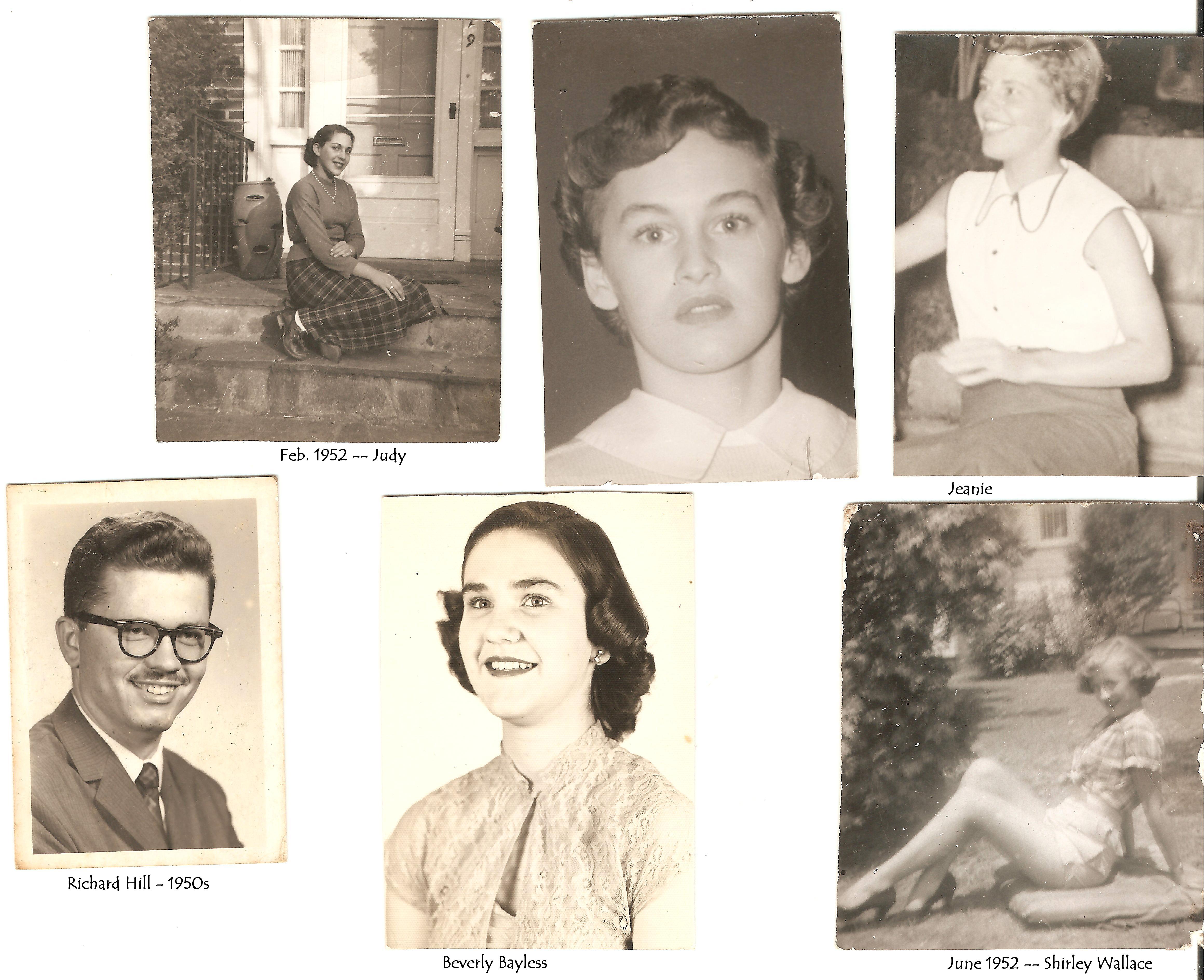
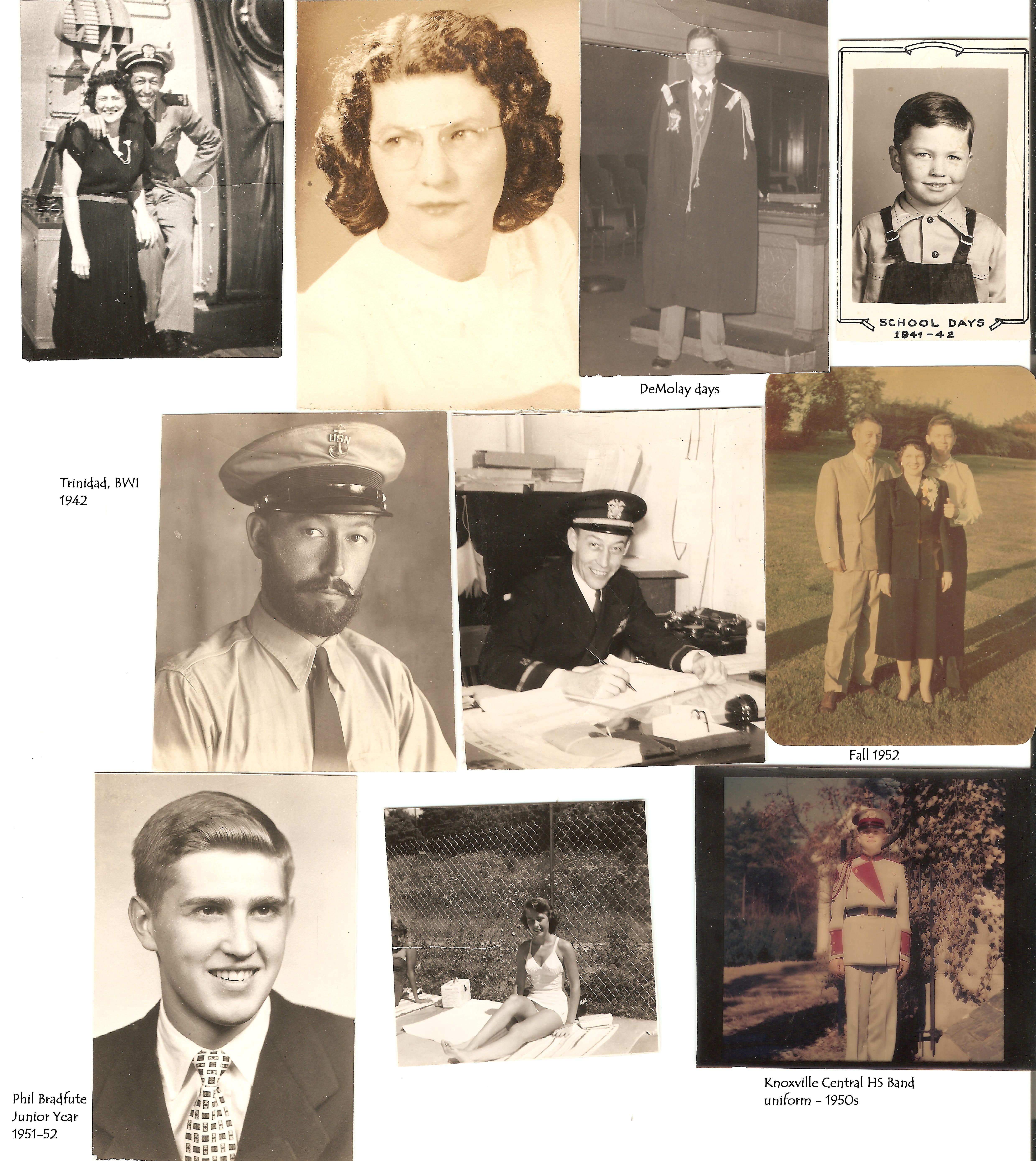
Before the days of manpurses, men carried hunks of leather which encased identification cards, family photos and whatnot, giving men backaches when they sat too long with the leather hump pushing up one side of their rumps.

Here are some of the miscellaneous items in two wallets found in my father’s computer desk — my father’s wallet and my grandfather’s (Dad’s father’s) wallet — a snapshot of history (you can decide which set(s) of images belonged to which wallet):