From blacksmiths to international banking institutions…

One benefit, if benefit is the right word, of my father and mother in-law no longer an influence on my daily thought patterns, is that my mother is not one to fret over the workings of people we know only from television images and newspaper stories — the megawealthy, the overambitious politicians, the steroid-filled athletes, the exhibitionist actors, etc.

We can live taciturn lives without concern about those outside our day-to-day circle of influence.

Otherwise, I can serve on the committees that determine who gets wireless spectrum segments, whose technological development is the de facto standard, how to protect ourselves from monopolistic predators with no social benefits, and which laws protect people or corporations more.

At the end of the day, only I can truly tell myself if I am better off today than I was yesterday, or if I’ve put myself in a position to potentially be better off tomorrow.

For example, have you ever worked with a team to develop the de facto standard for a telecommunications method like ADSL?

For those who missed the whole dialup/ADSL/cable/satellite modem portion of history class, there once was a time when people were unable to get instant access to world events such as game scores, election results or regime changes except through mass media announcements.

Then, as technology progressed, we were able to communicate gossip about world events not just by landline voice lines but also through nonvoice methods like dialup modems, which some of us might only recognise through old films like “You’ve Got Mail” or ringtones that simulate a modem sync-up tone series.

Well, I guess it’s time for me to skip all that and join the new evolution in communication technology — a smartphone with builtin WiFi hotspot.

First, I’ll have to buy the smartphone, which is, for me, right now, a choice between the Samsung Galaxy SIII and the latest Nokia 9xx to be announced on 5th September (my wife leans toward the Apple iPhone 4/5 series).

Then, we’ll take the smartphones home, test their WiFi hotspot throughput, see if it’s faster than our ADSL line or a potential cable modem, and concede defeat that we can’t outcompete the advances of technology by continuing to stick with ADSL, a telecommunications method that a team I once worked with at Conexant (the descendant of Rockwell Semiconductor in the days of the Hayes modem and the AT command set) put into a play several products including a residential gateway.

After all, it doesn’t look like I’ll ever get the gigabit throughput that Chattanooga residents enjoy, let alone the speed that AT&T U-verse promises but hasn’t delivered to my household here in the so-called advanced metropolis of the Rocket City, a/k/a Huntsville, Alabama, USA, Western Hemisphere, Earth, Orion–Cygnus Arm, Milky Way galaxy, Local Group, Virgo Supercluster, Observable Universe.

In retrospective, all of this seems a bit slow, doesn’t it?

Well, we’ll leave that chapter in this story for another blog entry…

What I went through with my mother in-law in 1997…

…I go through with my mother in 2012.

My mother in-law was 80 years of age when her husband died.  My mother was 78 when her husband died.

In both cases, as in any longterm relationship between two people, the survivor learns new forms of daily decisionmaking.

My mother in-law depended on her now-deceased son and living daughter (my wife) to help her make decisions after their father died.

My mother depends on my sister and me to help her make decisions after our father died.

When my father in-law died, my wife was almost 35.

When my father died, I was 50.

In between: fifteen years of wisdom gathered through life experiences, some shared between us, some accumulated individually.

Fifteen years of social changes/progress, including new technology (think about how much the Internet has changed in 15 years), new businesses, failed businesses, climate change, fashion cycles, pop music tastes, entertainment choices, medical science advances, etc.

Are we more or less tolerant of Iranian atheists/humanists?  Liberal Quakers?  Non-heterosexual relationships?  Physical/mental challenges?  The unemployed?  Cute cat videos?

Is there room in your life for a late night TV talk show host with a robotic skeleton and cloth-horse costumed actor(s)?

Would there have been such a creature 15 years ago?  Could he have been a reformed Scottish alcoholic comedian?  Do such creatures exist in real life today?

I learned a new phrase today: conformity to tomorrow (from book, “Without Apology: The Heroes, the Heritage, and the Hope of Liberal Quakerism” by Chuck Fager [which I read, quickly, in the book section of Unclaimed Baggage Center]):

“Conformity to tomorrow: …consists in a moderate opposition to the existing political power, together with the espousal of the ideas and doctrines of the most sensitive, the most visionary, the most appealing trend in society. This is a trend which, from the sociological point of view, is already dominant, and is the one which should normally be expected to win out….In this way, the political stand has the appearance of being independent, whereas in reality it is the expression of an avant-garde conformism.” (Jacques Ellul, a French Reformed theologian and sociologist, 1972A, p. 123.)

I would toss musical acts like Rage Against The Machine, political groups like the Tea Party and Occupy Wall Street, and economic movements like the EU handling of the PIIGS into the realm of avant-garde conformism, as well as most official social protest groups not included in terrorist lists for “wanted: dead or alive” drone attacks.

We always have to have enemies toward whom we formally direct our confusion/fear-based hatred.

But, as usual, I digress.

Earlier today, at a roadside restaurant called Carlile’s in Scottsboro, Alabama, a town where a plentiful plethora of people met for camaraderie and shopping bargains, my wife and I held a wonderful discussion with Autumn, mother of three boys aged 7, 6 and 2, the first taking the role of the responsible eldest (“Mom told you not to do that”), the second a quiet child who puts up with the physical shenanigans of his two brothers, and the youngest, the rowdiest one of the bunch.

Autumn, raised by her grandparents, lost them both nine months apart five years ago.  The emptiness inside is slowly, very slowly, wrapped up in new friendships and new experiences we call the passage of time.

When she wants to turn to her grandparents for guidance, they are not there and she feels an instant pang of pain.

Although she has a beautiful tattoo of a heart on her arm where every one of her three boys first rested and for whom she tattooed their names, she would never tattoo the names of her grandparents or the name of her husband on her body because the reminder of their losses, in plain ink visible under skin, would be too much to bear (beauty is not the only thing that’s skin-deep).

She, like all parents, believes deep down that her kids will outlive her, their futures bright.

To those who’ve lost their children to congenital conditions, I give you my sympathy.  No one wants to survive the death of offspring with a promising future.

My wife outlived her parents and her only sibling.

I have outlived my father but not my mother and my only sibling.

As this storyline grows more complicated, my life and the lives of my family members are intricately intertwined.

Not a loss, not a gain nor a zero-sum game is life.

The sets of states of energy are constantly in flux.

Every waking moment is an opportunity to learn.

Is new technology an enabler of your relatively expensive entertainment addictions or an avenue of opportunity for increased wealth?  Does it increase the credit or debit side of your account ledger?  In other words, do you go into debt to play games and watch videos?

These and other questions lead us to thought trails about the costs and benefits of a globally-connected economy, where plenty of leisure is available to the masses.

If this laptop computer and these blog entries are using up CPU cycles for the sole purpose of entertaining myself, is that okay?

What about the urgency to act, the desire to change our society significantly so that spare CPU cycles are used to ensure survival of Earth-based lifeforms here and elsewhere as long as potential energy states are available to support them in this part of the universe?

Does it matter if the majority of our species believes in self-centered activities?

What are a few decades compared to 1000 years?

What is 1000 years compared to 200 million?

Can we really know the future, no matter how much we bunch together to conform to one vision knowingly, unknowingly, voluntarily and/or coercively?

All for the sake of family, whatever that means to you/me/us?

Overheard in a theatre

Sadly, I guess the times of my passive-aggressive father are over.  In his day, I doubt we would have heard someone make such a bold, impolite, immoral statement as, “Well, yes, Bill Clinton cheated on his wife, but he was the U.S. President, for Christ’s sake.  Of course, it makes sense that he still represents the Democratic Party.  ‘W’ was a whore man himself before he conveniently found Jesus and cooperated with the Muslim Saudis in selling out American oil interests.  He ‘conveniently’ still represents the Republican Party, too.”

So many cynical observations about promiscuous politicians and teachers, so little time to tell them.  Thank goodness, the film “The Campaign” was enough to tie me over for a while and fill in for such a bleak political election campaign season here in the ol’ US of A, where neither of the two primary candidates for U.S. President can talk about why the American economy is doing so poorly due to their being owned by the same worldwide corporate lobbying interests.

The last two paragraphs are examples of the influences on my youth, which I am trying hard to remove from my set of operational memories.

It is while we prepare the storyline to ease over to another planet (thanks, in part, to the friendly folks at Need Another Seven Astronauts (NASA)), where we will talk about life in the universe that does not center on our species, as puny as it is in comparison to the history of helium or cilia or syphilis/gonorrhea.

I am in a mischievous mood, wanting to make fun of others for the sake of making fun of others with no purpose in mind other than to entertain myself here, rather than in my thoughts alone.

Have you ever sat in a dark theatre, felt a constriction in your chest, the left side of your body going numb for just the briefest of moments, and wondered, “Is this it?”

I can feel it again right now.  Maybe it’s just a muscle twitching after I swept the driveway yesterday.  Or indigestion.

I hope so.

I really would like to sit and laugh quietly for many days longer.

If not…well, it was a good ride.

“It.”  Hmm…

“It” is nothing more than my life, a diversion for other sets of states of energy programmed to reproduce.

I never reproduced.

Scientific studies indicate that reproducing at my age is a recipe for heightened risk of autistic children who would drink out of plastic bottles made with BPA and filled with high fructose corn syrup, take antibiotics and become obese, and, finally, succumb to the onerous labels of “BIG” — BIG farms, BIG Pharma, BIG…you get the picture, if you subscribe to the notion that it’s an “us vs. them” world.

I never met BIG.  I don’t know “them.”  They are just words to me, diversions from a goal one gazillion years in the making, looking back 1000 years from now to see what we’ve accomplished.

Milestones, not accusations.

Actions, not passive disagreement.

A colleague of my father jokingly called my dad an imaginary engineer because of his master’s degree in industrial engineering (even saying so to my father a few days before he died), which always irritated my father.  Now, an industrial engineer is in charge of the largest company in the U.S. by stock value — Apple.  Who gets the last laugh?

That’s the thing.  If this moment is my last one, do I want to have my last thoughts focused on a clever joke or expanding the life of this planet into the cosmos?

I don’t want to spin a passive-aggressive take on a reworked warmed-over punchline.

I sure don’t want to be remembered for simply being clever.

I don’t want to be remembered at all.

This universe is it, all I’ve got, the only verifiable theory of life as I know it.

If I don’t give my minute/tiny/invisible/forgettable place in life a serious thought, who will?

If I don’t have my father around to argue with that the world is not falling to the Nazis and Communists all over again, to whom do I direct my attempt to make peace with my father and our generational gap?

If I don’t have my mother in-law around to convince that the United States is not about to go into another Great Depression (or worse) because a man who is too young (and black) is the U.S. President, to whom do I say that it’s not just white people and old people who care about the American Dream of [democracy and/or capitalism] and freedom for all?

It was a tough decision to say I would never vote again because I care about the higher ideals of our country and our world.  The everyday arguments of this time, of my generation, are perennial — that’s why I don’t care about them.

My visions are hundreds and thousands of years in the making, carrying on a long tradition passed on to me by others, regardless of the current form our organisation of life (i.e., civilisation) may look like.

War and the desire for peace are perennial.

Using available resources until they are depleted and worrying about the consequences are perennial.

That’s why I don’t care about them or the ways we beat our chests like good primates in unison about our alignment with issues such as these.

In the big picture, our species is unimportant.

We aren’t going to agree with the big picture until something else comes along to change that view.

Even then, we’ll argue that our ancestors — the keepers of our origin stories — were right and we’re the center of the universe.

So be it.

You can keep perpetuating those stories in whatever form you like, if it makes you feel better as you procreate.

As long as you keep in the wee spot at the back of your thoughts that you’re working for a larger cause than our species.

I use “cause” cautiously and facetiously because it implies more than what a single blog entry in a continuous storyline is supposed to be about, bringing up imagery of the influences upon my youth again, when this is solely about the way the universe works non-anthropomorphically.

Enough for now in this chapter.

More as it develops…

Hazel Green, Alabama — McCafe

Personal note: my wife attends an event at our niece’s house presumably about clothes or jewelry. Meanwhile, I sit in a McDonald’s restaurant, looking at dead flies on window sills and listening to an old man tell his family, “I am NOT moving back to Alabama. You cannot have my car. These are my keys.” while he charges his cell phone that he hooked up to a power receptacle hidden high above an insect zapper he unplugged.

What is the definition of crazy?

Is it the kid using a metal stake to compress the garbage so he doesn’t have to empty the rubbish bin for a while, his McDonald’s uniform askew, his tie hanging loose?

Is it the woman leaning against the wall outside one of the entrances, smoking a cigarette and chatting on her mobile phone in the afternoon August heat?

What about the people speeding by on the highway?

Or me, drinking an iced coffee after eating a dipcone (soft serve ice cream served in a cake cone and dipped into chocolate)?

What about the way Ballmer ran Microsoft into oblivion? Or the way Bill Gates is trying to make up for years of predatory business practices by attaching his name to the reinvention of the toilet?

I could be making notes about comets or Martian rovers.

I could make a list of people to thank.

Instead, I type on a mobile Bluetooth keyboard for iPad, reinventing myself, reiterating the importance of computer connectedness and listening to a family discuss a boy’s future school performance because his father (grandfather?) has issues about moving back to Alabama to care for his wife (daughter?) and [grand]child.

Nearby, the Tillman D. Hill Public Library.

Closer, a live housefly on the tabletop looking for food.

Across the way, a computer for people to request a job at McDonald’s: “Apply Here / Aplique Aqui — This Employer Participates in E-Verify”.

And I have 45 more minutes to entertain myself until I drive back to my niece’s house to pick up my wife.

These are the salad days, the good ol’ days, the golden years, the midlife crisis years…watching a young family load their kids in the Chevy Silverado truck after having loads of fun in Playland, the father wearing a set of girl’s necklace beads because his little baby is about to fall asleep in his arms, the mother loading the other daughter in the backseat.

We live and then we die.

She drives the truck. He drives the Pontiac Trans Am.

One of their children does not look like it belongs to them but they seem to love each other.

An older couple, he wearing an “Anderson’s Dozer Works” blue work shirt, she using a cane, hobble to their Buick Roadmaster in the handicapped spot.

The days of our lives tucked in between birth and death, not far from the border between Tennessee and Alabama, longtime college football rivals.

What more can we ask for? What more do we want, able to drive and talk on the mobile phone at the same time, arguing in one moment and laughing together in the next?

“I’ll put your face all over facebook, MySpace, Google, the whole Web, if that’ll make you feel better!” The old man laughs and his family joins him. “Of course, I don’t have Internet at home.” They laugh some more. “I’ll sue everybody that makes fun of you who could have seen you if I had Internet at home.” They continue laughing, one of them saying, “Well, you’re on the Internet now. Quick! Send someone an email!” They giggle. He guffaws, “I swear, I’m gonna put it on facebook!” The boy states, “They’re gonna call me names,” and storms off to the bathroom. The man: “I’m gonna pull it up on Yahoo!” The woman snickers. “New email!” he declares as she stands up to look. “See!” She leans over and breaks into a broad grin. “See, I’ve posted pictures of last Thanksgiving. What’s there to make fun of?” The boy returns and rolls his eyes: “That!!! You can’t put those on there!” nodding at me as he leaves the restaurant to get in his Lincoln LS sedan and roll down the windows, playing country music loud enough for me to hear.

They calm down. No more arguments about returning to Alabama. A family makes up in a fast food restaurant, at least for the moment.

The man raises his voice, over the protest of the woman questioning what he’s posting next. “By God I do, NOW!!!” She gets ready to go. “See, you can put all sorts of stuff on facebook. Look what he’s put up there on his own. Birthday party. You’ve got to pay attention to what he puts on there. Maybe you should. Maybe you should. Security issues start with facebook and go from there. Anyone can see where you’re going and where you’ve been. See, here’s stuff from when he was 12. Now everybody can see pictures of everybody. Somebody could come in, slap him across the face and another kid take a picture from across the parking lot, posting it for the world to see. What will they think of that?”

She shakes her head. “They won’t do that. I’ll be back.” She walks out to the Lincoln, lights up a cigarette and drives off with the boy, leaving the man to work on his laptop and talk on the cell phone.

Time for me to leave, a little early to pick up my wife, but well within the range of conversation of an adult man and adult woman having a little fun with a teenage boy about pictures of his offline life in perpetuity on the Internet, while learning from each other what’s important in the boy’s online life.

Are we alone?

Talking with a friend in south Florida about some of her clients, one of whom she nicknamed “Sybil,” and, for the protection of many I won’t detail here (but suffice it to hear that multiple personality disorder may be more myth than fact, except in rare cases like this one), I wonder what to do next.

My grandparents built a house in North Port, Florida, in 1964.

So did my next-door neighbours (built a house in Big Cove, Alabama, in 1964, that is).

My grandparents and my father are dead.

So, too, one of my next-door neighbours.

My mother considers selling the house in Florida.

The surviving next-door neighbour was convinced by his real estate agent to sell his song for a dance, or less, and he did.

From the death of his spouse to the sale of his house in less than a month.

Makes me question the integrity of the real estate agent (the agency is Keller Williams — more on that later) and/or the sanity of my neighbour.

My mother has been advised not to make major life decisions until six months after her husband is dead.

Someone didn’t tell my neighbour the same thing.

Sure, he wants to be closer to his children and grandchildren.

I know he’ll be lonely without his dear wife.

My wife and I will miss seeing her in her yard, dressed in long-sleeved shirt and long pants during the heat of summer, a beekeeper’s headgear protecting her from sun and insects.

I am winding down from a once-in-a-decade holiday trip with my wife a few months after my father died, after which I spent a week with my mother and sister going through the house in Florida where my grandparents savoured their retirement years year-round and my parents enjoyed their retirement years as snowbirds.

Meanwhile, people have killed each other by the hundreds, if not thousands, thousands of babies have been born, businesses opened/closed and other aspects of our planet’s lifecycle — killing and eating each other to survive — moving along as it always has and always will.

In the meantime (why don’t I say “in the happytime,” instead?), I examine historical documents to prepare myself for a future filled with humour, satire, comedy, tragedy and words.

Last night, I had a dream.

My mother, sister and I sat down at a large table.  Two or three other large tables were spread around the restaurant where people were sitting down in order to get a good view of Dad opening his birthday presents.  Several people walked up and described the special, unique gift they had brought/made and hidden in a back room so my father wouldn’t see when he walked in for the surprise birthday party.

I looked through the gifts, marveling at the personal touches so many people had put into their gifts, feeling a sense of anticipation rise in me at seeing Dad come back and open so he would know how special he was to so many in his life.

Then, the realization of reality crept into my dream world and I woke up shaking, my neck and back muscles tense, my face twitching.

Dang it, I miss Dad!

My subculture wants me to believe Dad is out there somewhere watching over me (i.e., heaven) but I don’t care about some imaginary space that defies gravity.

I want to share time and space here with my father now, talk about the U.S. Navy material I found in his father’s (my grandfather’s) sea chest, ask him what he remembers about growing up during WWII, go fishing one more time, hit golf balls into the park and retrieve them, look at new sports cars and wonder how people can afford them.

But life doesn’t work that way.

We are born, maybe get married, maybe have children, and then we die.

I have lived into that part of the lifecycle that I never wanted to face again after my best friend/girlfriend died when we were 10 years old.

Forty years later, I’m facing the same emotions I couldn’t handle as a preteen, when I dove into my Boy Scout training, schoolwork and marching/concert/jazz band practice to hide the mess of thoughts inside me.

Where do I hide now?

Am I alone as I feel?

Do I even exist?

Does any of this matter?

Today is an imaginary time period created to account for the rotation of Earth on its axis while tilted.

Tomorrow is another such imaginary time period.

I shall let my imagination take me into a world of stories where writers pluck plots and characters, harvesting them at just the right time to entertain themselves (and, perhaps, others later).

Storytelling is my comfort food, a habit I turned to when I was 10 and didn’t have anyone to share the pain of losing my girlfriend with, how I compensated for the fact that the universe is neutral to my existence as a temporary conflux of states of energy.

In the near-term (both time and space), we appear to exist through experimentation from birth that shows an environment of similar groups of states of energy responding to us.

From a great distance, we do not exist — we do not move this planet through our individual actions, although collectively we influence the condition of the planetary environment around us.

Most of us only care about our local conditions, our circle of influence.

But if I don’t care, if I see conditions — past, present and future — that are, practically, independent of the existence of me, what then?

The story continues, with or without me…

Not all my heroes were cowboys…

A few weeks ago, while driving back from north Virginia, where my niece, Maggie, officially graduated from secondary school, I took my mother to dinner at the Martha Washington Inn in Abingdon.

We stopped in the quiet town to reminisce about my father’s days there as an extension agent and assistant professor for Virginia Tech.

His office was located at the Inn.

A block or so down the street is Barter Theatre, a venue for the performing arts.

I can remember more than one but less than a dozen times I took a date to see a play or musical at Barter Theatre, driving up from northeast Tennessee to show my female companions a bit of culture common to most cultures (but rarely, agar plate cultures).

As president of the Drama Club in our secondary school (for two years!), I felt it was my duty to support the arts.

The Barter Theatre presented mainly light entertainment such as, if my memory serves me well in this moment, I Do! I Do!, a musical that features the song, “My Cup Runneth Over.”

Right now, I cannot remember the names of the performers.

However, we were taught that more than one famous performer cut their teeth on the stage of Barter Theatre:

Patricia Neal, Ned Beatty and to tie this blog entry to a recent death, Ernest Borgnine.

The world is small.

On television, I watched Ernest Borgnine and his crazy cast of characters turn the U.S. Navy into a farcical front for jokes about bureaucratic nonsense, humour during wartime and the general state of the American sitcom exhibited in “McHale’s Navy.”

We all start somewhere.

If an ugly mug like Borgnine’s can become a nationally-recognized figure, anyone can.

We celebrate beauty in women with “Miss [name your region]” contests all the time.

How often could a woman proudly say she made the Ten Ugliest Faces of Hollywood list?

Borgnine did, along with Karl Malden and many others.

When they did, it made me smile and think, “Well, if they don’t care about their looks, why should I?”

You don’t have to be a cowboy or handsome to be successful.

Persistence is the key.

That, and an outstanding personality.

I have both.

That’s why I’m here, remembering my mother, my father, Barter Theatre and the actor who went from Abingdon to Hollywood decades ago, Ernest Borgnine, who became one of my heroes, both local and national, along the way.

My father was my first hero and will be my last.  Borgnine was one of many important ones in-between.

May we laugh with our last breath or die trying!

Domesticated Animals

What is one gallon (3.75 litres) of water worth to you?

In many parts of the world, a toilet is composed of a seat, a bowl full of water and a reservoir of water.

While your derriere warms the seat, you eliminate waste products (e.g., urine, feces) into the bowl and then use a levered mechanism to flush out the bowl, replacing its contents with the water in the reservoir.

A simple procedure.

Some of us are trained to drain the bowl after every use.

Some of us are trained to conserve water and drain the bowl after more than one use.

Some of us have no idea how to use the toilet, growing up with other means of eliminating waste — a hole in the floor, a hole in the ground (over which a wooden hut is built and then called an outhouse), writing your name in the snow, doing your business on the grass and covering with leaves, etc.

I grew up with unisex toilets in the home and gender-based toilets (bathrooms or water closets) in public buildings.

I don’t know how the people who avail themselves of the facilities designated for women in public places use the toilets.

In the unisex toilet at home, our parents taught my sister and me to flush after every use.

In the men’s room in public places, I have observed over the years a variety of behaviours, from clean, flushed toilets to bowls overflowing with waste and toilet paper.  [We have a toilet in the men’s room called the urinal but that one is eliminated from this discussion to focus on the more universal product for receiving our waste.]

When water is scarce, a gallon of chlorinated/fluoridated water mixed with waste products is as precious as some metals.

In that situation, what is proper is not prudent.

However, where water is abundant and treated water is inexpensive, let’s be courteous to those who’ll use the toilet after us and flush our waste away.

Surely, we’re educated and domesticated enough to handle that simple a task, eh?

There are plenty of other public places of your life to demonstrate your barbarian behaviour to better advantage.

Deep Secrets of the Subterranean Basement

In my parents’ house is a partially-completed basement, one section meant to be a couple of bedrooms turned into a big storage area many moons ago.

This morning, my mother calmly asked me to look at the heat pump system air filters to see if they needed changing.  The one in the upstairs area was caked with dust, not changed in months.

A quick trip to Walmart later, I changed the upstairs filter. Lo and behold! we have cool air circulating throughout the upper floor of the house.

Meanwhile, in the darkest reaches of the basement is an air intake vent hidden behind piles of stuff from my old bedroom, long since converted into Dad’s office upstairs.

Mom pointed into the middle of the spider webs and said, “Son, can you reach in there and see if the air filter needs to be changed?”

My life for a clean air filter?  Mom, is that all I’m worth to you?!

As I bargained with the hungry arachnids for a few seconds to disturb their threadbare threads, I nearly stepped on a box covered with contact paper from the mid 1970s.

Could it be the lost artifacts, the treasure of my forgotten youth?

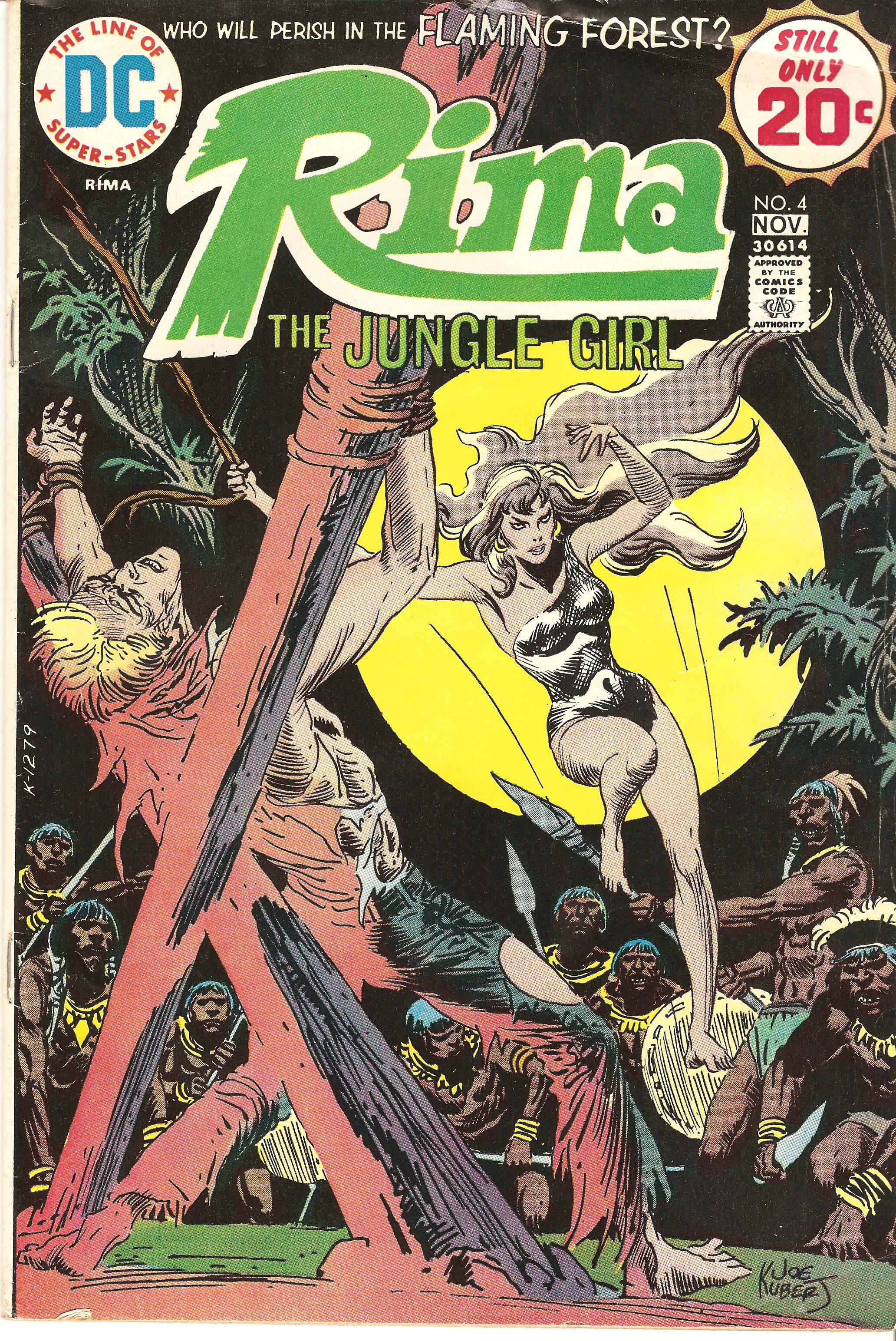
THE BOX OF COMIC BOOKS I THOUGHT MY PARENTS HAD TOSSED OR MARKED DOWN IN A GARAGE SALE?????

Yes!!!!

Ahh…I myself had bought this box of illustrated tales, both comical and horrible, at a garage sale for the terribly high price of $2 or $3 decades ago.

My parents scoffed at paying such a fortune for mere paper covered with colourful drawings and stories of questionable morals.

Yet, I persisted and they caved in.

Here, for your viewing pleasure, is the second cover of one of the many dozens, including Beetle Bailey:

Meanwhile, a spider bite is itching…what evil lurks in the damaged hearts of regenerating men!

German private industry vs. American military industry transportation choices

The beauty of a brain in retirement is letting one’s thoughts wander.

For instance, as I was driving back and forth from unrestricted territory down a long road into a restricted American military base, I looked around me.

I remembered when I used to commute via airplane and taxi from the U.S. to Germany on business.

In Germany, I noticed that some companies, such as Fujitsu-Siemens in Augsburg, offered large covered parking areas nearest buildings for people who commuted by bicycle or motorbike.

Here in the U.S., at the local military base called Redstone Arsenal, those who carpool (more than one person per vehicle) are allotted spots to park nearest one of the buildings but motorbikes were allotted uncovered spots in the middle of the carpark.

Which got me thinking…

When are we going to design our infrastructures to optimise the mix of devices we use in our transportation systems?

In other words, if we make token efforts to promote efficient means of transportation, then people will continue to pay for the convenience of inefficient methods.

Only when we make it difficult and/or inconvenient to use relatively expensive transportation vehicles (cars/trucks/SUVs) will we change our habits.

For instance, what if people had to use mass transit to get onto a U.S. military base, with tiny carparks and large bicycle/motorbike storage facilities located at mass transit pickup points throughout walk/bike-friendly [sub/ex]urban neighbourhoods?

Would we encourage people to walk or bike to work rather than the majority piling into their one-person occupied metal-and-plastic contraptions lined up one-after-another in traffic jams morning, noon and night to get on the base?

Would we worry less about the dangers of large carparks full of uninspected vehicles on military bases?

Would we find better ways to spend our time than wait on crowded roads for our turn to drive through traffic-light controlled intersections?

Would we have more time to spend with family before and after our workdays are done?

Makes an argument like the one cited here at wired.com moot, doesn’t it, when you eliminate the need for the motorised/EV transportation devices altogether?