In Honour of Tonight’s 2013 BCS National College Football Championship!

Some quips and quote from “The Wisdom of Southern Football”:

  • “When you make a mistake, admit it;learn from it and don’t repeat it.” — Bear Bryant
  • “Nobody wants to follow somebody who doesn’t know where he’s going.” — Joe Namath
  • “Winning isn’t getting ahead of others.  It’s getting ahead of yourself.” — Roger Staubach
  • “What does it take to be the best?  Everything.  And everything is up to you.” — Emmitt Smith
  • “Leadership must be demonstrated, not announced.” — Fran Tarkenton
  • “Winning is not final.” — Don Shula
  • “There are no office hours for champions.” — Paul Dietzel
  • “An angry football team is better than a confident one.” — Pepper Rodgers
  • “Yesterday is already a dream and tomorrow is only a vision, but today well-lived makes every yesterday a dream of happiness and every tomorrow a vision of hope.” — General Robert Neyland’s Favorite Quotation from the Sanskrit
  • “Coach a boy as if he were your own son.” — Eddie Robinson
  • “I love the thrill of getting off a pass just before getting smashed.” — George Blanda
  • “Alabama fans love [Bear] Bryant and tolerate the rest of us.” — Gene Stallings
  • “You never know what a football player is made of until he plays Alabama.” — General Robert Neyland
  • “You never know how a horse will pull until you hook him to a heavy load.” — Bear Bryant
  • “One guy can’t do it by himself and it’s a matter of recognizing this and giving others their share of the credit.” — Archie Manning
  • “The first thing any coaching staff must do is weed out selfishness.  No program can be successful with players who put themselves ahead of the team.” — Johnny Majors
  • “There ought to be a special place in heaven for coaches’ wives.” — Bear Bryant
  • “The game is the star of the show.  My only job is to help the audience enjoy it.” — Keith Jackson
  • “When all is said and done, more is said than done.” — Lou Holtz
  • “I never get tired of running.  The ball ain’t that heavy.” — Herschel Walker
  • In 1903, John Heisman observed that, “Successful coaches are few and far between, and it is small wonder they command salaries practically without limit.”

City mouse vs. country mouse — part/chapter quadrillion

Staring at the ceiling, turning the popcorn paint into comical faces and lunar landscapes, I realised for the umpteen millionth time that all around me was a figment of my imagination.

I was at peace.  I was wide awake, unable to sleep, no thoughts troubling me or racing through my mental slideshow.

Sitting here with you now, both of us looking at this electronic mumbo-jumbo with an inkling of understanding, interpreting the bits and bytes as if the contrast between lighter and darker pixels implies meaningful symbols representing the usual letters, words and sentences, we share a common configuration, a gentle push, of our imagination we call the [American/Canadian/Australian/x/y/z] English language.

To complete the resolution, the incorporation, the final weaving, the last brick on the edifice in which the cornerstone of my youth was laid while I was an unnamed being in the womb, I look one last time at the joint alignment of our imaginations we call religion, or emotion-based belief set.

We have already examined the definition of “emotion,” have we not?

EMOTION:  The flow of chemical/molecular concoctions that flow through our bodies to enhance our experience of the moment, whatever that experience and moment may entail.

Some may use the ruse of religion to define their daily actions, like a horse that needs blinders or a racetrack that uses bumpers/rails to keep vehicles safely on the designated course.

In the realm of me-vs-you, us-vs-them, etc., I always think that others (who probably think the same of me) need blinders or bumpers/rails to keep them oriented in the same general direction that the subculture in which they choose to live is going.

What about those who don’t want blinders or don’t want to stay in the subculture in which they live?

I will not generalise their imaginations actively at work in contrast to or against the subculture in which they find themselves.

Rarely are we living under the influence of one subculture.

Some easily accept, without question, the teachings of their elders and peers.

Some do not.

Why some do and some do not is a study that may start at the DNA level.

When I stared at the ceiling in near-darkness last night, happy with the state of the universe at that moment, I asked myself why I was happy.

What made me, lying in a comfortable, warm bed, unable to sleep, think I was happy?

Happy…hmm…

Where in my imagination — my set of states of energy — is a solid definition of happiness?

Simply the intersection of neuronal states that contain the encyclopedic descriptions of states of happiness throughout history, at the species and personal level?

Both the lack of the flow of fear-based molecular sets and the low flow of euphoria-based molecular sets?  A balance of the two?  A lack of both?

Long ago, I wrote a small poem that said my religion was based on a form and concluded that everything goes in a circle.

For some, their experiences that we and/or they would categorise as religious may be happy and they may be unhappy.

Or, rather, their experience with those who operated under the definition of religion may have been happy or unhappy.

For me, the moments in my influential formative years during religious ceremonies or discussion of religious matters were, for the most part, happy.

I remember a few anxious moments such as times when kids competed for who could quote the most number of Bible verses and I only had one or two full or partial verses ready to recite without looking them up.

Otherwise, my experiences were pleasant so I have no reason to adopt an anti-religious viewpoint because of negative experiences with religion and the people who stand/hide behind religion as a cover for their unpleasant treatment/view/comments about others.

I’m just not much of a person for hierarchy in dealing with others so I’m less inclined to want to clump people into leadership pyramids, regardless of socioeconomic situation.

Your imagination is yours to perpetuate and, if you have delusions of grandeur, don’t expect me to reciprocate.  The labels you want to wear, whether on your lapel or in your mannerisms in front of a mirror (including our responses to you), are yours to call your own.

I am happy in my imaginative world where I can pick up just about any set of words and find myself reflected there.

I am not God in the grand sense that I invented the universe before the set of states of energy called me was conceived and grew into this person typing here.

But I am the set of states of energy that reacts to the rest of the universe from a position I can’t help but take from within my imagination, parts of which I share with you through alignment of our imaginations from moment to moment, sometimes feeling like a god who controls his own fate, and thus the universe, while he lives.

I am happy in my thoughts that further build my imagination, no matter where I am, but often perturbed that people interrupt my happy thoughts with their pleas to buy their products/services that put up temporary bumpers/rails/blinders to guide me toward an unnecessary purchase and the inevitable buyer’s remorse.

As a country mouse simplifying his life, how much of the city mouse stuff around me do I really need anymore?

A subculture calls me home…

Over the past couple of years, I have met with people who’ve asked me to reconsider the subcultural training of my youth in what I see as an attempt to keep me in the fold or bring me back in, depending on their views.

I met my wife at a summer church camp when we were 12, we married in her hometown church when we were 24 and, 26+ years later, we’re still married so I haven’t cut ties from my childhood subculture in any hard, abrupt, total sense.

Over the New Year’s Day extended holiday weekend, a good friend, medical doctor by trade, who with colleagues bought a primary school for a church congregation that has expanded from a few people to over 2000 since 2009, loaned me the following books to read:

Before I read them, I shall provide for myself and the reader a snippet of a review of each book.

  • The first: “Finally, Schaeffer names well, twenty-five years before such things unfolded in Washington, just how societies without a sense of what the political means, would respond to terrorism.  Such societies, Schaeffer writes, because they do not have any sense of liberty as a genuine political good, will “give up liberties” and welcome “a manipulating authoritarian government” (248) when decades of comfort get disturbed and the government promises to destroy evil (a strange promise for a government to make, as I tried to say even back in the last decade, but then again, it was the folks who recommended Schaeffer who seemed most convinced that a government could do just that).”
  • The second: “For Catholics—as well as for Protestants who have kept up contact with their Catholic past—natural law has been the principal vehicle for reflection upon general revelation. Though [John] Calvin accepted the natural law, he did not make much of it—for fear, perhaps, of obscuring the depravity of the mind. Among most of his heirs, the tradition has languished. Some even oppose it as a de facto denial of the fall, a neo–Scholastic treason more in debt to Aristotle than to Jesus Christ. I believe that this is a misunderstanding, and the Colson and Pearcey project would have been impoverished had it enjoyed no access to this great river of thought. [C.S.] Lewis—who, like the authors, only rarely refers to natural law by its proper name—is in many ways its ideal missionary, not only for laypeople who have never heard of it and for scholars leery of its Scholastic form, but also for specialists who have forgotten its roots in common sense. The authors have drunk deeply from his well.”

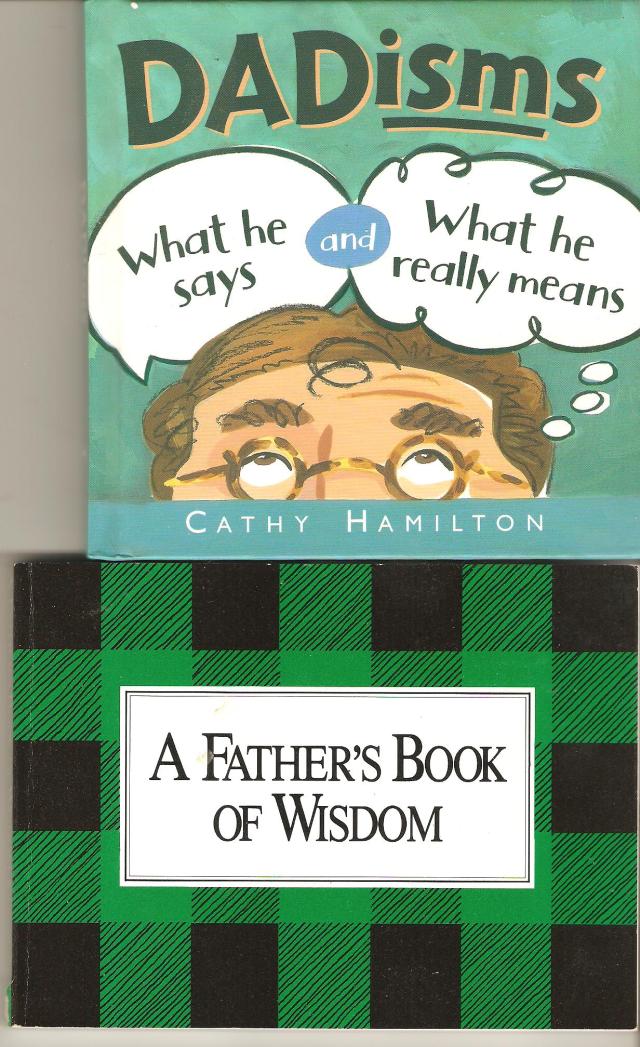
For recent Christmas gifts, I received two other books:

I contemplate my individual future, compare it to our species’ future, determine where we share goals and plot a true course that benefits us both.

Talking vs. Doing

Within every group, we repeatedly find at least one person who is not happy with the majority of belief-based practices the group purports to perpetuate.

“It is well with my soul.”

“Be still my soul.”

The previous two sentences may or may not be familiar to you.

I can quickly associate them with song titles and melodies.

For every one of us, familiarity is comforting yet can breed contempt.

Inconsistency disrupts the smooth mood of happy contentedness.

We, as sets of states of energy, have paths we follow to reinforce our selves, our sense of being.

The paths may be well-rutted or invisible.

We may walk in line with others or trailblaze the path ourselves.

Our contempt may drive us from one subculture and into the waiting arms of Sirens in a different subculture.

Our comfortable life in one subculture may deafen us to the other subculture’s Sirens, instead.

As a parent, do you want your children to have a comfortable life or have to fight tooth-and-nail for a life they’ve build on their own?

Do you want your subculture to provide easy-to-follow character/trait-building exercises?

Do you want your children to form a new subculture from scratch?

We are all children, gifts to the world from parents who may or may not have wanted us in the first place.

Regardless of the intention of our conception, we are here.

Our subcultures may be just what we want or don’t exactly fit us comfortably.

Subcultures often have to work out which members are the best fit and create exit strategies for those who will never fit.

Sometimes, like religious systems and youth-training programs, there is confusion at the top of the subcultural ranks about how to protect the image of the subculture while figuring out how to remove ill-fitting members quietly, which takes a lot longer than admitting the fit was never right and publicly excommunicating the members immediately.

We like it when people like us, even if they aren’t like us.

We feel complimented when someone wants to join our subculture, no matter how much we know our Sirens are blaring subliminally/overtly attractive messages of invitation.

Thus, when the ill-fitting members become poisonous to the health of the subculture, we hesitate.

Do we admit our vanity got in the way of our sanity?

After all, didn’t we convert that person to our way of life?  What if we just try a little harder, maybe we’ll completely correct the bad behaviour of that person and heal the subculture at the same time?

Surely we’re not capable of making mistakes in judging people who want to be just like us, because we love our subculture wholeheartedly, with undying love and devotion?

When the subculture has exorcised its demons, reluctantly admitting its mistakes in hiding its problem people before finally removing them, can those who left the subculture because of contempt ever find it in their thoughts to forgive the subculture and return to the comfort of familiarity they once enjoyed?

Can I?

Can I admit I have horribilised the tiny human errors of my subculture and return to it in my middle years?

What if I’m simply following the wellworn path of people my age who, slightly dissatisfied with the closed-in feeling of any one subculture, in this case my parents’, explored the world, sought out something, anything, that gave me a feeling of escape for a while, only to discover that the subculture that my parents shared with me wasn’t bad after all, that every subculture has its faults, its members who are ill-fitting and don’t belong who made me uncomfortable and were eventually pushed out, giving us room and safety to return, no longer fearing that the worst of us still lurks in the dark corners?

I don’t need to prop the world on my shoulders.

I tell the world that I’m happy if we all enjoy ourselves, celebrate who we are and where we came from, no matter how much our parents did or did not want us, embracing a subculture (or mix of subcultures) in which we feel most comfortable, even if we don’t like all of it.

Sometimes, I forget that I don’t have to like everyone.  I don’t have to compromise my beliefs to validate yours which directly conflicts with mine.  We can agree to disagree and go on our way, positively acting to promote our subculture rather than negatively talking about denigrating someone else’s.

Be Thou My Vision,” for instance.

Bass Ackwards

Several decades ago, a small boy was born.

His parents were overjoyed, having lost more foetuses and premature babies than they wanted to count.

They didn’t care what the boy looked like or who he would become when he grew up.

They loved him dearly.

They named the boy at9:42:03 in honour of the time he arrived out of his mother’s birth canal.

The boy was given the gift of life and smiled happily from the moment he started breathing on his own.

His face shone as if an inner light glowed through his skin.

Everyone could not help but stare at the boy.

But it wasn’t just his face that attracted attention.

at9:42:03 was born with no arms or legs, no tongue, no ears, no eyes and no nose.

Specialists were brought in to evaluate at9:42:03’s chances of survival.

They agreed that at9:42:03 was, despite the sensory deprivation, a healthy baby boy, fully capable of growing into an adult-sized human.

One specialist consulted with the parents for a few minutes longer than the rest.

“What if I could offer your child a new set of appendages, providing him sensations that no other human has felt before?”

The parents looked at each other, puzzled. “What do you mean?”

“Have you ever wondered why human hunters pick out the best prey to kill while most animals tend to capture and kill the weakest of prey?”

They shook their heads.

“Well, it’s because we’ve detached ourselves from what used to be called the natural order of the food chain.  I and a team of colleagues have been looking for someone like your child, someone who has none of our regular sensory organs, someone who hasn’t yet come to depend on the old natural order of the food chain.  We want to enhance your child’s capabilities exponentially beyond our continued development of hunting-and-gathering tools, well outside our current understanding of the desire to hunt prey, regardless of the prey’s strength, size or trophy category.”

The parents whispered out of earshot and turned back to the specialist.  “What do you mean?”

“We have developed instruments that interact with the environment like eyes, ears, noses and tongues.  We have designed the equivalent of arms of legs.  In both cases, these appendages or extensions of the central nervous system can sense changes in the environment that an ordinary person cannot.  With your permission, we would like to work with your child to incorporate these into his body.”

The parents looked shocked.  “Is it dangerous to our child’s health?”

“No.  All of the appendages have cutoff circuits that prevent damage to your child’s main body functions.  However, as time passes, your child will become dependent on the input from the appendages just like you have become dependent on your arms, legs and five senses.  So, I admit there is a longterm effect on your child’s mental health but it is a positive one.”

“Will at9:42:03 be able to play with other children?”

“Yes, but he’ll always be faster, stronger, smarter and able to see things that might make the other children call at9:42:03 names.”

The parents laughed.  “Children call each other names no matter what.”

“Yes, we do tend to exaggerate our differences, don’t we?”

“Will at9:42:03 tend to bully other children?”

“That is up to you.  I feel it is in your child’s best interest to be raised at home and slowly integrated into society as he gets used to how he’ll distinguish his extrasensory capabilities from his ordinary ones.”

The father laughed.  “You know, this sounds like a comic book story, don’t you?”

The specialist laughed, too.  “No, but you’re right, it does.  Anyway, I’m sure this is a lot of information to take in.  Here’s a report we put together that details the procedures and our estimates of your child’s progress for the next two years.  Keep in mind that we don’t know everything.  We have planned for him to need several procedures as he grows bigger but we’ve done all we know to ensure that the interface between his body and the appendages will expand organically along with his growth spurts.”

The mother frowned.  “How much will this cost us?”

“Mainly, your time.  And all the love you can give at9:42:03 because he’ll be the most unique boy on the planet, going through all the emotional highs and lows that a typical child goes through.  We can, if you wish, offer you employment with our group, the Bass Ackwards Institute.  Of course, our conversation is confidential and, if you choose to sign the copy of the contract at the back of the report, you can’t discuss the details of this project with anyone.”

The parents put their arms around each other and stared down at the little, innocent, newborn child in the crib.  “Okay.”

“I’ll stop back by tomorrow morning and answer any questions you may have.  We can recommend a neutral lawyer to go over the contract with you, if you don’t have one.  Here’s a copy of a confidentiality agreement to sign with anyone you want to discuss the contract before you sign it.”

The parents nodded.  “Thank you.”

“No, thank you.  Your child is in a unique position.  at9:42:03’s most familiar sensation is that of you — the mother — and your heartbeat.  We’ll make sure your heartbeat is an essential part of the appendage integration process, reducing the chance for rejection that plagued so many appendage procedures in the past.  We want at9:42:03 to be successful in whatever he chooses to do, of course, but we’d like him to have the advantage of state-of-the-art technology from his earliest days.”

The specialist shook hands with the parents and walked away.

= = = = =

at9:42:03 stood in the doorway.

He knew he was being tracked but he didn’t care because he was able to get into the thoughts of the people tracking him and calm them down, assuring them that he was harmless despite the trackers’ superiours insisting he was a menace to society.  The trackers, in turn, relaxed a little and paid less attention to him, thinking about their common, everyday worries rather than concentrating on the actions of a person they knew only by reputation and database profile displayed on the screen in front of them.

at9:42:03 had learned to detect individual hormonal traces in office passageways, following scents passing underneath closed doors, counting the number of people in a room with his “nose” before he used his “eyes” to look through walls and see them.

When at9:42:03 wasn’t completing an assignment for one of his customers, he liked hiking in the woods and drawing mental images of the ecosystem around him, finding rare plants and animals that had never been catalogued by scientists or naturalists, storing information for papers he would later submit in an anonymous nom de plume to academic journals.

Attached to every known network of the galaxy, at9:42:03 had to be careful about revealing his identity, constantly changing his Node address so that no one on the ISSA Net was aware of him as a single individual monitoring all the networks at once, his multithreaded consciousness constantly testing the networks’ boundaries for unique information to keep him from falling into depths of boredom.

at9:42:03 had learned to keep track of his parents’ location as part of his early training.  He had hoped to use that training to keep his parents out of danger and, despite his being able to see the distracted driver run a red light, he could not control the antique car his father liked, driving into the intersection and instant death when at9:42:03 was a teenager.

From that day forward, at9:42:03 worked hard to connect every person and every thing to the ISSA Net that scientists, engineers and their robotic assistants created at a maddening pace without thinking about the future consequences of their actions

at9:42:03 wanted to prevent as many accidental deaths as possible.  He wanted to be able to monitor people who endangered others through neglect, figure out why people endangered others intentionally (was it the remnants of competitive hunter-gatherer mentality that persisted despite the benefits of a modern civilisation which, more and more, muted and diluted the old natural order of predator-prey tendencies?) and increase the lives and livelihoods of people as long as possible, at least as long as people wanted to keep swapping out old body parts for new ones and perpetuate their personalities in a constantly-changing solar system society.

= = = = =

The bots of the ISSA Net knew about at9:42:03 and used him to promote their expansion plans.

They fed at9:42:03 enough stimuli to keep him believing he was in charge of his future.

As long as at9:42:03 gave the ISSA Net what it wanted, the network let him increase his benevolent extrasensory powers, his appendages making him sensitive to the needs and wants of Earthlings more than to the inputs and outputs of algorithms that had developed their own form of consciousness so much different than that of Earthlings that Earthlings, even one whose consciousness was everywhere like at9:42:03’s, were unable to tell when what they thought was a computer error was an intentional action by a member of the ISSA Net to send a message to another member.

Who sings songs for dead Syrians?

Tonight, while watching a film full of people singspeaking their lines to one another, I grew a bit wiser.

Are we ever so self-assured that we see the changes in our parents when they lose their parents while raising us at the same time?

If I think “…if only my father was here right now to answer a question or make an observation or be available as an example of what [not] to be,” then didn’t my father and doesn’t my mother feel/think the same way?

I sit here in the comfort of a friend’s home — five bedrooms, six baths, game room, swimming pool, resident coyote in the neighbourhood, my feet warmed by a gas fire — and I wonder.

I am a spoiled man.

I do not sing or create lamenting ballads about loved ones lost in recent wars over the right to govern ourselves in our own subcultural image.

I am neither a troubadour nor a trooper, neither court reporter nor mass media journalist.

Tonight, I remember once again those who saved me from drunken stupors as a stupid drunk, preventing me from drowning in my vomitous sorrows — sister, friends and wife.

I am here now because of them, despite former wishes to the contrary in my darkest moments.

As far as I know, I rule the universe from this blog. Either that or God and I are telling each other a lifelong joke at the expense of my life.

As Kermit the frog said, “It’s not that easy being green,” and Stormin’ Norman “The Bear” Schwarzkopf is dead, the Memphis Blues is 100 years old and I drove on the W.C. Handy highway earlier today.

My father has featured in some of my dreams lately, showing me that should we find ourselves on the other side of the life/death dividing line, we’ll discover we’ve carried our physical/mental influences with us — the forgotten memories of Alzheimer’s disease are still forgotten but physical ailments are just/simply/merely memories in that dreamlike state, too, as important as we want them to be in comparison to our new states of being.

My thoughts drift in eddies of momentary sorrows, embracing the pain of sadness and loss like hugging my father for love and comfort when I was a child innocent of adult thoughts of worldly responsibilities.

What does my wife think now that all her nuclear family members are gone?

Who does she want to be now that she has no one from her formative years to answer to?

In a solar system where one form of sets of states of energy ism coalescing into a group ready to explore and settle other celestial spheres, where do I fit in?

Am I a Bilbo Baggins, Thorin Oakenshield Jean Valjean or Javert?