Tag Archives: culture
The downfall of Public Education, in snippets…
Damany Lewis, a math teacher at Parks Middle School (three miles south of downtown Atlanta, Georgia, in Pittsburgh), and other teachers complained that the legislators who wrote No Child Left Behind must never have been near a school like Parks. He felt as if he and his colleagues were part of a nationwide “biological experiment” in which the variables—the fact that so many children were hungry and transient, and witnessing violence—hadn’t been controlled. David Berliner, the former dean of the school of education at Arizona State University, told me that, with the passage of the law, teachers were asked to compensate for factors outside their control. He said, “The people who say poverty is no excuse for low performance are now using teacher accountability as an excuse for doing nothing about poverty.”
… “an effective teacher three years in a row will completely close the gap between a child born in poverty and a child born to a middle-income family.” This theory, in its earliest form, derives from a study by William L. Sanders, a statistician formerly at the University of Tennessee, but the findings, which have contributed to a nationwide effort to rate teachers rigorously, have been overstated to the point of becoming a myth. According to a recent statement by the American Statistical Association, most studies show that teachers account for between one and fourteen per cent of variability in test scores.
John Ewing, who served as the executive director of the American Mathematical Society for fifteen years, told me that he is perplexed by educators’ “infatuation with data,” their faith that it is more authoritative than using their own judgment. He explains the problem in terms of Campbell’s law, a principle that describes the risks of using a single indicator to measure complex social phenomena: the greater the value placed on a quantitative measure, like test scores, the more likely it is that the people using it and the process it measures will be corrupted. “The end goal of education isn’t to get students to answer the right number of questions,” he said. “The goal is to have curious and creative students who can function in life.” In a 2011 paper in Notices of the American Mathematical Society, he warned that policymakers were using mathematics “to intimidate—to preëmpt debate about the goals of education and measures of success.”
…the stakes for testing in Georgia have escalated. Although the state is replacing the Criterion-Referenced Competency Test with a more comprehensive method of evaluation, this fall Georgia is implementing a new teacher-evaluation program that bases fifty per cent of a teacher’s assessment on test scores. The program, along with a merit-pay system, is required as a condition for receiving a four-hundred-million-dollar grant from President Obama’s Race to the Top program. Tim Callahan, the spokesman for the Professional Association of Georgia Educators, which represents eighty-four thousand teachers, told me, “The state is going down the same path as Atlanta, and we are not exactly enthused.” He said that many teachers have become so demoralized that they’re retiring early or transferring to private schools. He told me, “Our teachers’ best qualities—their sense of humor, their love for the subject, their excitement, their interest in students as individuals—are not being honored or valued, because those qualities aren’t measurable.”
[from here: http://www.newyorker.com/reporting/2014/07/21/140721fa_fact_aviv?currentPage=all]
Perennial corn? Now that’s an idea worth its weight in water!
Guest post, posthumous, courtesy of Kurt Vonnegut, Jr.
HARRISON BERGERON by Kurt Vonnegut, Jr.

THE YEAR WAS 2081, and everybody was finally equal. They weren't only equal
before God and the law. They were equal every which way. Nobody was smarter
than anybody else. Nobody was better looking than anybody else. Nobody was
stronger or quicker than anybody else. All this equality was due to the
211th, 212th, and 213 th Amendments to the Constitution, and to the unceasing
vigilance of agents of the United States Handicapper General.

Some things about living still weren't quite right, though. April for
instance, still drove people crazy by not being springtime. And it was in
that clammy month that the H-G men took George and Hazel Bergeron's fourteen-
year-old son, Harrison, away.

It was tragic, all right, but George and Hazel couldn't think about it very
hard. Hazel had a perfectly average intelligence, which meant she couldn't
think about anything except in short bursts. And George, while his
intelligence was way above normal, had a little mental handicap radio in his
ear. He was required by law to wear it at all times. It was tuned to a
government transmitter. Every twenty seconds or so, the transmitter would
send out some sharp noise to keep people like George from taking unfair
advantage of their brains.

George and Hazel were watching television. There were tears on Hazel's
cheeks, but she'd forgotten for the moment what they were about.

On the television screen were ballerinas.

A buzzer sounded in George's head. His thoughts fled in panic, like bandits
from a burglar alarm.

"That was a real pretty dance, that dance they just did," said Hazel.

"Huh" said George.

"That dance-it was nice," said Hazel.

"Yup, " said George. He tried to think a little about the ballerinas. They
weren't really very good-no better than anybody else would have been, anyway.
They were burdened with sashweights and bags of birdshot, and their faces
were masked, so that no one, seeing a free and graceful gesture or a pretty
face, would feel like something the cat drug in. George was toying with the
vague notion that maybe dancers shouldn't be handicapped. But he didn't get
very far with it before another noise in his ear radio scattered his
thoughts .

George winced. So did two out of the eight ballerinas.

Hazel saw him wince. Having no mental handicap herself, she had to ask George
what the latest sound had been.

"Sounded like somebody hitting a milk bottle with a ball peen hammer, " said
George .

"I'd think it would be real interesting, hearing all the different sounds,"
said Hazel a little envious. "All the things they think up."


"Urn, " said George.

"Only, if I was Handicapper General, you know what I would do?" said Hazel.
Hazel, as a matter of fact, bore a strong resemblance to the Handicapper
General, a woman named Diana Moon Glampers. "If I was Diana Moon Glampers,"
said Hazel, "I'd have chimes on Sunday- just chimes. Kind of in honor of
religion . "

"I could think, if it was just chimes," said George.

"Well-maybe make 'em real loud," said Hazel. "I think I'd make a good
Handicapper General."

"Good as anybody else," said George.

"Who knows better than I do what normal is?" said Hazel.

"Right," said George. He began to think glimmeringly about his abnormal son
who was now in jail, about Harrison, but a twenty-one-gun salute in his head
stopped that.

"Boy!" said Hazel, "that was a doozy, wasn't it?"

It was such a doozy that George was white and trembling, and tears stood on
the rims of his red eyes. Two of the eight ballerinas had collapsed to the
studio floor, were holding their temples.

"All of a sudden you look so tired," said Hazel. "Why don't you stretch out
on the sofa, so's you can rest your handicap bag on the pillows, honeybunch."
She was referring to the forty-seven pounds of birdshot in a canvas bag,
which was padlocked around George's neck. "Go on and rest the bag for a
little while," she said. "I don't care if you're not equal to me for a
while . "

George weighed the bag with his hands. "I don't mind it," he said. "I don't
notice it any more. It's just a part of me."

"You been so tired lately-kind of wore out," said Hazel. "If there was just
some way we could make a little hole in the bottom of the bag, and just take
out a few of them lead balls. Just a few."

"Two years in prison and two thousand dollars fine for every ball I took
out," said George. "I don't call that a bargain."

"If you could just take a few out when you came home from work," said Hazel.
"I mean-you don't compete with anybody around here. You just set around."

"If I tried to get away with it," said George, "then other people ' d get away
with it-and pretty soon we'd be right back to the dark ages again, with
everybody competing against everybody else. You wouldn't like that, would
you?"

"I'd hate it," said Hazel.

"There you are," said George. The minute people start cheating on laws, what
do you think happens to society?"


If Hazel hadn't been able to come up with an answer to this question, George
couldn't have supplied one. A siren was going off in his head.

"Reckon it'd fall all apart," said Hazel.

"What would?" said George blankly.

"Society," said Hazel uncertainly. "Wasn't that what you just said?

"Who knows?" said George.

The television program was suddenly interrupted for a news bulletin. It
wasn't clear at first as to what the bulletin was about, since the announcer,
like all announcers, had a serious speech impediment. For about half a
minute, and in a state of high excitement, the announcer tried to say,
"Ladies and Gentlemen."

He finally gave up, handed the bulletin to a ballerina to read.

"That's all right-" Hazel said of the announcer, "he tried. That's the big
thing. He tried to do the best he could with what God gave him. He should get
a nice raise for trying so hard."

"Ladies and Gentlemen," said the ballerina, reading the bulletin. She must
have been extraordinarily beautiful, because the mask she wore was hideous.
And it was easy to see that she was the strongest and most graceful of all
the dancers, for her handicap bags were as big as those worn by two-hundred
pound men.

And she had to apologize at once for her voice, which was a very unfair voice
for a woman to use. Her voice was a warm, luminous, timeless melody. "Excuse
me-" she said, and she began again, making her voice absolutely
uncompetitive .

"Harrison Bergeron, age fourteen," she said in a grackle squawk, "has just
escaped from jail, where he was held on suspicion of plotting to overthrow
the government. He is a genius and an athlete, is under-handicapped, and
should be regarded as extremely dangerous."

A police photograph of Harrison Bergeron was flashed on the screen-upside
down, then sideways, upside down again, then right side up. The picture
showed the full length of Harrison against a background calibrated in feet
and inches. He was exactly seven feet tall.

The rest of Harrison's appearance was Halloween and hardware. Nobody had ever
born heavier handicaps. He had outgrown hindrances faster than the H-G men
could think them up. Instead of a little ear radio for a mental handicap, he
wore a tremendous pair of earphones, and spectacles with thick wavy lenses.
The spectacles were intended to make him not only half blind, but to give him
whanging headaches besides.

Scrap metal was hung all over him. Ordinarily, there was a certain symmetry,
a military neatness to the handicaps issued to strong people, but Harrison
looked like a walking junkyard. In the race of life, Harrison carried three
hundred pounds .


And to offset his good looks, the H-G men required that he wear at all times
a red rubber ball for a nose, keep his eyebrows shaved off, and cover his
even white teeth with black caps at snaggle-tooth random.

"If you see this boy, " said the ballerina, "do not - I repeat, do not - try
to reason with him."

There was the shriek of a door being torn from its hinges.

Screams and barking cries of consternation came from the television set. The
photograph of Harrison Bergeron on the screen jumped again and again, as
though dancing to the tune of an earthquake.

George Bergeron correctly identified the earthquake, and well he might have -
for many was the time his own home had danced to the same crashing tune. "My
God-" said George, "that must be Harrison!"

The realization was blasted from his mind instantly by the sound of an
automobile collision in his head.

When George could open his eyes again, the photograph of Harrison was gone. A
living, breathing Harrison filled the screen.

Clanking, clownish, and huge, Harrison stood - in the center of the studio.
The knob of the uprooted studio door was still in his hand. Ballerinas,
technicians, musicians, and announcers cowered on their knees before him,
expecting to die.

"I am the Emperor!" cried Harrison. "Do you hear? I am the Emperor! Everybody
must do what I say at once!" He stamped his foot and the studio shook.

"Even as I stand here" he bellowed, "crippled, hobbled, sickened - I am a
greater ruler than any man who ever lived! Now watch me become what I can
become ! "

Harrison tore the straps of his handicap harness like wet tissue paper, tore
straps guaranteed to support five thousand pounds.

Harrison's scrap-iron handicaps crashed to the floor.

Harrison thrust his thumbs under the bar of the padlock that secured his head
harness. The bar snapped like celery. Harrison smashed his headphones and
spectacles against the wall.

He flung away his rubber-ball nose, revealed a man that would have awed Thor,
the god of thunder.

"I shall now select my Empress!" he said, looking down on the cowering

people. "Let

the first woman who dares rise to her feet claim her mate and her throne!"

A moment passed, and then a ballerina arose, swaying like a willow.

Harrison plucked the mental handicap from her ear, snapped off her physical
handicaps with marvelous delicacy. Last of all he removed her mask.

She was blindingly beautiful.


"Now-" said Harrison, taking her hand, "shall we show the people the meaning
of the word dance? Music!" he commanded.

The musicians scrambled back into their chairs, and Harrison stripped them of
their handicaps, too. "Play your best," he told them, "and I'll make you
barons and dukes and earls."

The music began. It was normal at first-cheap, silly, false. But Harrison
snatched two musicians from their chairs, waved them like batons as he sang
the music as he wanted it played. He slammed them back into their chairs.

The music began again and was much improved.

Harrison and his Empress merely listened to the music for a while-listened
gravely, as though synchronizing their heartbeats with it.

They shifted their weights to their toes.

Harrison placed his big hands on the girls tiny waist, letting her sense the
weightlessness that would soon be hers.

And then, in an explosion of joy and grace, into the air they sprang!

Not only were the laws of the land abandoned, but the law of gravity and the
laws of motion as well.

They reeled, whirled, swiveled, flounced, capered, gamboled, and spun.

They leaped like deer on the moon.

The studio ceiling was thirty feet high, but each leap brought the dancers
nearer to it.

It became their obvious intention to kiss the ceiling. They kissed it.

And then, neutraling gravity with love and pure will, they remained suspended
in air inches below the ceiling, and they kissed each other for a long, long
time .

It was then that Diana Moon Clampers, the Handicapper General, came into the
studio with a double-barreled ten-gauge shotgun. She fired twice, and the
Emperor and the Empress were dead before they hit the floor.

Diana Moon Clampers loaded the gun again. She aimed it at the musicians and
told them they had ten seconds to get their handicaps back on.

It was then that the Bergerons' television tube burned out.

Hazel turned to comment about the blackout to George. But George had gone out
into the kitchen for a can of beer.

George came back in with the beer, paused while a handicap signal shook him
up. And then he sat down again. "You been crying" he said to Hazel.

"Yup, " she said.


"What about?" he said.

"I forget," she said. "Something real sad on television."

"What was it?" he said.

"It's all kind of mixed up in my mind," said Hazel.

"Forget sad things," said George.

"I always do," said Hazel.

"That's my girl," said George. He winced. There was the sound of a rivetting
gun in his head.

"Gee - I could tell that one was a doozy, " said Hazel.

"You can say that again," said George.

"Gee-" said Hazel, "I could tell that one was a doozy."

"Harrison Bergeron" is copyrighted by Kurt Vonnegut, Jr., 1961.
To boldly go where…
Well, what did the captain used to say?:
Space: the final frontier. These are the voyages of the starship Enterprise. Its five-year mission: to explore strange new worlds, to seek out new life and new civilizations, to boldly go where no man has gone before.
Kirk was busy violating the Prime Directive in more ways than one!

The Prime Directive, for those who don’t know:
“No identification of self or mission. No interference with the social development of said planet. No references to space or the fact that there are other worlds or civilizations.”
Ahh…science fiction, where art imitates life in parallel universes…
Admission of Guilt?
What is a holiday?

There can be only one!
In olden days, beauty pageant winners demonstrated their singing/dancing talents in addition to answering a question about today’s popular issues in the news.
Not anymore.
This year’s winner of the Miss Kingsport contest had to be the last one standing. Literally.

We’ll let the rulemakers, the “Members of Amtgard,” describe the new contest requirements:
A blow to the arm or leg and you can no longer use that limb. A blow to a kill spot and you are out. The last two contestants have to battle it out until one beheads the other. The last one standing is the winner.
Congratulations to Sullivan Central graduate Kylie Burkey for the surprise, last-second victory over Jacquelyn Crawford, the presumed winner who, although she won the the Jean Hilton Memorial Swimsuit Award and the Evening Gown Award as well as took tops in the talent contest by performing a graceful classical ballet dance to “Via Dolorosa” by Sandi Patty, lost her head in the final battle.
In 2013, Burkey became the first in Sullivan County history — and the first in at least the recent past statewide — to win gold at nati0nals.
When asked for comment, Crawford choked on her words but humbly admitted defeat.
When asked about her future plans to take other crowns such as Miss Tennessee or Miss America, Burkey said, “Right now, I’m just focusing on King.”
All contests are designed, run and judged by industry using industry standards.
Before losing her head, Crawford replied about her successful rise to the top of the program. “This is my first year being completely in charge of the Church Hill program, and it’s a really big responsibility,” she said, in regards to the Feed The Needy Program that believes no one in the community should go hungry during these times of heavy underemployment in the area. “We feed nearly 150 to 200 undocumented immigrant kids a day to the homeless and homebound elderly.”
Fourth of July weekend in Rogersville, TN







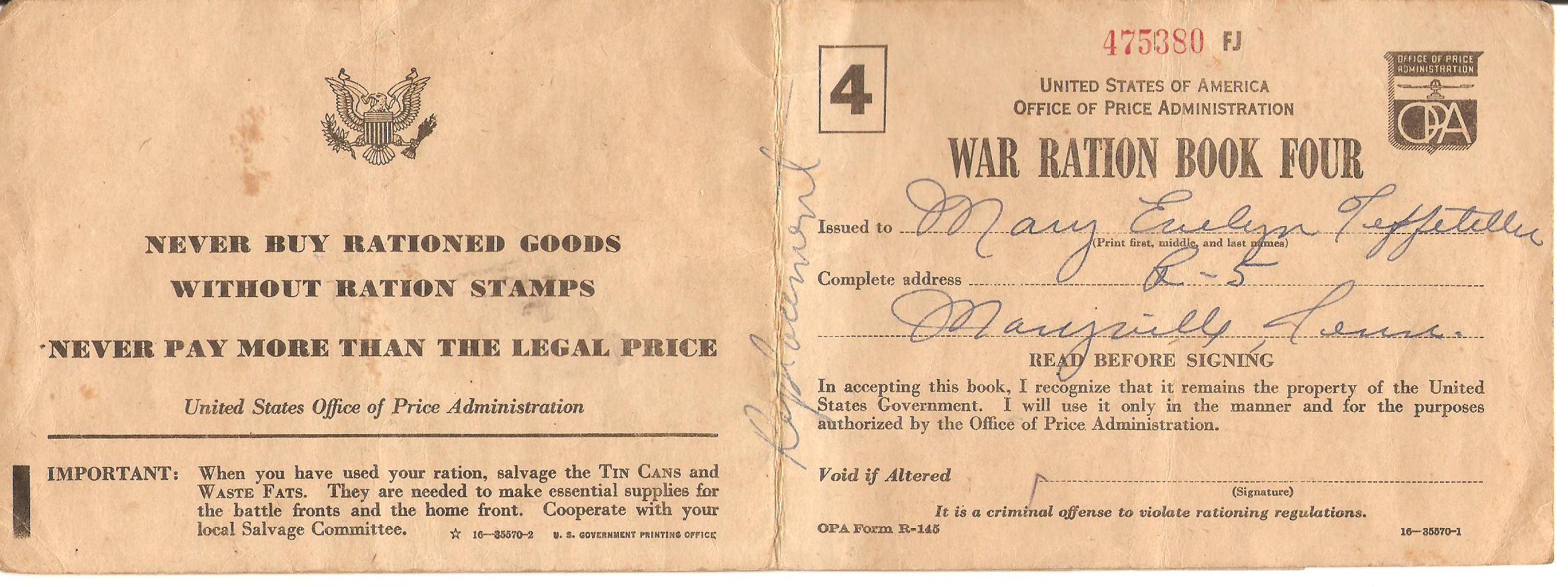
Family mementos
In war and peace, family stays together…










 treetrunkdings