The downside of profiling

Enter two data points that are scary in and of themselves:

Mix them together and what do you get?  Answer: the next generation of “death by suspected terrorist” suicide seekers, upping the former lower level of “death by cop” prevalent among the truly despondent too afraid to kill themselves.

Pebbles in a pond, waves flowing out and causing the Law of Unintended Consequences to create quantum effects one cannot easily compute with the archaic devices we currently call supercomputers.

I wish life was just happiness and bellies full of good food but it doesn’t always turn out that way…sigh…

Up Next

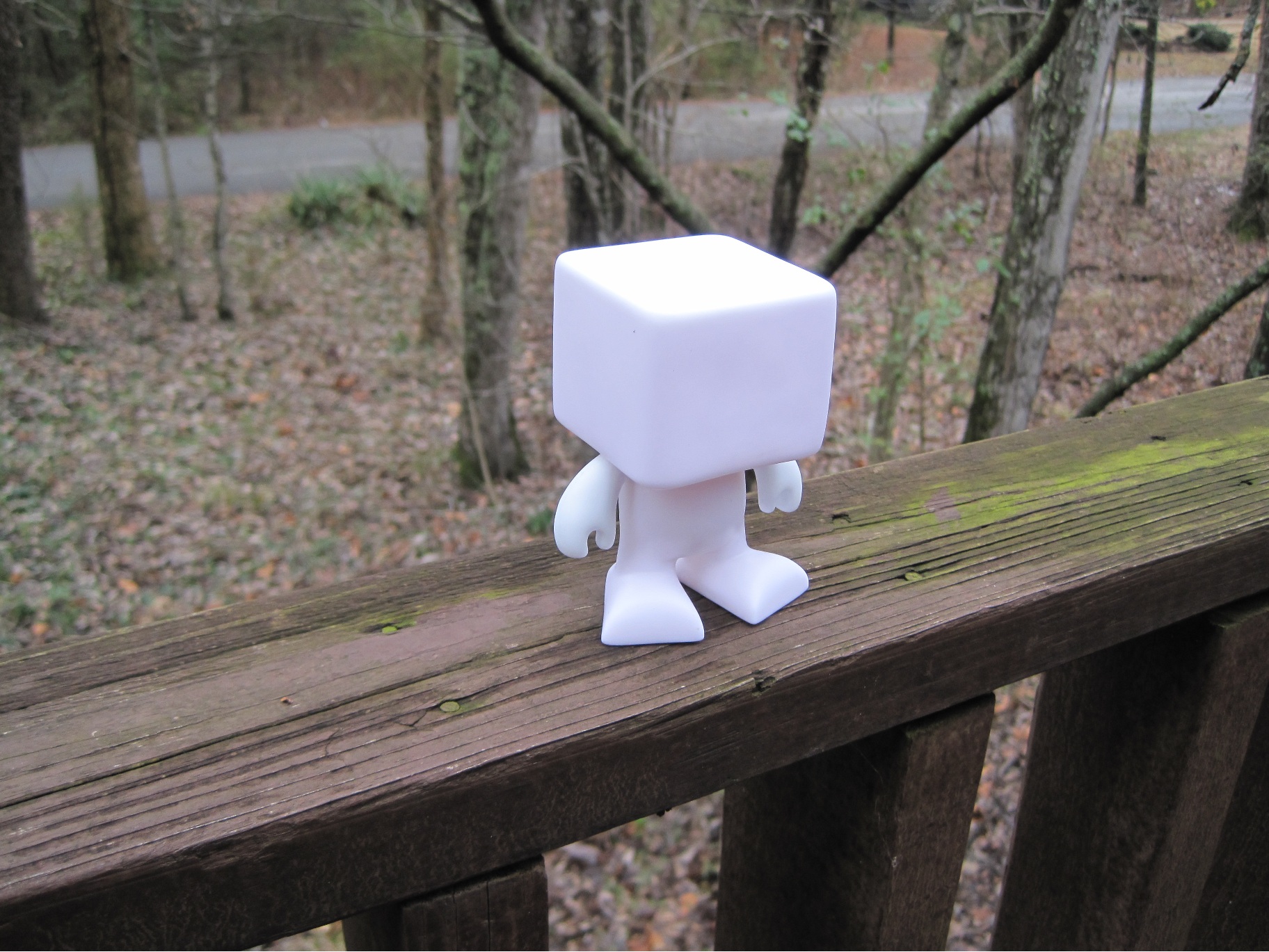
The next satirical video stars a new friend of mine, who began with the simple name of “Color Blanks” but will, before your eyes, transform into a

Solar System Sensation!!!

Color Blanks blockhead from above

Color Blanks blockhead

A new friend has asked me to watch a live performance by an artist named Louis CK, whom I’ve never seen, live or filmed.  I downloaded the video and will view in the next few days.

Molding a Character out of Molten Glass

I remember the first piece that grabbed my attention.  Thick.  Heavy.

Ever had a tumbler or paperweight that felt solid?  1 kg or more?

Stripes that ran through it…sigh…

But I lost it in a divorce.

“How did I lose something so precious to me?”  Oh…never mind…if you haven’t been there, you wouldn’t understand…even the important things are worth letting go in a divorce.

It’s standing here, the heat in my face as I gather, where I feel truly at home.

My first glassblowing class, unlike yours, was almost a joke.  No help from the instructors, as if they wanted to get a good laugh watching us fail.  Nothing to take home with me, either.

That’s why you’ve got the molten ball, the flowers, the paperweight and the tumbler.

I want you to remember this day, cherish it, even.

Quiet.  There’s a chopper coming in.

I thought we had promises of no warzones anymore.  Oh well…

Where was I?

Hmm…I left my job, my “real” job, a while back…’95, I believe.

I got here in 2003.

In between, well, let’s say it was an adventure…renting time in other glassblowers’ studios.  Studying under people who had no idea what they were doing and some who were very nearly the best of the best.

Sure, I could have apprenticed at a glass factory but I didn’t want to spend five years learning and relearning the fine art of one single activity, perfecting it before moving on to the next.

I like to experiment, see where the glass is taking me, understanding what the colours and the minerals do in extreme heat.

Yes, I’m married but my husband is the exact opposite of me.  Very quiet.  A homebody.

That’s okay, though, because we get along.

Besides, he doesn’t mind if I work late.

After all, this is my job and my hobby.

That’s the thing about owning your own business — you never get a day off — if you love what you do you never want to take a day off.

I have my apprentices here, as you can see.  I love them all in different measure, just like children, who require various levels of attention, care and guidance because every personality is different.

After you’ve gathered and gathered and gathered, you get a feel for when gravity is pulling, so that’s why you see me absent-mindedly rolling the pipe in my hand.  Ask my husband.  If I’m standing with a broom, I’ll roll it around, too.

I’ve worked in this business long enough that I’m used to being seen as one of the guys.  You don’t get a lot of female glassblowers, especially when I started, so I’m pretty thick-skinned.

That twisted piece down there was going to be a Christmas chandelier or tree topper but I didn’t like so I broke it.  I think this piece could be a horn or a party hat.  What do you think?

Stop by again soon and I’ll talk with you in more detail.  I really think there’s a good story you could make with my character.

I don’t mean I have some sob story that’ll break your heart.  I know there are a lot of good people in this town that a story’s begging to be told about us in one of those intersecting storyline/character sketch sort of things.

A small cotton town growing into the Rocket City.  Where do we go from here?

When will the first glassblower open a shop on the Moon or Mars?  Hey, it’s just a matter of time, right?

This and That

So, how do we solve the Syrian crisis?  How do we send in people from other countries who will be welcomed by both pro- and anti-Assad Syrian citizens to prevent more killing?

A friend asked why poetry is not as popular as other written art forms (non/fiction novels, for instance).

My response:

In general, books can put us into the complete narrative of other people’s lives — fictional and nonfictional — with excruciatingly drawnout detail, which some crave for its complete escapist fantasy (pick your favourite genre), while poetry is often a snapshot or sketch of a single moment or idea, requiring the reader to use imagination to fill in the blanks.

In my youth, a pop poet named Rod McKuen both attracted people to the power of poetry and alienated those who consider poetry a higher art form.

Most people, if they think of poetry at all, hear what you call “does so much more, it says so much more, it’s so much cleverer, it requires so much more, it’s simply brilliant,” in song lyrics, which is not such a bad thing.

Another friend explains why it’s more fun in the Philippines.

DARPA wants to know your biometric habits.

And finally, have you ever wanted your personal bobblehead nodding back to you every day?

BONUS: Where’s Emma Peel when you need an appealing car model named PEEL?

Creativity

From my father, via email, a Kingsport Times-News article:

Watch out! Attitudes can turn off your creativity

Mr. Ferguson is the father of four adult children and the grandfather of ten. He is an attorney in Kingsport and the author of the book, “Above and Beyond the Bottom Line.” His e-mail address is s h e l b u r n e @ f e r g u s o n – l a w o ff i c e . c o m .

We are discovering in all aspects of life, what we should have known all along, creativity is a part of our DNA. For example, if you believe that God is the “Creator” and that we are created in his image; doesn’t it make sense that we have creativity engrained in us? Flip that coin and on the other side is a reality that our natural creativity can be turned off by the way we respond to it.

Imagine a two- to three-year-old, typical child. What are the two questions most frequently asked by this child? Isn’t it: “What’s that?” and “Why?” Curiosity is the first cousin to creativity and how you and I respond to children’s curiosity encourages or stymies their natural creativi t y.

So rather than look at what we can do to encourage creativity (which is certainly an option), let’s think about what habits we can change to not hamper creativity not only in children but in adults as well. Businesses today and for tomorrow   must excel at creativity in order to survive.

Let me begin by giving credit to Brian Clark, CEO of Copyblogger Media, a creative man himself who has launched four successful businesses. The following are his “10 Mental Blocks to Creativity:”

1. “Trying to Find the ‘Right’ Answer.”   When we search for a creative answer, usually there are numerous choices. Our typical formal educational approach is to learn the “right” answer. In the world of creativity, we face ambiguity where there may be no one, right answer, but countless answers.

2. “Logical Thinking.” Logic is vital to good decision making, if it is used later in   the process and not at the beginning. Logic at the outset of the creative evolution tends to eliminate other, better possibilities by focusing on the one logical choice.

3. “Following Rules.” We all develop rules to follow that make our decision making easier. However, adhering to rules hampers creativity. Businesses tend to be the Mecca for developing a rule for every situation. As Marcus Buckingham said in the title to his terrific book, “First Break All the Rules.” Allow creativity to roam free of arbitrary rules.

4. “Being Practical.” We Americans love to look for the “bottom line” of every decision. We rush to get to the end of the creative process and decide whether our idea is practical. Let the idea linger for awhile before testing its practicality.

5. “Play is Not Work.” Do you work at playing? Or do you divide life into play and work? Where are you most creative, at work or play? Learn to work at playing at work.

6. “That’s Not My Job.” We live in an era of narrow specialization. While that may be vital to success, it doesn’t mean that you can’t recognize and see that the parts are related to the whole. You can explore and look for the possibilities outside your narrow specialty.

7. “Being a ‘Serious’ Person.” While it is helpful to getting along with others that we appreciate the three “C’s” of conformity, constancy and consistency, they forge a barrier to creativity. Brian Clark points out that kings often called on “jesters and fools” to see realities from a different, perhaps foolish perspective.

8. “Avoiding Ambiguity.” Ambiguity is uncomfortable to most of us. We prefer certainty and order with everything in the right box. Ambiguity is helpful when your goal is to innovate. It also gives us a huge advantage since most people despise ambiguity.

9. “Being Wrong is Bad.” What is the source for most of our learning? Making   a mistake is what should drive us to learn. Take the toddler for example. She learns how to ultimately walk by falling down and getting up to try again. Creative businesses and people have an attitude that tolerates making mistakes and taking risks.

10. “I’m Not Creative.” If you do not have the twin desires to experience and create, you’d better check your pulse to make sure you are alive. That is what humans do because as I noted earlier, it is in our DNA to create. Please don’t deny your humanity. Create something.

Please take to heart the above warning signals that destroy our creativity. Encourage your friends and particularly your offspring to believe they are creative.