Hard to believe just a few weeks ago I still had to make sure the broom was kept in our pantry to keep Merlin from chewing on the broom straws and making himself sick…sixteen years of leaving the pantry doors partially open and finding vomited pieces of broom, gone! The little daily habits that once annoyed me…amazing how much I miss them when they’re no longer part of my life.
Tag Archives: chapter excerpt
Speaking of touch sensitive
This morning, I scouted the yard for a piece of cedar I wanted.
I heard rustling around me.
Lo and behold, four small nine-banded primitive creatures were pushing their snouts into the leafy underbrush.
Baby armadillos!
They and I moved about each other with ease.
They seemed unmiffed by my presence.
I walked along with them for a couple of minutes.
Then, curiosity got the better of me.
I rubbed my gloved hands across the backs of two of them.
They scampered away.
Furry cats they’re not. Feral-like, they are.
Salvaging a rotten cedar log…
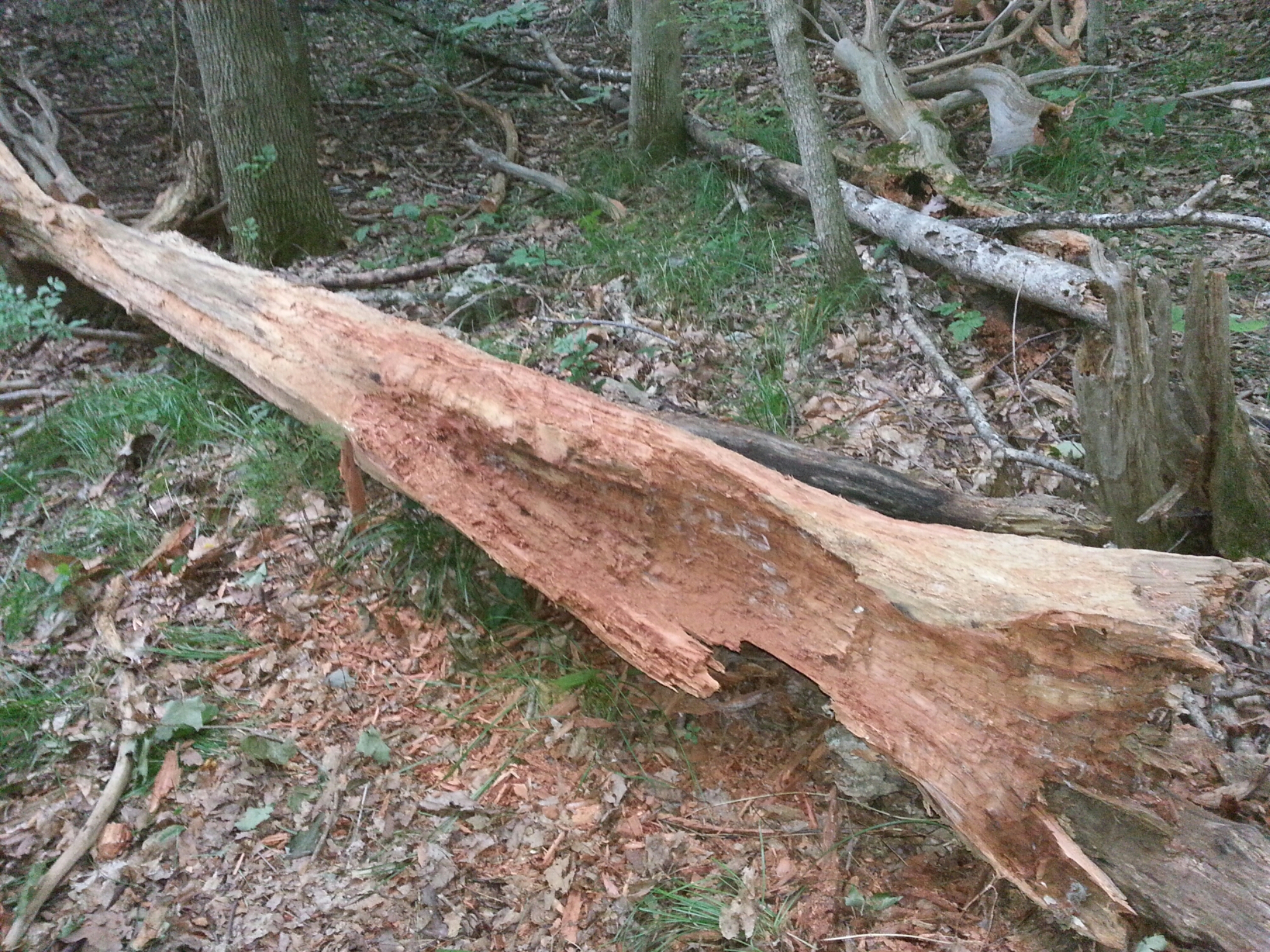
What will this become…hmmm…
Bridge construction update
More log smoothing
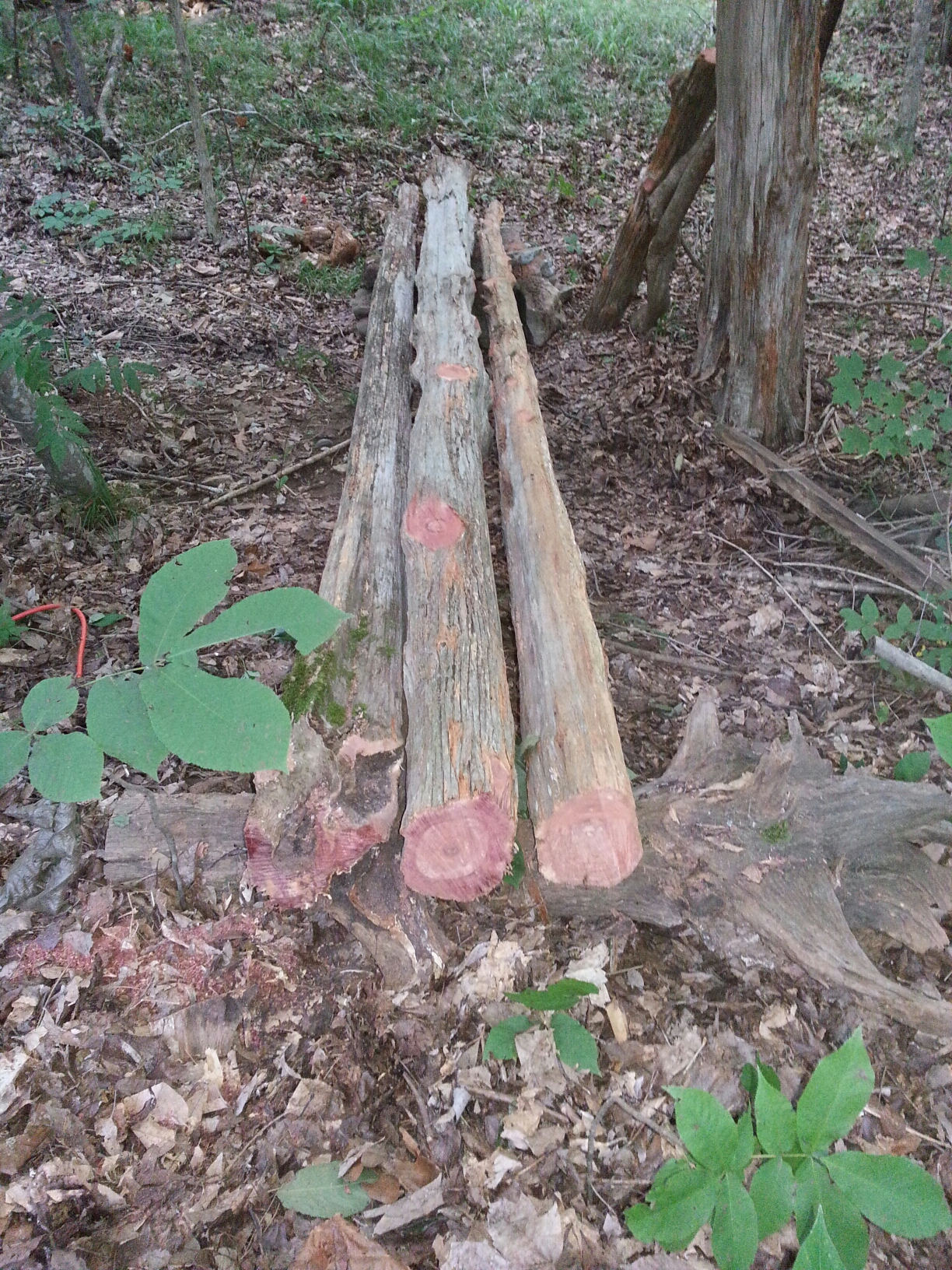

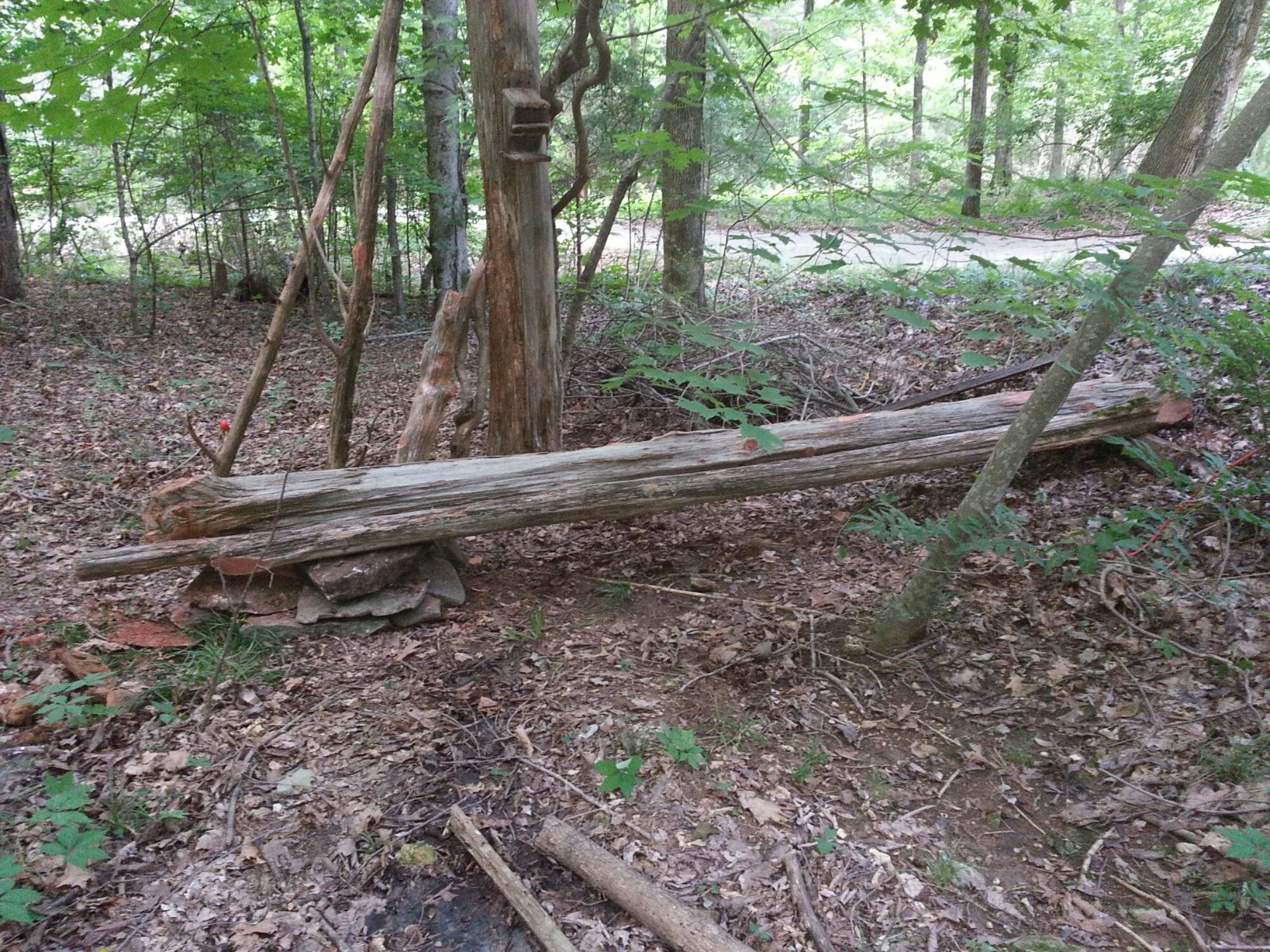
Added a rock abutment…

More mushrooms popping up…


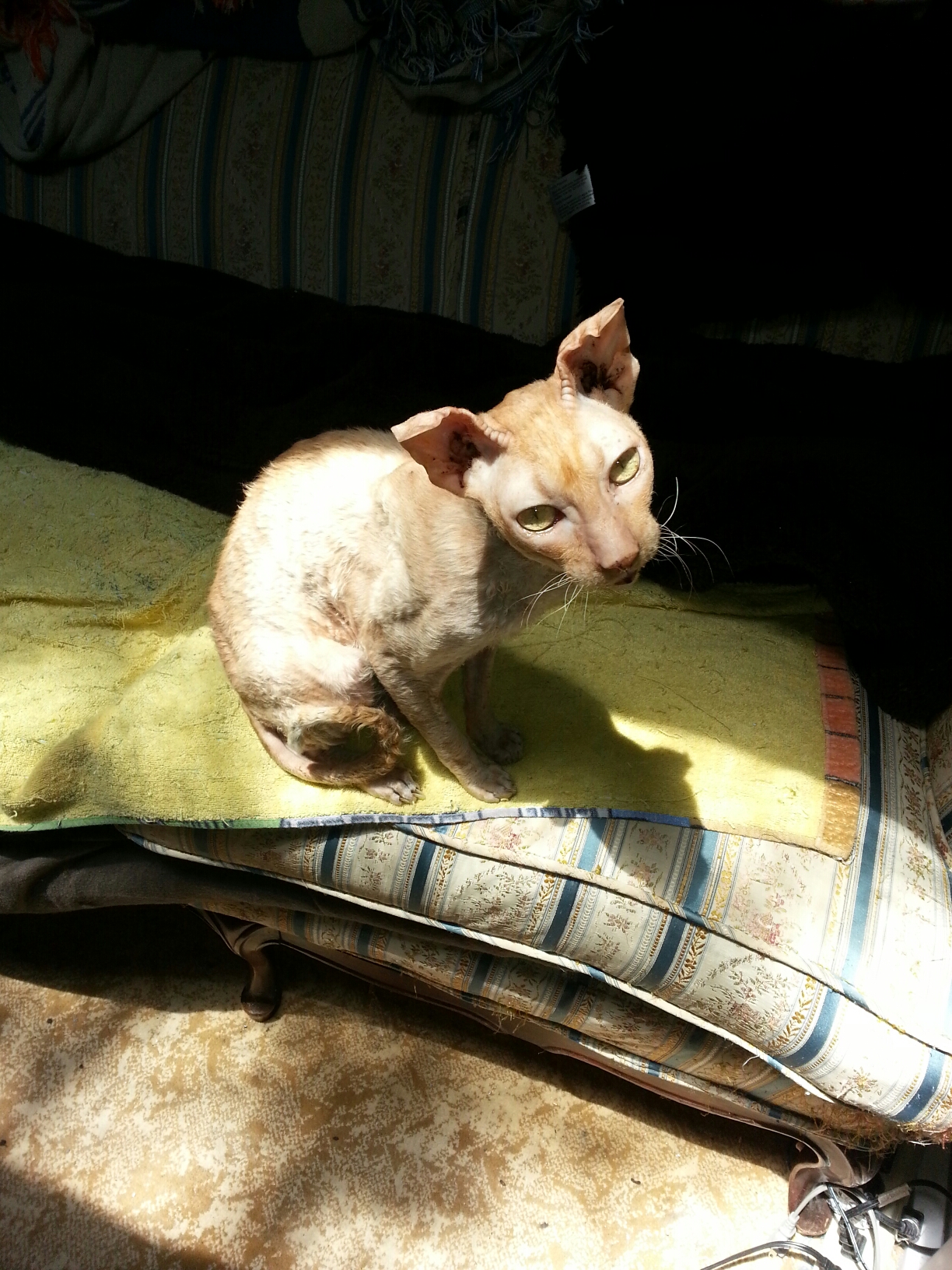
Sunny demeanor
Test fit the logs…

…then eat lunch with elderly Erin sunning on a sofa…
Woodsman Methodology 2.0
A simple log bridge’ll do in a pinch but I want something sturdier.
Introducing Cedar Log Bridge the second revised new and improved edition.
Cut three logs out of the forest fallen cedar tree inventory to use as main walking beams…
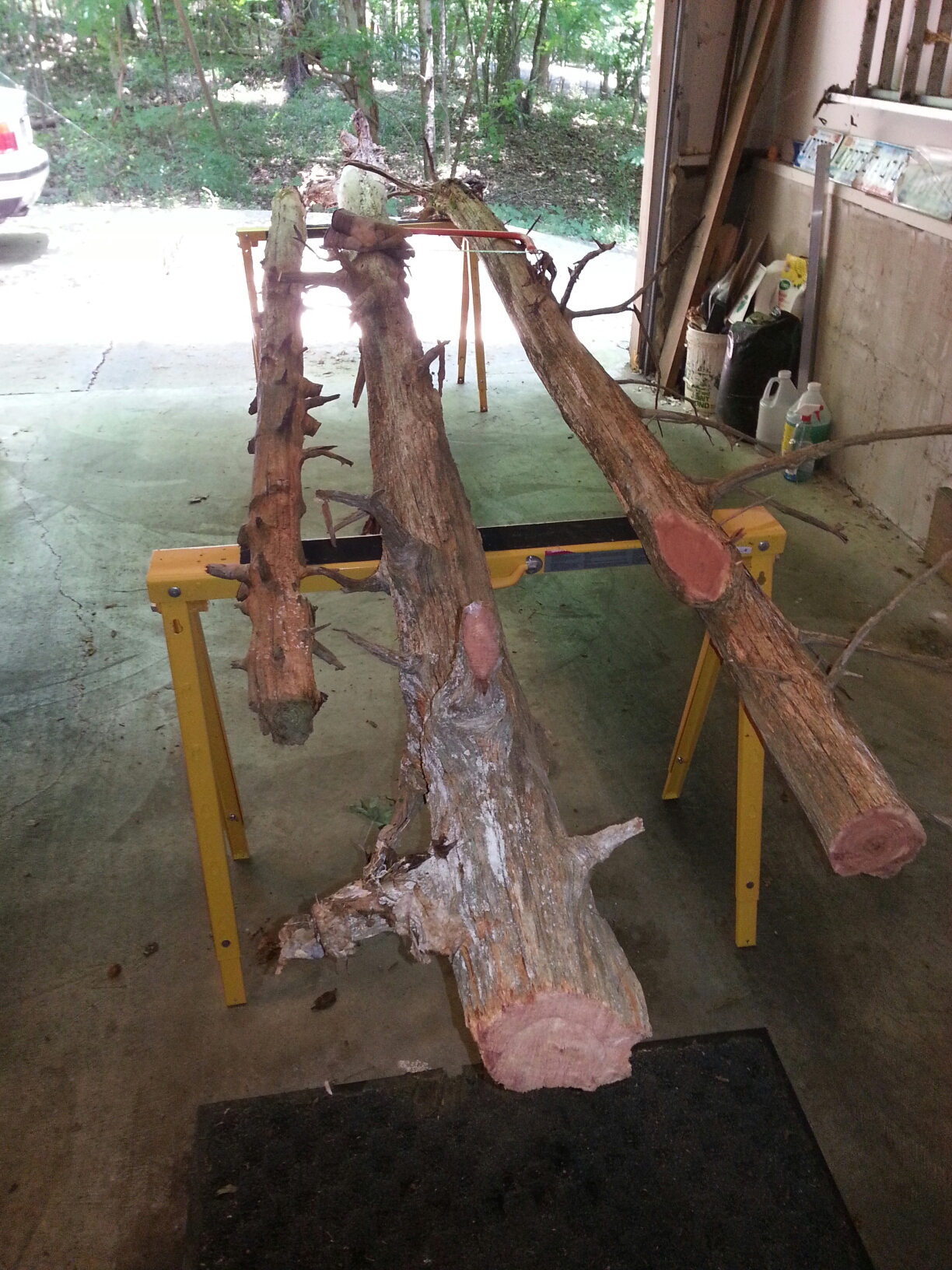
Cut two straight cedar treetops for handrails…

Photograph more wildlife in-between, such as a four-leaf mayapple with mushrooms…

Jack-in-the-pulpit…

More shrooms…


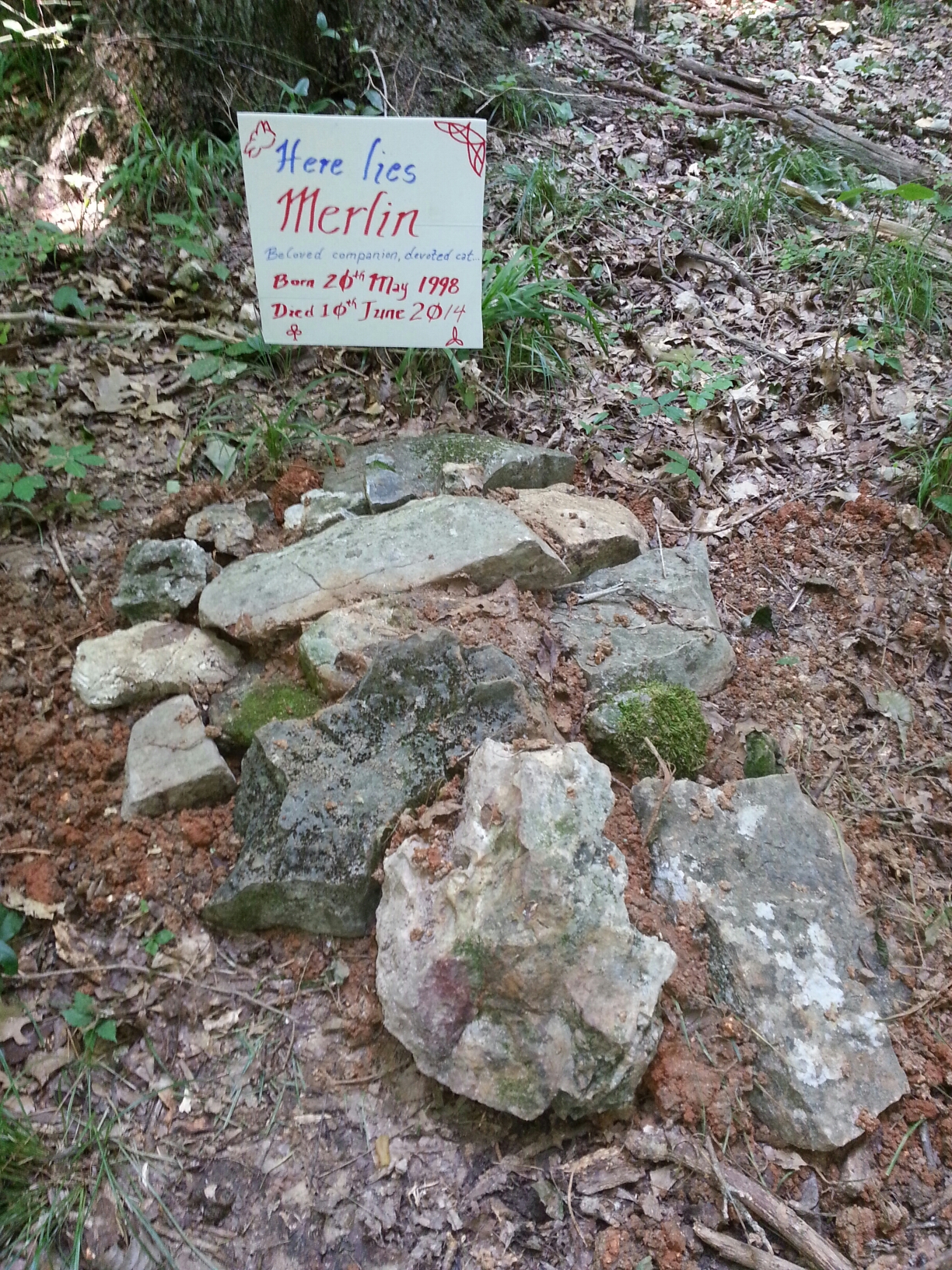
…and Merlin’s grave…sniff, sniff…
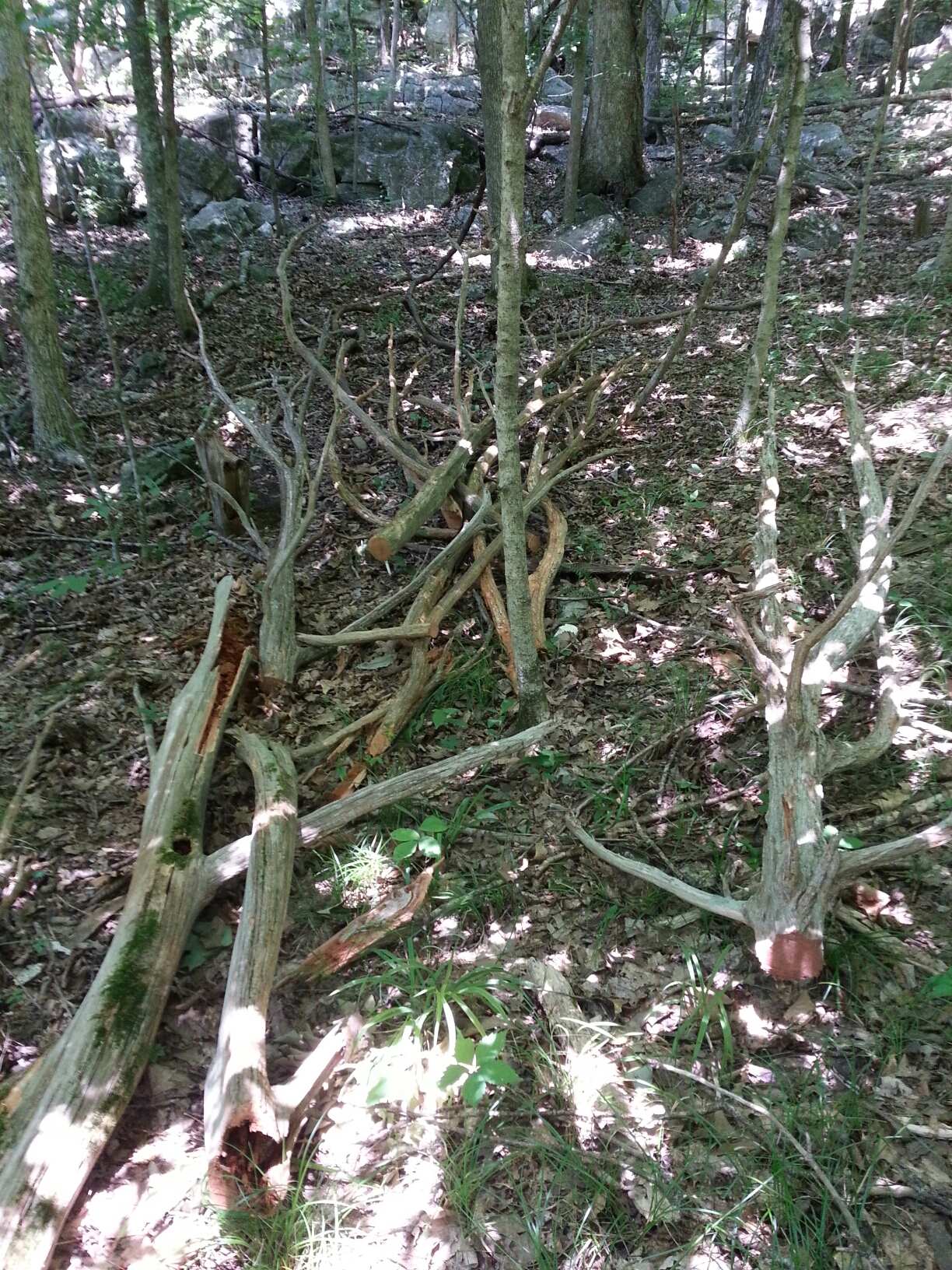
…then find miscellaneous cedar branches for support beams, decorative elements, etc.
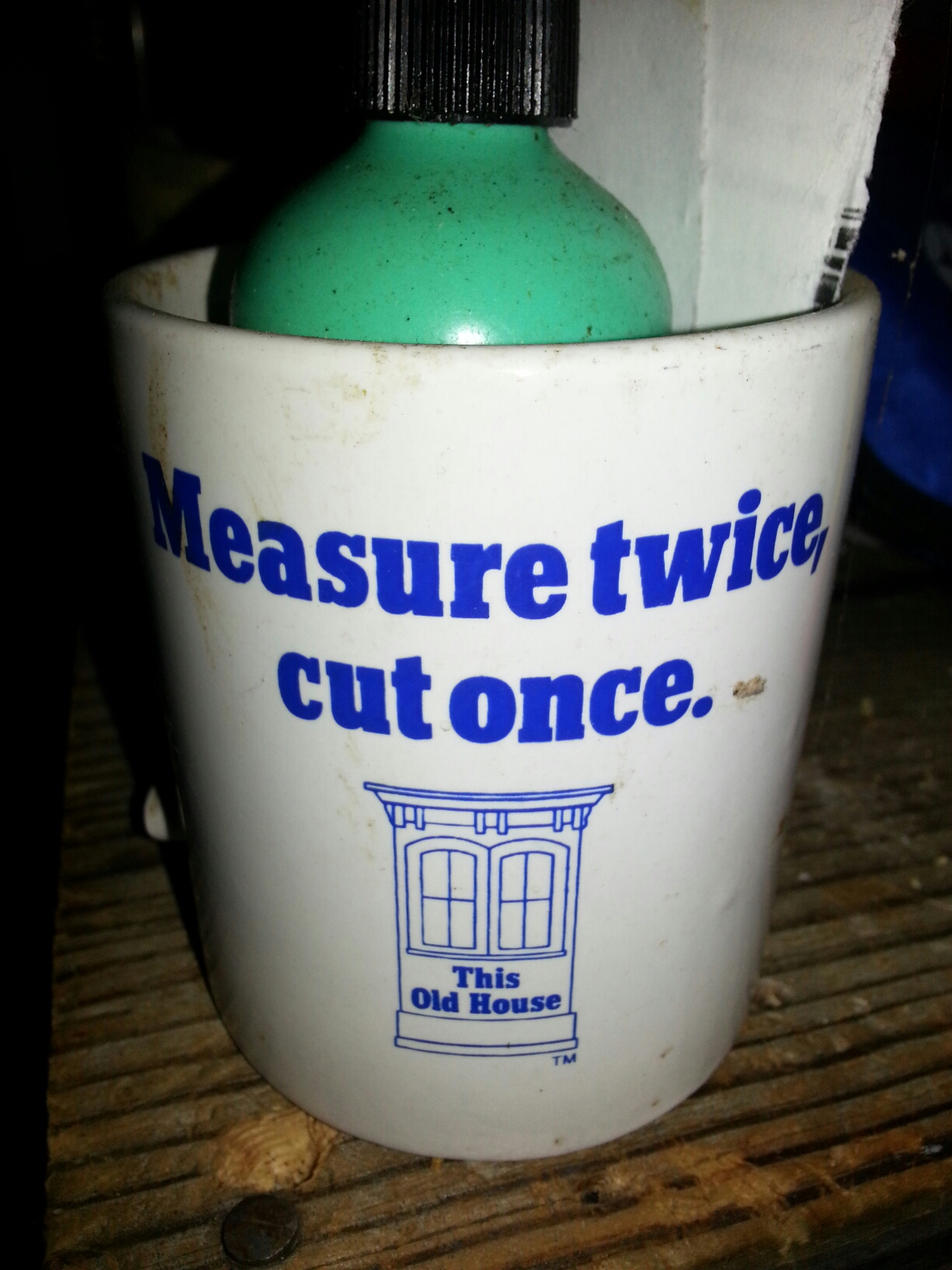
Time to start measuring (twice),
…cutting, and sawing on the cutting-edge!
The Local and the Cosmic
My father taught me one important lesson — never take a job because you have to and, even if you need it, don’t act like you do.
Maybe you heard it differently when I directly quoted my father. We sat in his car, I a teenager off from high school for the summer, he working as an “energy efficiency” expert in the role of extension agent for Virginia Tech. We looked out of the windshield at the small entrance to the factory Dad was visiting that day.
“Son, I want you to observe the people you meet today. There are two types — those who work in the front office and those who work on the factory floor. This little burg in an Appalachian mountain valley is what they call a company town. The people on the factory floor do most of their shopping at the local store, which is run by a member of the family that owns and operates the factory. They wouldn’t leave this valley, no matter what, and the factory owners know that. In return for giving the workers better than poverty wages, the owners and managers make sure the workers put in a hard day’s work and spend most of their paycheck getting goods and services they would not have, had the factory not been here. Most of the workers are in debt to the owners because they buy more than they can afford.”
This particular factory made ready-to-wear clothing just like other factories in the area — socks, jeans, that sort of thing.
The owners weren’t bad people but some of them were less caring about the condition of their workers than others.
I remember one factory where the owner complained that he wasn’t getting the level of performance out of the machinery that was promised by the manufacturer. A manufacturer rep had inspected the equipment and said nothing was wrong. The owner contacted the Va. Tech extension office and requested assistance.
When Dad arrived, he interviewed the owner while I sat up front with the secretary for the factory. She was a pretty, young woman who had gone to business school and could type and take dictation as well as manage the petty cash and the file cabinet organisation.
Because I was a good-looking, red-headed teenager, wherever we went Dad sat me down with the secretary to get the scuttlebutt and opinion of the owner/manager.
Sometimes, he took me along for a tour of the factory, especially if he needed a go-fer to measure distances or equipment size.
In this case, Dad made me stay with the secretary because the boss was a little agitated and wanted to personally unload on Dad about adult stuff.
After Dad toured the plant with the owner and one of the shift supervisors, he collected me, along with a box of jeans that the secretary insisted on giving me as a present for being so kind and attentive.
On the way back to the extension office in the basement of a wing in the Martha Washington Inn in Abingdon, Dad told me what the boss had said.
Basically, the man wanted to increase factory output to at least 100 percent capacity in order to stay profitable and ahead of the cheap knockoffs that were starting to flood the market. If so, he could lower prices and remain competitive. If not, he would either have to let workers go or close the factory and he didn’t want to abandon the business because it had become his life’s work and he wasn’t ready to give it up.
Dad returned to the factory without me and took temperature measurements around the equipment (mainly large cutting or sewing machines). The temperatures were only slightly elevated and did not account for a lower-than-expected output.
He returned a second time, with me along to observe.
He asked me to strike up a conversation with one of the workers and ask dumb, “innocent” teenager questions about what’s it like to work in the factory.
Dad already knew what I reported back to him before I told him.
It was not the equipment that was the bottleneck which slowed down production.
It was the workers.
They were operating in temperatures that were too high for humans to tolerate for eight to ten-hour shifts at a time, especially in the summer.
Dad submitted his findings to the boss, who did not accept that the workers, whom he trusted as loyal and hard-working, were the cause of the problems, and requested that Dad redouble his efforts to find the root cause.
Dad told me that this is the difference between management and labour.
He rewrote his findings, suggesting that to lower the equipment temperature down to a more productive capacity, large industrial fans should be installed in both ends of the factory (basically a long metal building, thinly insulated against cold).
The boss took Dad’s suggestion as a good sign that the manufacturer rep had missed something obvious, felt better for consulting Dad and installed the fans.
The factory output increased significantly. The boss was happy and gave Dad a great recommendation.
I recall that incident any time I hear a major figure in business such as Elon Musk wax poetic about the future or give away patents.
We get so wrapped up in our jargonese that we sometimes forget the fact we are one species on an insignificant planet of a solar system in one of a few billion known star systems we call the Milky Way Galaxy.
On the door mat labeled “WATCH CATS,” on the exact same spot where Merlin sat for a photograph, rests a telescope pointing down toward the ground, reminding me that my feet are usually stuck to terra firma rather than floating amongst the stars.
Merlin spent most of his life in this house and I spent most of the last seven years in this house with him and his brother Erin, who sits nearby.
Merlin taught me a lot in his sixteen years on this planet. I was never completely sure who was management and who was labour but I didn’t care — symbiotic love clouded the logic in such thoughts.
I think Elon gets the same message…

The truth?
After years of speculation about what inspired him, Terry Gilliam stepped out of the editing room today to admit that he got most of his ideas for Monty Python, especially the Holy Grail material, from the film “Snow White and the Three Stooges.”
Fans around the world were thrilled with the news.
The creators of Frozen deny any link to the film whatsoever.
Tasteful or tasteless?
I have no problem letting my thoughts wander afield, knowing the energy spent generating thoughts reduces the energy spent acting upon them.
For instance, the day Merlin died — in fact, mere minutes before his life passed before my eyes — I drove over to the local supermarket and bought a cardboard container of fried chicken.
Seven pieces: two breasts, two thighs, two wings and a drumstick.
Can you see where this is going?
While my wife held the crying Merlin in her arms, I prepared a dinner plate for her of a chicken breast and banana pudding. I went ahead and prepare my plate, too, so that when my wife finished eating I could hand Merlin back to her and I could eat.
Merlin died before my wife finished eating.
I’m a sentimental old fool. I can sit here and remember so vividly as Merlin’s eyes dilated so completely I knew he was dying the moment Janeil handed him to me, as if he was taking in every last bit of the world he could just before he said goodbye.
But I digress.
After Janeil finished eating, she asked to hold Merlin [blog entry delay — Erin wants some turkey]…
When she held him, she looked him and said, “I think he stopped breathing.”
“I know.”
“Yes. He died a few seconds ago but I was too much in shock to say anything.”
She nodded. “Well, what do you want to do?”
“Bury him.”
“I know that. I mean right now.”
“I guess we can put him in a box.”
“There’s a box of my scrapbooking supplies on the stove. You can use it.”
I emptied the box and placed Merlin’s stiffening body inside, placing his loose head on the lip of the box as if he was just reclining in it for a moment.
I set the box on the sofa between us and went back to get my dinner plate of potato salad, cole slaw, cowboy beans, a chicken thigh, wing and drumstick.

While seated on the sofa, I ate. Tears welled up in my eyes. I looked past Merlin to my wife. “I’m trying to eat and not think.”
“Uh-huh. I know.”
It wasn’t just the thought of my dead buddy beside me that got to me.
It was other thoughts, too.
Like what does fried cat taste like?
Does it taste like chicken?
How much meat is left on Merlin’s bones?
No, no, I’m not supposed to think thoughts like that.
I’m civilised!
I’m not supposed to wonder if I placed Merlin’s body in the crawlspace, would unknown creatures strip his body down to the skeleton like the mice and chipmunk skeletons I’d found down there through the years?
I once made a recycled art homage to Damien Hirst using cat food boxes and cans, simulating a cat carcass cut in two. Would I dare use Merlin’s skeleton as an art exhibit?
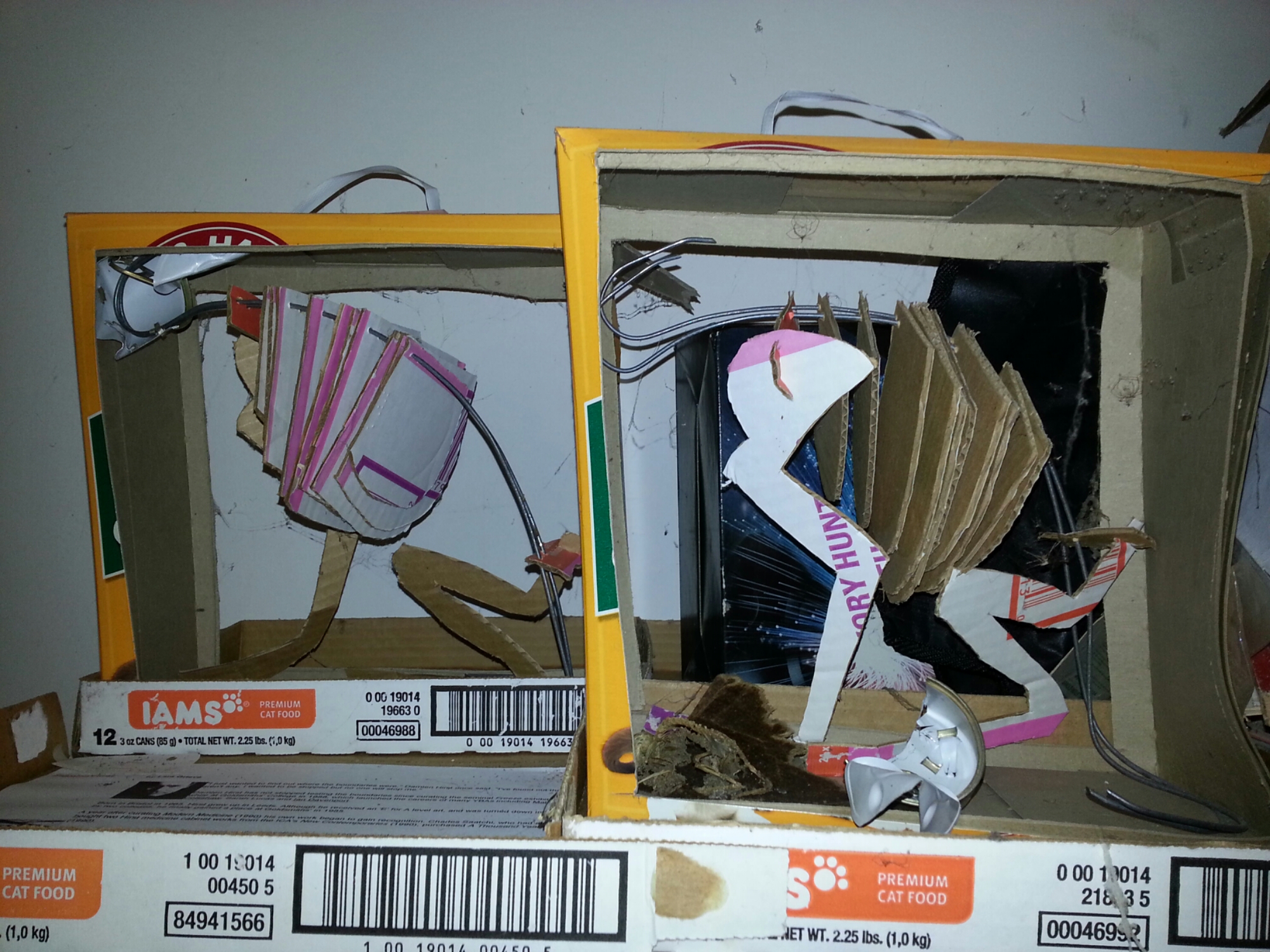
After all, people have their favourite pets stuffed and put on display in their homes. Hunters mount the decapitated heads of their kills on walls.
Best remain still, my wandering thoughts, and finish my meal.
There’s always tomorrow. Seems like a pretty good idea to me.
After I buried Merlin that evening, I returned the next day to place rocks on his grave, arranged like a dinosaur skull…look sideways and you’ll see it.

The 30-Minute Woodsman Methodology
Instead of agile design, I went with the woodsman design methodology to build a bridge across a wet-weather creek bed.
Simple is better!
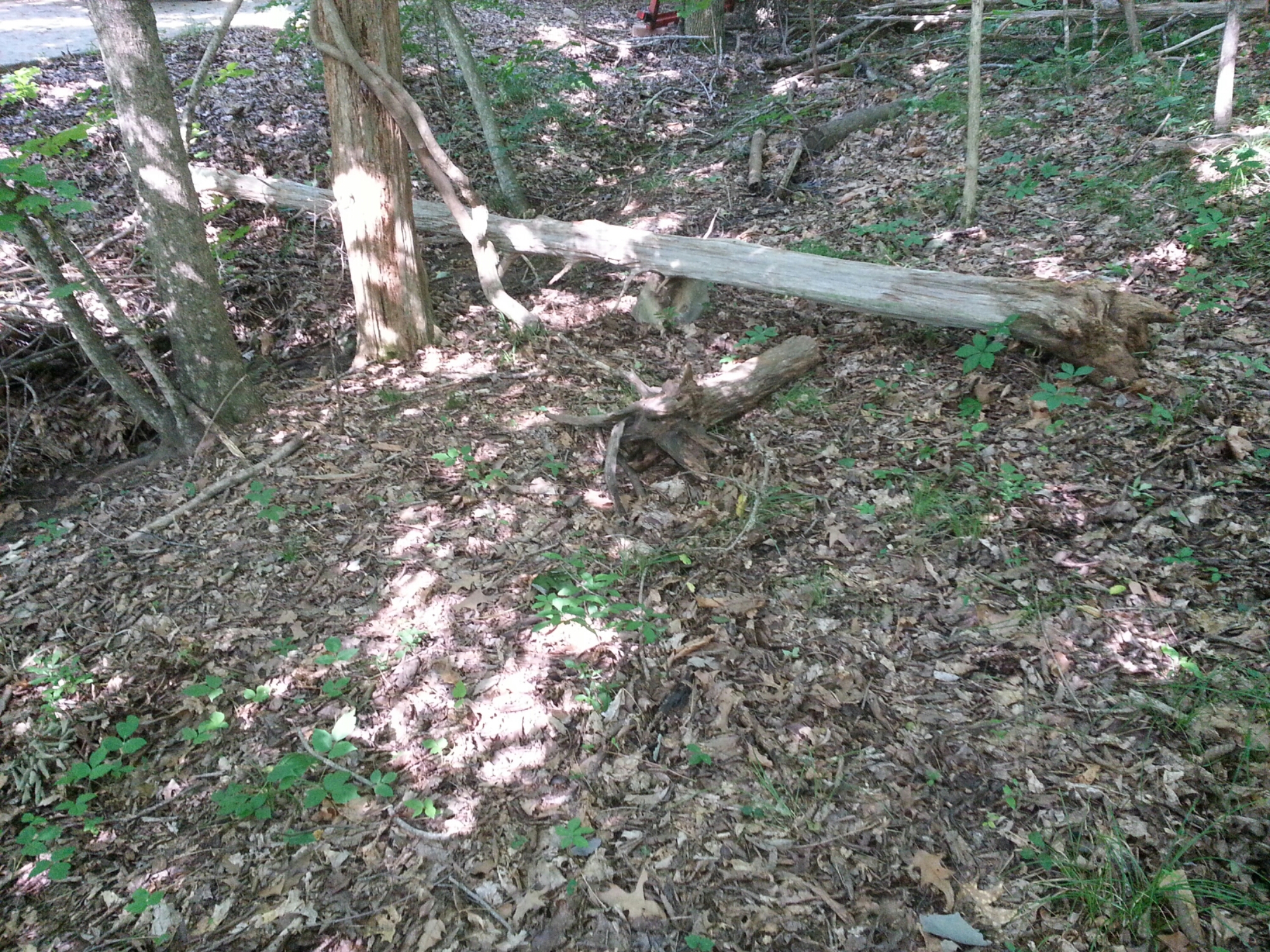
I saw several fallen cedar trees in the woods beside our driveway and the light bulb in my gulliver lit up, dim though it may be.
Why build the ol’ tree trunk log bridge?
After all, I didn’t name my company Tree Trunk Productions for nothing!
I found a log with a relatively flat side, used my handy-dandy D-shaped hand saw to remove limbs on that side and flipped the log on its flat side to drag it to the dryish creek bed.

I test fit the log to determine which branch stubs under the log to shorten and use as support stakes in the ground.
After setting the log in place I stood on the log and felt it was too bouncy for regular traffic to Merlin’s grave in the woods.
I found a rock up in the woods, tested its fit under the log — a little too high and unsteady. With a spade I dug out a solid footing for the rock and repositioned the log on top.
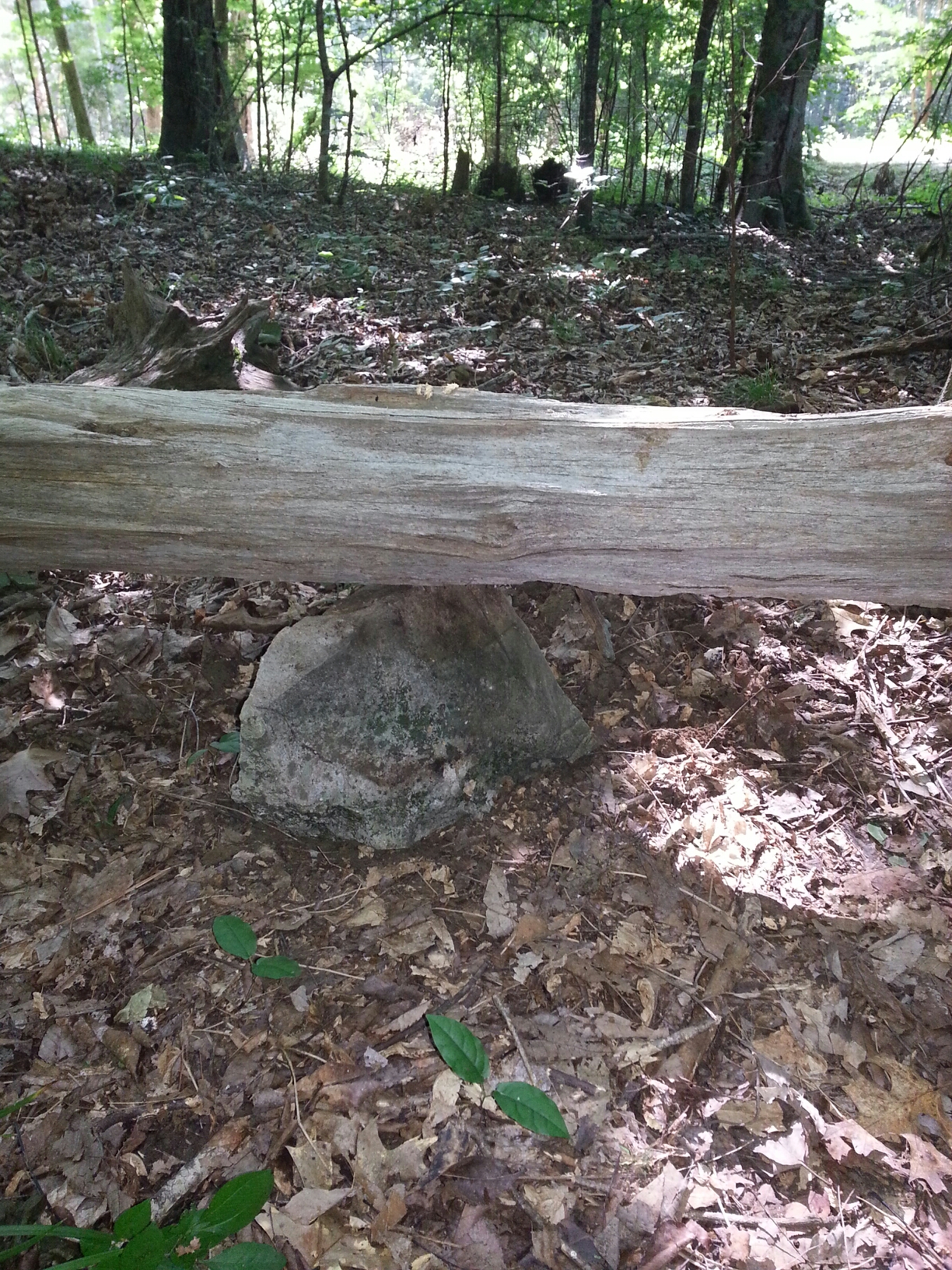
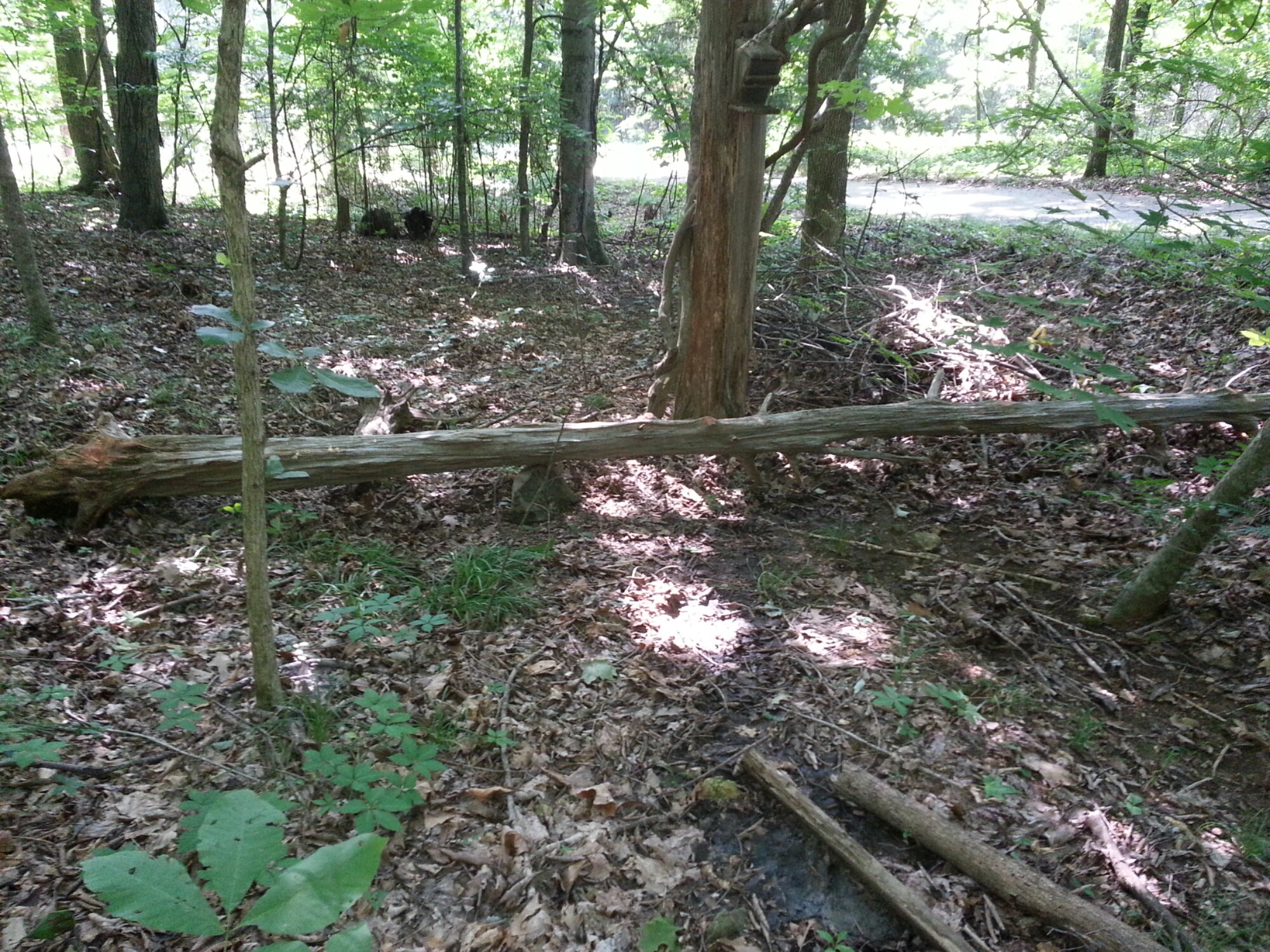
Thirty minutes and the job was done, using all-natural materials for the bridge; a Stanley 35′ PowerLock2 measuring tape to estimate the log length I needed (16 feet), a Great Neck bow saw to cut the log, and a now old-n-rusty spade I got as a “honey do” wedding present back in 1986 to set the rock in 2014.
Job done!

Time for a mid-morning snack and then find a place to fly my electric RC planes in the early summer stifling heat.
 treetrunkdings