The reddest leaves of autumn in north Alabama this year have been those of poison ivy vines. To the eye, a delight; to the skin, a detriment.
Tag Archives: chapter excerpt
The neurotic, neural path of neuropathy
While the “live in Japan” set of 21st Century Schizoid Band bangs out tunes in the living room, the unsyncopated water beats of rain from the gutter streak across my window view.
Out of synch, out of tune…vie-veh-vuh-v-vroom!
Methinks it’s time for a new stop-action video before neuropathy takes over my toes and I can no longer feel sand squish between the digits of my feet.
Neuroaesthestics — same view, two different viewpoints?
Are they alike, similar, or opposing, in your view?
Good news for 4G LTE programmers?
Habits of Habitual Habitating Habitats
I am a man of opposites.
I don’t always know why.
If you say left, I say right.
If you say can, I say might.
If you say Catherine, I say Kathryn.
If you say Jennifer, I say Guinevere.
Opposites have meaning in alliteration,
Different than meanness in symbols/ideas.
Vocabulary definitions,
Vocational constabulary,
Destabilising vacations,
Docent verifications.
Definitely vocal.
Defiantly local.
Lo-cal.
Vo-tech.
Lo-tech.
Hi-tech.
Hi-test.
Tie vest.
Vie via “veni, vidi, vici.”
Vital.
Words curb.
Curb words.
Carve wood.
Weave curds.
The rhythms rhyme with rheumatism like no other word could.
THE END
= = = = =
Thanks to Morgan at Dreamland BBQ; Robert Gates; Tony Yates; Christa DeCicco; “Christabel” by Samuel Taylor Coleridge.
Return to ROI

Something, some thought, some idea, in the back/top/middle of my head is itching.
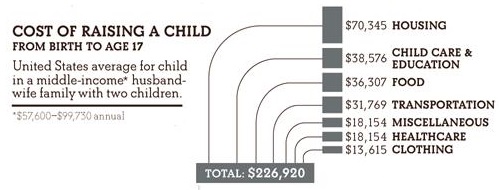
I look at old stats such as this:
I wonder about the average cost of postsecondary education for a college student in the U.S.:
Figure 40-1: Total cost of attending an undergraduate institution for first-time, full-time students receiving aid, by level and control of institution and living arrangement: Academic year 2010-11

I examine tables such as this one:
Figure 29-1: Percentage of youth ages 16-24 who were neither enrolled in school nor working, by sex: Selected years, 1990-2011

Finally, I ask myself, what, based on the salaries of youth who reached adulthood, was my ROI (return on investment) of these kids?:
Figure 49-2: Median annual earnings of full-time, full-year wage and salary workers ages 25-34, by educational attainment and sex: 2010

And that’s just the U.S. domestic market.
I’m thinking about this one…~$227k to raise a middle-class kid. Looking at salary figures above, the kid has to work for quite a few number of years to pay back the investment in his upbringing.
Where is the line where ROI is achieved?
Meanwhile, those shrinking middle-class kids are having kids and using public resources, contributing some small amount toward supporting public employee pension funds, Medicare, Medicaid, Social Security, etc., that they hope to receive themselves one day, even if they don’t believe the benefits will be available when they reach their senior citizen years.
In other words, our investment in the average citizen continues throughout that citizen’s life, well after ROI on childhood is achieved.
But there’s something else here in and out of this data set that still itches, has itched and continues to itch every time the subject passes through my thought set.
More than social responsibility.
More than cultural expectations.
More than formative years brainwashing.
More than standard/quality of living.
I see the costs, I see the benefits of straightline ROI, but the je ne sais quoi…???
What about the noneconomic value of a person? Where are we accounting for the individual person’s thoughts, dreams, wants, needs, etc.?
One thousand years from now, we hold a history class and talk about the concept of worship through the rise and fall of civilisations.
During the first few thousand years of our species’ history, we slowly replaced the worship of unseen deities with the worship of money, as simply demonstrated through the construction and sole function of edifices found during archaeological digs.
It took a hard turn from deity-to-money history for us to change what we worship 1000 years later.
But we’ll save that lesson for another blog entry.
Thanks to Meagan at Tenders; Joe and Jennifer at KCDC.
When all ages/genders work…
So, now that all genders, all ages, all nationalities, etc., are eligible for employment, we have an abundance of people not working in formal contribution to a money-based economy…
What to do…hmm…
Women, children, elderly added to what once was a 16-to-65 year old male-dominated workforce not so long ago.
How do we challenge all seven billion of us to find meaningful work under these conditions?
No AT&T 4G LTE in Rocket City
According to CSR Alethia last night, there are no plans for AT&T to deploy 4G LTE towers in Huntsville, Alabama, anytime soon, for those who are interested.
Colour between the lines
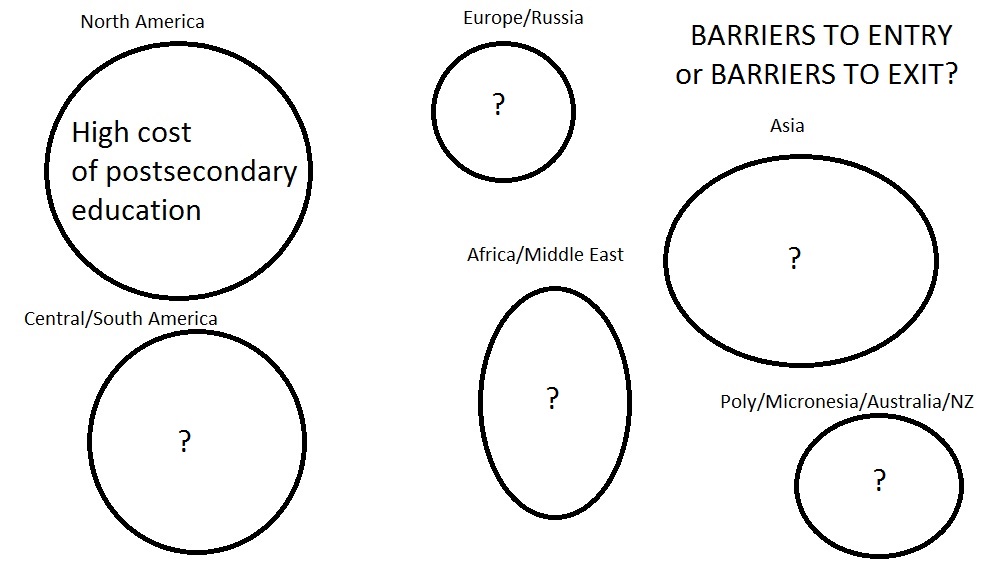
Finish the diagram below (Crayons only, please — no fine-tip pens or magic markers).
 [Click to enlarge]
More points to [re]ponder
- Technology disrupts former profit models, closing businesses and increasing unemployment, but provides no equal replacements for jobs/profitability
- Technology creates high-stimulus, addictive leisure activities that are easily available (cheap, abundant, etc.), making instantly-gratifying tasks like searching the Internet and gaming more appealing than delayed-gratification tasks like studying for high-skill jobs
- Technology creates demand for high-skill jobs but large workforce not interested/motivated for high-skill job training
- Local skill gap in job requirements for businesses seeking expansion, as well as national governmental barriers to entry/competition for eligible, highly-skilled, internationally-mobile workforce, contributes to regional high unemployment
When do local people, en masse, say “no more!” to higher education and highly-technical skill sets, creating viable subcultures that revert back to lower skill needs? How do they remain competitive enough to be profitable and stay in business as owners/employees?
Does a technology-based socioeconomic system, in general, have a fixed lifespan like a classic technology lifecycle?
Yes, these are repetitive thoughts but ones I want to grasp onto for myself and understand their implications for the future in this parallel universe of a blog.
Either we admit that our model of nations is out-of-sync and possibly obsolete or we open up the floodgates and let subcultures compete against each other at full blast, with subcultures, like species and languages, going extinct at a faster rate than before.
If the latter, will your subculture withstand the onslaught?
 treetrunkdings