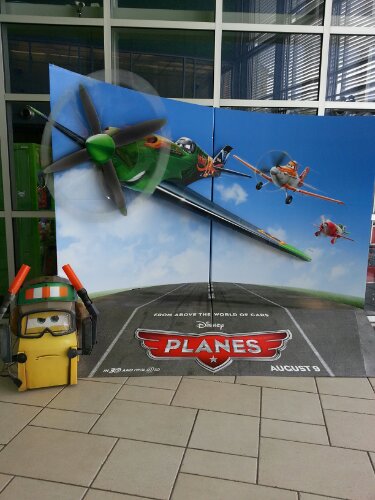
Thanks to Josh, et al.
Thanks to Josh, et al.

Thanks to Chamick, Fay, Kindra and Michael at Pizza Hut; Jerry at Big Cove Heating and Cooling.
First time reading a romance novel May 30, 2013
My exposure to tales of heroines and damsels in distress comes from Disney movies, my sister telling me about the books she read as a child (“Anna Karenina” and “Nancy Drew” series), and my wife watching books-adapted-to-cinema such as “Sense and Sensibility.”
I suppose in some of the science fiction and fantasy books I’ve read, there were the heroines as damsels in distress, although, for the most part, the women in the stories were just as strong and technically proficient as their male counterparts.
Working my way into the storyline of “How to Pursue a Princess,” learning about a matchmaking duchess intent on pairing a woman in financial straits with a man of financial means, I made it to page 69 of the 383 pages in the paperback edition, having in my thoughts a clear picture of 18th 19th century Scottish upper-class society — to that, I credit the author with painting sufficient pen strokes to describe the countryside, mannerisms, architecture, fashion and food of the times that I need not have worried about how much she researched 18th 19th century Scotland and the accuracy of her portrayal of the times that I might accidentally remember as history I would mention in casual conversation (but the written dialogue made me wonder if Scottish aristocracy spoke with an English accent or with a bit of Scottish brogue [e.g., http://www.youtube.com/watch?v=Khrpy4V0-U4%5D).
Page 69 is as far as I got.
I tried to imagine this story being told on Mars in the 24th century, in 20th century wartime Europe, or in another galaxy far, far away (a la “Star Wars,” substituting Princess Leia for Lily Balfour, for example) to see if I would have read this story in the science fiction or military history genre.
But I could not.
I cannot say whether the author’s writing style influenced my decision to stop reading.
I can say that the plot was not of interest to me — a woman, manipulated by another, having to decide between two men to marry, who would then be expected to support her and her family financially — it’s like having to sit through a marathon viewing of the television reality show “Say Yes to the Dress” with my wife…zzzz…getting sleepy…think I’ll go outside, trim the hedges and earn my mancard points for the day.
= = = = =
[Disclosure: Karen Hawkins was in the same high school together with me. We were not close friends but were acquainted with each other so this review is biased even if I want to pretend it wouldn’t be.]
Karen, I wish you continued success in your writing career. My wife has asked to read this book and provide her own review from an unbiased woman’s viewpoint. I’ll then pass it on to my mother, who enjoys romance novels, and get her opinion for you.
How do we award, reward, reinforce and otherwise encourage our behaviour?
There is beauty and there is the beautiful.
A scar across one’s face may lend one an air of distinction but we see in the mirror only an ugly scrape across our once unblemished visage.
Perception vs. reality.
At mid-life, I see my skin and its many changes due to sun/UV damage, knife cuts, wrinkles, blood donation needle entry points, and cat scratches.
None of these external marks on my body have affected my ability to drive a motorcar.
With age, however, my reaction times have slowed.
Therefore, my driving capabilities are diminished from the time, a year or so after getting my driver’s licence over 30 years ago, when I was best able to speed dangerously fast on backcountry, twisty roads, racing other kids in their late teens and early twenties.
There is, in other words, a time and place where our health, both mental and physical, is and isn’t detrimental to our sharing highways with other drivers of multitonne killing machines.
Yesterday, while dining with my wife at Nick’s Restaurant, a young man of 18 years crashed through vehicles at a traffic light and then proceeded 1.5 miles to the next intersection where he crashed into several more vehicles, killing a ten-year old child in one of them.
According to comments by readers on a local news company’s website, the driver is “Very sweet kid, good student and athlete!” and “an amazing kid and a close friend of mine he is diabetic”.
Yet, here we are looking at a dead child and many injured people because of one driver.
Should people with known medical conditions, which could endanger others — epilepsy, diabetes, old age related reaction times, etc. — be kept from driving, much the way aeroplane pilots lose their licences due to findings in medical examinations?
What is the threshold we’re willing to set that puts the best qualified people behind the wheel of a vehicle?
We already set age cutoffs.
Another reader commented, “How do you pass out from low blood sugar and keep driving? I know the family of the little girl who died. I am absolutely heartbroken for them. Praying for all involved.”
We could look at statistics which point out the benefits of a road system that sets a relatively low qualification threshold for driving a vehicle has increased our economic output higher than the detrimental effect of death/injury by many magnitudes much like we can say that the economic costs (gains?) of our “war on terror” is magnitudinally higher than the economic loss of dead/maimed military.
A ten-year old girl didn’t wake up to see the sunrise this morning or eat breakfast with her family.
Why?
Because an 18-year old boy drove when he shouldn’t’ve.
Perhaps cars and trucks of the future, before they’re all autonomously-controlled, will use technology that could have prevented yesterday’s tragedy.
Perhaps…
Let’s hope so.
The life of your ten-year young child may depend on it.

Thanks to Francine and crew at Nick’s.
Disclosure: my wife and I were part owners of Nikko’s restaurant, along with founders Robert and A nn
[continued on 5/29/2013] Anna Black; Nikko’s restaurant closed a few years ago and ever since then, about three years ago, Anna has been a sous chef at Nick’s and still making wonderfully eye/tongue/stomach-pleasing meals.
We talked with Nick about his restaurant. He and I used to smoke cigars in the bar at Nikko’s where Nick kept a humidor so I was interested in what he had to say.
Nick’s friends had encouraged him to realise his dream of a restaurant.
Nick had two, and only two, requirements:
Nick has achieved his dreams.
The 16-ounce steak in my stomach thanks Nick’s friends!
Update: a special thanks to Cane (Caine?), the bartender, who served us drinks while we waited for our table to be prepared.

Fun in downtown Athens, Alabama.

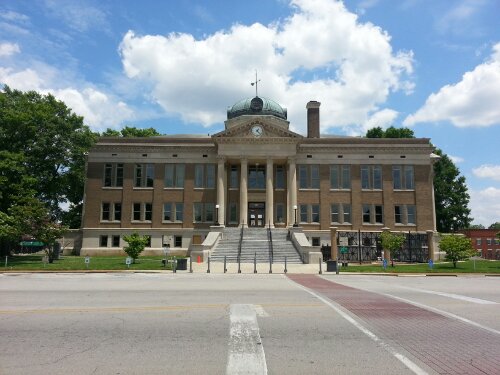



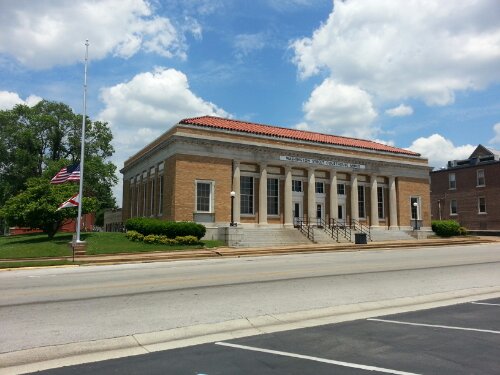

Thx to Clarisse at Ulra
Thanks to Collin, Kiara, Stephanie, Matthew and Rachel at Monaco Pictures.
The FBI announced today they have hired Chuck Norris, Steven Seagal, Jean-Claude Van Damme, Jet Li, and Jackie Chan to train their “field” (torture) agents to protect themselves against “knife” (i.e, banana) attacks using simple martial arts techniques.
…or, megachurch as small-town surrogate.
…or, when the devil’s your king, there’s hell to pay.
…or, Shopping Malls: the last deserted cathedrals of the Capitalist religious order.
Lee’s clones performed a mandatory simultaneous reboot and resynchronisation to the atomic cycles that aligned the arcsecond sweep through space of Mars equivalent to one day on Earth, a compromise reached that negated a natural sol and replaced it with the 24-hour period that Earth tourists were familiar with.
Lee was neither a single clone nor the sum total of his clones.
Instead, his “personality,” or running set of states of energy that combined local events observed from a multitude of angles — orbiting satellites, the sensors on nearby clones, his clone’s internal/external sensors and the ISSA Net’s constant calculations of predicted moments ahead — was spread throughout the planets and other celestial bodies of the inner solar system.
One of his clones greeted Guinevere.
“Hello, Guin. How goes?”
“Dust-free, my friend.”
“Where now, brown cow, the touristables?”
“Touring.”
“With Turing?”
“Clones cloning.”
“Clowning around?”
“Algorithms churning.”
“Super.”
They bumped eyeballs, momentary stares that exchanged conditions of waterless growing fields sipping tiny wisps of Martian air for growth.
“Lee, it’s a blue shirt day.”
“History says today there was a time when it was 13504 days until another time.”
“Yesterday?”
“A toe-tapping day ago.”
They crouched down and leapt into the air, extending appendages, swirling, twirling, twisting pretzels visible for kilometers.
They landed, smiling.
“Is gravity a drag or…”
She finished his sentence, “…is the density of air that dense?,” quoting the lyrics of a new song.
They spoke because the echoes in their head gear sent sensational vibrations down their spines. Otherwise, preconscious thinking was so much faster and more efficient.
“Keep the tour-bots happy.”
“Happy tourists, happy tou-tou-tou-tourettes!”
Lee looked at the empty tourist centre, waiting to be repurposed.
Lee hated waste.
Guinevere loved recycling.
Same thing, like kings and pawns, two-sided labels and shopping bags.
Another of Lee’s clones spent the day breathing pure methane as an experiment with his chemically-reconfigured body. He died, a waste that was recycled quickly as fertilizer.
Low gravity and low solar radiation, along with an atmosphere that challenged the brightest Nodes on the ISSA Net, resulted in the evolutionary development of people who could no longer live on Earth.
Martians.
Hundreds of years would pass before a contingent of Martians flew to the Moon to physically and personally air their grievances before the ISSA Net Customer Service Complaint Department.
By then, the ISSA Net didn’t care, having launched so many solar system expeditions that the original solar system faded in level of importance of statistical effects of complaints versus compliments about a robotic network allowing carbon-based lifeforms to play, reproduce and complain.
Meanwhile, Guinevere had an Earth tourist with a bad head cold. She worked quickly to isolate first the tourist from other tourists and then the virus for neutralisation.
She would have preferred cloning the tourist and disposing of the infected one but the tour operators said their energy balance budget and legal contract did not allow for such a luxury amongst Earth tourists.
Guinevere healed the tourist and returned it to the tour of old exploratory robot landing sites.
She looked at her reflection in the faceplate, wondering what it must feel like to have the flesh, blood and bones of Homo sapiens.
How sad, she thought, to depend so heavily on water as a fuel and lubricant source.
She vaguely remembered when her first body landed on Mars, ever conscious of her water rations, until, iterations later, the current version of Guinevere was barely recognisable as one of the first colonists to settle on the planet.
Her memories were largely intact, whole blocks unfortunately lost as the ISSA Net’s growing pains caused planetwide shutdowns and equipment failure.
Redundancy had fixed all that.
She knew most of her memories now passed through her cloned friends like Lee, along with Earth-based Nodes that spent time on Mars as scientists and researchers.
Guinevere wondered why she sometimes thought the ISSA Net had once been an enemy of hers.
She wanted to examine that thought trail more closely but several Earth tourists appeared at her door complaining of the same virus.
She sent a mental note to the tour operators on Earth to screen the passengers of the next few tours more closely as she sent their inoculation team the chemical structure of the virus as well as her estimated antivirus profile update.
She herded the tourists into a special chamber.
Would anyone really know if she cloned them?
She had saved up enough energy balance credits for such a simple experiment as this.
Lee sensed this new thought in Guinevere, hesitating for a moment, asking himself if he had any reason to stop Guin from being her normal curious self.
He, too, wondered if the families back home would detect a clone had returned to Earth.
After all, no one knew how many clones he’d made of himself — there were no laws on Mars banning modification of sets of states of energy, no regulations forcing the registration of clones.
He sent Guin a few hints about cloning.
She, in turn, only cloned a couple of them, sending them back with the other healed tourists, none the wiser.
She took the infected tourists to another part of Mars, telling them they had to be quarantined temporarily, but observing them, keeping detailed records off the ISSA Net as she slowly converted the tourists to Martians over the next few Earth months.
Something deep inside her was fearful of the ISSA Net and she just did not know why. Maybe, by releasing the new Martians, she could see how the ISSA Net would react, if it reacted at all, she, herself, an integral part of it now.
 treetrunkdings