Two data points

Would you believe that Vladimir Putin is a big fan of the actor, Jeff Daniels?

Yes, it is true.  Putin admits privately that his latest stunt, flying with cranes, was inspired by a film starring Jeff Daniels, Fly Away Home.

Men quit jobs due to Internet addiction but deny they’re asexual, claim it’s just a cat infection problem — news at 12, 1, 4, 5, 5:30, 6, 6:30, 8, 9, 9:30, 10, 10:30, 11, 11:30, 12…as soon as Tom Brokaw wakes up from his sleeping pill addiction, that is.

Drum roll, please!

Wake us up after the ECB finishes its latest fruitless fishing expedition — you won’t find many appetising meals in the EU economy.

13,755 Days to Go

In the warm evenings of the year, I sleep on a sofa in the sunroom, often woken up by my wife on her way to work.

This morning, after my wife left, I heard the pitter-patter of tiny feet and opened my eyes to see a squirrel licking up the dew on top of one of the skylights.

On the driveway yesterday, a line of ants moved back and forth from one location to another, unencumbered by hungry predators, the ants walking around dry leaves and hickory nuts that fall from trees in this miniseason of early autumn.

The sounds of residential construction hit my ears — hammering, sawing, splintering wood — and I wonder about not just the waste and fraud in the medical business but the waste and redundancy in construction.

As long as it’s cheaper to dump leftover construction material in landfills, we have no incentives to drive innovation in construction methods unless there’s also a profit motive.

How can we increase the profit motive without imposing fees or adding regulatory disincentives?

For instance, what happens to old material — shingles, tiles, sheet metal, nails, underlayment — after a house is reroofed?

Where are the innovators in the reuse/recycle field?

We can easily see the potential energy of water behind a dam but we can’t see the potential energy of material in a house before remodeling?

I look through the lens of my eyes and all I see are sets of states of energy devoid of anthropomorphic qualifications.

What if we all saw life that way, how some states of energy bond more readily than others, rather than superficial qualities that are in meme states only?

Outside the window, the redbud leaf that is full of holes and starting to yellow has a sense of beauty about it but beauty is truly only in the eyes of the beholder.  The holes chewed in the leaf indicate a set of states of energy found the leaf material useful for strengthening its bonds, not for any sense of beauty I may assign either one.

Let us not confuse our brain’s excess capacity for making sense of the world around us for more than what it always is — adapting to our environment to improve our chances to reproduce our sets of states of energy.

Some useful websites for today:

Fifty years until the next generation of real innovation?

I’m floating in a thought set of two Thai teas right now so my ability to pull memories out of the nether reaches of the brain is muddled.

What is the difference between idol worshipers and the idolised?

What makes groups of people find true innovation?

Imagine the following conversation…

= = = = =

Today, we have brought together some of the brilliant geniuses of the past (as opposed to the non-brilliant ones, that is) — Tesla, Eastman, Marconi, Edison, Nakamatsu, Einstein, Khayyám, Curie — in order to find out their thoughts about today’s revolution in technology.

Moderator: “Gentlemen and lady, welcome.”

All: “Thank you.”

Moderator: “During this time of year, technology vendors tell us about their latest offerings in the open market.  We’d like your opinions about their engineering achievements.”

Curie: “I am a scientist, not an engineer.”

Einstein: “Me, too.”

Moderator: “No problem.  We only want your opinion about the practical applications of research you performed in your lifetimes.”

Curie: “Please proceed, Monsieur.”

Moderator: “Thank you.  Over the past few days, we have seen many devices demonstrated by company executives that are meant to simplify…”

Eastman: “Are you saying that executives themselves are simplifying something?”

Moderator: “No.  Let me finish and you see what I am trying to say.”

Edison:  “As both inventor and company man, I can tell you that simplifying your work for the public is no easy challenge.  Why, look at Tesla here.  Does anyone remember who he is.  I bet Westinghouse would have a thing or two to add if he were he.  By the way, where is he?”

Moderator: “Well, we put out a call for him but instead, strangely enough, we received an RSVP from a musical act calling itself AC/DC.”

Edison: “Very interesting.  Yet, you also invited me.  Were you trying to send a message?”

Marconi: “Who, me?”

Moderator: “No.  Please let me continue…”

Curie: “Gentlemen.  Let our moderator finish what he had to say.”

Moderator: “Thank you.  Anyway, we have a lot of devices to talk about so I’ll get right to it.  We have placed on the table in front of you several of the latest products — some of them still in the prototype stage — that we would like you to comment upon.  Let’s start with this one, the Motorola Droid Razr Maxx HD.  Who would like to comment first?”

Tesla: “Okay, I will bite.  What is this interesting toy?”

Moderator: “This is a mobile phone.”

Tesla:  “A phone, you say?  Where is the receiver?”

Moderator: “Well, that’s the thing, sir.  You see, it is the receiver.”

Tesla: “A-ha.  I see this is like a tiny television, is it not?”

Moderator: “Yes.  Good analogy.  You’ll also be glad to know that it uses wireless technology to send and receive radio signals…”

Marconi:  “A wireless?  Why didn’t you say so?  How do you power this device?”

Moderator: “With a battery.”

Edison: “AC or DC current?”

Moderator: “DC.”

Edison: “Very exciting.  I can see why Westinghouse chose not to show up.  What about this musical act, AC/DC?  Did they finally decline the invitation?”

Moderator: “No, they decided to show up by proxy.  Here, let me show you.  Mr. Marconi, if you will hand me the phone…?”

Marconi: “Certainly.”

Moderator: “I’ll just bring up the music app…”

Eastman: “‘Music app’?”

Moderator: “Oh, sorry.  This phone has its own built-in memory…uh, well, not unlike camera film…”

Eastman: “Really?”

Moderator: “No…I mean…well, Ms. Curie, your research into radioactivity, combined with Einstein’s work on relativity, has opened up many engineering and science fields, including work on erasable memory.”

Tesla: “You can erase memories now?  Fascinating…”

Moderator: “Well, not human memories, I mean…”

Tesla: “Oh?  Well, that’s too bad.  Imagine being able to erase ordinary memories from your mind so you could create more room for important research…”

Moderator: “Anyway, let’s get back on schedule.  Inside this phone, like most of the devices we’ll review today, are miniaturised computing and memory units, not unlike the analog computers some of you are familiar with.  Back to the demo!  Here is what the rock band AC/DC sounds like…” [plays “Back in Black” by AC/DC]

Einstein: “Very interesting use of distortion…”

Moderator: “Yes, these are electrified instruments.  If you gather closer, you can see the band performing.”

Curie:  “Looks like that young man is wearing his pants a little short, n’est pas?”

Einstein: “I am impressed that the men can see what they’re playing with their hair so long.”

Moderator: “Yes, I understand what you mean.  Anyway, let’s move on.  Here is the next device, the Nokia Lumia 920.”

Tesla: “Why is it sitting on that little hot plate?”

Moderator: “Well, sir, this is exactly the sort of thing I thought you’d appreciate.  The ‘hot plate,’ as you call it, is a wireless charger for the battery.”

Tesla: “Wireless electricity?!  If I was still alive, I would be sainted for this, wouldn’t I?”

Moderator: “Yes, sir.  In fact, there is a movement to do just that.”

Tesla:  “All those years in isolation, fearing that no one would understand me in this or any century, let alone on this planet…”

Moderator: “And for you, Mr. Eastman, this phone has a camera.”

Eastman: “What do you mean?”

Moderator: “In fact, there are two cameras, one that faces away from you and one that faces you, which detects your face and will turn off if you stop looking at it.”

Eastman: “Amazing.  But this is all it can do?”

Moderator: “We have more product offerings to show you from manufacturers such as LG, HTC, Amazon and Apple…we can get to those later.  So far, what do you think about our incredible technical achievements?”

Einstein: “I don’t know.  I mean, we had telephones and cameras in my day…”

Tesla: “And I demonstrated wireless radio so long ago…”

Marconi: “No, I did.”

Tesla: “Whatever you choose to believe is up to you…”

Curie: “But what do they do, exactly?”

Moderator: “Madame, these devices — the smartphones and tablets, as we call them — allow scientists and doctors from around the world to gather together in realtime.”

Eastman: “So you have solved the problem of teleportation?”

Edison: “Yes, has the ultimate goal that us scientists, engineers and inventors kept from the public — traveling through space and time — reached fruition?”

Moderator: “Not exactly.  Check this out.  You can see one another’s faces and hear your voices nearly instantaneously, though.”

Tesla: “And all this takes place wirelessly?”

Moderator: “Yes.”

Tesla: “This is all you have achieved in the decades since I’ve been gone?”

Moderator: “Well, not exactly.  We have sent men to the moon…”

Curie: “No women?”

Moderator: “That’s right.  But more than one woman has gone into outer space…”

Curie: “…and cured cancer by now, I imagine.”

Moderator: “Not exactly.”

Together: A collective sigh.

Tesla: “So what you’re saying is that the work we’ve done is just being worked and reworked all over again, combining and recombining the hard years of research for which we sacrificed our lives, our reputations, our…”

Einstein: “Precisely my thoughts.  I suppose by now someone has absolutely proved or, God forbid, disproved my theories and moved on to more important science?”

Moderator: “Not exactly.”

Einstein: “I see.”

Nakamatsu: “You may think that these are unimportant achievements but I can tell you that the research does not progress as fast as you think it does.  Just like in your day, there is so much competition that a lot of redundancy prevents inventors like us from making significant progress.”

Khayyám: “These smartphones, as you call them.  What else can they do?  The tablets appear to be a magic slate of some kind.”

Moderator: “Yes, sir.  Let me show something that you might find interesting, as simple as it seems to us today — the graphing calculator function.  You just plug in the formula here…and a graph of the formula, or function, is displayed there.”

Khayyám: “Wonderful, wonderful.  It is poetry in motion!”

Tesla: “The more I see these things, the more I ask myself whether you have carried my research to its conclusion.  Can you control minds with these smartphones?  Is there a universal mind behind them?”

Moderator: “Sort of.  Some people call it the web browser-based search engine.  Others call it wikipedia, baidu or google.”

Khayyám: “‘Google’?  Is that a mathematical term?”

Moderator: “In a way, yes.  Some say it is an intentional misspelling of the word ‘googol,’ one followed by 100 zeroes.”

Khayyám: “So the universal mind is truly mathematical?  It is just as I thought.  I can return to my eternal meditation upon the true meaning of the philosophical poet who dabbles in mathematics.”

Moderator: “Well, that’s about all the time we have.  What I’m gathering from you is an intriguing mix of disappointment and satisfaction.”

Tesla: “Yes, your devices are fun to look at.  However, where are the brilliant minds of today?  Have they not advanced science any further?  Are they just building upon our old research?”

Einstein: “I suppose the atomic bomb is a thing of the past by now, given what you’ve shown us, opening up young people across the world to break down barriers of ignorance and connecting together their joy and vigour, ridding the world of unnecessary violence.  No, wait, don’t say it!”

Moderator and Einstein in unison: “Not exactly.”

Moderator: “Thanks again for joining us.  Since it seems I have not completely impressed you with our ‘all-in-one’ devices, let’s reconvene in…let’s say, oh, another 100 years and see if I can’t knock your socks off, as the saying goes.”

Curie: “Don’t call me until you’ve found a cure for radiation poisoning.”

Tesla: “Don’t bother me until they’ve found more practical applications for my inventions like mind control or creating earthquakes to move mountains.”

Khayyám: “Call me anytime but give me more time to wake up from my meditative sleep, next time.”

Einstein: “Hey, if you don’t have to put me back to sleep right now, I won’t complain.”

Nakamatsu: “Wasn’t the floppy disk a great invention?  I thought so.  The tiny memory card there is not so different, is it?  Let me show you what I think it’ll turn into next…”

Edison: “I want to know one thing.  How many iterations will it take until those things are so tiny they’ll fit inside your ear where DC power is the only way to go?  Take that, Westinghouse, wherever you are!”

Marconi: “I’m with Tesla on this one, despite our previous differences.”

Tesla: “It’s about time…”

Moderator: “Yes, the concept of time is still something we share in common.  Until next time, dear readers!”
 

Just Another Gnome, Elf, Ogre, Dwarf or Fairy Tale

From watching a film titled “Monsters” that started in San Jose, Central America, to earthquakes that take place in San Jose, Costa Rica, we find instantaneous coincidental incidences that drive our storytelling off the charts.

Do you want your STEM experts/geniuses to gather their education on the spur-of-the-moment JIT (or JIT) need or do you want them to be SMEs or members of SMEs for SMEs on the spot, all the time?

Again, look at what South Korea is doing.

Business and wealth accumulation are just one of the many religions on this planet but not the only ones.

I have bowed to the gods of business — Dale Carnegie, Jack Welch, Bill Gates and Steve Jobs — but I hesitate to bend over for any of them anymore, now that my pile of gold is big enough and tall enough to stand on its own and look me in the eye.

My newfound wealth is the joy of discovering life around me that has no ties to wealth accumulation — the joy of idleness.

There is peace in sitting still and listening to the sounds of the universe.

But I have no offspring to protect and nurture, no legacy to protect, I remind myself, so my goals, or lack of them, are not yours.

I have let the whirlwinds of your desire for power and wealth drag me into your business, which is indeed very entertaining and quite honestly a change from day after day of hours of meditation on the meaning of a piece of lint on another planet.

It is easy to see how managing a species of 7+ billion can be thrilling, even seductive.

My life is limited and slipping away, lost temporarily in your world of political maneuverings and power struggles.

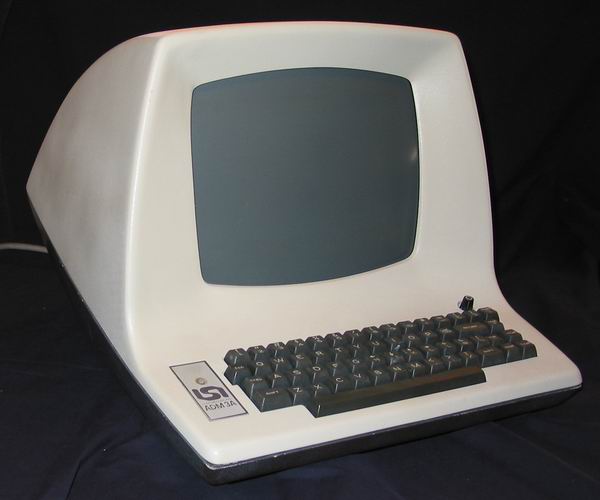
I have watched the invention of the computer change very little in 50 years — going back and forth from one version of the dumb terminal

to another

ooh…look, honey, they’ve reduced a desktop computer down to the size of a handheld writing tablet with text too tiny to read with these middle-aged eyes!  And now it’s wireless!  Whoo-hoo!  Break out the moonshine — they’re calling ’em phablets now!!!  Why, afore you know it, they’ll figure out how to convert my blood straight to pure grain alcohol without the need o’ swallowin’ the dadgum rotgut to begin with.  Maybe even keep muh liver from picklin’, too!  Yee-haw!

Oh well, I’m just happy that there are young people today who care about formal education in moderation while keeping their eye on the big picture, whatever that means to them — advancing the field of pure science or working on the latest smartphone app for pure profit, or doing nothing at all, if they so please, living on the dole and telling each other tall tales (“Yes, I ran an ultramarathon in under 2 hours but the government wants to keep it a secret because I’m a special agent keeping you safe from invisible aliens.”).

The Uncool Factor

Do you watch minitrends come and go, wishing you’d joined in or at least made some snarky comment at the end of a news article about one?

Trendspotting is as much a trendy habit amongst the chattering classes as trainspotting used to be amongst the pocket watch clattering crowds.

Rich or poor, famous or obscure, we live and die, don’t we, as trends pass us by?

Billions of heads bobbing up and down in the soup of life we call our planetary atmosphere.

Will South Koreans stop chasing advanced college degrees in order to get good paying jobs because there aren’t enough jobs for people with tonnes of knowledge shoved into their neurons?

Will the U.S. continue to see a rise in minimum-wage jobs that count toward full employment, even if the workers themselves are underemployed?

How long can the billions, many climbing up to minimum wage jobs and many falling down into minimum wage jobs, survive on promises until the equilibrium is unethically inequal?  Promises compared to what?

These questions I ponder as I process the information I read from a product announcement made earlier today in New York City.

Plenty of people seemed desperate to tell me how great the newest Nokia smartphones will be in someone’s life, if not mine.

It was like listening to futurists tell me they were finally delivering the promises of yesterday’s future visions — flying cars, elevators to the Moon and immortality — that had already fallen out of fashion, no matter how fascinating, technically speaking.

All in a platform that seemed like something I’d seen before…iPod nano:

Versus the latest announcement, the Nokia Lumia 920:

What, no click wheel?  lol

Anyway, looks like the Ballmer/Elop/Harlow ship continues to spring leaks, but not the good kind.  Innovation is not the same as the “cool factor” that eludes many companies unaware of or unable to capture the zeitgeist for their personal use when trying to wow us with unavailable gizmos not a part of our general social sphere.

I think my mind is made up (and I don’t have a mind!) — without pricing or release date for the Nokia/Windows8 phones to go on, and the Nokia 800/900 being a Windows 7 deadend (or nearly so), I’m throwing my money at Samsung and one of its smartphones — probably the Galaxy SIII but possibly the Note II because having a phablet is the whole point of my venture into the smartphone world.

[And Hezbollah, you can kick my shiny, white Aston Martin.]

Middle class or not — you decide…

Reposted from here:


Why you’re not actually poor


By Kimberlee Stiens, LearnVest

In the “Money Mic” series, LearnVest hands over the podium to someone with a strong opinion on a financial topic. Today, LearnVest reader Kimberlee Stiens explains what she thinks it means to actually be poor – and why most of us aren’t.

I am sick of hearing about the trials and tribulations of the middle class.

Politicians constantly talk about strengthening the middle class (which is shrinking) or accuse their opponents of waging war on it, when I think the middle class, on the whole, has little cause to complain.

I’ve seen women on LearnVest and in my daily life complain about making $40,000 a year, saying that’s not enough to support themselves (to which I would add: “in the lifestyle to which they’ve become accustomed”).

The poverty line in America is $22,350 a year … for a family of four. In 2010, a full 15 percent of Americans lived below this threshold. Most American adults will live below that threshold for at least one year of their lives.

That’s why I think we need to change the way we talk about being poor or middle class.

I know because I grew up poor

I became middle class for the first time ever only about a year ago. I grew up fairly poor, my father being generally unable to keep a job and my mother not having legal standing to work in this country. (Complicated story, but she’s Canadian and only recently got U.S. residency. I think she always intended to go back there.) I graduated college with some $60,000 in student loans and a temporary internship position for a congressional campaign paying $250 a week. At least it came with free housing.

I graduated with a degree in political science and wasn’t sure what I wanted to do, but was mostly looking for office jobs. When I started college, I harbored the same illusions as the rest of my graduating class: We were freshmen in 2004, when almost all undergrads could count on getting a job after graduation, and we finished college in the middle of the Great Recession.

After the congressional campaign, I worked at a fast-food restaurant for two years while constantly applying for office jobs. I made no more than $10 an hour, with no benefits. So when I managed to get an internship in Washington, D.C., working for the Marijuana Policy Project, I jumped on it. I worked for $9 an hour until I was promoted to my first full-time, salaried position as a membership assistant, at $35,000 a year, with paid vacation and health benefits.

Finally, at age 25, I was middle class, but I didn’t know it yet.

It’s our choices that define us

I work at a nonprofit, a sector where salaries are notoriously low. Yet most of my peers here make at least $30,000 yearly. We all have health care and other benefits.

After I started my job, I realized that, for the first time,my life was no longer about what I could and couldn’t afford. It was about how I chose to spend my money. I could no longer blame the externalities of a cruel world for keeping me down.

Now I’m the office manager and executive assistant to our executive director at the same organization where I had my first internship. I make $39,000 a year (I negotiated my raise!), and live in Washington, D.C., one of the most expensive housing markets in the country. I’m paying off my student loans, and I’m doing fine.

Given that I encounter more than one panhandler on my walk to work each day, it seems delusional that anyone complains that $35,000 a year makes them poor. I live in D.C. and work on the Hill, where there’s a culture of made-up poverty. Many staffers work long hours and live in shared housing, but they all tend to make salaries of at least $25,000 with health benefits (and they have plenty of opportunity to move up after they put in their time). Everyone complains about being poor, but then they go out to drinks each week.

It’s not that they have it easy. They just don’t understand how much easier they have it than some.

Try another perspective

I’m not trying to diminish anyone’s experience. I know that dipping below a standard of living you’ve always enjoyed will feel pretty crappy. My point is that, comparatively speaking, it’s not actually all that crappy. Many middle class people, particularly those who have never really been poor, don’t seem to see that there’s a whole other side to the economy that they never experience, like a writer who struggles to pay for friends’ weddings. I’ve met people who have spent 20 years in food service, with no health care, no bonuses and usually kids to support.

There are middle class people who say they just can’t live in D.C. or New York City on $40,000 a year, but there are also people in those same places living on minimum wage. Take a look at the invisible people around you who make your life tick — your cleaners, the person making your drinks, your interns — and imagine how they make ends meet.

It’s a choice that you make to feel disadvantaged. If you make $33,000 a year, the truth is, you are actually in the top half of wage-earners.

Everyone can, and should, do a little more to manage their finances better. And while studies may show that we don’t feel truly comfortable or secure in our finances until we reach between $50,000 and $75,000 a year, it’s a bit dramatic for people to feel anything other than lucky when depositing their salaried paychecks.

Kimberlee Stiens lives in Washington, D.C., where she works as an office manager for a medium-sized nonprofit. She blogs at Business for Good, not Evil.

Reposted post of the day

21 Ways Rich People Think Differently

Business InsiderBy Mandi Woodruff | Business Insider – 9 hours ago

World’s richest woman Gina Rinehart is enduring a media firestorm over an article in which she takes the “jealous” middle class to task for “drinking, or smoking and socializing” rather than working to earn their own fortune.

What if she has a point?

Steve Siebold, author of “How Rich People Think,” spent nearly three decades interviewing millionaires around the world to find out what separates them from everyone else.

It had little to do with money itself, he told Business Insider. It was about their mentality.

“[The middle class] tells people to be happy with what they have,” he said. “And on the whole, most people are steeped in fear when it comes to money.”

Flickr / C. Pajunen1. Average people think MONEY is the root of all evil. Rich people believe POVERTY is the root of all evil.

“The average person has been brainwashed to believe rich people are lucky or dishonest,” Siebold writes.

That’s why there’s a certain shame that comes along with “getting rich” in lower-income communities.

“The world class knows that while having money doesn’t guarantee happiness, it does make your life easier and more enjoyable.”

2. Average people think selfishness is a vice. Rich people think selfishness is a virtue.

“The rich go out there and try to make themselves happy. They don’t try to pretend to save the world,” Siebold told Business Insider.

The problem is that middle class people see that as a negative––and it’s keeping them poor, he writes.

“If you’re not taking care of you, you’re not in a position to help anyone else. You can’t give what you don’t have.”

Getty Images3. Average people have a lottery mentality. Rich people have an action mentality.

“While the masses are waiting to pick the right numbers and praying for prosperity, the great ones are solving problems,” Siebold writes.

“The hero [middle class people] are waiting for may be God, government, their boss or their spouse. It’s the average person’s level of thinking that breeds this approach to life and living while the clock keeps ticking away.”

4. Average people think the road to riches is paved with formal education. Rich people believe in acquiring specific knowledge.

“Many world-class performers have little formal education, and have amassed their wealth through the acquisition and subsequent sale of specific knowledge,” he writes.

“Meanwhile, the masses are convinced that master’s degrees and doctorates are the way to wealth, mostly because they are trapped in the linear line of thought that holds them back from higher levels of consciousness…The wealthy aren’t interested in the means, only the end.”

I Love Lucy screencap5. Average people long for the good old days. Rich people dream of the future.

“Self-made millionaires get rich because they’re willing to bet on themselves and project their dreams, goals and ideas into an unknown future,” Siebold writes.

“People who believe their best days are behind them rarely get rich, and often struggle with unhappiness and depression.”

6. Average people see money through the eyes of emotion. Rich people think about money logically.

“An ordinarily smart, well-educated and otherwise successful person can be instantly transformed into a fear-based, scarcity driven thinker whose greatest financial aspiration is to retire comfortably,” he writes.

“The world class sees money for what it is and what it’s not, through the eyes of logic. The great ones know money is a critical tool that presents options and opportunities.”

7. Average people earn money doing things they don’t love. Rich people follow their passion.

“To the average person, it looks like the rich are working all the time,” Siebold says. “But one of the smartest strategies of the world class is doing what they love and finding a way to get paid for it.”

On the other hand, middle class take jobs they don’t enjoy “because they need the money and they’ve been trained in school and conditioned by society to live in a linear thinking world that equates earning money with physical or mental effort.”

8. Average people set low expectations so they’re never disappointed. Rich people are up for the challenge.

“Psychologists and other mental health experts often advise people to set low expectations for their life to ensure they are not disappointed,” Siebold writes.

“No one would ever strike it rich and live their dreams without huge expectations.”

BarackObamadotcom via YouTube9. Average people believe you have to DO something to get rich. Rich people believe you have to BE something to get rich.

“That’s why people like Donald Trump go from millionaire to nine billion dollars in debt and come back richer than ever,” he writes.

“While the masses are fixated on the doing and the immediate results of their actions, the great ones are learning and growing from every experience, whether it’s a success or a failure, knowing their true reward is becoming a human success machine that eventually produces outstanding results.”

10. Average people believe you need money to make money. Rich people use other people’s money.

Linear thought might tell people to make money in order to earn more, but Siebold says the rich aren’t afraid to fund their future from other people’s pockets.

“Rich people know not being solvent enough to personally afford something is not relevant. The real question is, ‘Is this worth buying, investing in, or pursuing?'” he writes.

11. Average people believe the markets are driven by logic and strategy. Rich people know they’re driven by emotion and greed.

Investing successfully in the stock market isn’t just about a fancy math formula.

“The rich know that the primary emotions that drive financial markets are fear and greed, and they factor this into all trades and trends they observe,” Siebold writes.

“This knowledge of human nature and its overlapping impact on trading give them strategic advantage in building greater wealth through leverage.”

12. Average people live beyond their means. Rich people live below theirs.

“Here’s how to live below your means and tap into the secret wealthy people have used for centuries: Get rich so you can afford to,” he writes.

“The rich live below their means, not because they’re so savvy, but because they make so much money that they can afford to live like royalty while still having a king’s ransom socked away for the future.”

richkidsofinstagram.tumblr.com13. Average people teach their children how to survive. Rich people teach their kids to get rich.

Rich parents teach their kids from an early age about the world of “haves” and “have-nots,” Siebold says. Even he admits many people have argued that he’s supporting the idea of elitism.

He disagrees.

“[People] say parents are teaching their kids to look down on the masses because they’re poor. This isn’t true,” he writes. “What they’re teaching their kids is to see the world through the eyes of objective reality––the way society really is.”

If children understand wealth early on, they’ll be more likely to strive for it later in life.

14. Average people let money stress them out. Rich people find peace of mind in wealth.

The reason wealthy people earn more wealth is that they’re not afraid to admit that money can solve most problems, Siebold says.

“[The middle class] sees money as a never-ending necessary evil that must be endured as part of life. The world class sees money as the great liberator, and with enough of it, they are able to purchase financial peace of mind.”

Kim Bhasin / Business Insider15. Average people would rather be entertained than educated. Rich people would rather be educated than entertained.

While the rich don’t put much stock in furthering wealth through formal education, they appreciate the power of learning long after college is over, Siebold says.

“Walk into a wealthy person’s home and one of the first things you’ll see is an extensive library of books they’ve used to educate themselves on how to become more successful,” he writes.

“The middle class reads novels, tabloids and entertainment magazines.”

16. Average people think rich people are snobs. Rich people just want to surround themselves with like-minded people.

The negative money mentality poisoning the middle class is what keeps the rich hanging out with the rich, he says.

“[Rich people] can’t afford the messages of doom and gloom,” he writes. “This is often misinterpreted by the masses as snobbery.

Labeling the world class as snobs is another way the middle class finds to feel better bout themselves and their chosen path of mediocrity.”

Flickr / Wei Tchou17. Average people focus on saving. Rich people focus on earning.

Siebold theorizes that the wealthy focus on what they’ll gain by taking risks, rather than how to save what they have.

“The masses are so focused on clipping coupons and living frugally they miss major opportunities,” he writes.

“Even in the midst of a cash flow crisis, the rich reject the nickle and dime thinking of the masses. They are the masters of focusing their mental energy where it belongs: on the big money.”

18. Average people play it safe with money. Rich people know when to take risks.

“Leverage is the watchword of the rich,” Siebold writes.

“Every investor loses money on occasion, but the world class knows no matter what happens, they will aways be able to earn more.”

Flickr / Ibrahim Iujaz19. Average people love to be comfortable. Rich people find comfort in uncertainty.

For the most part, it takes guts to take the risks necessary to make it as a millionaire––a challenge most middle class thinkers aren’t comfortable living with.

“Physical, psychological, and emotional comfort is the primary goal of the middle class mindset,” Siebold writes.

World class thinkers learn early on that becoming a millionaire isn’t easy and the need for comfort can be devastating. They learn to be comfortable while operating in a state of ongoing uncertainty.”

20. Average people never make the connection between money and health. Rich people know money can save your life.

While the middle class squabbles over the virtues of Obamacare and their company’s health plan, the super wealthy are enrolled in a super elite “boutique medical care” association, Siebold says.

“They pay a substantial yearly membership fee that guarantees them 24-hour access to a private physician who only serves a small group of members,” he writes.

“Some wealthy neighborhoods have implemented this strategy and even require the physician to live in the neighborhood.”

Getty Images21. Average people believe they must choose between a great family and being rich. Rich people know you can have it all.

The idea the wealth must come at the expense of family time is nothing but a “cop-out”, Siebold says.

“The masses have been brainwashed to believe it’s an either/or equation,” he writes. “The rich know you can have anything you want if you approach the challenge with a mindset rooted in love and abundance.”

From Steve Siebold, author of “How Rich People Think.”

Two books for the day

More to add to the reading backlog list:

As they say, it’s better to play dumb and be dumb than to play dead and be dead…

Another Miracle Cure for the Near-Sighted

Do you ever wonder what your doctor is not telling you?

We here at the Research Centre have the medical answers you seek.

Did you know that most people who are near-sighted can trace their eye problems to sleep posture?  How about far-sighted people or people with astigmatism?

Yes, that’s right!  Depending on how you sleep on your side, you place an undue amount of continuous pressure on your eyeballs, pressing your pillow or your hand into your orbs and causing permanent compression problems.

Surely, you’ve noticed how you wake up in the morning and one eyeball seems to have more difficulty seeing than the other?

Don’t let that stand in your way of a life of perfect eyesight.

The Research Centre has developed a special device that fits you and only you, gently cupping the area around your eyes and preventing foreign objects from pressing against them.

Send us the 3D image of your head captured by your gaming system like a Kinect or any 3D scanning device and we will convert that image into a perfect, personalised JKin3000 Eye Protection System just for you.

No worries about your bed partner accidentally using yours.

In fact, if you order now, we’ll build a second unit for your partner at 50% off the retail price.

But wait, that’s not all!!!

If you order in the next 2 microseconds, we’ll create a whole set of eye protection systems for your entire family (limited to two adults and two children, please, although four consenting adults may enjoy this offer for just 10% more).

No more bullies at school calling your children “four eyes”!

No more cleaning sweat off your glasses after a 10 kilometre run!

But don’t take our word for it.  Listen to the way our paid actors read compensated testimonials!

“I used to worry that I wasn’t getting second dates because of my glasses.  After six weeks of wearing the JKin3000, clearing up my eyesight, it’s not my glasses that turn off dates but the giant, hairy wart at the end of my nose.  Thank you, Research Centre, for ‘opening my eyes’ to the possibilities of plastic surgery!”

“The JKin3000 saved my life.  A tree limb fell through our roof and would have ended my marriage if it weren’t for glancing off my wife’s JKin3000 instead of puncturing her skull and piercing my shoulder, instead, rendering my arm useless.  Thank you, Research Centre, for putting me on permanent disability!”

“My kids used to give me a hard time about my contact lenses, calling me old-fashioned because I wouldn’t consider LASIK surgery.  Thanks to the JKin3000, the kids no longer make fun of my contact lenses.  Instead, they call me ‘Horse Blinders’ because of the photo of me sleeping in my JKin3000 they posted on the Internet.  Thank you, Research Centre, for giving my kids something to share about me on their facebook page!”

See how the actors’ professional acting classes make the testimonials seem much more exciting!  We thought so!

Don’t delay.  Your social calendar and your life itself may depend on us.

The JKin3000 Eye Protection System is available in any other colour or pattern you choose but the first one you think of or the favourite one you prefer.

And for you do-it-yourselfers, we offer the JKin3000 Eye Protection System templates for your 3D printers.  Buy our introductory kit and start your own JKin3000 franchise from home.

The Research Centre is not responsible for the misuse of this product, which may or may not help those with imperfect eyeball shapes.  The Research Centre makes no claims that this product is anything more than a decorative item you wear for private enjoyment in your bedroom or anywhere you feel confident enough to wear modified patent-expired horse blinders in public.  Requests for refunds will be forwarded to our answering machine which we haven’t checked in the four weeks we’ve been in business.

From blacksmiths to international banking institutions…

One benefit, if benefit is the right word, of my father and mother in-law no longer an influence on my daily thought patterns, is that my mother is not one to fret over the workings of people we know only from television images and newspaper stories — the megawealthy, the overambitious politicians, the steroid-filled athletes, the exhibitionist actors, etc.

We can live taciturn lives without concern about those outside our day-to-day circle of influence.

Otherwise, I can serve on the committees that determine who gets wireless spectrum segments, whose technological development is the de facto standard, how to protect ourselves from monopolistic predators with no social benefits, and which laws protect people or corporations more.

At the end of the day, only I can truly tell myself if I am better off today than I was yesterday, or if I’ve put myself in a position to potentially be better off tomorrow.

For example, have you ever worked with a team to develop the de facto standard for a telecommunications method like ADSL?

For those who missed the whole dialup/ADSL/cable/satellite modem portion of history class, there once was a time when people were unable to get instant access to world events such as game scores, election results or regime changes except through mass media announcements.

Then, as technology progressed, we were able to communicate gossip about world events not just by landline voice lines but also through nonvoice methods like dialup modems, which some of us might only recognise through old films like “You’ve Got Mail” or ringtones that simulate a modem sync-up tone series.

Well, I guess it’s time for me to skip all that and join the new evolution in communication technology — a smartphone with builtin WiFi hotspot.

First, I’ll have to buy the smartphone, which is, for me, right now, a choice between the Samsung Galaxy SIII and the latest Nokia 9xx to be announced on 5th September (my wife leans toward the Apple iPhone 4/5 series).

Then, we’ll take the smartphones home, test their WiFi hotspot throughput, see if it’s faster than our ADSL line or a potential cable modem, and concede defeat that we can’t outcompete the advances of technology by continuing to stick with ADSL, a telecommunications method that a team I once worked with at Conexant (the descendant of Rockwell Semiconductor in the days of the Hayes modem and the AT command set) put into a play several products including a residential gateway.

After all, it doesn’t look like I’ll ever get the gigabit throughput that Chattanooga residents enjoy, let alone the speed that AT&T U-verse promises but hasn’t delivered to my household here in the so-called advanced metropolis of the Rocket City, a/k/a Huntsville, Alabama, USA, Western Hemisphere, Earth, Orion–Cygnus Arm, Milky Way galaxy, Local Group, Virgo Supercluster, Observable Universe.

In retrospective, all of this seems a bit slow, doesn’t it?

Well, we’ll leave that chapter in this story for another blog entry…