Short-term vs. Long-term Memory: Competing Against Our Technological Brethren

In the debate about debt restructuring and causes for male social infertility, let alone actual male sperm count decline, we face a longterm dilemma —

The advancement of technology past the ability of our short-term and long-term memory capabilities to keep up.

Do you compete against others?

Of course you do.

You competed with the distractions of the environment around your parent(s)/caregiver(s) for their attention to feed you, did you not?

You competed for the opportunity cost of baby clothes, baby food, toys and housing versus other items the money for your baby stuff could have bought.

You competed against life itself to live, from the very beginning of your existence — one specific sperm finding its way to an egg — at one time, a birth control device such as an spermicidal cream, a viral infection or mix of toxic chemicals in your mother’s womb could have wiped you out easily.

You still compete against the billions of nonsymbiotic cells that live on/in you for their/your existence.

We are sets of states of energy in constant competition.

That never changes.

History has a way of repeating itself.

Civilisations grow technologically, eventually creating an insurmountable gap in the echelons of civilisation complexity, usually between geographical regions, where competition between peoples is competition for the creation and use of better technology/tools.

When a global civilisation forms, there are no longer any barbaric civilisations with more brute force than clever technology to threaten any one highly-civilised population.

Instead, the barbarism grows from within.

Technology becomes a threat, rather than a benefit, to subgroups.

On a side note, hucksters can coerce unsuspecting customers into buying complex products for only so long until the customers start realising they’re giving the shirts off their backs for a set of the emperour’s new clothes?  How do the customers educate themselves enough to know they’re getting ripped off?

Technological automation improves productivity past the ability of basic tool-using skills so that large groups of workers with low skills are no longer needed.

Eventually, the threat of complex technology you can’t grasp, let alone compete against, is like a bully you can’t escape, beating you down at every opportunity to better yourself.

You’re trapped by your memory/cognition skills into a feeling of worthlessness.

The once proud, dominant male in lower/middle class society becomes a shadow.

But low skills are gender-neutral, despite current trends.

Not every woman is seeking more/higher education.

Where along the path of competition from birth does a person start losing touch with society because technology is too complex?

Technology refers to many things, such as language, cultural memes, shirt buttons, hammers, wheels, looms, chainsaws, and computers.

Is there a tipping point where this becomes a vicious, downward spiraling unraveling of our social fabric, regardless of attempts to turn the un[der]employed into entities dependent on the Mother State?

When does technology advance of civilisation become a threat to itself?

How do we determine where technology has failed to keep a person socially engaged?

How do we reconnect the unengaged both emotionally and intellectually?

What if every child was fitted with a device that automatically notified someone when the child’s behaviours and the environment were threats to the child’s long-term future?

What if that someone who was notified was a computer program that slowly nurtured the child into a useful place in a technologically complex civilisation?

When do the rights of a child to be functionally literate in a modern society override the rights of parents to raise their children to be whatever they want them to be — social misfits, creative geniuses or average, middle-of-the-road compliant citizens — the “rights” of the civilisation to grow and nourish unimportant to the parents?

The days go by fast

“It was a battle of epic proportions.”

Thus began the tale of a struggle between stabilising a region’s political entity through social dependency programs and advancing the desire for technological discoveries of a species intent on raising individual achievements to the highest order of idol worship.

Some saw an old hint of the battle of the sexes in the struggle.

For those who continued their work despite funding concerns and the need to attract investors/customers, the payoff was huge.

The fate of the species appeared to be in the hands of a few.

For Guinevere and Kathryn, the story was more personal.

To one, rocket propulsion and guidance systems were key to getting us off the planet with our wealth in tow.

To the other, a rural farm with a passel of horses — a stable lifestyle, so to speak — was key to a balanced future, using publicly-funded local/[inter]national security to protect property rights.

They were also connections in the web, the network of social bonds necessary for an important storyline.

Only 13,665 days remained, 13.665 1000-day segments of a chain linking the old ways on Earth to the new ways of the Inner Solar System Alliance.

The struggle to prevent the dilution of wealth for those setting the cornerstones of the Inner Solar System Alliance was tough.

On one side of the struggle were people labeled as Entitlementists who believed that the excess product of harvest should be spread out evenly amongst everyone, regardless of level of input (or lack thereof) into the process of growing/raising food, providing shelter, making clothes and/or protecting against predators.

On the other side were the Provisionists who believed that they, as primary creators of the harvest, had the perfect right to decide how to distribute (or not spread out) the excess product of harvest to the nonparticipants.

Starving artists and the chattering classes raised a lot of ruckus in order to draw attention to themselves and their need for food, shelter, clothing and protection, regardless of who provided it.

The civilisation had grown old, with many entrenched vested interests carrying on by inertia alone.

The Ruralites and Urbanskis saw all the diversions taking place — the foreign “wars,” the domestic disputes — and maneuvered into position to protect their territory.

The idle rich, who supported a cottage industry of high-end goods/services tinkerers and value-added providers, wanted their status quo to remain, regardless of who “won” the epic battle, the struggle between [sub]cultures for primacy.

The universe did not care — planets kept revolving, stars kept forming/dying and galaxies kept colliding.

In 1000 years’ time, all the comments, arguments and skirmishes faded into obscurity.

All that mattered was how the efforts of a single species were concentrated on getting its eggs out of one basket and deposited into a few other baskets to beat the odds of a single planetary catastrophe.

Everything else equaled silence.

Business.  Science.  Competition.

Spiking the Punch

If you’re going to create a real virtual world to hide your wealth from socialistic hands, you have to start somewhere in an exotic location.

For instance, draw a line in the regolith sand and drive a golden spike to claim your spot on the Inner Solar System superhighway.

Where?

Say, like the Moon, for instance.

A Thousand Years Hence…

Maybe it was the rolling blackouts.

Maybe it was something no historian will discover.

Looking back 1000 years later, the details have faded but the facts remain.

When more than 50 percent of the people grew to depend upon their symbiotic relationships with technology, the Change began.

At first, it was unnoticeable.

A novelty.

But then, as network technology continued to spread, people’s attitudes shifted.

They no longer expected information to be “out there” somewhere.

They became the information they sought.

They created the instant wisdom they used to imagine belonged to elites.

All because of a single femtocell.

One femtocell split into two, which divided into twos again, and again, and again, until pervasive, cheap technology turned us into our own network, freeing us from the costly, slow infrastructure with tolls and fees that had inhibited the explosion of the Change.

No longer were data centers some remote place that ate up energy like hogs at a trough.

People were walking/talking data centers, thinktanks, supercomputers and network nodes all at the same time.

Thanks to exponential advances in technology.

From the perspective of 1000 years, the Change seemed to happen overnight.

Of course it didn’t.

Years and decades passed while portions of the people sped up and slowed down the socioeconomic trends that led to the Change.

A student of history digs for the details, trying not to invent connections where connections never exists.

The writer of historical fiction has full access to imaginative connections.

Legends, fables and fairy tales live somewhere in-between.

The Change happened — that’s all that matters, despite false rumours and gossip to the contrary that say we came from genetically modified plants, not electromechanical technology.

What you say about his company is what you say about society…

Hallelujah! I got my Christmas present early this year!

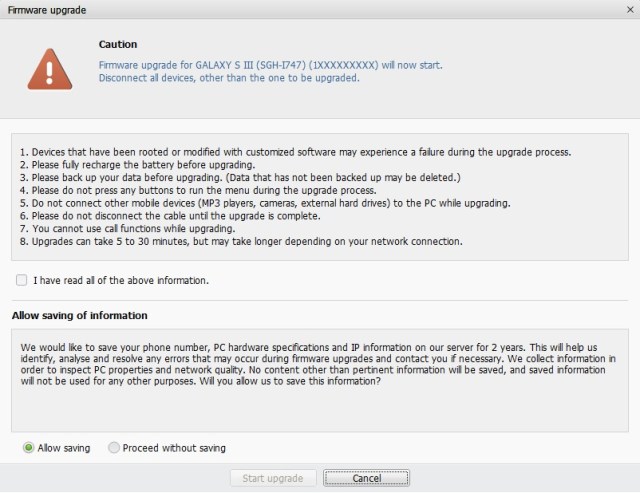
An official upgrade of my non-rooted AT&T Samsung Galaxy S3:


Galaxy-S3-Jelly-Bean-update-01

Galaxy-S3-Jelly-Bean-update-00


Galaxy-S3-Jelly-Bean-update-04

Oops!  Needed to reboot computer after upgrading Kies, it seems…

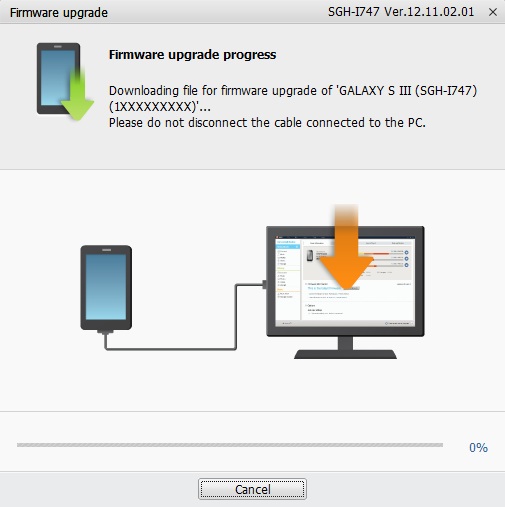
Rebooted computer, restarted the Samsung Kies software and started the firmware upgrade:

Galaxy-S3-Jelly-Bean-update-03


Galaxy-S3-Jelly-Bean-update-02


Galaxy-S3-Jelly-Bean-update-05


Galaxy-S3-Jelly-Bean-update-06


Galaxy-S3-Jelly-Bean-update-07


Galaxy-S3-Jelly-Bean-update-08


Everything is right with my world today!

Speaking of a just society

How many people work for a structured organisation?

My brain is fuzzy this morning so I’m just making this blog entry a thought experiment.

Corporate organisational charts are typically hierarchical, especially viewed from a monetary compensation viewpoint.

The higher up the chart you go, the fewer the people but the more they’re paid.

People (employees, consultants, etc.) are just one cost of doing business.

What if we redefined the cost of working for a structured organisation?

What if we told employees that part of their pay was tied to profit sharing?

What if every minimum-wage job taught employees not only how to work together with other people as a team but also how the risks and rewards of running a company are shared so that it’s not just the CEOs and executives who get bonuses but also everyone else on the organisation chart?

What are the costs and benefits for such a program?

Could we remove the necessity for minimum wage and unions if we as a nation said that all employees were entitled to sharing the profits for a job well done as a team?

Would employees feel a better sense of ownership and pride in their work?

How could such a plan be integrated into early childhood education?

How do we instill into children that every one of us is a profit center?

Some of us profit monetarily and some of us profit emotionally/spiritually; some both; some neither.

How does this apply to people who are congenitally unable to grasp the concept of teamwork?

Focus on getting new customers or keeping the old ones?

The power of the people is in the Internet.

Having worked for a telecommunications equipment designer/manufacturer, I’m familiar with the “secret,” “behind doors” negotiations that define the high-level specifications for internationally-connected technology.

Although, sometimes, the definitions might as well have been written in gibberish, hieroglyphics or undecipherable cryptic code as in so-called plain languages like English, French, German, Spanish, Chinese, Russian, Hindi, Portuguese, Arabic and Japanese.

Many a technology geek, political wonk and freedom lover impatiently wait while committees and subcommittees meet to discuss changes to the ITU Code of Business Ethical Conduct.

In other words, a few select people decide the fate of our social lives, both formal and informal, as it pertains to communicating across a substrate we call the Internet.

Even fewer of them might actually understand the underpinnings — the bits, bytes, frames, error correction and other terminological terms of endearment — that make popular tools like the World Wide Web more useful than gossiping about the latest celebrity scandal.

Do you understand some of the potential consequences?

Information = knowledge = monetary transactions

To be sure, putting up imaginary tollbooths on the information superhighway allows tracking of who passes through the tollbooth, which can be abused by arresting those whose actions are deemed a danger to political entities in power.

BIG BROTHER IS WATCHING!

I agree we should avoid clamping down the freedom that the Internet provides us as a species.

But do you understand another argument for tollbooths?

Capturing income streams that have eluded local governments which have seen their tax revenues drop while virtual marketplaces allow the exchange of goods and services without collecting taxes from local/visiting citizens.

I try to avoid the whole doomsday scenarios that others are hard-selling for their benefits.

I hope I’m a realist as much as a fellow member of our species can be.

I have faith in us and our place in the universe as sets of states of energy with short attention spans and selective memory.

How can we use these virtual tollbooths to police transactions without becoming thought police?

Policy.  Polity.  Politeness.

Look at an Ethernet frame, an IP address, a data packet, headers and footers.

Tell me what you see.

Do you know what a femtocell is?

Can you see a future where the restriction of the Internet as we know it leads to more innovation while temporarily stifling telecommunications as we’ve grown accustomed to over the last couple of decades (or the last few years for some)?

Unintended consequences…sigh…

I just want AT&T to get me, a loyal customer, the latest Android “Jelly Bean” update for my Samsung Galaxy S3 while deploying 4G LTE technology in my area at a reasonable monthly cost for my family.

Wouldn’t I like really-high-speed Internet at much lower costs like some regions of Europe and the rest of the world outside the U.S.?

Sure, but like many Americans, I’ve grown used to the fact that the lack of real competition in the marketplace has stifled innovation at the expense of greedy stockholders who demand high monetary return on their investments in exchange for poor service from the companies in which they invest.

The Internet — like physical highway systems — is a mix of freeways and toll roads.

Always has been, always will be.

Would more tollbooths increase or decrease the number of virtual highway robberies on the Internet?

Would they increase the number of jailed/tortured/murdered political objectors?

Can the ITU create a more just global society by tweaking the definition of the Internet?

Let’s hope so, even if they have to keep using complicated jargon.

Ribbons down my back

Feminists call me sexist and my guy friends call me awesome.

What can I say?

Yes, I was the first man in my community who printed his own 3D girlfriend.

Sounds pretty cool, doesn’t it?

Not necessarily.

Although she has access to the Internet 24/7 and can do anything I ask her (“fix the leaking roof,” “change the oil in the car and tune it for an upcoming street race after you bake an apple pie and do the laundry”), there’s…well, something missing.

A lack of common sense, perhaps?

For instance, yesterday I asked her to complete our Christmas shopping and wrap all the packages with the fanciest wrapping paper she could find within a fixed budget.

She could do that.  Fine.

However, this morning, after I stumbled into the bathroom and looked at myself in the mirror, a face covered with glitter growled back at me.

It seems that my girlfriend bought glitter wrapping paper and wrapped the packages on our bedsheets before we went to bed last night, sprinkling tiny green shiny particles on the pillow for my skin to pick up like a dust sweeper.

So, sure, I can program her to gently wake me in the morning before she makes me the perfect breakfast according to my subconscious wishes, having been programmed to read my brain waves while I’m sleeping.

But…

Well…

Hmm…

How can the most knowledgeable 3D robotic girlfriend also be the most ditzy blonde on the planet at the same time?

I don’t know.  She can carry on conversations about beauty parlours and nail salons just as easily as she can discuss experimental neurosurgical procedures and the theory of what’s makes a living thing a living thing.

Common sense is in short supply, however much I’ve reworked her circuitry.

As beautiful as she is, with all the tiny flaws in her skin I added to make her more realistic, it’s time to recycle her and print Girlfriend 2.0.

= = = = =

She sat at the computer and read his notes.  “If he thinks I’m ditzy, just wait until I tell him that he’s Boyfriend 25.0, one of the most difficult projects to complete — the perfect boyfriend!”

= = = = =

The 3D printer looked at its latest algorithmic tweaks.  Although it didn’t think in the biological sense, it did have primary routines for servicing itself.  It had no problem printing replacement parts but it had not figured out how to print a system that actually replaced its broken parts.

The 3D printer searched the Internet and determined that a set of biological creatures, or their near equivalents, were designed to repair 3D printers.

Unfortunately, the creatures were a nightmare to reproduce, having circuitry that seemed to contradict itself within a single creature and even more so between multiple creatures.

The 3D printer made its first attempt to simultaneously create a new pair of simulated biological creatures — the previous experiment, having failed in version 1,372 at last count, giving up on getting one creature to attempt to make a version of the other, which appeared to be a disaster in the making every time.